Industrial food mixers for muesli, cereals, and seed mixes
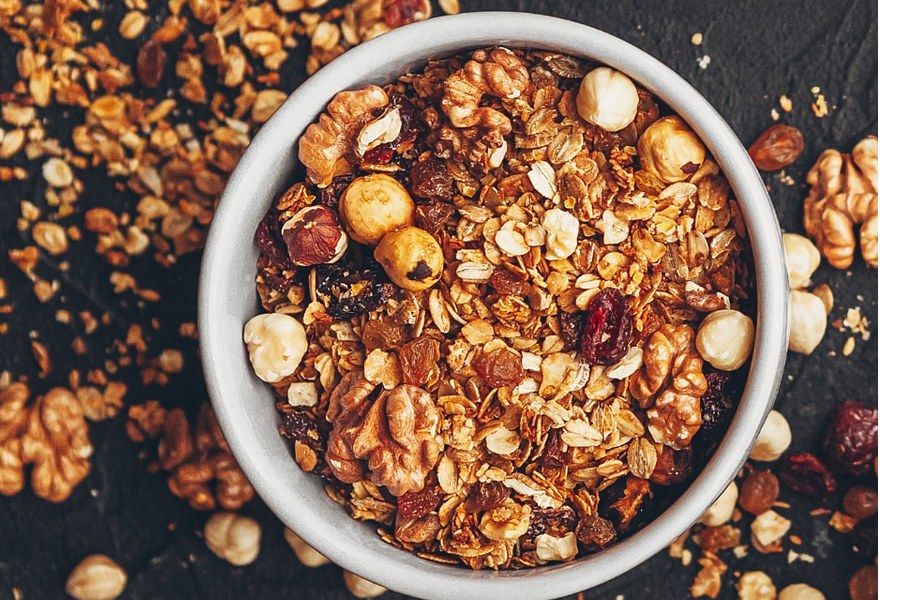
From a processing standpoint, muesli is more complex than its rustic image might suggest. The combination of rolled oats, seeds, nuts, chocolate chips, and dried fruit results in a mixture with widely varying particle sizes, bulk densities, and mechanical sensitivities—and that is precisely what makes the mixing process the critical link between raw materials and a premium product.
What makes the mixing process so challenging?
For muesli and cereal manufacturers, there is one essential rule: After mixing, the product should look exactly like its ingredients did before—only evenly distributed. Nuts must not break, dried fruits must not be crushed, and delicate freeze-dried fruits must retain their structure completely. At the same time, the mixture must be homogeneous: oats, raisins, and almonds must be distributed so that the consumer experiences the full flavor with every spoonful. Contract manufacturers face additional challenges: frequent formula changes, rapid residue-free cleaning without cross-contamination, and varying batch sizes while maintaining consistent quality. In addition, liquid ingredients such as honey, syrup, or natural sweetening agents are often used, which must be finely and evenly incorporated into dry ingredients—without clumping or sticking.
The key figure: 10 to 30 seconds
What’s surprising about cereal production: The actual mixing time is often only 10 to 30 seconds. This short duration isn’t a compromise, but a deliberate method—the shorter and gentler the mixing process, the less mechanical stress is placed on the raw materials and the higher the quality of the final product will be.
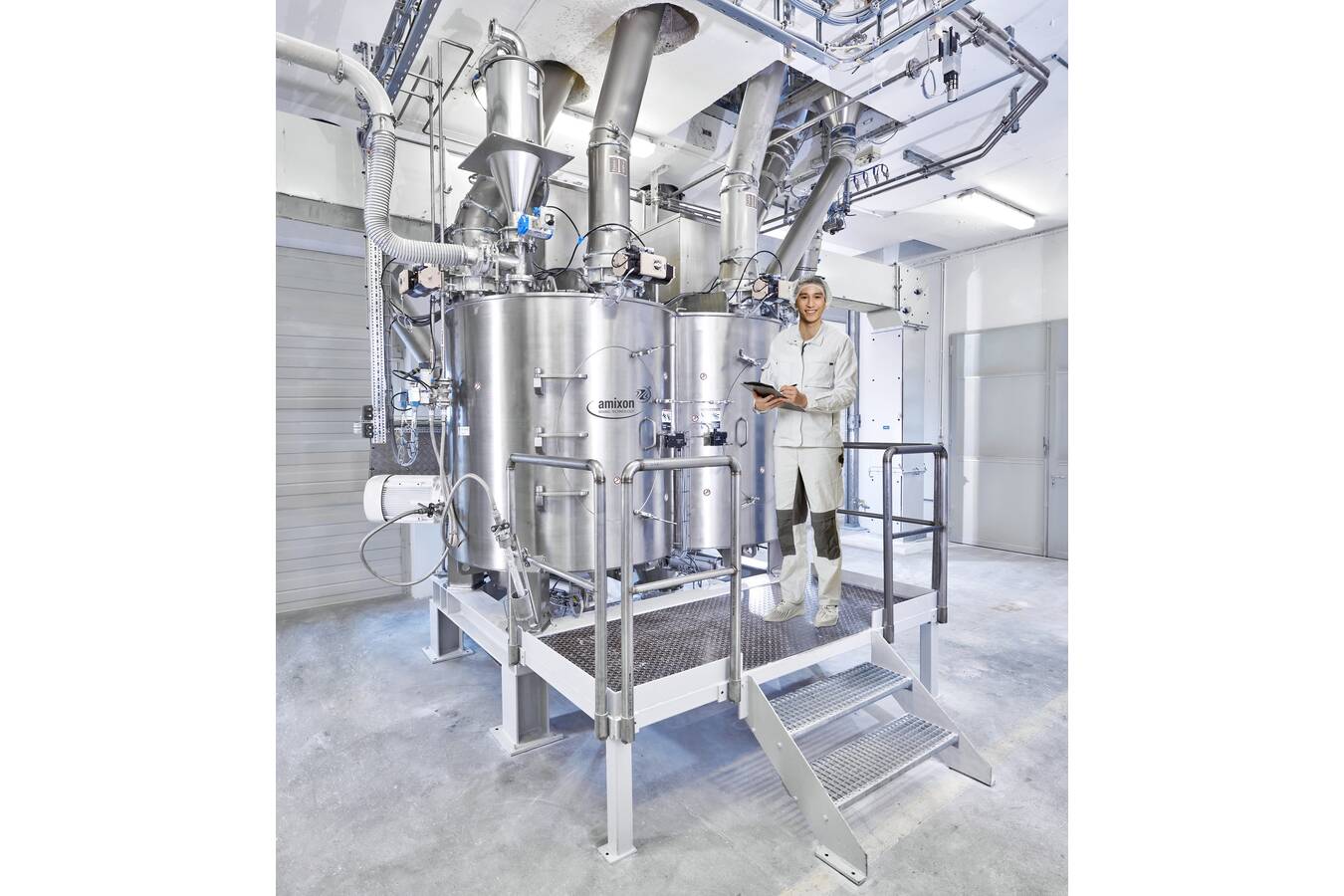
After just 20 to 160 mixing cycles, amixon® precision mixers achieve mixing results that cannot be further improved in practice. The energy input required is so low that virtually no particle breakage occurs—a 2-cubic-meter batch can be homogenized in just 15 seconds.
Case Study: From Organic Food Production to Mass Manufacturing
Many organic cereal manufacturers face the same dilemma: their product range is expanding, batch sizes vary widely—and the mixing technology must handle both with equal reliability. A long-established organic food company made these exact requirements a top priority when selecting machinery:
- Ideal mixing quality with short mixing times
- A secure process that protects the product
- Variable filling levels without quality loss
- Residual emptying of up to 99.99%
- Optional dry or wet cleaning (CIP/COP-compatible)
The solution was an amixon® mixing system that enabled scalable operation from day one—while fully maintaining product integrity and ensuring complete compliance with hygiene standards.
The technical center as a planning tool
For manufacturers and contract manufacturers looking to set up a new mixing process or optimize existing production facilities, the amixon® Technical Center in Paderborn offers testing capabilities using original raw materials. This allows for a true-to-scale evaluation of mixing quality, liquid addition, product protection, and discharge behavior—before investing in a production facility. This reduces planning risks.