Supplier sign in
Home
STAY INFORMED
Subscribe to our monthly newsletter.
Your email address will never be disclosed to any third party.
Read our privacy notice.
Press release
21-09-2026  |  81 x
Share:

Nicotine Pouches: Why the Blending Process Is Key to Product Safety

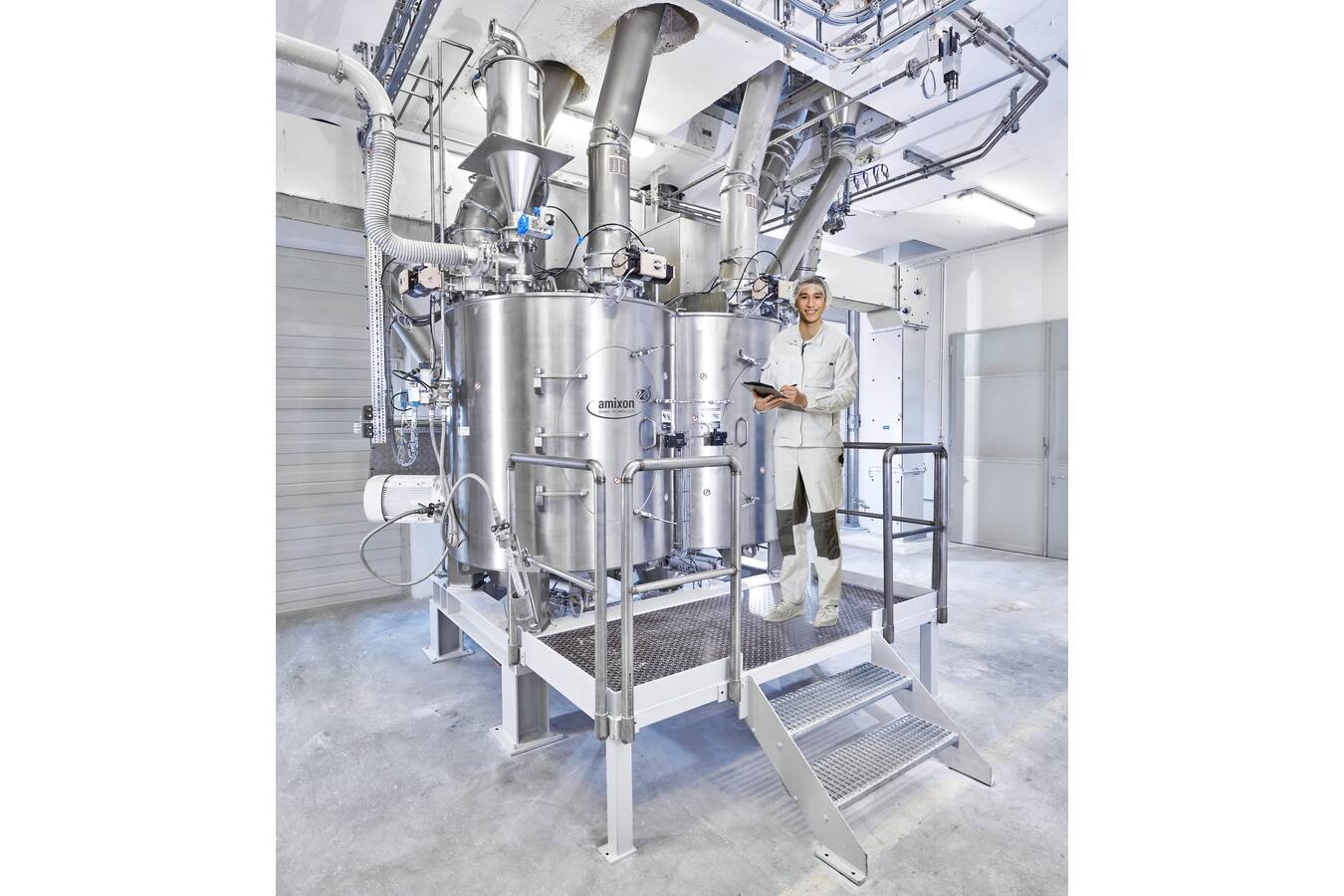
amixon® GmbH, based in Paderborn, is a specialized manufacturer of vertical mixers for the pharmaceutical, food, and chemical industries and offers customized mixing systems for the production of nicotine pouches.

What are nicotine pouches?

Nicotine pouches are tobacco-free, nicotine-containing single-use pouches intended for oral use. The user places the pouch between the gum and upper lip; the nicotine is absorbed through the oral mucosa. Major tobacco and consumer goods manufacturers position them as part of smoke-free product portfolios that enable harm reduction compared to conventional cigarettes. The global market is growing at a double-digit rate and is increasingly attracting new producers.

A nicotine pouch typically consists of the following ingredients:

  • Microcrystalline cellulose (MCC) as the main carrier matrix
  • Nicotine – liquid or in the form of a salt (e.g., nicotine bitartrate)
  • pH buffers (e.g., sodium carbonate) to control bioavailability
  • Humectants (e.g., propylene glycol) to achieve the desired product consistency
  • Sweeteners, as well as flavors and flavorings

The process engineering challenge

Unlike standard powder blends, nicotine pouches require the precise combination of substances with very different physical properties—which places special demands on the blending process:
  • Fibrous cellulose with low bulk density, capable of becoming electrostatically charged and prone to dusting
  • Hygroscopic salts and buffer materials that tend to clump rapidly
  • Viscous humectants that create risks of localized agglomeration
  • Volatile flavorings that tend to adsorb onto container surfaces
  • Liquid nicotine - a potential contact poison that must be distributed absolutely evenly throughout the substrate

An occasional overdose of nicotine is harmful to health, while an underdose is ineffective. Every single batch must have an exactly reproducible distribution of the active ingredient. Regulatory requirements set by the FDA and European guidelines impose strict limits in this regard—according to industry standards, the maximum nicotine content per pouch is generally 20 mg.
With nicotine pouches, the quality of the blend isn’t a matter of efficiency—it’s a matter of product safety.

amixon® Vertical Mixer: The Solution for Nicotine Pouches

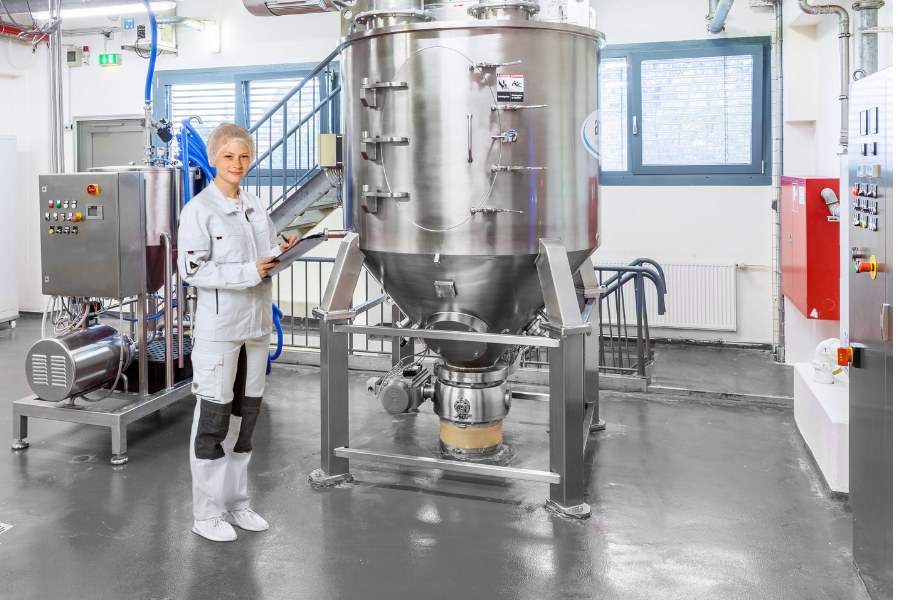
amixon® vertical mixers with conical mixing chambers have been developed specifically for this type of application: the precise homogenization of powder blends with micro-ingredients and liquid components under hygienic conditions.

Three-dimensional overall flow – no dead zones

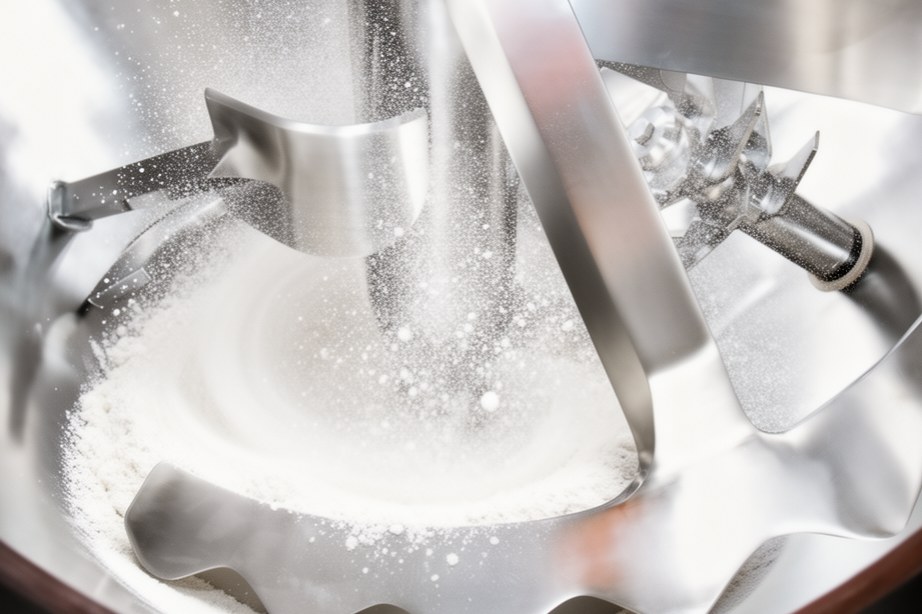
The distinctive amixon® mixing tool creates a three-dimensional product flow: the mixture is guided upward in a spiral along the container wall and then back down toward the center of the container. This complete circulation with no dead zones ensures that even the smallest amounts of nicotine, flavorings, or buffering agents are evenly distributed throughout the entire carrier substrate. Technically ideal mixing results are achieved after just 40 to 160 revolutions.

Precise liquid application – no localized over-moistening

Liquid nicotine must be dispensed in controlled doses and sprayed evenly. amixon® mixers can be equipped with integrated spray nozzles, allowing the nicotine solution to be introduced directly into the active product flow in a finely dispersed form. This prevents localized clumping and ensures that the absorption kinetics of the carrier substrate are not exceeded.

Gentle treatment of sensitive ingredients

amixon® mixing technology operates with exceptional care: flavors are not damaged by heat or excessive shear forces, and the structure of cellulose fibers is preserved. Optionally, the mixing vessel can be inerted with nitrogen to reliably protect oxidation-sensitive flavors or nicotine-containing components.

Complete discharge with ComDisc®

The innovative ComDisc® system—the name is derived from the English term “complete discharge”—ensures that the mixed material is discharged almost completely and without segregation. The ComDisc® discharge tools are mounted on the lower mixer arm. During the mixing process, they float in the mixture and do not interfere with the mixing process. Only during discharge do they lower and push the remaining product residues evenly and fully automatically into the discharge nozzle. Depending on the product and application, discharge rates of up to 99.997% and higher are achieved. Valuable active ingredients such as nicotine are not lost as residues, batch changes are accelerated, and cleaning efforts are significantly reduced.

GMP-compliant design – easy to clean and validatable

All product-contact components are designed in accordance with GMP, EHEDG, and FDA guidelines and are compatible with WIP/CIP. CleverCut® inspection doors enable visual inspection and facilitate cleaning validation—particularly important when different nicotine strengths or flavors are produced on the same line.

Scalable from the lab to series production

amixon® mixers are available in capacities ranging from 10 liters to 50,000 liters. Formulations can be tested on a small scale at the amixon® technical center and seamlessly transitioned to industrial-scale production—a decisive advantage in a market where products are evolving rapidly.

amixon® at Powtech 2026 in Nuremberg

From 29 September to 1 October 2026, amixon® GmbH will exhibit at Powtech 2026 in Nuremberg, Germany. The international trade fair is one of the leading events for technologies related to the processing of powders, solids, and bulk materials.
Visit us at our booth (Hall 7A Booth 326) to discover our innovative mixing systems and customized solutions for a wide range of process applications. Our experts will be available to discuss your requirements and answer your questions about industrial mixing technology.


Company information

Related trade show

More items

Mixing under pressure: Process technology for dietary supplements amixon® has been developing precision mixers for the production of dietary supplements, vitamin mixtures, and sports nutrition for over 40 years.
Mixing under pressure: Process technology for dietary supplements
amixon® has been developing precision mixers for the production of dietary supplements, vitamin mixtures, and sports nutrition for over 40 years. This article provides an overview of the key process requirements in dietary supplement manufacturing based on amixon®'s application experience. Dietary supplements are legally classified as foodstuffs, but in practice they are closer to pharmaceuticals. Complex formulations with vitamins, probiotics, plant extracts, and bioactive substances require reproducible processes, complete documentation, and GMP-compliant equipment. Contract manufacturers face an additional challenge: multiple recipes every day, in the same machines, with maximum demands on allergen management and cleanability. Four core challenges in process engineering * Homogeneity and dosing accuracy: Active ingredients must be distributed identically in each portion. The benchmark is a standard deviation of less than 1% in mixing quality. * Protection of sensitive ingredients: Proteins, probiotics, and vitamins are sensitive to heat and shear forces. Suitable mixers operate at low peripheral speeds and…
03-09-2026  |  334  |  press release  | 
Continue reading
Aromatic und precise: Processing technology for tea and spice blends For over 40 years, amixon® has been developing precision mixers for the gentle processing of tea, herbs, and spices. This article highlights why mixing technology in this industry determines aroma quality, product safety, and competitiveness.
Aromatic und precise: Processing technology for tea and spice blends
For over 40 years, amixon® has been developing precision mixers for the gentle processing of tea, herbs, and spices. This article highlights why mixing technology in this industry determines aroma quality, product safety, and competitiveness. No other food segment is as immediately subject to sensory evaluation as tea and spices. Consumers can immediately smell and taste whether a product lives up to its promises. What ends up in the cup or on the plate is the direct result of the manufacturing process—and that is where blending technology makes the difference. Dried leaves, ground roots, botanical ingredients, and complex spice blends differ fundamentally in particle size, density, and surface structure. Only a mixing technology that accounts for these differences can reliably preserve structure, aroma, and product quality. Four Challenges the Industry Faces * Preserving the structure of delicate ingredients: Tea leaves, flowers, and coarsely crushed spices must not be ground in the mixer. Mechanical stress creates fine particles—and in high-quality tea and spice blends, fine particles are a quality defect, not a byproduct. * Uniform flavoring: Oleoresins, essential oils, and liquid extracts must be…
05-08-2026  |  414  |  press release  | 
Continue reading
Why the Mixing Process Determines Baking Agent Quality amixon from Paderborn builds mixing systems for baking agents and premixes: blending over 50 components homogeneously with minimal heat input.
Why the Mixing Process Determines Baking Agent Quality
amixon from Paderborn builds mixing systems for baking agents and premixes: blending over 50 components homogeneously with minimal heat input. The foundation is a deep understanding of product properties: baking aid concentrates consist of more than 10, sometimes over 50 individual components—enzymes, emulsifiers, leavening agents, lecithins, starch derivatives, whey powder, and functional fats. These are added to the flour in industrial bakeries at a concentration of only about 1% to 5%—but must nevertheless be distributed absolutely homogeneously, as they directly determine the texture, volume, crumb, and shelf life of the baked goods. The production of high-quality baking agents and premixes places three simultaneous demands on mixing technology: Three Key Challenges in Bakery Ingredient Production * Homogeneity despite extreme component diversity: Hydrophilic and hydrophobic substances, ultra-fine powders, and granules with varying bulk densities and particle sizes must be evenly distributed—and must not segregate again during product discharge * Controlled liquid addition without clumping: Oils,…
20-07-2026  |  789  |  press release  | 
Continue reading
Process technology for metal powder and high-precision applications In powder metallurgy, metallic components are created from precisely defined metal powders. These powders are intentionally processed, mixed, and then further processed through compaction and sintering.
Process technology for metal powder and high-precision applications
In powder metallurgy, metallic components are created from precisely defined metal powders. These powders are intentionally processed, mixed, and then further processed through compaction and sintering. Powder metallurgical products are indispensable in many industries. They are used in traditional applications such as bearings, gears, or filters as well as in additive manufacturing of metallic components. In all these areas, the quality of powder processing determines how stable processes run and how consistent the component quality is in the end. Typical products and technical terms in powder metallurgy: - Metal powders based on iron, stainless steel, titanium, or nickel - Alloy and additive mixtures - Powder blends for pressing and sintering processes - Metal powders for additive manufacturing processes (Metal AM) - Functionalized powders with flow or compaction aids Requirements for mixing, drying, and processing Powder metallurgical processes place high demands on powder preparation. Additives, alloying elements, or flow aids must be evenly distributed - because even small deviations affect compaction and sintering behavior. At the same time, the powders…
24-06-2026  |  886  |  press release  | 
Continue reading
Mixer for the production of pharmaceutical products Pharmaceutical solid processes place high demands on accuracy and control from the beginning. This diversity must be reliably controlled in the production process.
Mixer for the production of pharmaceutical products
Pharmaceutical solid processes place high demands on accuracy and control from the beginning. This diversity must be reliably controlled in the production process. Pharmaceutical solid processes place high demands on accuracy and control from the beginning. Raw materials are precisely specified, active ingredients are often highly effective and present in small amounts, and each batch must be processed consistently. Even the smallest deviations can have an impact on subsequent process steps. In daily practice, it mostly involves powders, granules, and premixes, whose physical properties – such as particle size, bulk density, or flow behavior – vary greatly. This diversity must be reliably controlled in the production process so that stable active ingredient-excipient systems, functional intermediates, or premixes for solid dosage forms can be created. Typical dry products of the pharmaceutical industry include: * pharmaceutical active ingredients (APIs) * excipients such as lactose, mannitol, starch or cellulose derivatives * premixes for tablet and capsule production * granules * powder mixtures for oral dosage…
16-06-2026  |  979  |  press release  | 
Continue reading
PORTALS
BulkSolids-Portal Schuettgut-Portal Recycling-Portal
Related
Bulkgids.nl
SIGN UP FOR OUR NEWSLETTER
Newsletter archive
Service and contact
About, ContactDisclaimerPrivacyAdvertisingControl panel login
Follow us
Linked
Supplier sign in