Supplier sign in
Home
STAY INFORMED
Subscribe to our monthly newsletter.
Your email address will never be disclosed to any third party.
Read our privacy notice.
Press release
08-10-2026  |  67 x
Share:
More information

Precision Mixing Technology for Food Ingredients

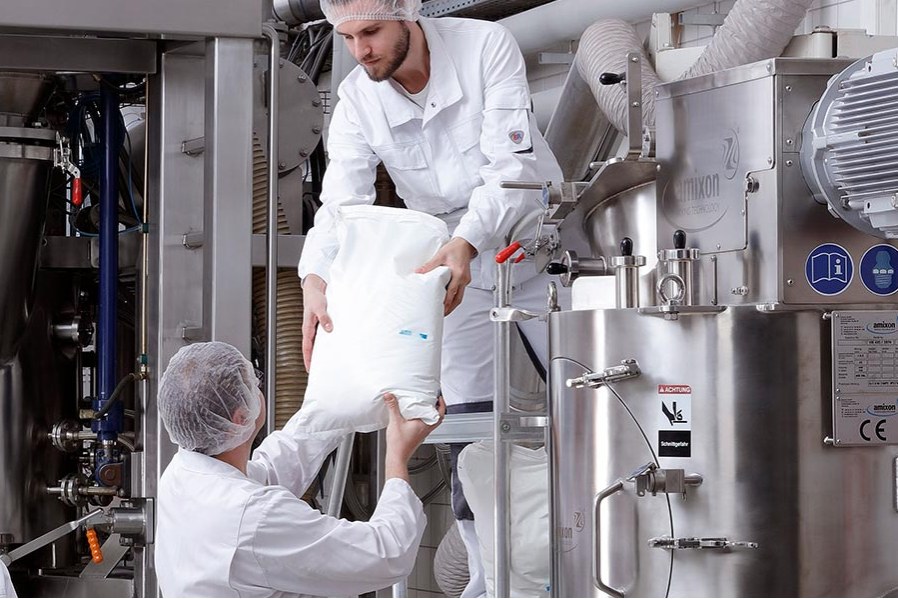
amixon® is a globally active specialist for industrial powder mixers and process technology for the production of food ingredients – including flavorings, food stabilizers, emulsifiers, enzymes, and functional food additives.
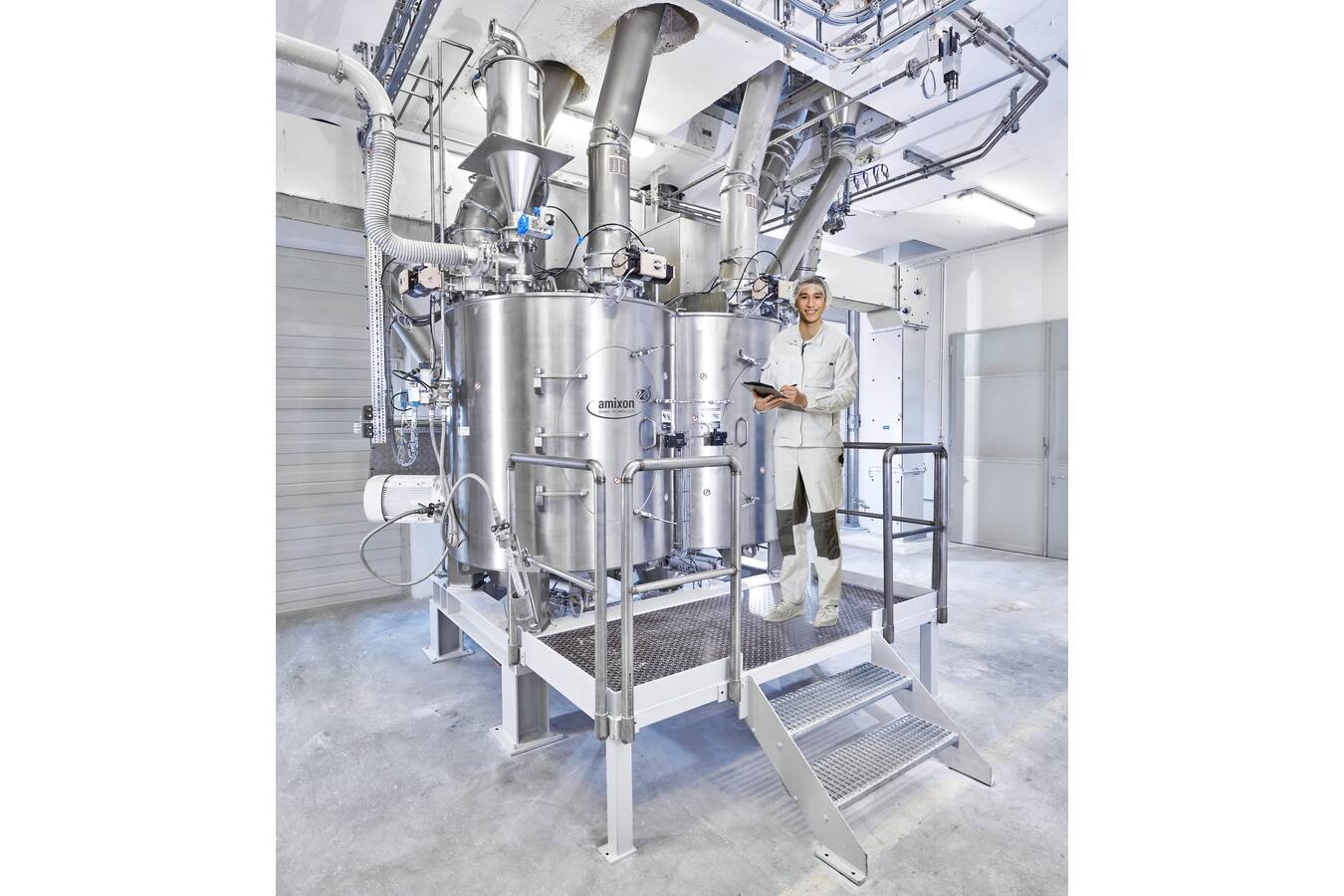
amixon® (Paderborn, Germany) is a globally active specialist for industrial powder mixers and process technology for the production of food ingredients – including flavorings, food stabilizers, emulsifiers, enzymes, and functional food additives. For over 40 years, the company has been developing and building vertical precision mixers for manufacturers and contract manufacturers in the food industry.

Food ingredients work behind the scenes – yet they determine whether a food product has the desired texture, retains its flavor, or remains shelf-stable for months. For producers of these functional ingredients, the mixing process is not a routine step, but a quality-critical process with a direct impact on product performance, declaration compliance, and batch reproducibility.

Why mixing processes are particularly challenging in the food ingredients sector
Formulations in the food ingredients sector often combine components with vastly different physical properties: gelatine, pectins, emulsifiers, hydrocolloids, modified starches, phosphates and enzymes – some in very small quantities, others applied as liquid components to a carrier powder. This heterogeneity places high demands on mixing technology.

Flavourings are increasingly available today in the form of so-called dry-liquid powders: microencapsulated flavouring substances that appear as powders on the outside but contain liquid flavouring components inside. If the microcapsules are mechanically destroyed during mixing, the controlled release of flavour is lost – with immediate consequences for product quality and shelf life. The mixing process must therefore operate distributively: homogenising without grinding or subjecting the mixture to thermal stress.

For contract manufacturers, there is an additional consideration: when product changes are frequent, complete emptying and rapid, residue-free cleaning are not merely a convenience but a regulatory requirement. Product residues from previous batches are not permitted in declared formulations.
Three key challenges in practice
  1. Preserving delicate ingredients
Flavourings, enzymes and agglomerated powders lose their effectiveness when subjected to excessive mechanical or thermal stress. A contract manufacturer that switches between ten or more flavour formulations every day needs a mixer that neither overheats nor deagglomerates – unless this is specifically required.
  1. Uniform distribution of small components
Micro-ingredients such as enzymes or flavourings often account for less than 1% of the total formulation. Their uniform distribution within the bulk powder determines the functionality of the end product – and whether this functionality can be measured during quality control.
  1. Flexibility with varying batch sizes and formulations
Seasonal products, custom formulations and fluctuating order volumes require mixing systems that operate cost-effectively even at partial capacity and can be quickly reconfigured.
amixon® solutions: The principle of shear flow

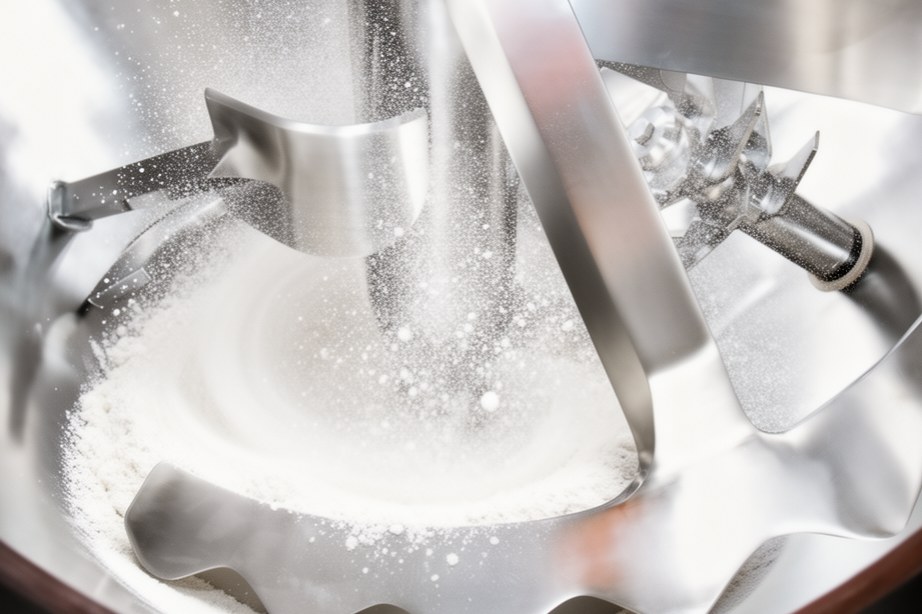
The core principle of all amixon® mixers is the shear flow generated by the helical SinConvex® mixing tool: the powder is moved in three dimensions – upwards at the outer edges and downwards at the centre – combined with a uniform rotation. This process produces a technically ideal random mix, usually within 2 to 5 minutes (50–100 tool rotations) – without heating the product and without any risk of segregation.
Depending on the requirements, the following machine designs are available:
  • SH Mixer (Spherhelics®): A gentle entry-level mixer for food ingredients applications, featuring uniform product movement with no dead zones
  • HM mixer (vertical twin-shaft mixer): Very short mixing times, high homogeneity, fitted with ComDisc® discharge elements for almost complete product discharge – ideal for frequent product changes
  • AM mixer (single-shaft conical mixer): Flexible for widely varying batch sizes and formulations; cost-effective even with partial filling
  • GM Mixer (Gyraton®): Precision silo mixer for large batches of 10 to 100 m³

For highly viscous flavourings, spice essences or liquid additives, high-shear blades or rotor-stator systems can be integrated as an option – allowing the mixer to switch seamlessly between gentle distribution and intensive dispersion.

Before designing a mixing system for food ingredients, it is recommended to conduct trials at the amixon® Technical Center. During these trials, mixing processes are tested using actual raw materials under real-world conditions. Mixing quality, product integrity, discharge behavior, and cleanability are systematically evaluated and documented. This provides investment security—especially for high-quality or regulated ingredients.


Company information

More items

Nicotine Pouches: Why the Blending Process Is Key to Product Safety amixon® GmbH, based in Paderborn, is a specialized manufacturer of vertical mixers for the pharmaceutical, food, and chemical industries and offers customized mixing systems for the production of nicotine pouches.
Nicotine Pouches: Why the Blending Process Is Key to Product Safety
amixon® GmbH, based in Paderborn, is a specialized manufacturer of vertical mixers for the pharmaceutical, food, and chemical industries and offers customized mixing systems for the production of nicotine pouches. What are nicotine pouches? Nicotine pouches are tobacco-free, nicotine-containing single-use pouches intended for oral use. The user places the pouch between the gum and upper lip; the nicotine is absorbed through the oral mucosa. Major tobacco and consumer goods manufacturers position them as part of smoke-free product portfolios that enable harm reduction compared to conventional cigarettes. The global market is growing at a double-digit rate and is increasingly attracting new producers. A nicotine pouch typically consists of the following ingredients: * Microcrystalline cellulose (MCC) as the main carrier matrix * Nicotine – liquid or in the form of a salt (e.g., nicotine bitartrate) * pH buffers (e.g., sodium carbonate) to control bioavailability * Humectants (e.g., propylene glycol) to achieve the desired product consistency * Sweeteners, as well as flavors and flavorings The process engineering challenge Unlike standard powder blends, nicotine pouches require…
21-09-2026  |  429  |  press release  | 
Continue reading
Mixing under pressure: Process technology for dietary supplements amixon® has been developing precision mixers for the production of dietary supplements, vitamin mixtures, and sports nutrition for over 40 years.
Mixing under pressure: Process technology for dietary supplements
amixon® has been developing precision mixers for the production of dietary supplements, vitamin mixtures, and sports nutrition for over 40 years. This article provides an overview of the key process requirements in dietary supplement manufacturing based on amixon®'s application experience. Dietary supplements are legally classified as foodstuffs, but in practice they are closer to pharmaceuticals. Complex formulations with vitamins, probiotics, plant extracts, and bioactive substances require reproducible processes, complete documentation, and GMP-compliant equipment. Contract manufacturers face an additional challenge: multiple recipes every day, in the same machines, with maximum demands on allergen management and cleanability. Four core challenges in process engineering * Homogeneity and dosing accuracy: Active ingredients must be distributed identically in each portion. The benchmark is a standard deviation of less than 1% in mixing quality. * Protection of sensitive ingredients: Proteins, probiotics, and vitamins are sensitive to heat and shear forces. Suitable mixers operate at low peripheral speeds and…
03-09-2026  |  508  |  press release  | 
Continue reading
Aromatic und precise: Processing technology for tea and spice blends For over 40 years, amixon® has been developing precision mixers for the gentle processing of tea, herbs, and spices. This article highlights why mixing technology in this industry determines aroma quality, product safety, and competitiveness.
Aromatic und precise: Processing technology for tea and spice blends
For over 40 years, amixon® has been developing precision mixers for the gentle processing of tea, herbs, and spices. This article highlights why mixing technology in this industry determines aroma quality, product safety, and competitiveness. No other food segment is as immediately subject to sensory evaluation as tea and spices. Consumers can immediately smell and taste whether a product lives up to its promises. What ends up in the cup or on the plate is the direct result of the manufacturing process—and that is where blending technology makes the difference. Dried leaves, ground roots, botanical ingredients, and complex spice blends differ fundamentally in particle size, density, and surface structure. Only a mixing technology that accounts for these differences can reliably preserve structure, aroma, and product quality. Four Challenges the Industry Faces * Preserving the structure of delicate ingredients: Tea leaves, flowers, and coarsely crushed spices must not be ground in the mixer. Mechanical stress creates fine particles—and in high-quality tea and spice blends, fine particles are a quality defect, not a byproduct. * Uniform flavoring: Oleoresins, essential oils, and liquid extracts must be…
05-08-2026  |  537  |  press release  | 
Continue reading
Why the Mixing Process Determines Baking Agent Quality amixon from Paderborn builds mixing systems for baking agents and premixes: blending over 50 components homogeneously with minimal heat input.
Why the Mixing Process Determines Baking Agent Quality
amixon from Paderborn builds mixing systems for baking agents and premixes: blending over 50 components homogeneously with minimal heat input. The foundation is a deep understanding of product properties: baking aid concentrates consist of more than 10, sometimes over 50 individual components—enzymes, emulsifiers, leavening agents, lecithins, starch derivatives, whey powder, and functional fats. These are added to the flour in industrial bakeries at a concentration of only about 1% to 5%—but must nevertheless be distributed absolutely homogeneously, as they directly determine the texture, volume, crumb, and shelf life of the baked goods. The production of high-quality baking agents and premixes places three simultaneous demands on mixing technology: Three Key Challenges in Bakery Ingredient Production * Homogeneity despite extreme component diversity: Hydrophilic and hydrophobic substances, ultra-fine powders, and granules with varying bulk densities and particle sizes must be evenly distributed—and must not segregate again during product discharge * Controlled liquid addition without clumping: Oils,…
20-07-2026  |  910  |  press release  | 
Continue reading
Process technology for metal powder and high-precision applications In powder metallurgy, metallic components are created from precisely defined metal powders. These powders are intentionally processed, mixed, and then further processed through compaction and sintering.
Process technology for metal powder and high-precision applications
In powder metallurgy, metallic components are created from precisely defined metal powders. These powders are intentionally processed, mixed, and then further processed through compaction and sintering. Powder metallurgical products are indispensable in many industries. They are used in traditional applications such as bearings, gears, or filters as well as in additive manufacturing of metallic components. In all these areas, the quality of powder processing determines how stable processes run and how consistent the component quality is in the end. Typical products and technical terms in powder metallurgy: - Metal powders based on iron, stainless steel, titanium, or nickel - Alloy and additive mixtures - Powder blends for pressing and sintering processes - Metal powders for additive manufacturing processes (Metal AM) - Functionalized powders with flow or compaction aids Requirements for mixing, drying, and processing Powder metallurgical processes place high demands on powder preparation. Additives, alloying elements, or flow aids must be evenly distributed - because even small deviations affect compaction and sintering behavior. At the same time, the powders…
24-06-2026  |  1002  |  press release  | 
Continue reading
PORTALS
✓ BulkSolids-Portal Schuettgut-Portal Recycling-Portal
Related
Bulkgids.nl
SIGN UP FOR OUR NEWSLETTER
Newsletter archive
Service and contact
About, ContactDisclaimerPrivacyAdvertisingControl panel login
Follow us
Linked
Supplier sign in