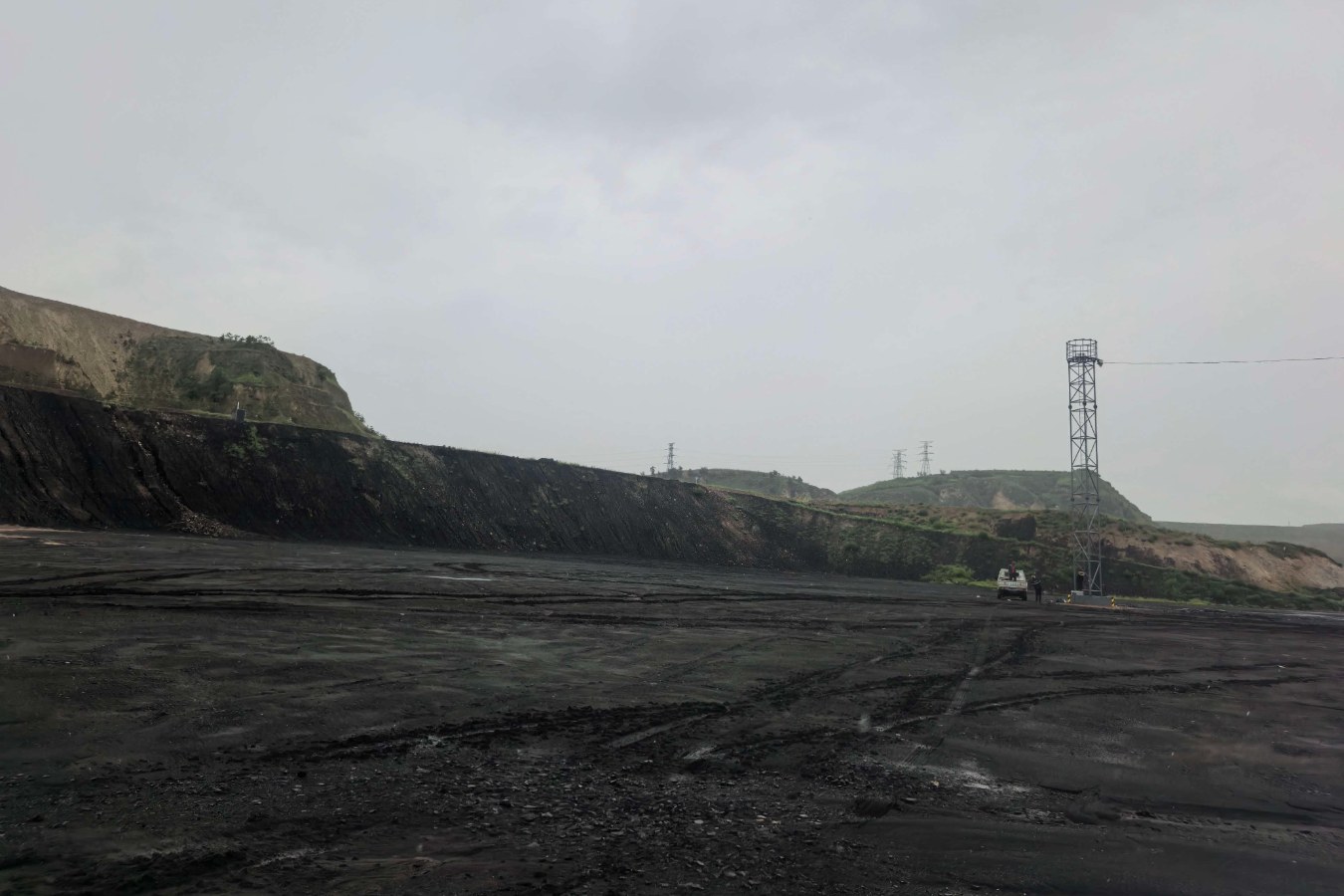
Thermal power plants rely on effective fuel supply and inventory management to maintain stable operations throughout the year. Inside massive coal sheds, stacker-reclaimers continuously build and reshape stockpiles, creating irregular ridges, steep slopes, and uneven surfaces. Variations in humidity, material characteristics, and operating conditions can further complicate stockpile management.
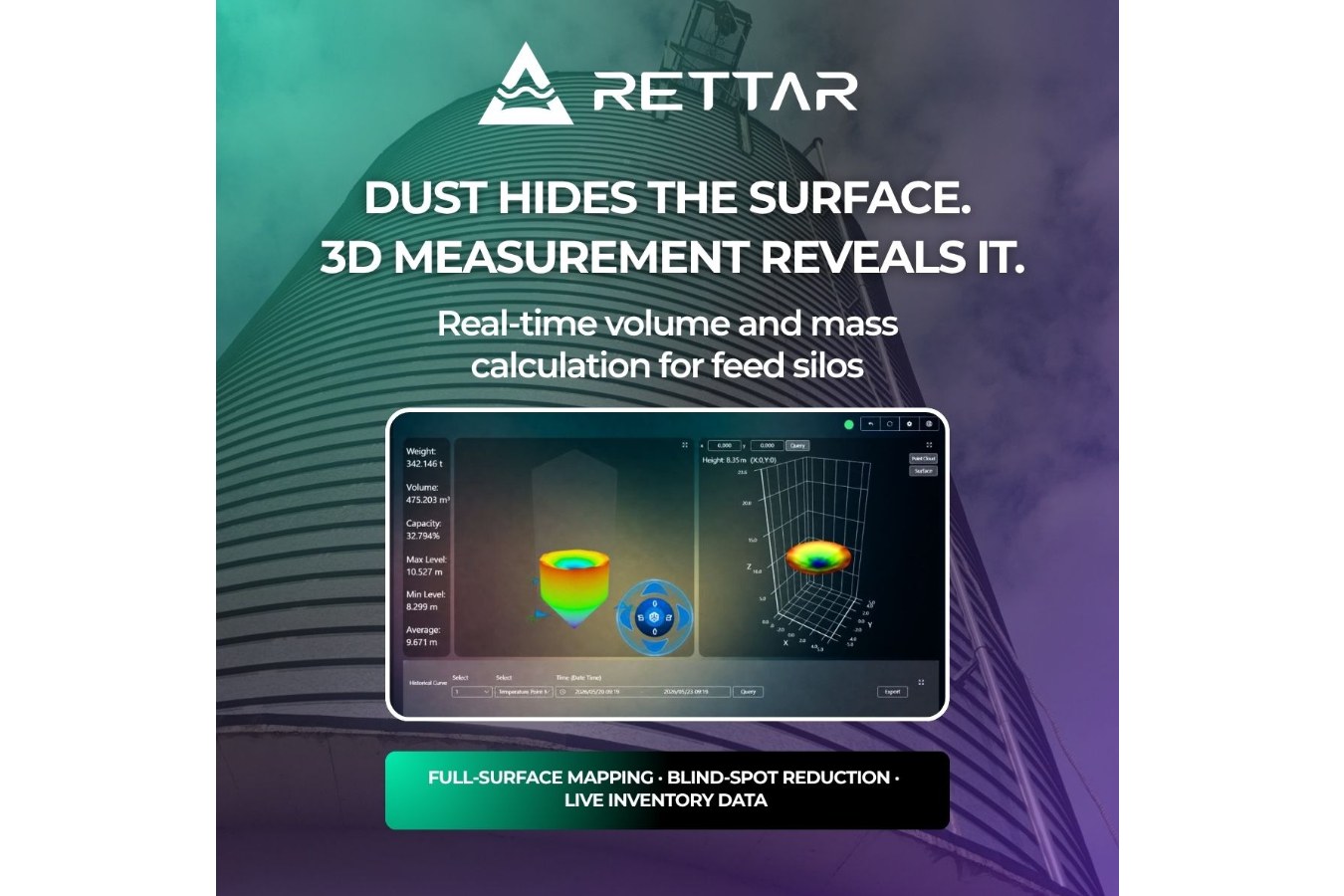
The challenge is not simply measuring the distance between a sensor and the coal surface. It is determining how much coal is stored across an extensive area. A single distance sensor captures only a limited perspective, making it difficult to represent an entire stockpile accurately. Rettar's multi-scanner system addresses this limitation through coordinated measurements from multiple positions.
Coal Inventory Measurement Challenges in Large Coal Sheds
Several practical challenges can undermine coal inventory measurement.
- Irregular stockpile geometry.
Stacker-reclaimers create constantly changing cones, ridges, and slopes. A single reading may accurately describe one location but fail to represent the surrounding material, potentially introducing errors into volume calculations. - Wall-side accumulation.
Coal can accumulate near walls, columns, and structural boundaries. Depending on the installation position, these areas may be difficult to observe, leaving parts of the stockpile insufficiently measured. - Dust and changing conditions.
Conveying, stacking, and reclaiming generate airborne dust that may affect measurement performance, depending on the sensing technology and installation environment. Continuous material movement also means that previously collected data may no longer represent the current surface. - Measurement blind spots.
Structural obstructions and limited coverage can leave portions of the coal surface unobserved. Although surface scanning cannot directly identify every internal void or hidden material condition, broader coverage helps reduce uncertainty caused by incomplete surface measurements.
These limitations can create discrepancies between estimated and recorded inventory, complicating replenishment decisions and fuel availability planning during periods of high demand.
How Rettar's Multi-Scanner Matrix Works in Practice
Consider a large coal shed where several stockpiles are continuously formed and reclaimed. Because the surface changes throughout the day, effective inventory monitoring requires coverage beyond a single measurement point.
Plan Coverage Around the Coal Shed Layout
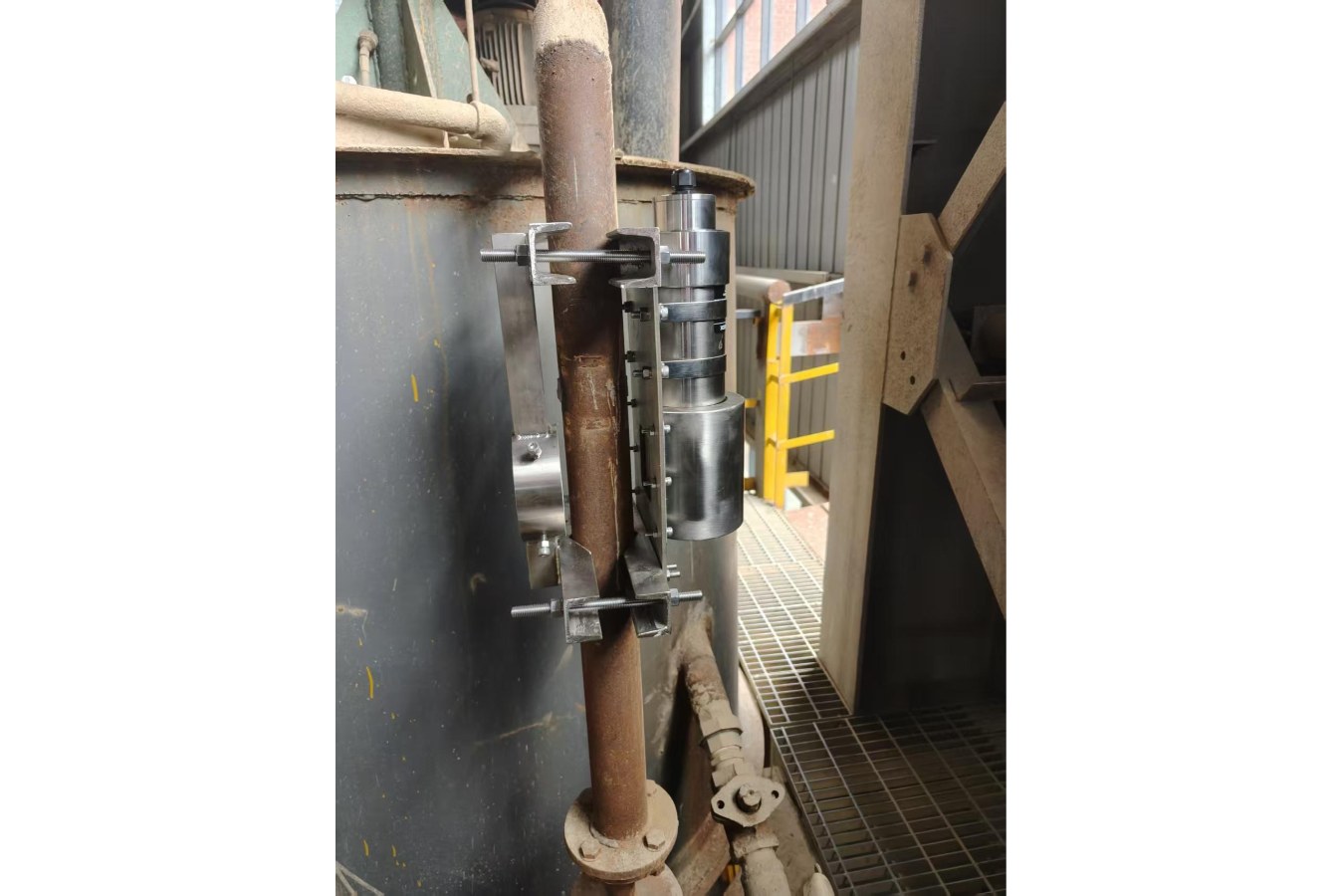
Deployment begins with an assessment of the facility's dimensions, structural columns, installation constraints, and stockpile geometry. Engineers determine suitable scanner positions to provide effective coverage across the storage area.
Rather than relying on one sensor to observe the entire shed, the multi-scanner arrangement distributes measurement coverage across multiple viewing positions. This is particularly useful where walls, structural features, or changing pile profiles restrict visibility.
Collect Measurements from Multiple Positions
As stacker-reclaimers reshape the stockpiles, multiple scanners collect distance measurements from their respective positions. Each scanner contributes information about the surface within its effective measurement range.
The objective is not simply to install more sensors. It is to coordinate their coverage so that the combined system captures a more comprehensive picture of the coal surface, reducing reliance on isolated readings.
Reconstruct the Surface and Estimate Volume
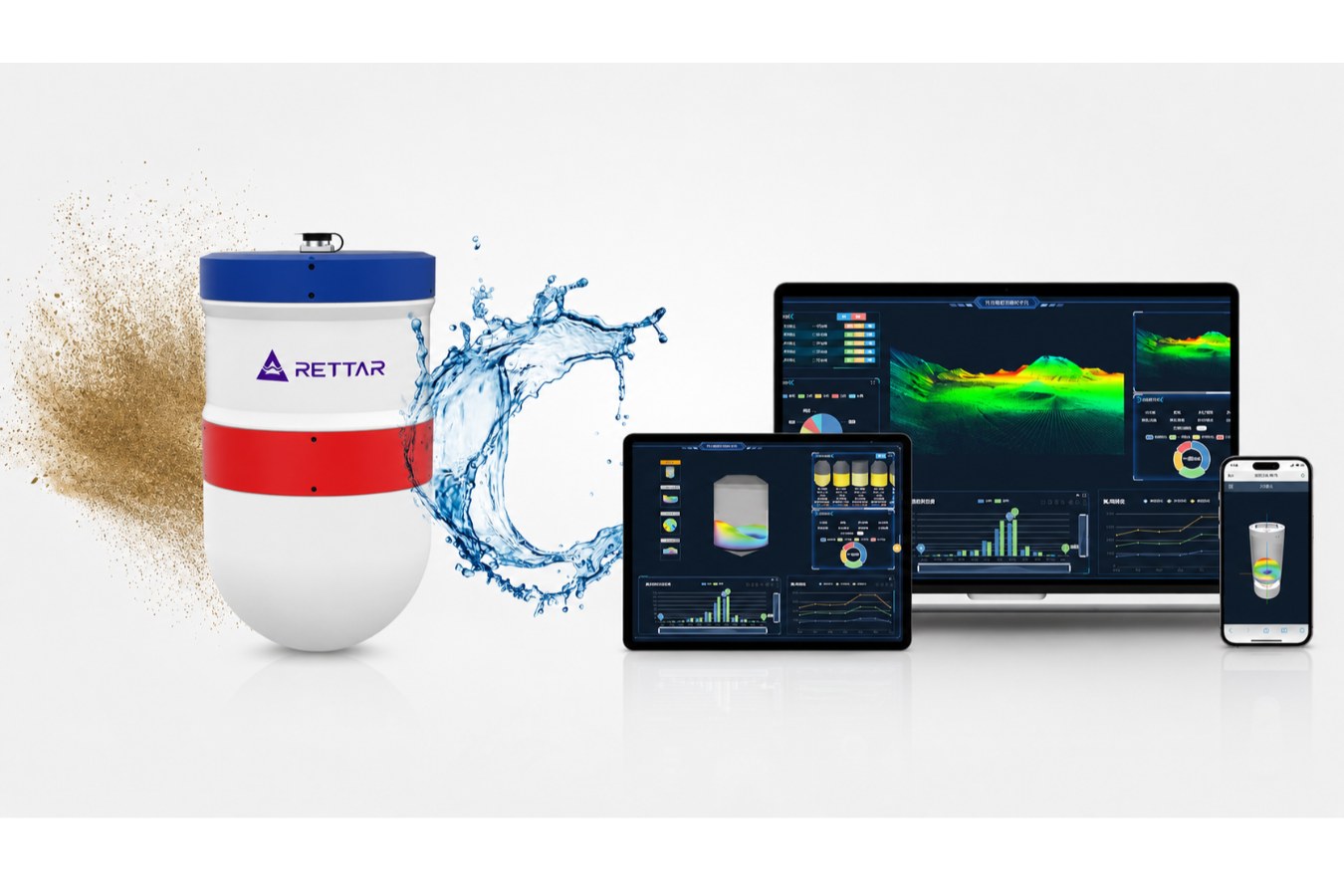
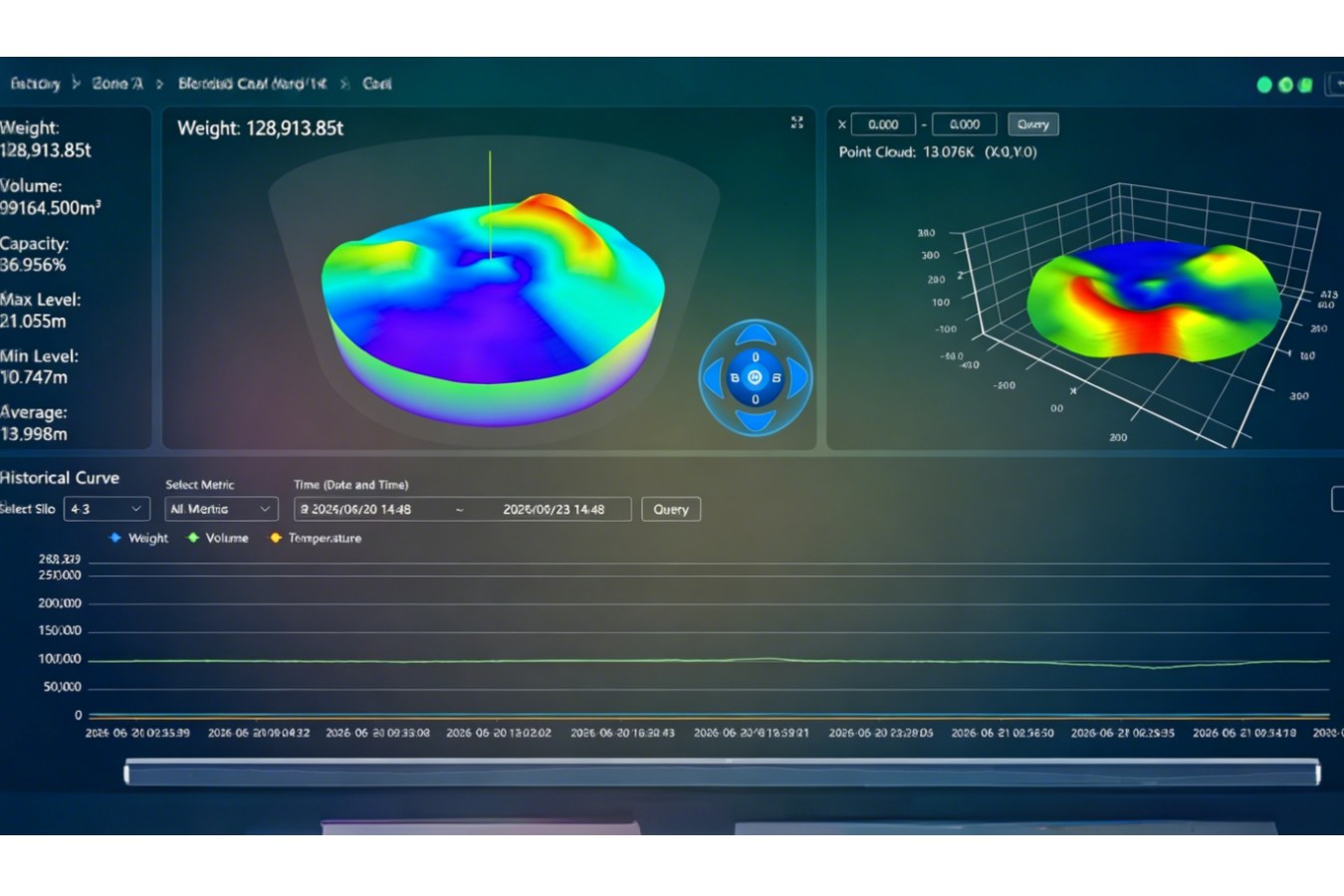
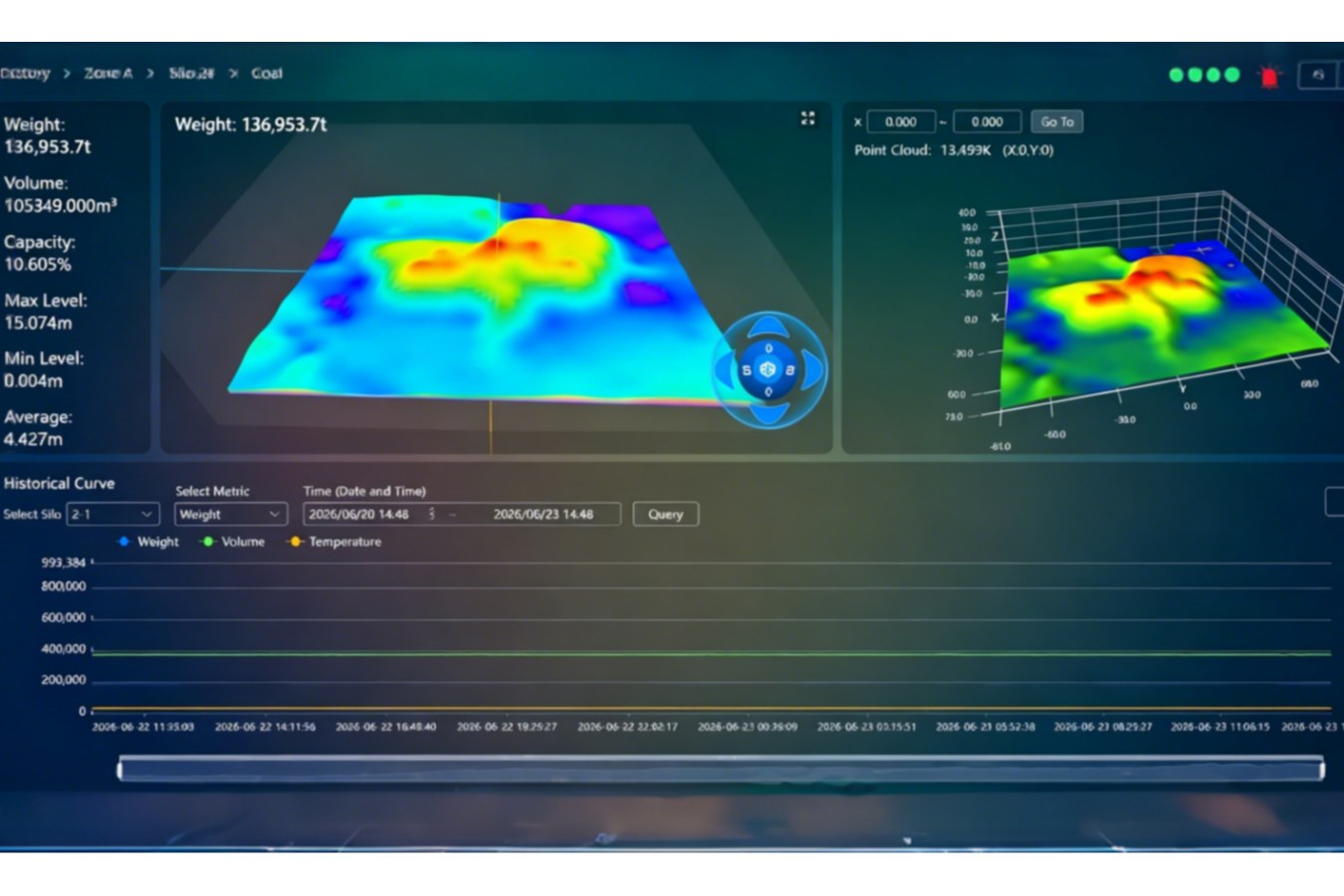
Measurements from multiple scanners are integrated to reconstruct the stockpile's surface geometry and support three-dimensional volume measurement. By reducing unmeasured areas, the system provides a stronger basis for estimating bulk volume than a single-point measurement can offer.
Successful deployment depends on appropriate scanner positioning, calibration, and accurate reference geometry for the storage area. Volume measurement must also be distinguished from mass estimation: calculating coal tonnage from volume requires representative bulk density data and suitable calibration.
Rettar's multi-scanner matrix therefore supports more comprehensive inventory visibility across large, irregular storage environments.
Translate Measurement Data into Operational Decisions
Once volume estimates are available, the data can support inventory monitoring and related management processes, depending on the site's integration requirements.
For power plants operating under peak demand, this information helps personnel track stockpile changes, compare estimated inventory with recorded figures, and identify areas requiring further inspection.
From Better Measurement to More Reliable Fuel Management
More comprehensive inventory data can support several operational improvements:
- Improved fuel availability planning:
Clearer inventory visibility supports reserve assessments against expected consumption. - More effective stockpile management:
Surface mapping reveals changes in pile geometry and highlights areas requiring closer inspection. - Better operational coordination:
Consistent inventory information supports communication among procurement, fuel management, logistics, and production planning teams.
These benefits depend on appropriate installation, calibration, and integration with existing operational processes. Multi-scanner measurement does not eliminate every source of inventory error, but it can improve the quality of information available for managing bulk coal storage.
Discuss Your Coal Inventory Measurement Requirements
Rettar's multi-scanner matrix coordinates measurements from multiple positions to improve coal surface mapping, reduce measurement blind spots, and support more reliable volume estimation. For thermal power plants managing fuel during peak-demand periods, a more comprehensive view of stored coal can strengthen procurement planning, inventory reconciliation, and daily operations.
Explore Rettar's multi-scanner measurement solutions to discover how coordinated scanning can support coal inventory management in large sheds and other complex bulk storage environments.