Supplier sign in
Home
STAY INFORMED
Subscribe to our monthly newsletter.
Your email address will never be disclosed to any third party.
Read our privacy notice.


Product news
17.02.2026  |  67x
Share this item

IMKO Optimizes Concrete Production with TDR Moisture Measurement

IMKO Micromodultechnik GmbH utilizes refined TRIME-TDR technology to ensure precise moisture measurement in sand, gravel, and fresh concrete, enabling adherence to strict recipe specifications.
Innovative TDR Technology for the Construction Industry
For over 40 years, IMKO has developed specialized sensors that
surpass traditional measurement methods. The TRIME technology creates a defined measurement volume along the sensor, eliminating the need for recalibration due to surface abrasion. This ensures long-term accuracy and high reliability in demanding bulk solids environments.

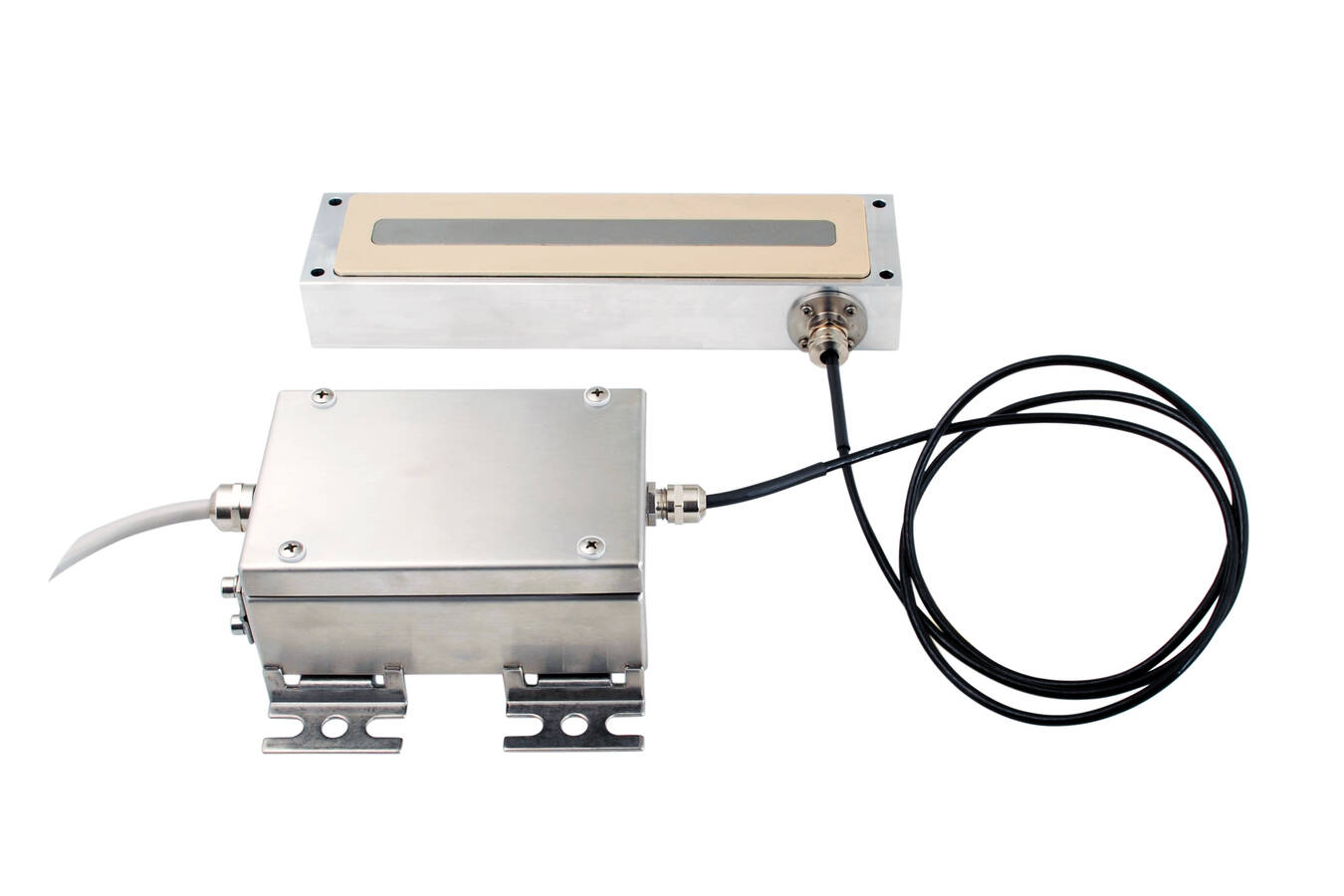
Advantages of the SONO sensor series:

  • Short measurement times for rapid process control
  • High resistance to mechanical wear and abrasion
  • Flexibility in mechanical integration with low material coverage
  • Reliable data for w/c ratio determination

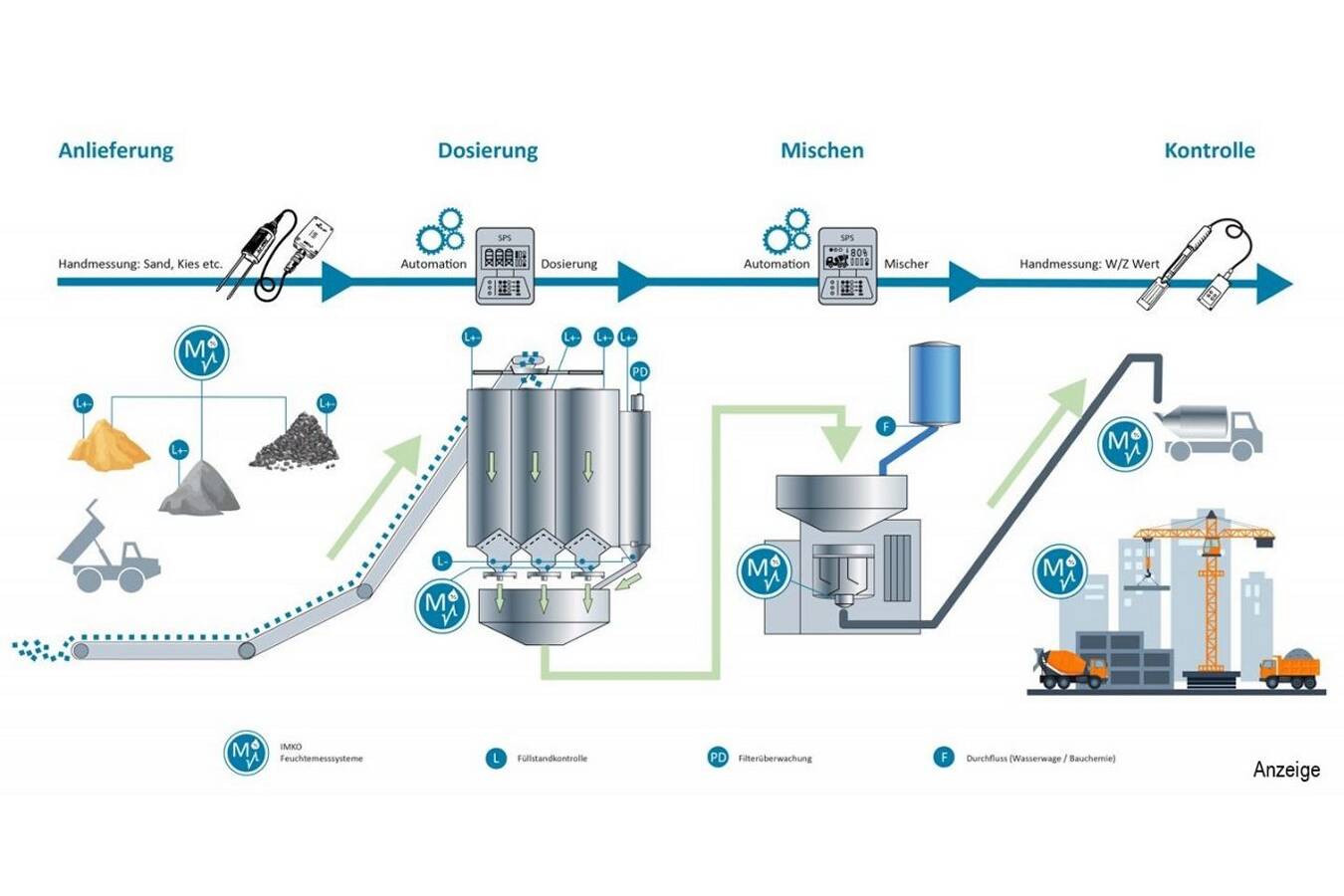
Quality Control from Material Delivery to Mixing

Monitoring begins at the point of delivery. Mobile solutions allow for the immediate assessment of aggregates like sand and gravel before they enter the process. This ensures that recipe adjustments can be made in real-time, preventing costly mixing errors and maintaining project schedules.

Precision Measurement during Dosing and Mixing Processes

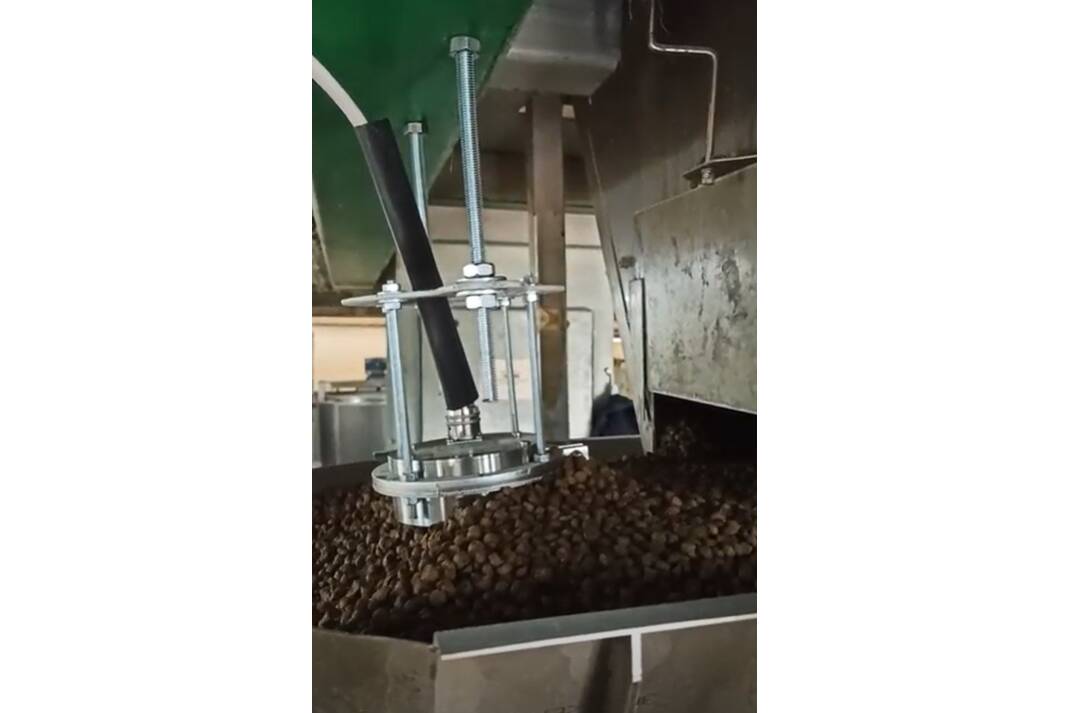
Stationary SONO sensors facilitate moisture detection during the dosing of aggregates up to 32 mm grain size, whether under silo flaps or on conveyor belts. The technology is compatible with all standard mixer types, including pan, planetary, and twin-shaft mixers, providing stable data for both earth-moist and fluid concrete.

Seamless Integration and System Networking

The system is designed for user-friendly commissioning and networking. Using SONO CONNECT or SONO VIEW interfaces, operators can parameterize sensors, select calibrations, and analyze measurement data wirelessly or via wired displays.
  • Wireless data transmission and graphical analysis
  • Pre-installed calibrations for common aggregates
  • Easy integration into existing plant control systems
  • Exchangeable wear heads for increased cost-efficiency

Company information

More items

New generation of moisture probes, for Food, Atex, and more Increase your plant safety and save time and resources through innovative sensor technologies for food, chemical, pharmaceutical and other industries.
New generation of moisture probes, for Food, Atex, and more
Increase your plant safety and save time and resources through innovative sensor technologies for food, chemical, pharmaceutical and other industries. All foodstuffs and bulk solids contain a proportion of water. The moisture content not only determines the quality of products, but also their shelf life and due to the weight, their price. Legal requirements lay down the framework. With material moisture measurement, you can determine the water content in your foodstuffs and bulk solids. IMKO is presenting a new generation of moisture probes in the form of its SONO probes. These were specifically developed for applications in food manufacturing and the construction industry, as well as the chemical and pharmaceutical industries, but can be used in other industries too. Not just superficial moisture What is special about the TRIME method is that the measuring volume of the probe completely penetrates the adjacent material. In this way, not only measured values for surface moisture are determined. In contrast, measured values for representative bulk volumes in the process are transparent. In addition, there is no
05.06.2025  |  2605x  |  Product news  | 
Moisture measurement drastically reduces gas consumption Save efficiently on energy with targeted moisture measurement when drying for example grain, animal feed pellets, sand and sewage sludge pellets
Moisture measurement drastically reduces gas consumption
Save efficiently on energy with targeted moisture measurement when drying for example grain, animal feed pellets, sand and sewage sludge pellets Gas is used in a huge variation of dryers. The consumption of natural gas as a primary energy source has been standard for many years. It has even been promoted as a bridge technology until the application of energetic-technological alternatives is qualified. Just recently, a customer from Saarland told me that he scrapped his oil tank last year and switched to gas. At the moment, he is facing another rise in gas prices. Help is needed here to optimise the use of this resource and possibly make intelligent savings. A calculation example from a comparable application: 1 m³ of gas is required to reduce the moisture content of 1 tonne of sand by 1%. With a throughput of 85 tonnes per hour and an average required reduction of 4 %, 340 m³ of gas are consumed per hour. Now the energy costs have doubled. Instead of EUR 350,000 for gas, EUR 700,000 is now required to operate this dryer. Plenty of money to fund an instrumentation. The installation of moisture determination
15.05.2025  |  1876x  |  Product news  | 
Moisture measurement in sawdust and wood chips/wood pellets Using SONO-GS1 enables direct moisture measurement in the material, even at hard to reach places
Moisture measurement in sawdust and wood chips/wood pellets
Using SONO-GS1 enables direct moisture measurement in the material, even at hard to reach places Drying bulk solids in belt dryers When drying bulk solids with belt dryers, an air-permeable belt is filled with the product to be dried. The height of the bulk solids on the belt and the dwell time in the dryer are defined based on the product type and properties, and the water volume to be removed. By adjusting the dwell time to the mean value, it is possible to compensate for a varying moisture content. This is necessary in the production of wood pellets, for example, because the quality is no longer guaranteed if the material is excessively dry, and operating times are put at risk if the material is too moist, provided the compactor closes. Benefits SONO-GS1 * Continuous recording and monitoring of moisture content and temperature * Improved and more accurate process control during all work processes * Increased process stability and thus lower scrap rates * Cost savings due to increased energy efficiency (due to less overdrying) Overdrying or underdrying
11.03.2025  |  1982x  |  Product news  | 

Related categories

PORTALS
BulkSolids-Portal Schuettgut-Portal Recycling-Portal
Related
Bulkgids.nl
SIGN UP FOR OUR NEWSLETTER
Newsletter archive
Service and contact
ContactDisclaimerPrivacyAdvertising
FOLLOW US
Linked