Supplier sign in
Home
STAY INFORMED
Subscribe to our monthly newsletter.
Your email address will never be disclosed to any third party.
Read our privacy notice.


Product news
21.01.2026  |  124x
Share this item
Allow (tracking) cookies from YouTube and Vimeo to watch videos
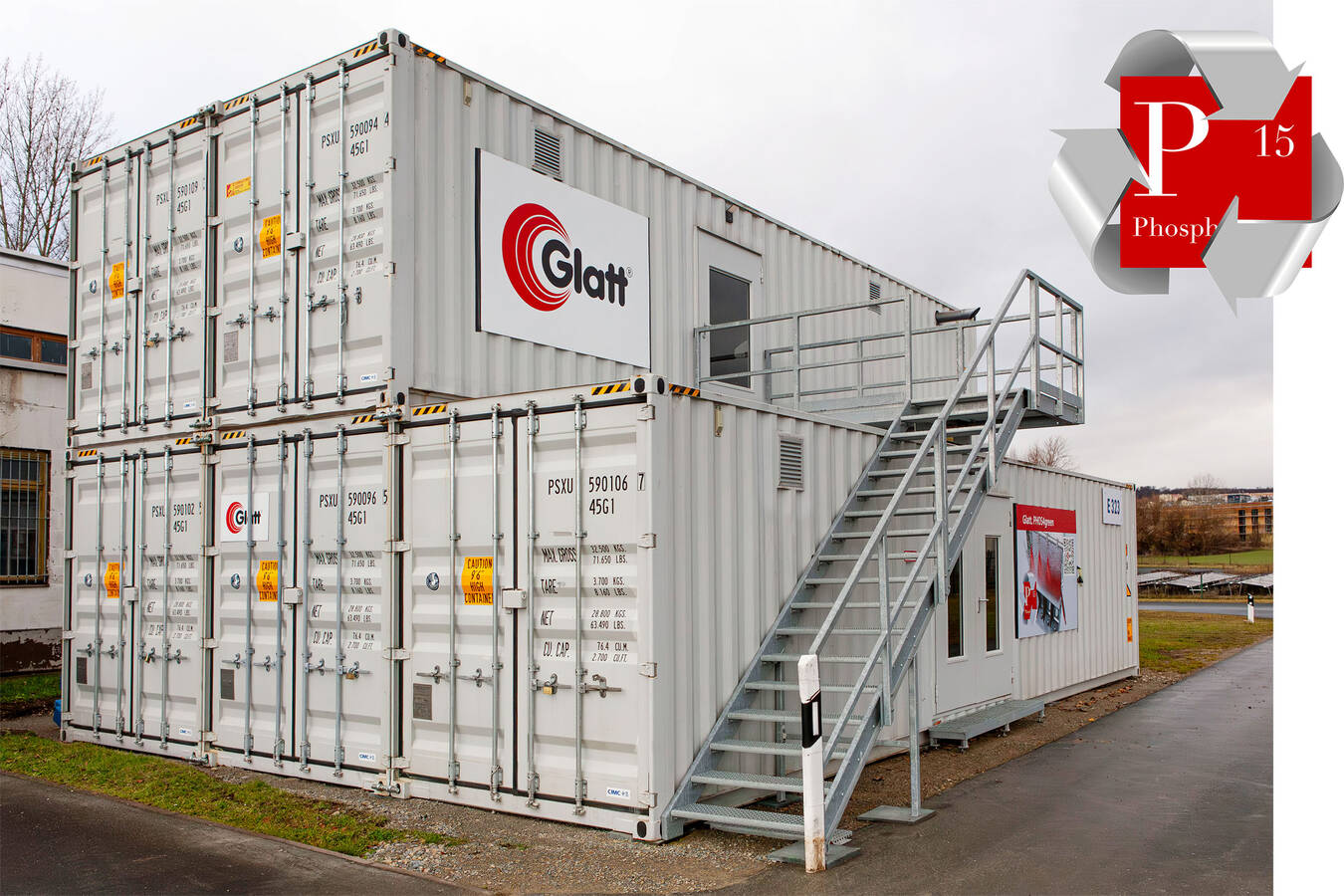
Glatt PHOS4green pilot plant in Weimar, Germany

Phosphorus recycling with reduced heavy metal content

PHOS4green pilot plant now in Weimar

Glatt Ingenieurtechnik using a containerized plant for heavy metal removal from sewage sludge ash as part of phosphorus recovery trials.
Phosphorus is a plant nutrient that is essential for human nutrition. However, because natural deposits are limited, phosphorus recycling for sewage sludge will become mandatory from 2029. Glatt provides proven technology for this purpose – PHOS4green – which has been expanded to include heavy metal depletion as a crucial process step.

“Our plant is ready for your sewage sludge ash,” says Jan Kirchhof, Head of Sales at Glatt Ingenieurtechnik, inviting experts to pilot tests at the Glatt Technology Center in Weimar. Of particular interest are sewage sludge ashes with elevated heavy metal content which, thanks to PHOS4green technology at the new demonstration plant, can be converted into fertilizer granules for the agricultural industry that meet all compliance requirements.

Shaping the future of fertilizer production

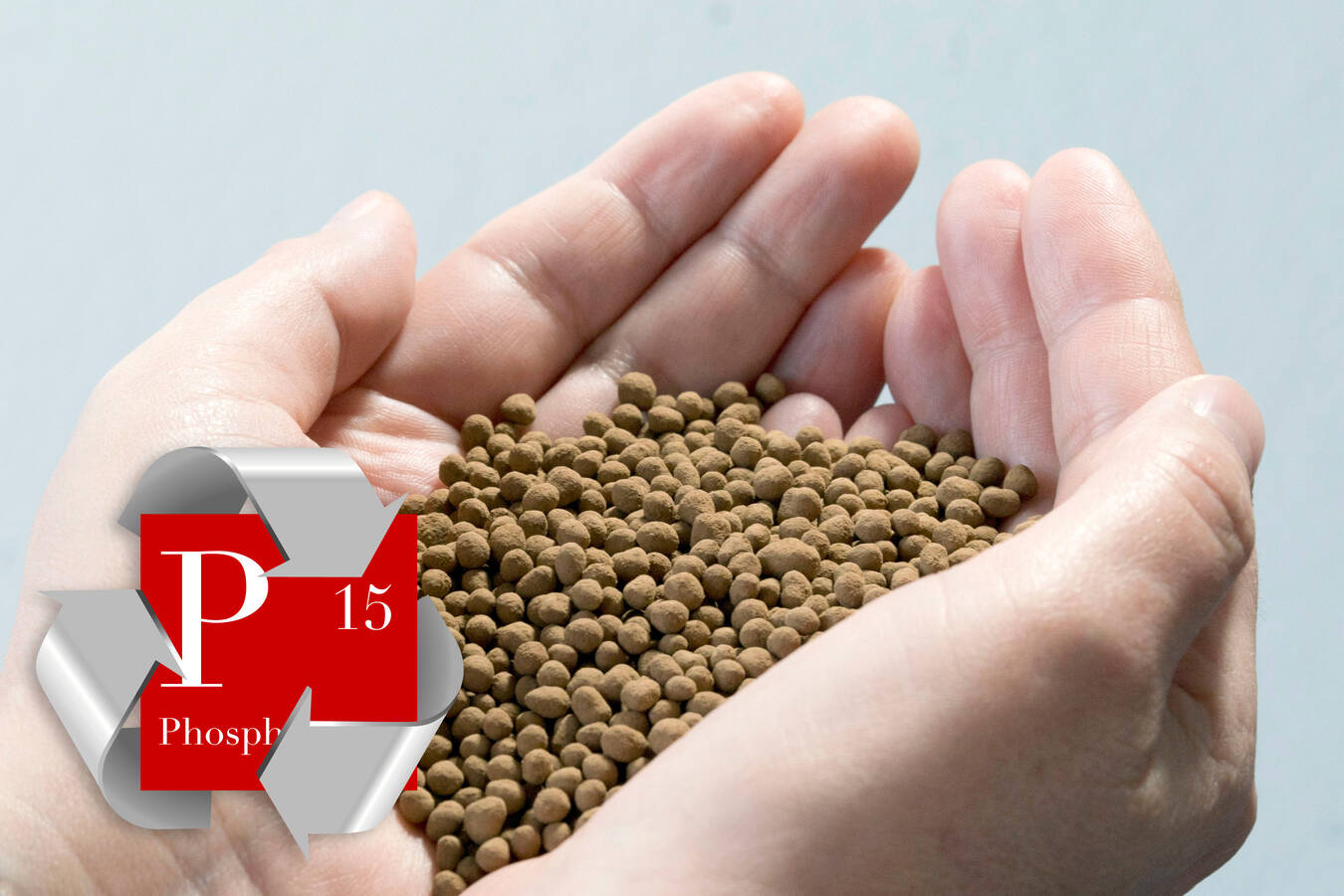
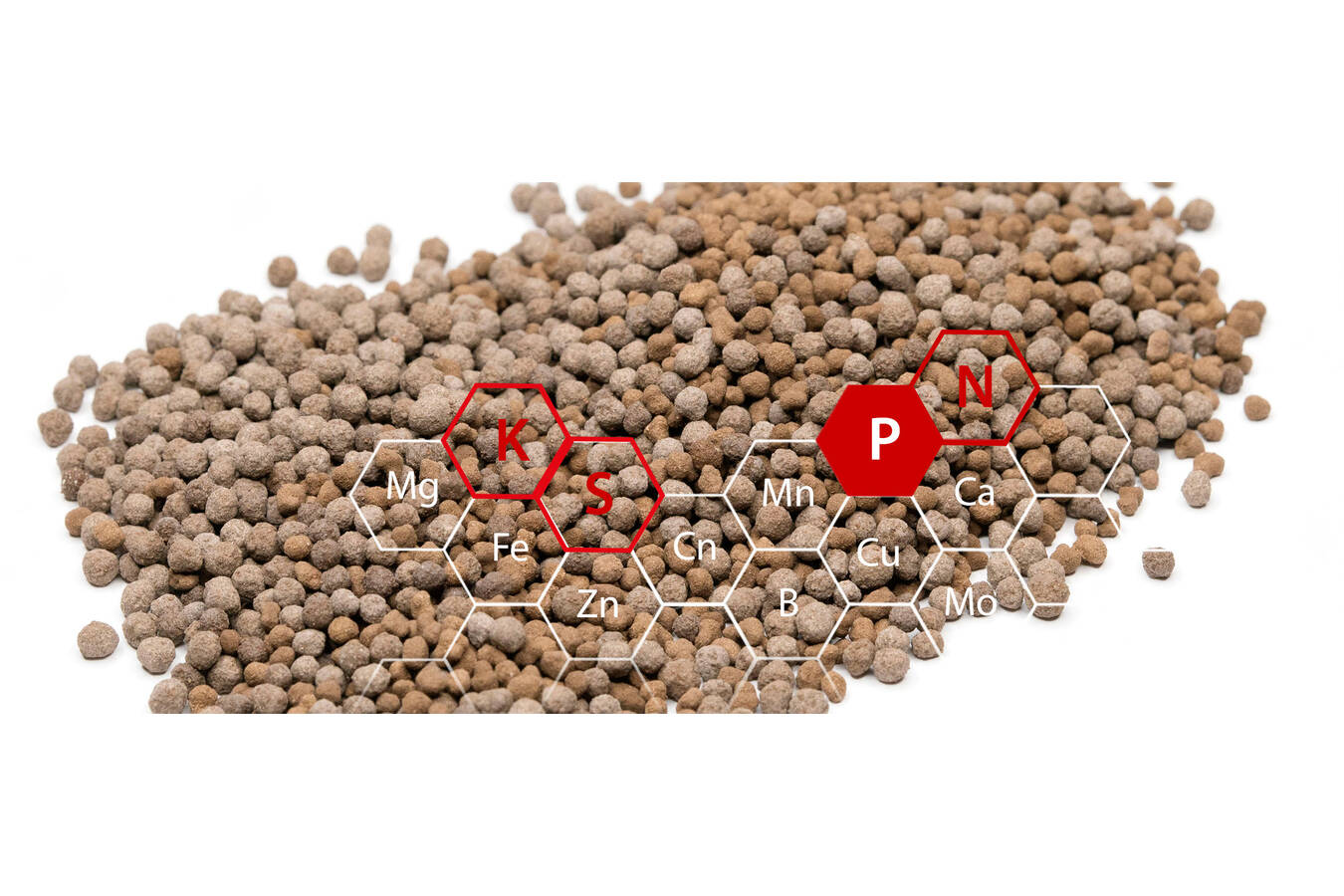
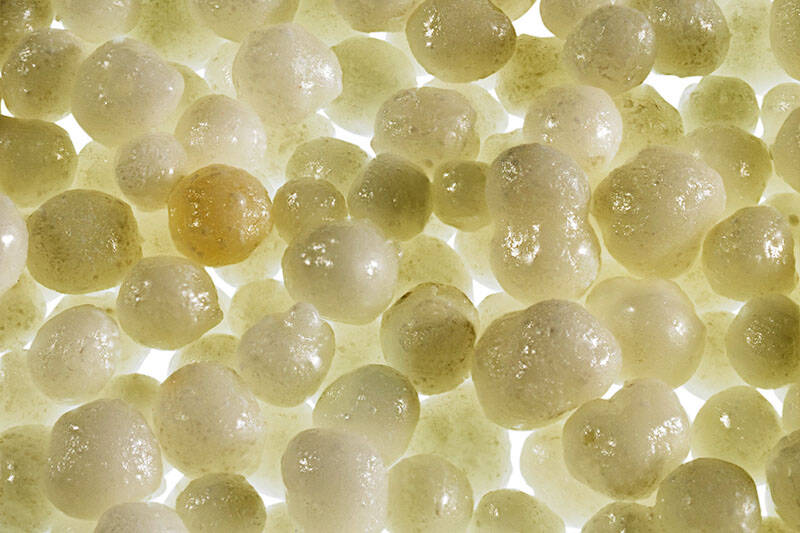
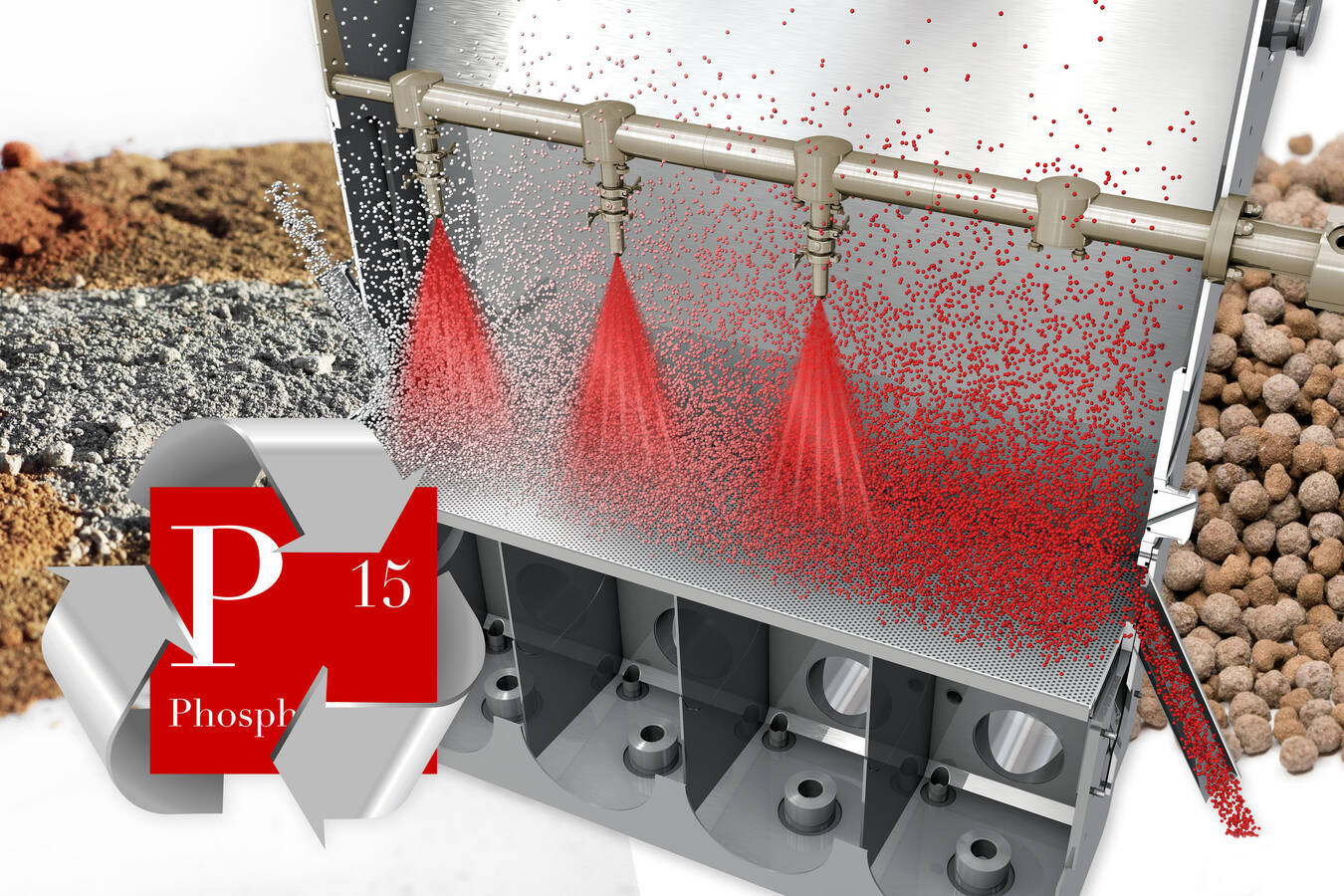
PHOS4green is an innovative, patented process for recovering the essential nutrient phosphorus from ash, making it directly usable in the form of new phosphate or compound fertilizers through granulation. Acids are used to convert insoluble phosphates into a form that is bioavailable to plants. The conversion of the poorly soluble phosphate compound takes place in a suspension, the composition of which can be adjusted. The PHOS4green technology was implemented industrially several years ago. However, one widespread problem remained – that of elevated heavy metal content in sewage sludge and its ash. Without appropriate treatment, these phosphorus sources cannot be upcycled for use as fertilizer. However, Glatt now has a process for heavy metal depletion that has been successfully tested in a mobile demonstration plant. Here, experimental investigations into the redissolution and separation of heavy metals from sewage sludge ash can be carried out on a pilot scale.

Expansion of pilot trials at the technology centre

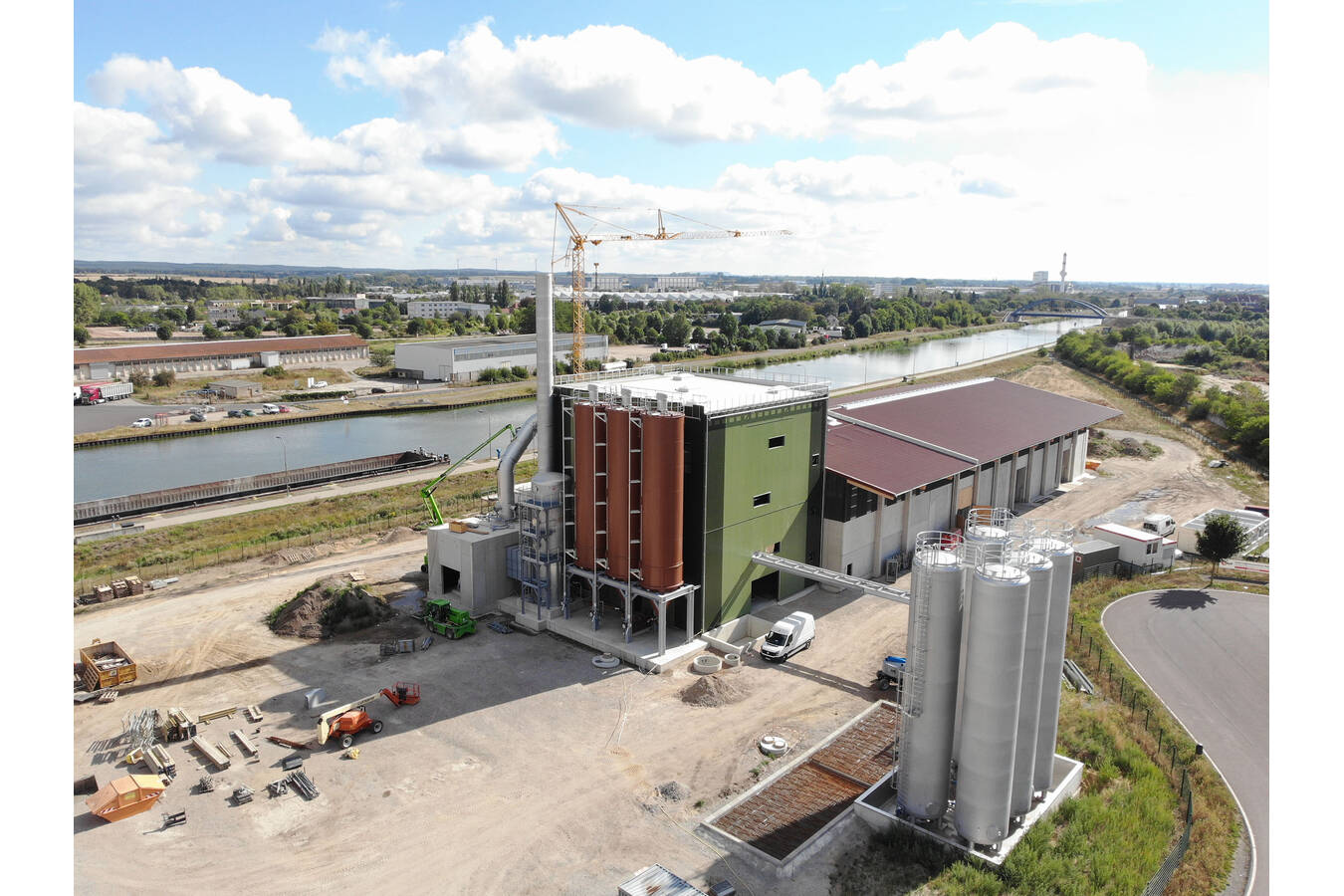
The demonstration plant for the advanced PHOS4green process was previously part of the RePhoRM project funded by the German Federal Ministry of Education and Research (BMBF[1]), which investigated the possibilities for regional phosphorus recycling in the Rhine-Main region. Following the successful completion of the research project, the five containers at the plant were set up in the outdoor area of the Glatt Technology Center in Weimar. They support and expand the testing capabilities of the current phosphorus recovery portfolio. Glatt offers customers the opportunity to test the PHOS4green process on both a laboratory and pilot scale, with granulation to individual fertilizer formulations. With the heavy metal depletion process, the recovery of valuable phosphorus as fertilizer for agriculture is now also possible for contaminated ash.

[1] Today: BMFTR – Federal Ministry of Research, Technology and Space

Company information

Glatt Ingenieurtechnik GmbH
Glatt is specialized in intelligent particle design for the generation and functionalization of powders and granulates with defined, adjustable properties. The focus is on particles and powders for pigments, catalytic, ceramic or battery materials as well as for granules and pellets as additives for e.g. industrial salts, detergents and cleaning agents, fertilizers, pesticides, food, feed, dietary supplements and pharmaceuticals. Encapsulation of flavors, enzymes, vitamins, microorganisms, probiotics or fatty acids (PUFA) is just as possible as encapsulation of essential oils and other active, sensitive substances to be protected. With Glatt APPtec®, a unique technology for spray calcination, it is possible to generate, coat and then calcine particles in a pulsing hot gas stream in a single process step. As a pioneer in fluid bed and spouted bed technologies, Glatt masters these important processes for the formulation and optimization of particle properties through defined spray agglomeration, spray granulation, spray coating or (micro)encapsulation as well as through combinations of these processes. Also in the high temperature range. Glatt supports the product idea from the early phase of product formulation through process development to scale-up to production scale. Under the leadership of the Glatt Process & Plant Engineering teams, customized production plants for nutrition, fine chemicals, pharmaceuticals, and biotech applications are successfully planned and commissioned. Worldwide. Whether based on powder synthesis, fluid bed or spouted bed technology, Glatt also offers certified contract manufacturing for customers without their own production capacities.

Last update: 28.10.2025

Related articles

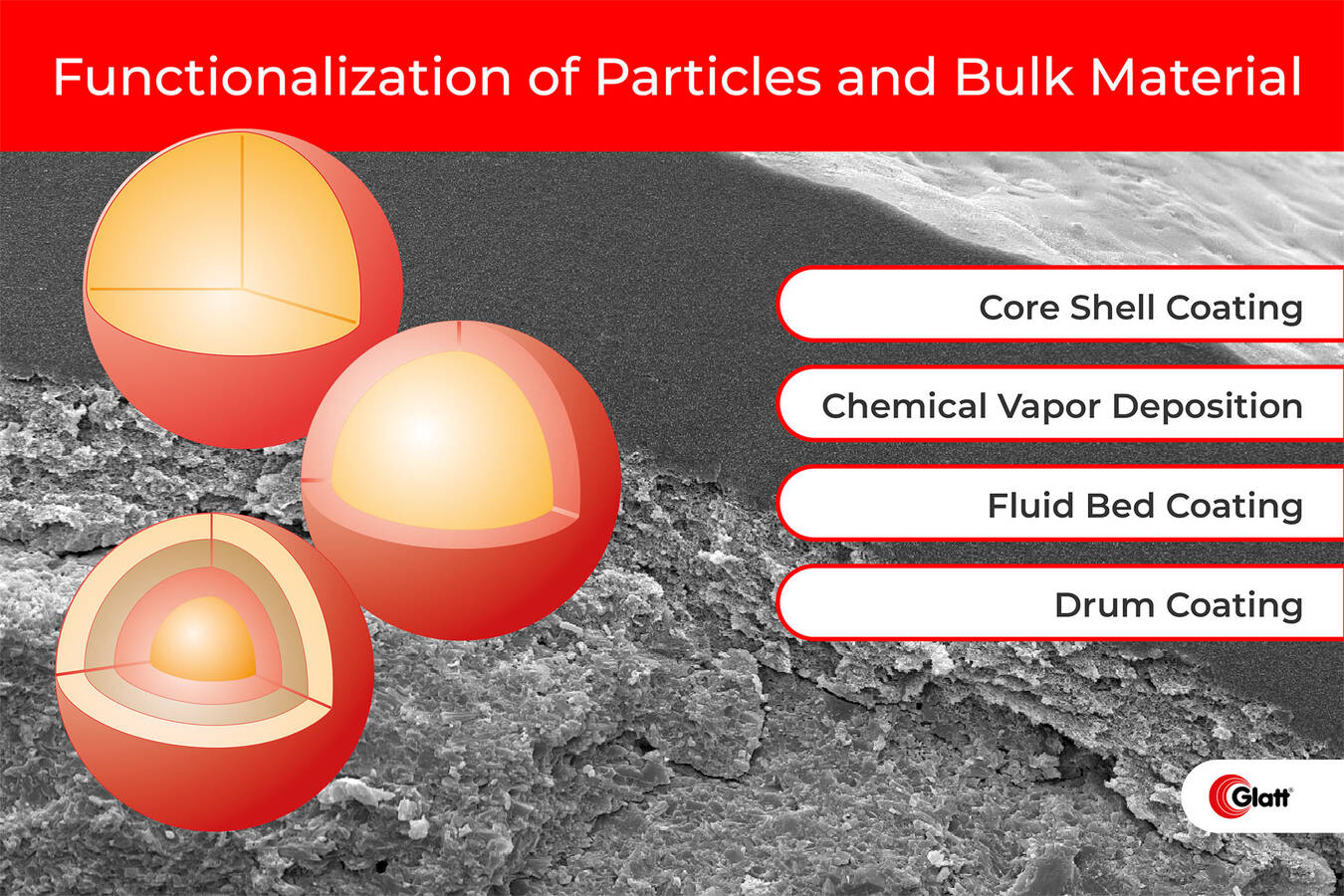
Functionalization of particles + bulk material by coating By determining the quality of the end product, it is essential to select the most suitable technology approach.
Functionalization of particles + bulk material by coating
By determining the quality of the end product, it is essential to select the most suitable technology approach. Individually adjusted coating parameters By determining the quality of the end product, particle coating is a critical step in many manufacturing processes. To achieve optimum results, it is essential to select the most suitable approach and, to do this, the specific properties of the raw materials, the required functionality of the coating and the intended application must all be considered. The most important aspects to think about when coating functionalised particles are outlined below. From the very beginning, those involved in process and product development must define the target parameters, the desired product properties and identify the technological and commercial conditions. Based on these criteria, a suitable technology can then be selected for production. Typically, this is an incremental process that, based on an initial concept, investigates different production variants. The aim is to optimise the process in terms of product properties and costs.
03.12.2025  |  2833x  |  Specialist article  |   | 
Striving for efficient phosphorus recycling solutions Phosphorus recycling from sewage sludge: more fertilizer, fewer heavy metals
Striving for efficient phosphorus recycling solutions
Phosphorus recycling from sewage sludge: more fertilizer, fewer heavy metals Phosphorus is essential as an agricultural fertilizer. Globally, this indispensable element is becoming increasingly scarce, putting an increasing focus on recovery where natural phosphate deposits are rare. Glatt Ingenieurtechnik GmbH has further developed its patented PHOS4green fertilizer production process so that sewage sludge ash from conurbations with high heavy metal contents can be used. Their removal means that fewer pollutants are released into the environment. Glatt has expanded its PHOS4green process to facilitate the legally compliant recovery of valuable materials from sewage sludge ash contaminated with heavy metals With sustainability now a global priority, the development of circular economies is top of mind throughout society, business and politics. The efficient use of resources, especially the recycling of waste products from material cycles, is becoming increasingly important. A good example is sewage sludge ash. Owing to its high phosphorus
03.01.2025  |  5710x  |  Specialist article  |   | 
From process development directly to contract manufacturing With short time-to-market: Particle and functional design from the fluid bed market leader
From process development directly to contract manufacturing
With short time-to-market: Particle and functional design from the fluid bed market leader The Glatt Group’s customers benefit from bundled expertise in particle design – from the initial feasibility test, through scale-up, to validation of the production process. Glatt offers suitable solutions for every variant and, if required, also implements customer-specific processes. Contract manufacturing has to fulfill very varied requirements. Some companies permanently outsource their production and permanently request large quantities. Others require flexible production slots to compensate for highly fluctuating requirements in terms of volume. Often, a mature product idea exists, but the innovators do not yet have the suitable technology. For the production and refinement of solid product formulations, a wide variety of tasks are commonplace: from nanodispersed powders for high-tech applications, to matrix-encapsulated feed and food additives in granule and pellet form, to products with a modified release of active ingredients. Contract manufacturing
08.07.2024  |  6458x  |  Specialist article  |   | 
Plant safety from the perspective of an operating company Plant engineers should “go the extra mile” to ensure the safe operation of process facilities
Plant safety from the perspective of an operating company
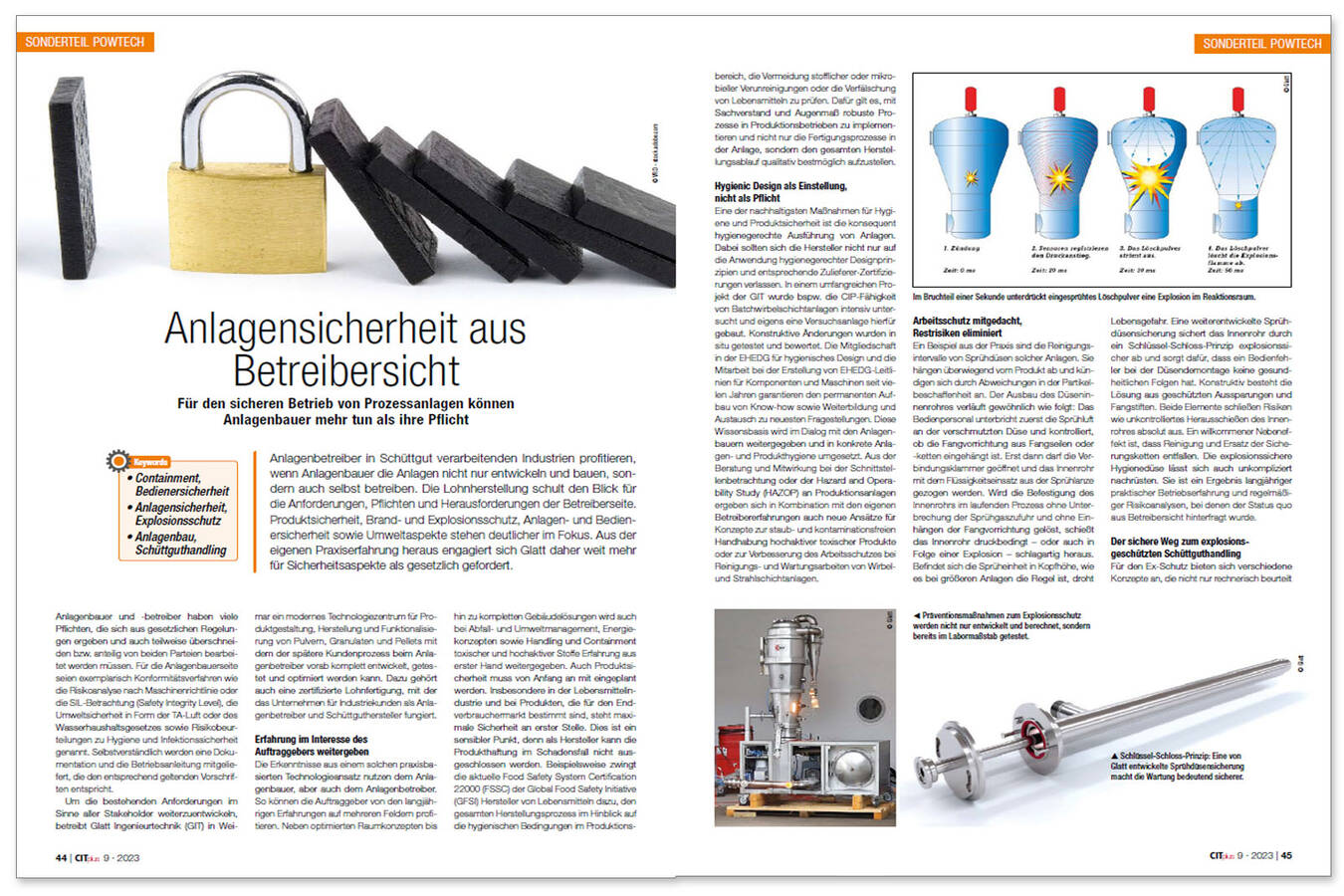
Plant engineers should “go the extra mile” to ensure the safe operation of process facilities Manufacturers in the bulk material industriy can profit, if the engineering and construction company not only develops tailor made solutions, but is a manufacturer itself. Toll manufacturing sharpens the view for the obligations, dutys and challenges on the manufacturing and operation side. Manufacturers need to pay higher attention to product safety, fire and explosion protection, plant and operator safety (occupational health) as well as environmental protection, than required from the engineering and construction side. Being a toll manufacturer themself, Glatt is incorporating the operational experience into the design of their process plants, beyond legal and regulatory requirements. Plant manufacturers and operators must comply with strict operational demands and legal regulations, some of which overlap or must be apportioned to the appropriate party. For the plant manufacturer, examples include conformity procedures — such as risk analyses in accordance with
27.10.2023  |  6996x  |  Specialist article  | 
Klärschlamm: Schadstoff- und Rohstoffquelle zugleich

This item is only available in German
04.08.2023  |  4483x  |  Specialist article  |   | 
Auf den Punkt getrocknet – Thermische Verfahren in der Wirbelschicht

This item is only available in German
02.03.2023  |  6557x  |  Specialist article  |   | 
Growing the German phosphate industry Jan Kirchhof, Glatt Ingenieurtechnik GmbH, Germany, reports on a laboratory experiment with phosphorus fertilizers and two current projects.
Growing the German phosphate industry
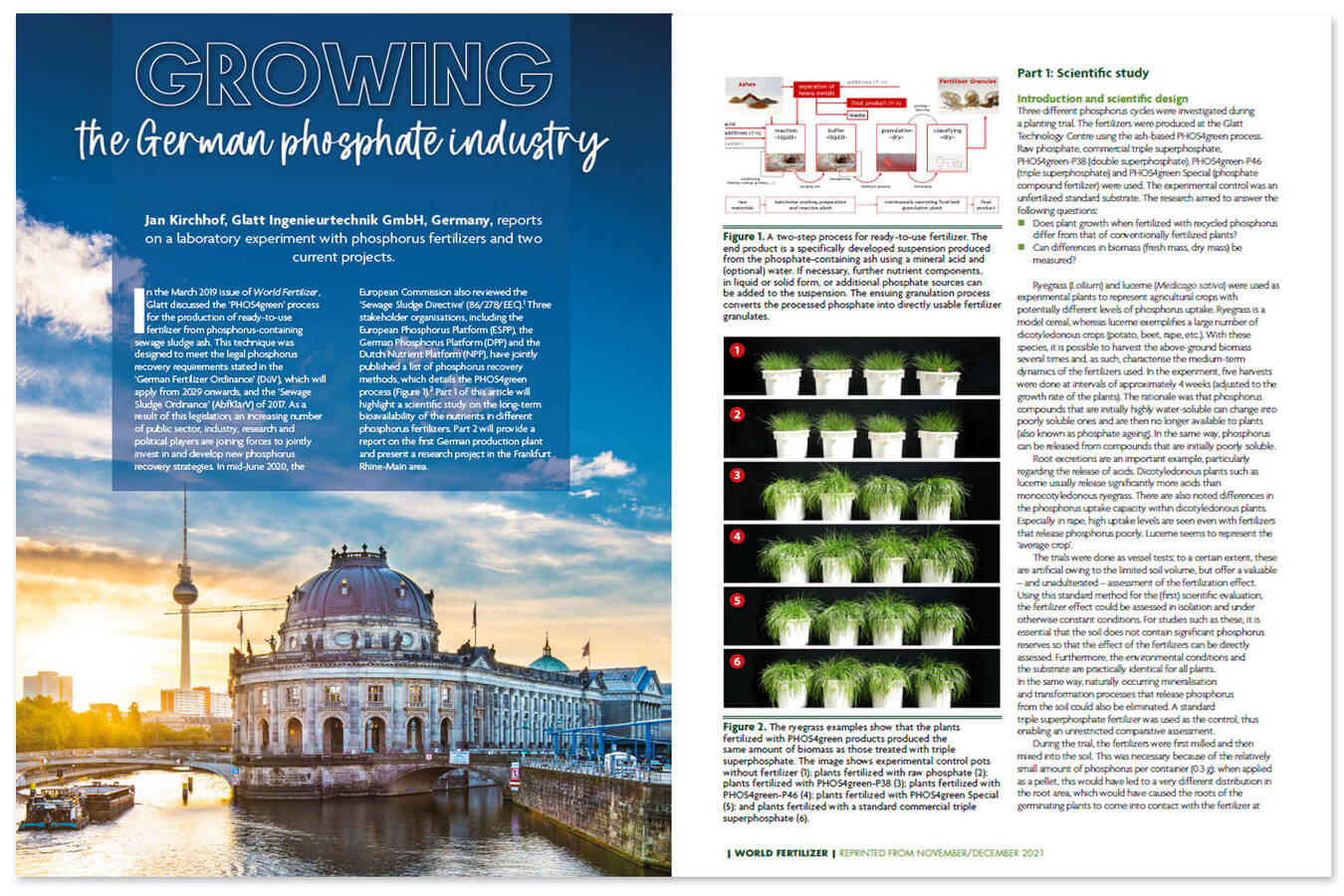
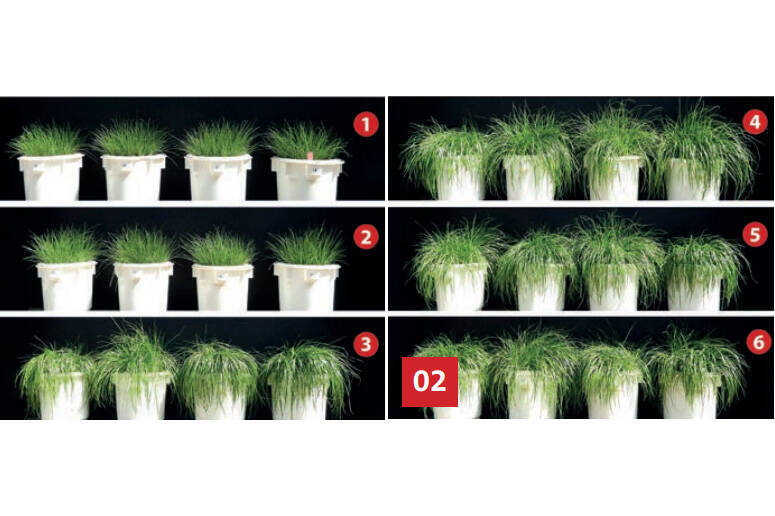
Jan Kirchhof, Glatt Ingenieurtechnik GmbH, Germany, reports on a laboratory experiment with phosphorus fertilizers and two current projects. » originally published in the trade magazine ‘World Fertilizer’, issue 11/2021, Palladian Publications Ltd. In the March 2019 issue of World Fertilizer, Glatt discussed the ‘PHOS4green’ process for the production of ready-to-use fertilizer from phosphorus-containing sewage sludge ash. This technique was designed to meet the legal phosphorus recovery requirements stated in the ‘German Fertilizer Ordinance’ (DüV), which will apply from 2029 onwards, and the ‘Sewage Sludge Ordinance’ (AbfKlärV) of 2017. As a result of this legislation, an increasing number of public sector, industry, research and political players are joining forces to jointly invest in and develop new phosphorus recovery strategies. In mid-June 2020, the European Commission also reviewed the ‘Sewage Sludge Directive’ (86/278/EEC).[1] Three stakeholder organisations, including the European Phosphorus Platform (ESPP), the German Phosphorus Platform (DPP) and the Dutch Nutrient
10.01.2022  |  4280x  |  Specialist article  |   | 
Den Kreislauf schließen – Phosphorrückgewinnung im Industriemaßstab

This item is only available in German
02.12.2021  |  5982x  |  Specialist article  |   | 
Improved performance for crop protection products Plant protection products, be they herbicides or fungicides, must be dust-free, free-flowing, stable, safe to handle + provide good redispersibility properties.
Improved performance for crop protection products
Plant protection products, be they herbicides or fungicides, must be dust-free, free-flowing, stable, safe to handle + provide good redispersibility properties. Product development usually focuses on the optimization of successful products: That means improved effectiveness and storage, safer handling and easier dosing. As well as these long-standing challenges, however, farmers and manufacturers of crop protection products are facing an increasingly fragmented market with regionally specific requirements. Due to globalisation and imbalances in the ecosystem, it is becoming increasingly necessary to control pests in a targeted manner and protect plants from previously unknown threats. Yet a growing market for organic farming means an increase in demand for biological or biodegradable crop protection agents which are obtained, for example, by fermentation processes. Industrial processing means these intermediate products are not temperature-stable and require gentle treatment at low temperatures. A further challenge is climate change: Cultivated areas in normally temperate climate regions are now exposed to weather events such
11.03.2021  |  3245x  |  Specialist article  |   | 
Neuer Dünger nach Maß aus Klärschlammasche

This item is only available in German
04.05.2020  |  6443x  |  Specialist article  |   | 
P-Rückgewinnung: PHOS4green setzt Signale in der Kreislaufwirtschaft

This item is only available in German
30.10.2020  |  6059x  |  Specialist article  |   | 

More items

Glatt searches skilled workers, technicians, engineers, scientists Wherever you are in the world – working at Glatt means everywhere: developing high-performance solutions. Implementing innovative ideas. Sharing global knowledge.
Glatt searches skilled workers, technicians, engineers, scientists
Wherever you are in the world – working at Glatt means everywhere: developing high-performance solutions. Implementing innovative ideas. Sharing global knowledge. Your Career at Glatt The opportunity for your success. Glatt is a leading global supplier of integrated process solutions for customers in the pharmaceutical, food/feed and fine chemical industries. Our products and services stand for reliability and quality worldwide. Around 3000 employees in more than 15 companies and agencies around the world work for Glatt. Be successful with us We offer you the opportunity to be successful with us. Follow the link under more information to go to our Job Offer webpage.*NEWLINE*If we have piqued your interest, please apply in person with your complete application documents via our online application portal. This is very easy and is the quickest way to success for you and us. You can easily upload your attachments, such as cover letter, CV and certificates, in all common formats. Notes * Applications that do not reach us via the online portal cannot be considered. * Can’t find a suitable vacancy? Then we look forward
07.04.2025  |  5902x  |  Job vacancy  | 
FILLED
Stabilize Oxidation-Sensitive or Volatile Substances Protection for essential oils, carotenoids, flavors and hydrophobic substances and other active ingredients by micro encapsulation
Stabilize Oxidation-Sensitive or Volatile Substances
Protection for essential oils, carotenoids, flavors and hydrophobic substances and other active ingredients by micro encapsulation Protecting and drying hydrophobic substances by micro encapsulation Essential oils, carotenoids, flavors or even hydrophobic plant substances are challenging candidates in terms of formulation and process due to their chemical structure. Such substances are usually extremely sensitive to oxidation and to higher temperatures. For many applications, these substances are needed in solid formulations, for example in flavored teas and dessert mixes or as essential oils, neutral in taste and stable over time as additives in baby food. The micro encapsulation process combines the inclusion of hydrophobic substances in a matrix with granulation and drying. In the first process step, the oil is emulsified and encapsulated with an encapsulation material that protects against oxidation – such as modified starches, hydrocolloids or even proteins. Stabilization of the emulsion has a decisive influence on product quality. It prevents the microcapsules from being destroyed
04.04.2025  |  1945x  |  Product description  |   | 
Controlled release of active ingredients with the right coating The right coating for detergents, salts, fruit acids and many other products. Improve the functionality of your product through controlled release.
Controlled release of active ingredients with the right coating
The right coating for detergents, salts, fruit acids and many other products. Improve the functionality of your product through controlled release. Controlled release of active ingredients is a key task for the formulation of pharmaceutical dosage forms. In addition to bioavailability, the release of the active ingredient from the tablet or active ingredient pellets determines its concentration in the blood. The properties of the polymer film, the pH-dependent solubility, the film thickness or the defined porosity are just some of the adjustable parameters to achieve the desired reproducible release kinetics. The key to success lies in the right coating process. For demanding solutions, Wurster coating in the fluid bed has established itself here. Functional active or auxiliary substances are now also used in other branches of industry. As early as the 1990s, detergent and cleaning agent manufacturers started initial trials with fluid bed coating processes for the introduction of dishwasher tabs, in order to release individual components of the tabs at the right time. For example, a water-soluble component was
05.12.2024  |  2377x  |  Product description  |   | 
Phosphorus Recovery on an Industrial Scale  Closing the Loop: Phosphate fertilizer from sewage sludge ash. Glatt’s PHOS4green technology provides an economically and ecologically viable solution suitable for closing the phosphorus cycle.
Phosphorus Recovery on an Industrial Scale
Closing the Loop: Phosphate fertilizer from sewage sludge ash. Glatt’s PHOS4green technology provides an economically and ecologically viable solution suitable for closing the phosphorus cycle. Ash-based recycling processes are among the most promising and economically attractive options when it comes to implementing the legally stipulated phosphorus recovery. The first fertilizers produced using the PHOS4green process have been available on the German market since June. The technology, which breaks down the phosphorus contained in sewage sludge ash and makes it reavailable in marketable end products, was developed by plant engineering and process expert Glatt Ingenieurtechnik in cooperation with fertilizer specialist Seraplant. (Article in German language) » Author: Jan Kirchhof, Senior Sales Manager Process & Plant Engineering, Glatt Ingenieurtechnik GmbH » originally published in the magazine ‘Verfahrenstechnik’, issue November/2021, Vereinigte Fachverlage
02.12.2021  |  5616x  |  Product description  |   | 
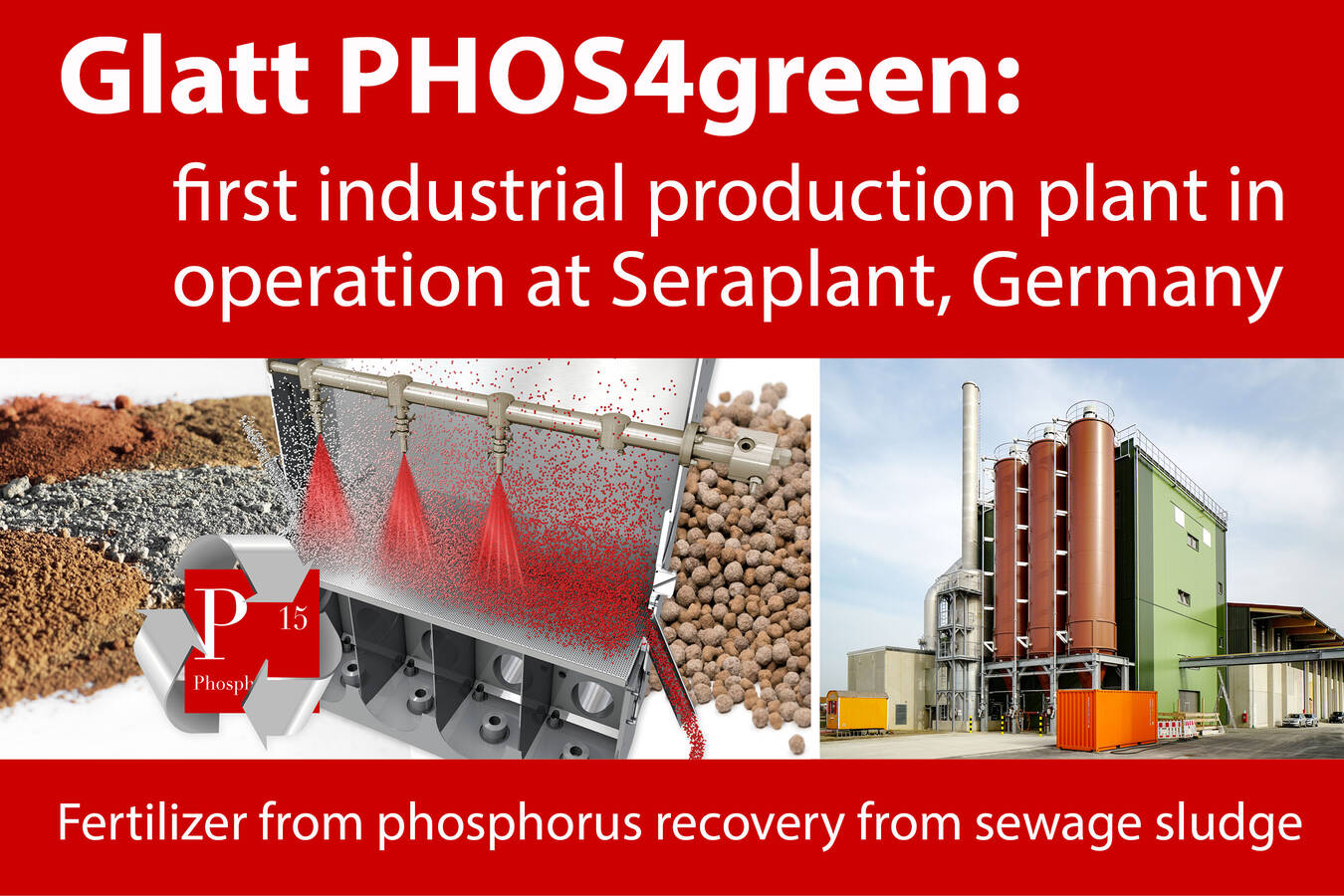
First German plant for recycled phosphate fertilizer in operation Glatt PHOS4green plant for fertilizer production with phosphorus from sewage sludge ash at Seraplant in Haldensleben, Saxony-Anhalt, Germany started up
First German plant for recycled phosphate fertilizer in operation
Glatt PHOS4green plant for fertilizer production with phosphorus from sewage sludge ash at Seraplant in Haldensleben, Saxony-Anhalt, Germany started up Residue-free production of ready-to-use fertilizer from phosphate-containing sewage sludge ash is now possible, thanks to plant manufacturer and process expert Glatt Ingenieurtechnik, and fertilizer specialist Seraplant. After a 20-month construction period, the first production plant for phosphate-containing mono and complex fertilizers made from recycled sewage sludge ash is now in operation. Seraplant operates the new plant at its headquarters in Haldensleben, Saxony-Anhalt, Germany. Glatt Ingenieurtechnik, a globally active plant engineering company, was responsible for the process development and construction. The official commissioning on May 31, 2021, was attended by Prof Dr Armin Willingmann, Saxony-Anhalt’s Minister for Economics, Science and Digitalization. Seraplant invested more than 20 million euros in the new production facility, with the support of the state of Saxony-Anhalt. As a result, more than 20 new jobs have been created in the southern
08.06.2021  |  7871x  |  Product news  |   | 

Related categories

PORTALS
BulkSolids-Portal Schuettgut-Portal Recycling-Portal
Related
Bulkgids.nl
SIGN UP FOR OUR NEWSLETTER
Newsletter archive
Service and contact
ContactDisclaimerPrivacyAdvertising
FOLLOW US
Linked