Supplier sign in
Home
STAY INFORMED
Subscribe to our monthly newsletter.
Your email address will never be disclosed to any third party.
Read our privacy notice.


Press release
21.08.2025  |  1216x
Share this item
Allow (tracking) cookies from YouTube and Vimeo to watch videos

Energy-efficient for optimal particles.

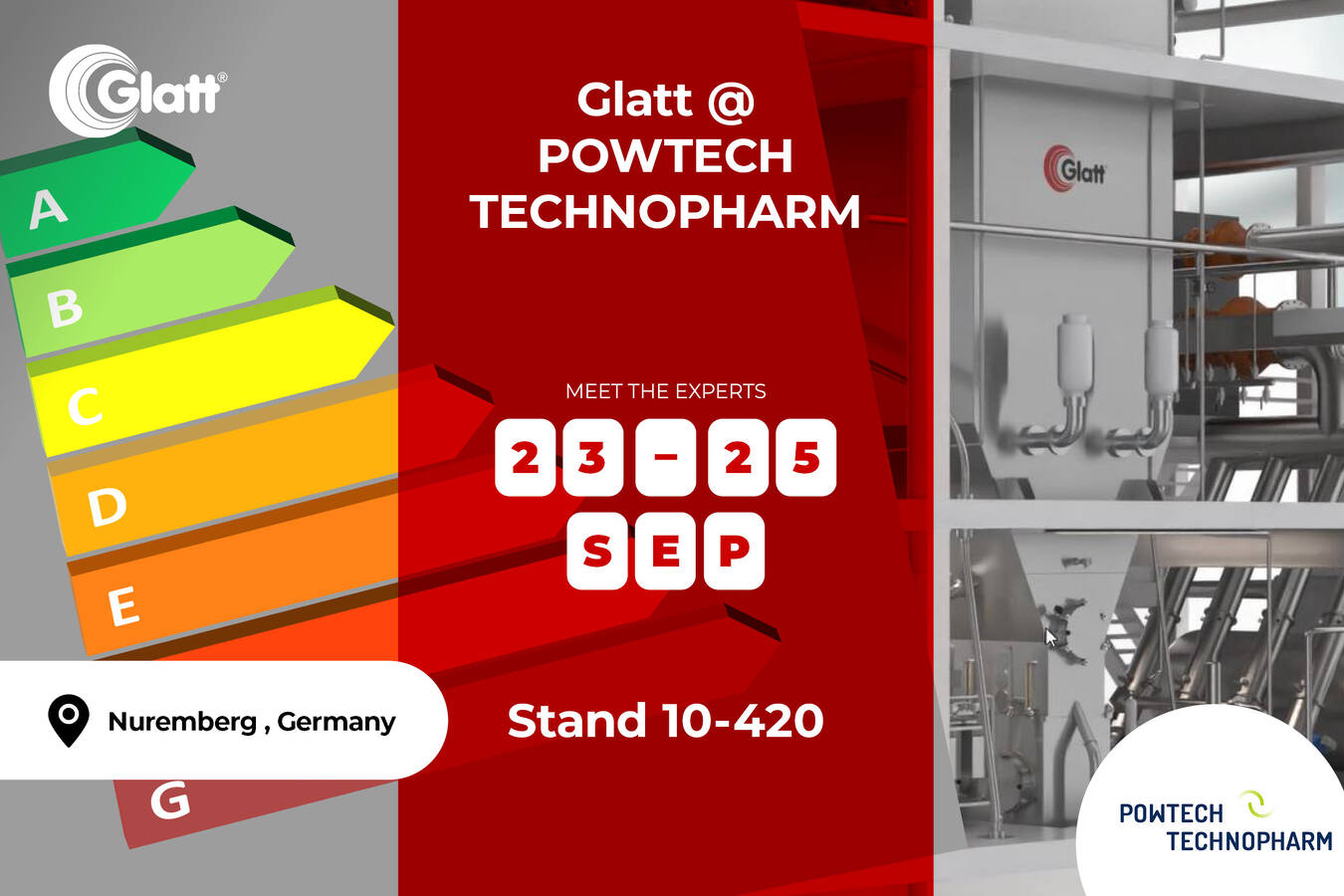
Powtech 2025. Glatt at stand 10-420. Energy-optimized particle production, contract manufacturing and flexible engineering concepts for pharma and biotech.
As one of the leading companies for fluidized bed processes and powder synthesis with its own technology center in Weimar, Glatt Ingenieurtechnik will be presenting integrated concepts combining particle design, process expertise, process and plant engineering and factory planning at POWTECH TECHNOPHARM in Nuremberg from 23 to 25 September 2025.

Energy costs are not only decisive for the final product costs in energy-intensive processes. Glatt Engineering therefore focuses on energy and CO2 savings through energy-optimized concepts for powder synthesis, fluidized bed and spouted bed technology. These include practical options for heat recovery from process exhaust air, HVAC (heating, ventilation, air conditioning), nozzle air generation, product streams or reaction heat. There are many potential savings, and the engineering experts can show how to use them through innovative technical approaches. A concrete example of this is the use of superheated steam for efficient spraying and drying processes in the fluidized bed.

Competent partnership for contract manufacturing

Glatt Ingenieurtechnik not only plans and implements complete production facilities, but also offers its own contract manufacturing capacities in cooperation with IPC Process-Center GmbH & Co. KG, whether as support from scale-up to market launch to in-house production or as a service independent of plant construction orders. IPC is part of the Glatt Group and works with customers to develop innovative, tailor-made granulates and pellets for a wide range of applications. Many years of experience enable the rapid and comprehensive implementation of new product ideas. Together, IPC and Glatt realize optimal customer solutions for food, feed and fine chemicals, as well as for the manufacture of pharmaceutical dosage forms. IPC has large-volume contract manufacturing capacities, which GIT has designed and installed as a factory planner and plant manufacturer. Customers who wish to invest in their own plant technology benefit from the know-how and smooth technology transfer within the Glatt Group.

Know-how transfer for pharmaceutical engineering

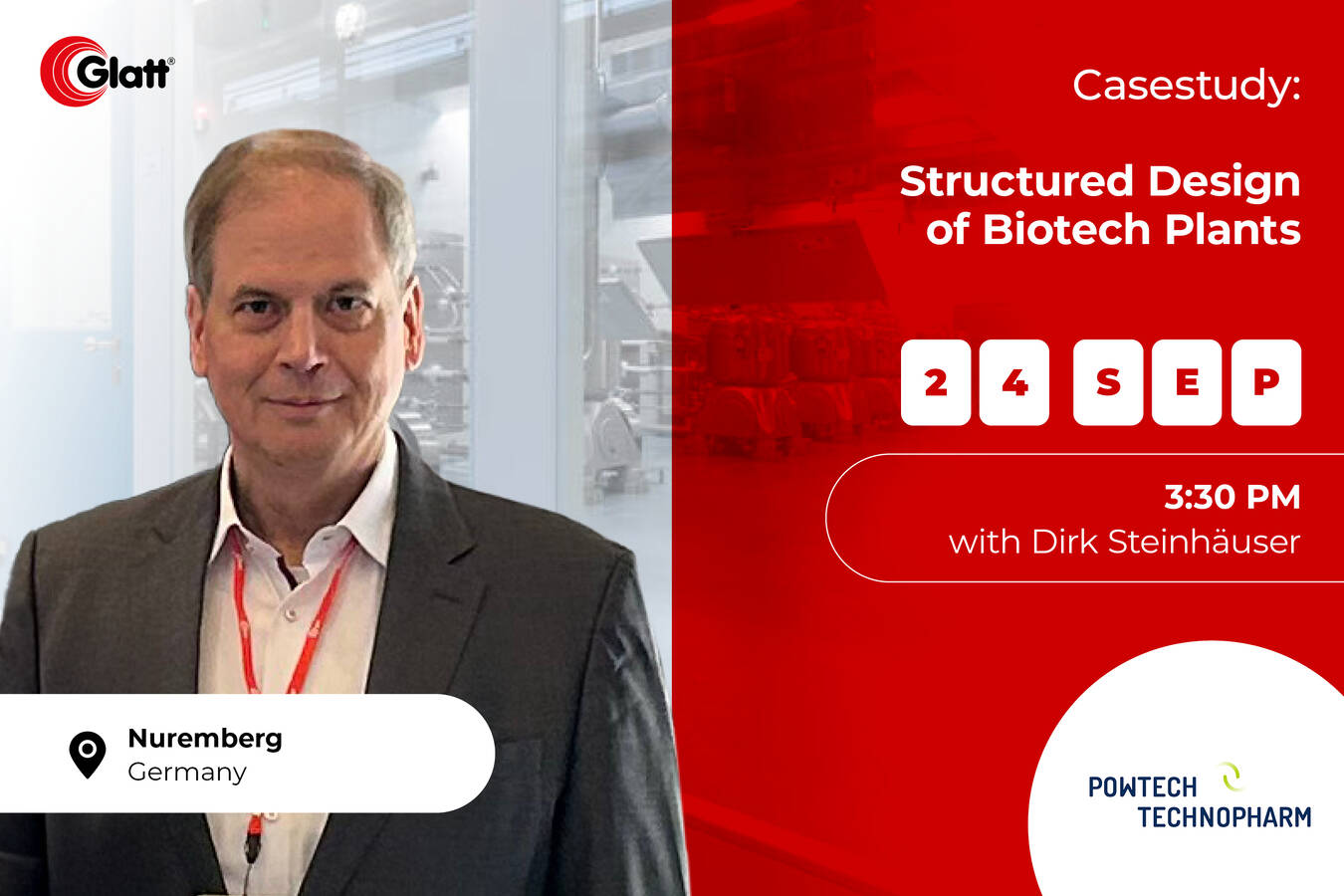
At the trade fair’s Stage Talks, Glatt experts will present sustainable approaches to pharmaceutical engineering. Dirk Steinhäuser, Deputy Branch Manager at GIT Dresden, will use a case study to provide an overview of the company’s structured and flexible planning approach for biotechnology projects. The biotechnology industry is dynamically developing new products for pharmaceuticals, nutritional supplements, food and bio-based chemicals. Fast and reliable scaling methods from laboratory to pilot scale for transfer to commercial production are crucial in this context (24 September 2025, 3:30 p.m., Stand 10-356).

Anton Kopitzsch, Team Lead Automation Engineering, Process & Plant Engineering, will devote his session to revolutionising the manufacture of solid oral dosage forms and outline fully automated batch execution in an advanced automation environment (25 September, 13:00, Stand 10-356). Glatt and Bayer’s innovative approach integrates advanced intralogistics, tracking technology and data acquisition into a sophisticated automation system, enabling seamless operations, unmatched efficiency and best-of-class quality control.

As always, Glatt experts will be on hand to advise trade fair visitors across all industries and for specific applications, from product ideas to the production of functional powders, granulates and pellets.


Company information

Glatt Ingenieurtechnik GmbH
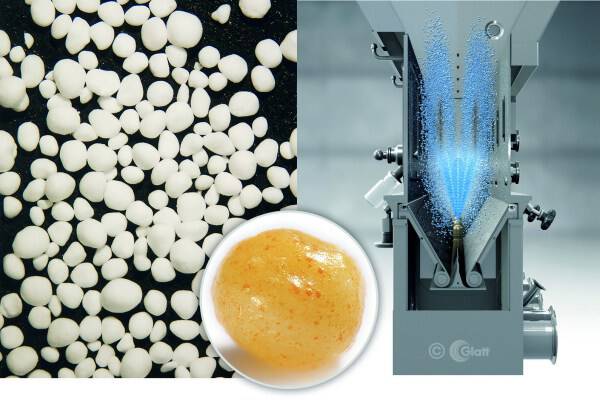
Glatt is specialized in intelligent particle design for the generation and functionalization of powders and granulates with defined, adjustable properties. The focus is on particles and powders for pigments, catalytic, ceramic or battery materials as well as for granules and pellets as additives for e.g. industrial salts, detergents and cleaning agents, fertilizers, pesticides, food, feed, dietary supplements and pharmaceuticals. Encapsulation of flavors, enzymes, vitamins, microorganisms, probiotics or fatty acids (PUFA) is just as possible as encapsulation of essential oils and other active, sensitive substances to be protected. With Glatt APPtec®, a unique technology for spray calcination, it is possible to generate, coat and then calcine particles in a pulsing hot gas stream in a single process step. As a pioneer in fluid bed and spouted bed technologies, Glatt masters these important processes for the formulation and optimization of particle properties through defined spray agglomeration, spray granulation, spray coating or (micro)encapsulation as well as through combinations of these processes. Also in the high temperature range. Glatt supports the product idea from the early phase of product formulation through process development to scale-up to production scale. Under the leadership of the Glatt Process & Plant Engineering teams, customized production plants for nutrition, fine chemicals, pharmaceuticals, and biotech applications are successfully planned and commissioned. Worldwide. Whether based on powder synthesis, fluid bed or spouted bed technology, Glatt also offers certified contract manufacturing for customers without their own production capacities.
Last update: 28.10.2025

Related trade show

Related articles

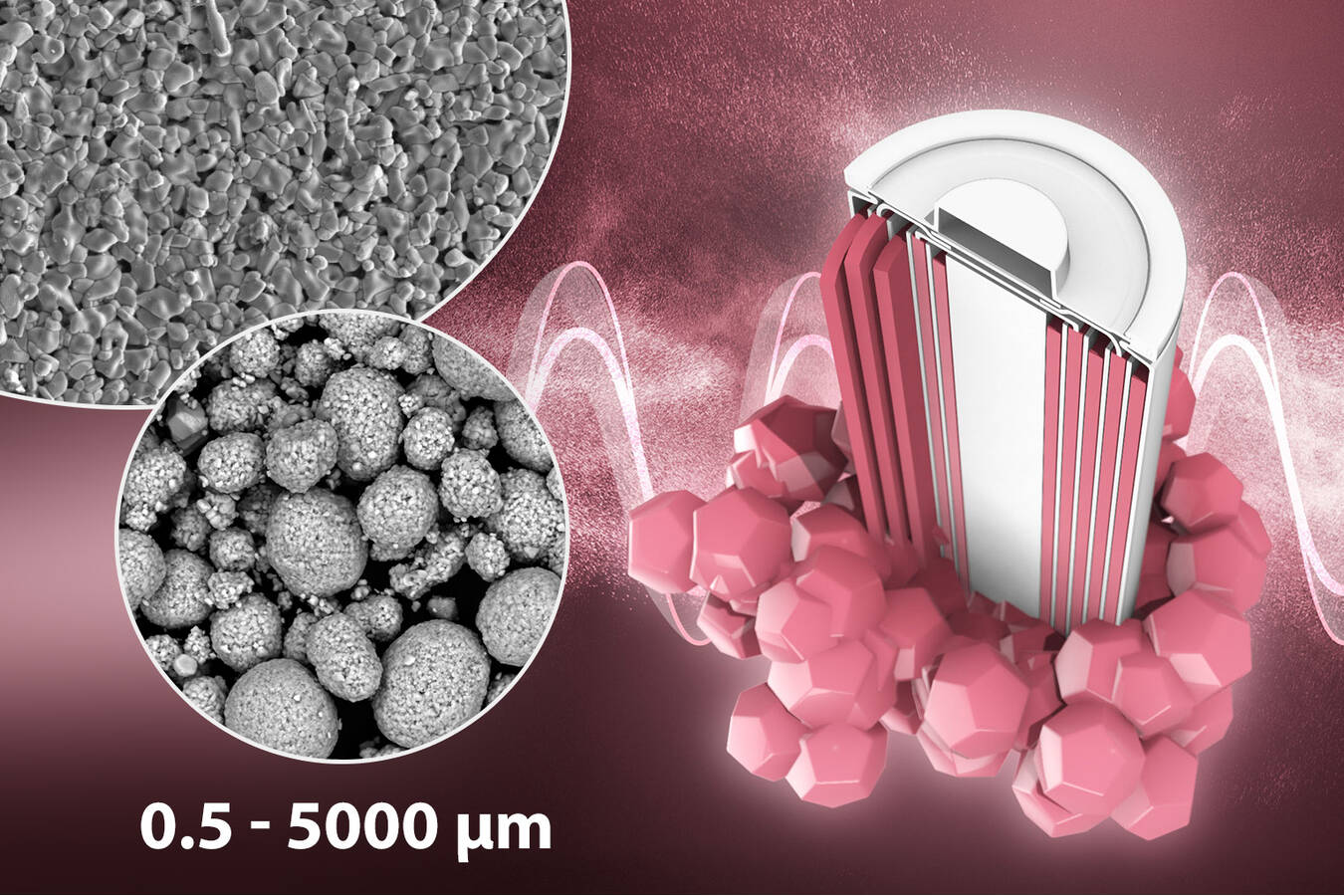
Production of innovative Battery Materials  
Enhancing Capacity and Stability by Particle Design with Advanced Powder Synthesis.
Production of innovative Battery Materials
Enhancing Capacity and Stability by Particle Design with Advanced Powder Synthesis. Enabling the production and refinement of anode/cathode materials and solid electrolytes in a single step, Glatt Powder Synthesis is a flexible and versatile tool for the development and industrial production of innovative battery materials. Although the battery capacity of computers and mobile devices has reached acceptable levels of functionality and performance, there is still room for improvement in terms of charging speed and range, particularly in the field of electromobility. The search for solutions to overcome these issues is a strong driver of innovation. Glatt Powder Synthesis is a technology that is already being used in the production, activation and coating of new battery materials. The key to the effectiveness of this process is the use of a pulsating hot gas flow and application-specific conditions. Developed by Glatt Ingenieurtechnik (Weimar, Germany) to synthesize a homogeneous powder, this technology first uses the raw materials to create a stoichiometric
22.07.2025  |  5026x  |  Specialist article  | 
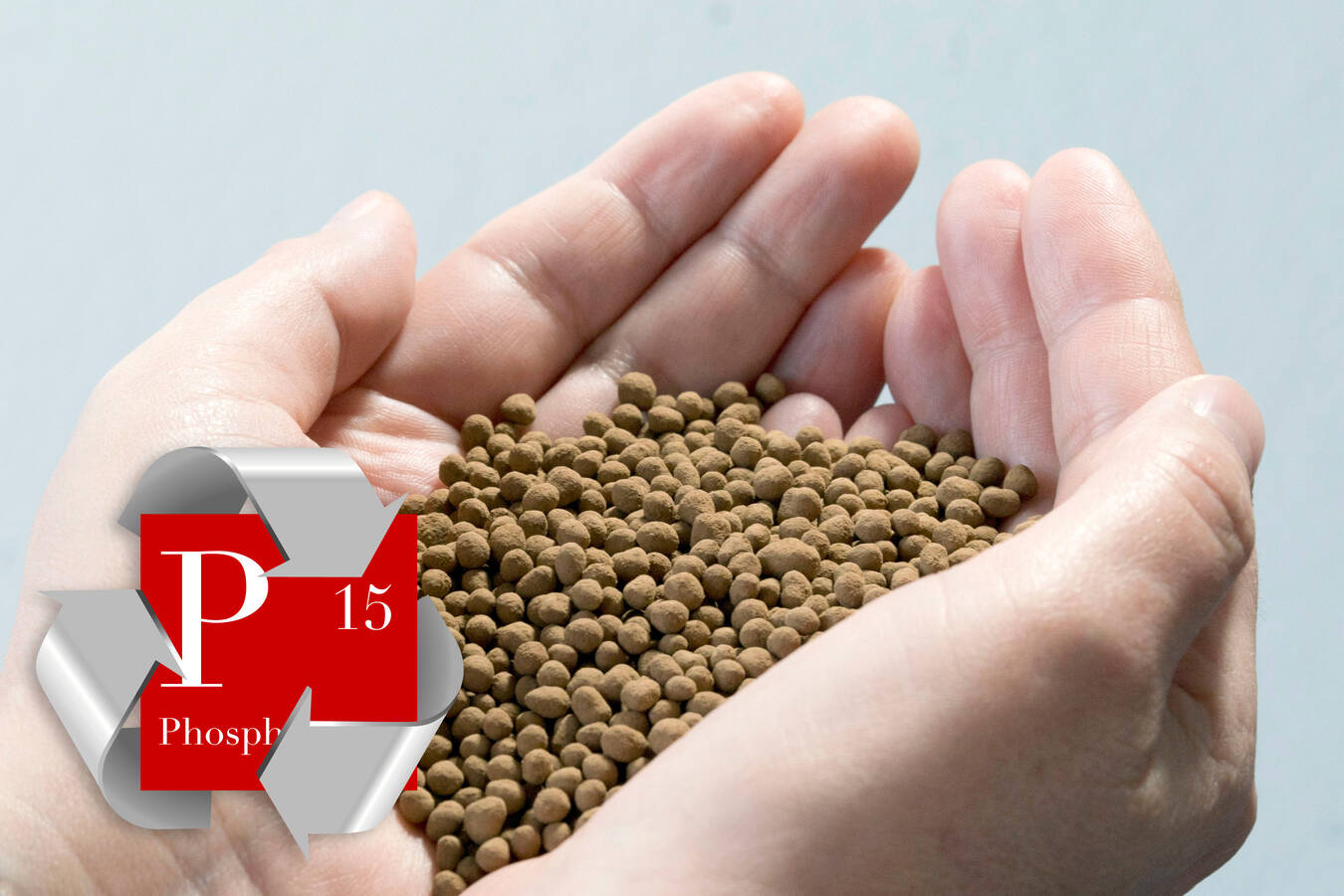
Striving for efficient phosphorus recycling solutions Phosphorus recycling from sewage sludge: more fertilizer, fewer heavy metals
Striving for efficient phosphorus recycling solutions
Phosphorus recycling from sewage sludge: more fertilizer, fewer heavy metals Phosphorus is essential as an agricultural fertilizer. Globally, this indispensable element is becoming increasingly scarce, putting an increasing focus on recovery where natural phosphate deposits are rare. Glatt Ingenieurtechnik GmbH has further developed its patented PHOS4green fertilizer production process so that sewage sludge ash from conurbations with high heavy metal contents can be used. Their removal means that fewer pollutants are released into the environment. Glatt has expanded its PHOS4green process to facilitate the legally compliant recovery of valuable materials from sewage sludge ash contaminated with heavy metals With sustainability now a global priority, the development of circular economies is top of mind throughout society, business and politics. The efficient use of resources, especially the recycling of waste products from material cycles, is becoming increasingly important. A good example is sewage sludge ash. Owing to its high phosphorus
03.01.2025  |  5306x  |  Specialist article  |   | 
From process development directly to contract manufacturing With short time-to-market: Particle and functional design from the fluid bed market leader
From process development directly to contract manufacturing
With short time-to-market: Particle and functional design from the fluid bed market leader The Glatt Group’s customers benefit from bundled expertise in particle design – from the initial feasibility test, through scale-up, to validation of the production process. Glatt offers suitable solutions for every variant and, if required, also implements customer-specific processes. Contract manufacturing has to fulfill very varied requirements. Some companies permanently outsource their production and permanently request large quantities. Others require flexible production slots to compensate for highly fluctuating requirements in terms of volume. Often, a mature product idea exists, but the innovators do not yet have the suitable technology. For the production and refinement of solid product formulations, a wide variety of tasks are commonplace: from nanodispersed powders for high-tech applications, to matrix-encapsulated feed and food additives in granule and pellet form, to products with a modified release of active ingredients. Contract manufacturing
08.07.2024  |  5779x  |  Specialist article  |   | 
How to tame recalcitrant ingredients withtechnological processes Plant-based functional ingredients behave differently than manufacturers of nutraceuticals and cosmetic products would like. Double microencapsulation can help them to overcome bioavailability and solubility challenges
How to tame recalcitrant ingredients withtechnological processes
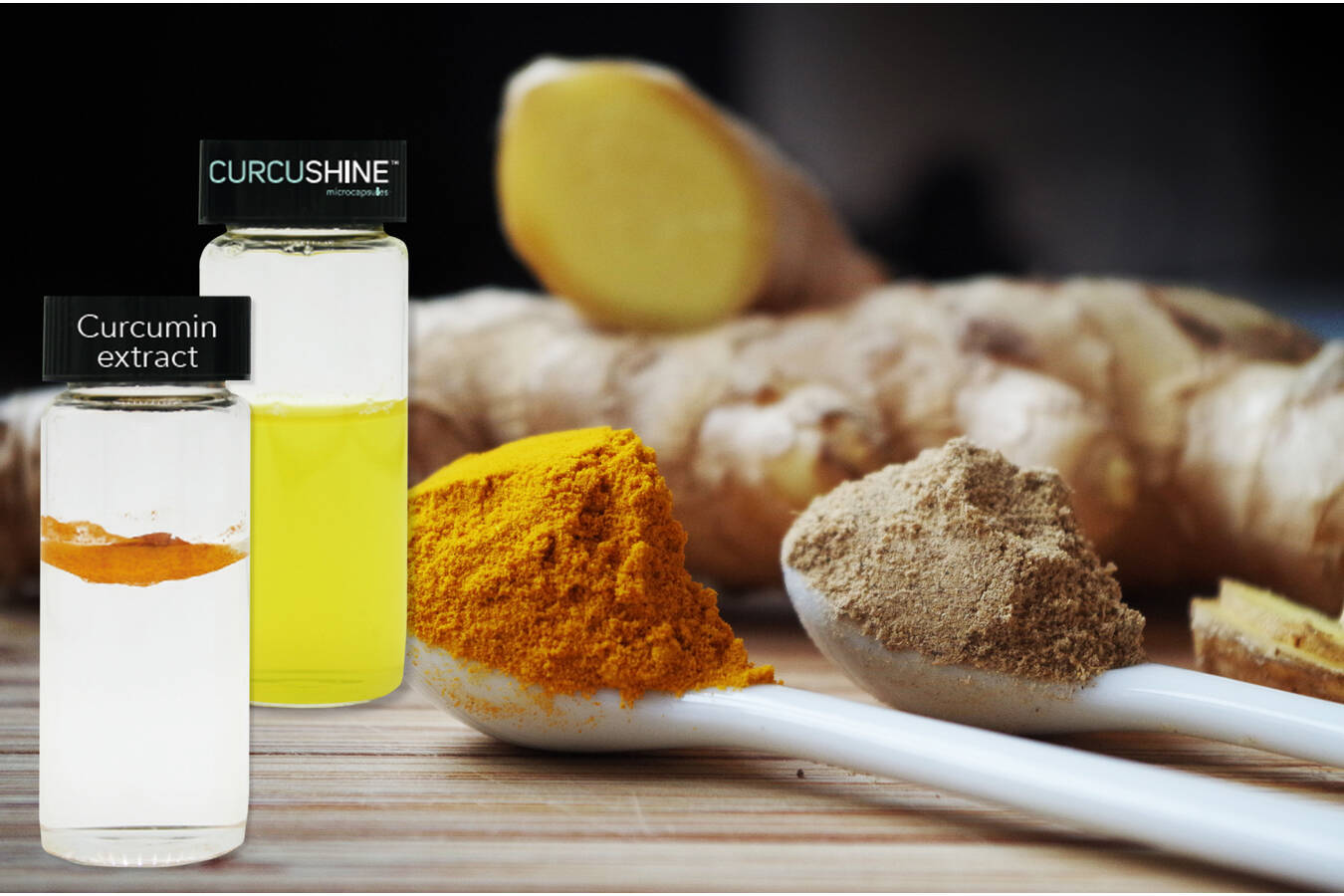
Plant-based functional ingredients behave differently than manufacturers of nutraceuticals and cosmetic products would like. Double microencapsulation can help them to overcome bioavailability and solubility challenges Plant-based functional ingredients behave differently than manufacturers of nutraceuticals and cosmetic products would like. Innovative processes such as double microencapsulation can help them to overcome bioavailability and solubility challenges. Among the currently trending functional ingredients, interest in natural sources such as turmeric and its polyphenol, curcumin, has been increasing for years. The spice is not only in demand in the culinary world, but has also found great promise in both consumer and scientific applications.1 Hewlings and Kalman reported that the reason for this is because of the medicinal properties of this rhizomatous perennial plant (Curcuma longa) from the ginger family, which have been known for thousands of years.2 In Asian countries, turmeric has traditionally been used as a medicinal plant for its antioxidant, anti-inflammatory, antimutagenic, antimicrobial and anticancer properties.3–5 This sought-after ingredient is not only
09.04.2024  |  7373x  |  Specialist article  |   | 
Ceramic raw materials from the pulsating hot gas stream Creating customized raw material products on a technical scale. Example: barium strontium cobalt iron oxide (BSCF), doped and coated zirconium dioxide.
Ceramic raw materials from the pulsating hot gas stream
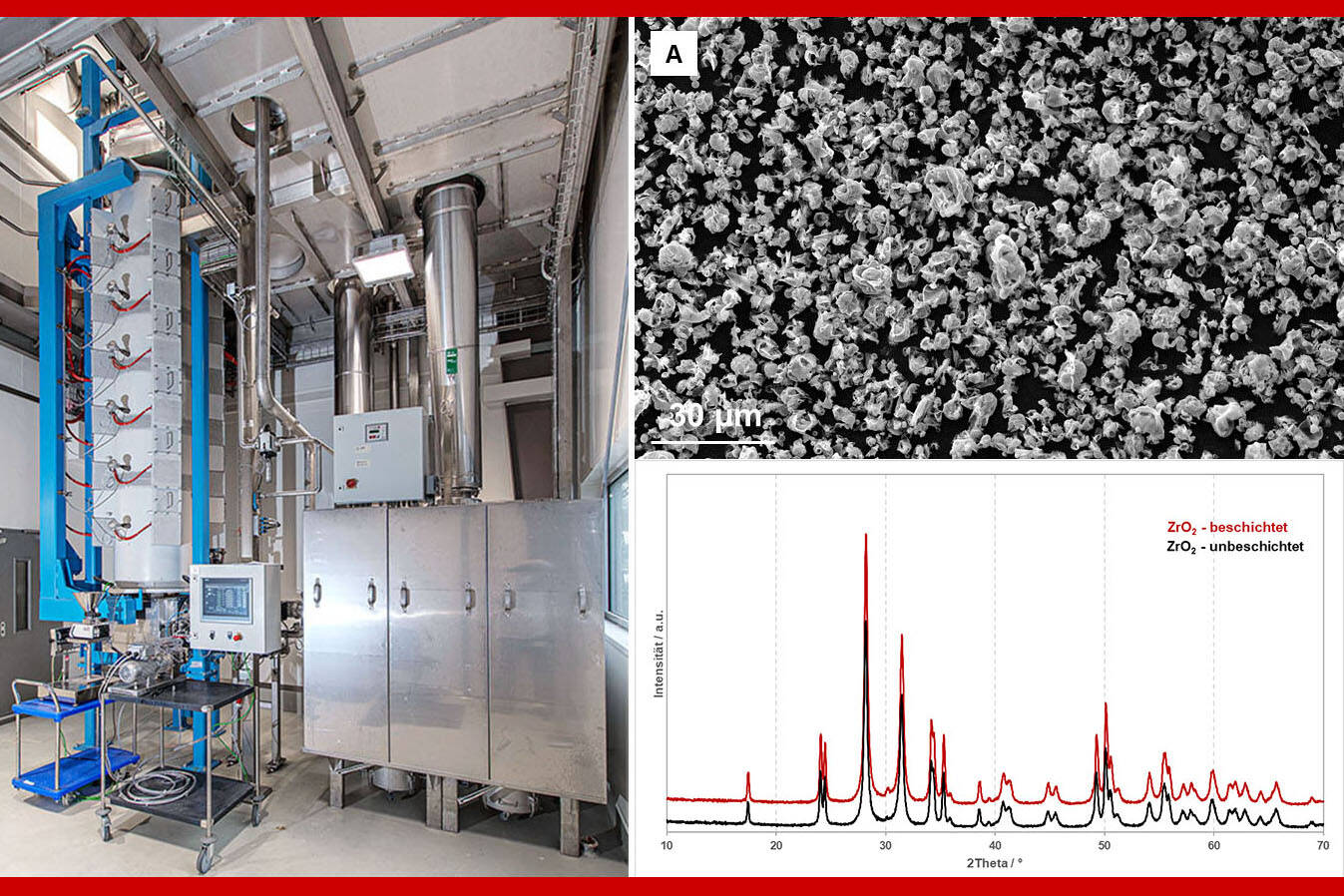
Creating customized raw material products on a technical scale. Example: barium strontium cobalt iron oxide (BSCF), doped and coated zirconium dioxide. By using Glatt’s innovative powder synthesis technology and the associated spray drying and calcination processes, new opportunities in raw material production have been explored. In this article, the inherent potential of barium strontium cobalt iron oxide (BSCF), doped and coated zirconium dioxide is described. Keywords Zirconium dioxide, BSCF, raw material development, spray drying, calcination, powder synthesis Authors Dr-Ing. Viktor Drescher is a materials engineer and holds a doctorate in coating technology from the Technical University of Berlin. At Glatt, he works in business development and is responsible for the high-temperature processes powder synthesis, high-temperature fluidized bed and chemical vapor deposition (CVD). Dr rer. nat. Johannes Buchheim obtained his PhD from Friedrich Schiller University in Jena, Germany. He has been working as a project engineer in Glatt’s Application and Formulation Technology department on powder synthesis
02.02.2024  |  6089x  |  Specialist article  | 
Plant safety from the perspective of an operating company Plant engineers should “go the extra mile” to ensure the safe operation of process facilities
Plant safety from the perspective of an operating company
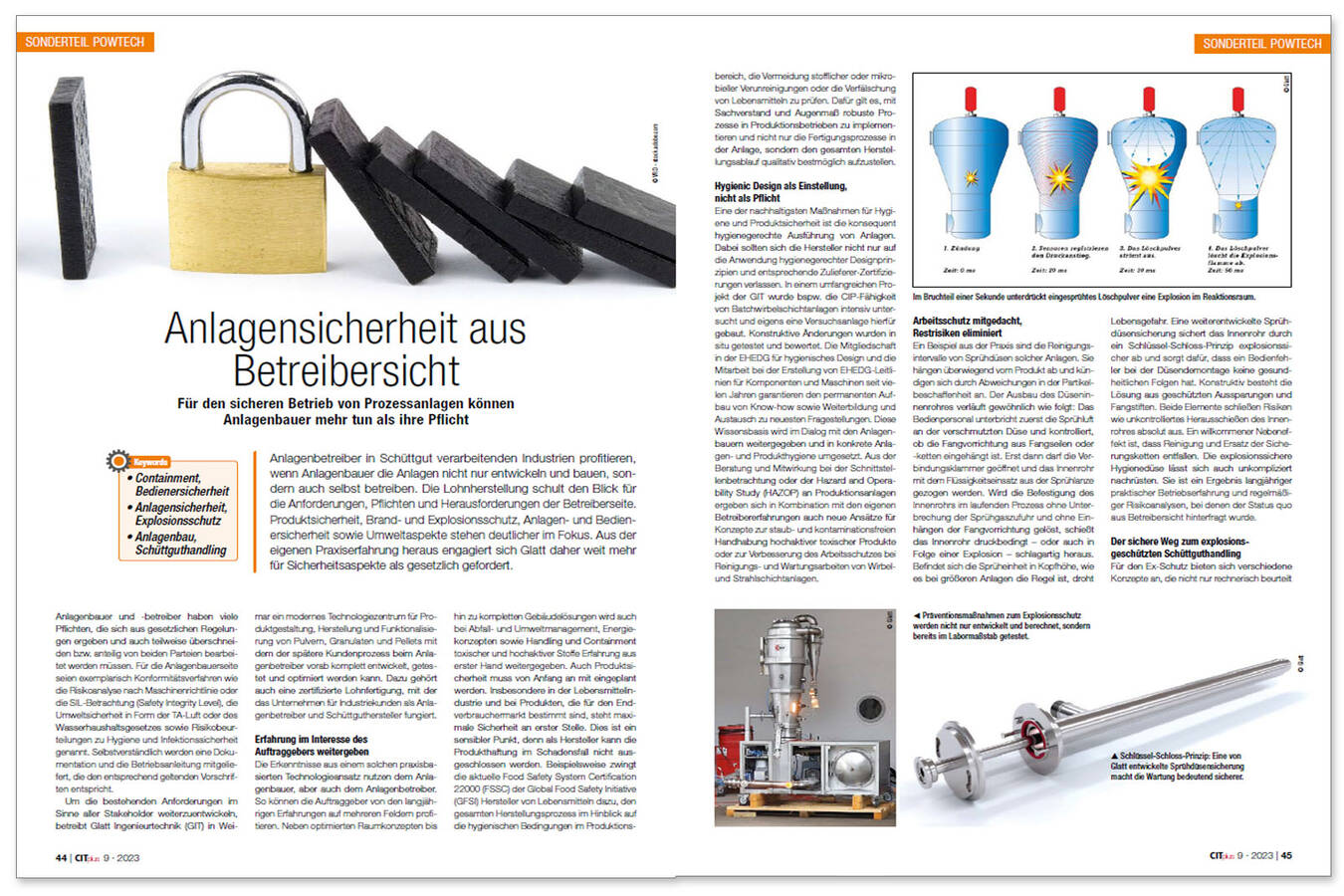
Plant engineers should “go the extra mile” to ensure the safe operation of process facilities Manufacturers in the bulk material industriy can profit, if the engineering and construction company not only develops tailor made solutions, but is a manufacturer itself. Toll manufacturing sharpens the view for the obligations, dutys and challenges on the manufacturing and operation side. Manufacturers need to pay higher attention to product safety, fire and explosion protection, plant and operator safety (occupational health) as well as environmental protection, than required from the engineering and construction side. Being a toll manufacturer themself, Glatt is incorporating the operational experience into the design of their process plants, beyond legal and regulatory requirements. Plant manufacturers and operators must comply with strict operational demands and legal regulations, some of which overlap or must be apportioned to the appropriate party. For the plant manufacturer, examples include conformity procedures — such as risk analyses in accordance with
27.10.2023  |  6551x  |  Specialist article  | 
Drying liquids – Best technology for nutraceuticals The desired end product properties can make a difference when choosing between spray drying or spray granulation
Drying liquids – Best technology for nutraceuticals
The desired end product properties can make a difference when choosing between spray drying or spray granulation Both spray drying and fluid bed spray granulation can be used to convert liquid products into bulk materials. The most effective process will often be dictated by the desired properties of the final particles and the specific application. Glatt Ingenieurtechnik has a thorough understanding of both techniques and has a long history of designing fluid bed systems that are tailored to individual customer products. Drying solids-laden liquids is frequently used in industry to convert products into a more manageable form and enable their storage at ambient temperatures. The resulting bulk materials are not only more stable than the liquid raw materials, they also have lower weights and smaller volumes, significantly reducing transportation and storage costs as well as any handling issues. To dry liquids as quickly as possible, spraying them into a hot air stream (spray drying) is very effective. It has been used for decades to quickly and cost-efficiently dry large-volume
29.08.2024  |  11373x  |  Specialist article  |   | 
Spray (micro) encapsulation of sensitive substances in matrix form An overview of essential oil and vitamin case studies
Spray (micro) encapsulation of sensitive substances in matrix form
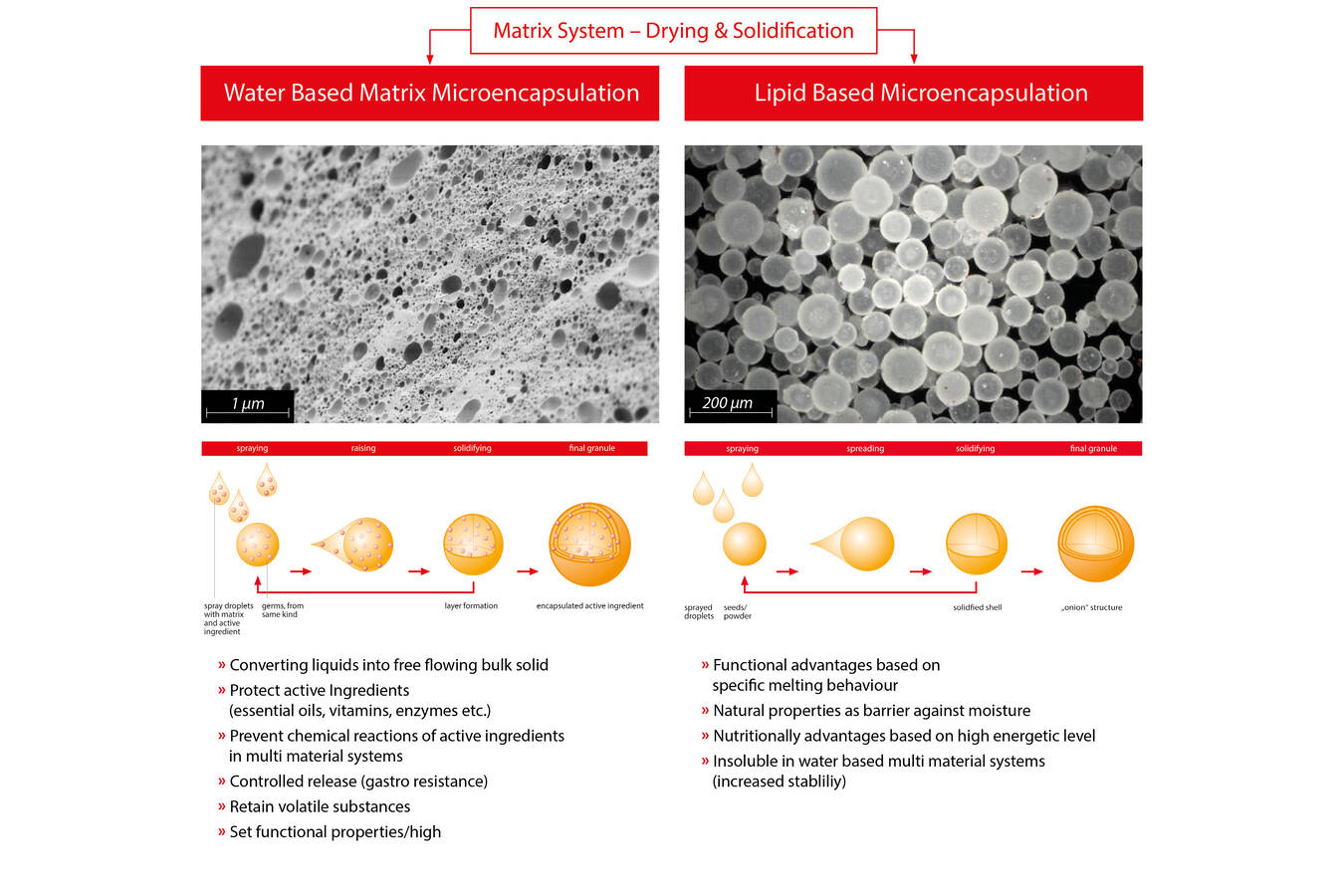
An overview of essential oil and vitamin case studies Phytochemicals are increasingly found in many food, chemical and agricultural items. Product and process optimization is becoming ever-more important in all of these industries, with a focus on quality, manufacturing efficiency, stability and formulation costs. Essential oils are volatile substances with a relatively high vapor pressure; they are susceptible to oxidation and light and may change or may even lose their properties when directly exposed to stressors. Like other sensitive, volatile, odor- or taste-intensive liquid active ingredients, they must therefore be protected from the environment or vice versa. For this protection and to simplify handling — as well as for better dosage and targeted release — these substances are therefore progressively offered and used in encapsulated and/or free-flowing forms. Various processes can be used to deliver products with a compact structure. During process development, the most suitable procedures and equipment
21.07.2021  |  12042x  |  Specialist article  |   | 
Drying and product design in the vacuum fluid bed Dry, durable, pressure-resistant: Gentle and safe processes
for processing extracts containing solvents and temperature-sensitive substances
Drying and product design in the vacuum fluid bed
Dry, durable, pressure-resistant: Gentle and safe processes for processing extracts containing solvents and temperature-sensitive substances The processing of solvent-containing extracts and temperature-sensitive substances such as microorganisms or enzymes places high demands on process conditions, occupational safety and plant safety. Vacuum fluid bed technology from plant manufacturer Glatt is another way of achieving even more temperature-friendly processes by lowering the boiling point at reduced system pressures. This benefits live cells, products with organic solvents, and also agglomerates with high strength. Aqueous processes and their limits Fluid bed technology is characterized by excellent heat and mass transfer. Each individual product particle is suspended by the process gas to achieve perfect mixing and homogeneous temperature distribution. These well-known advantages of convection drying over contact dryers are utilized for temperature-sensitive products such as yeasts, enzymes and other reactive substances. Efficient drying in the fluid bed enables a variety of other processes such as
06.05.2025  |  13125x  |  Specialist article  |   | 
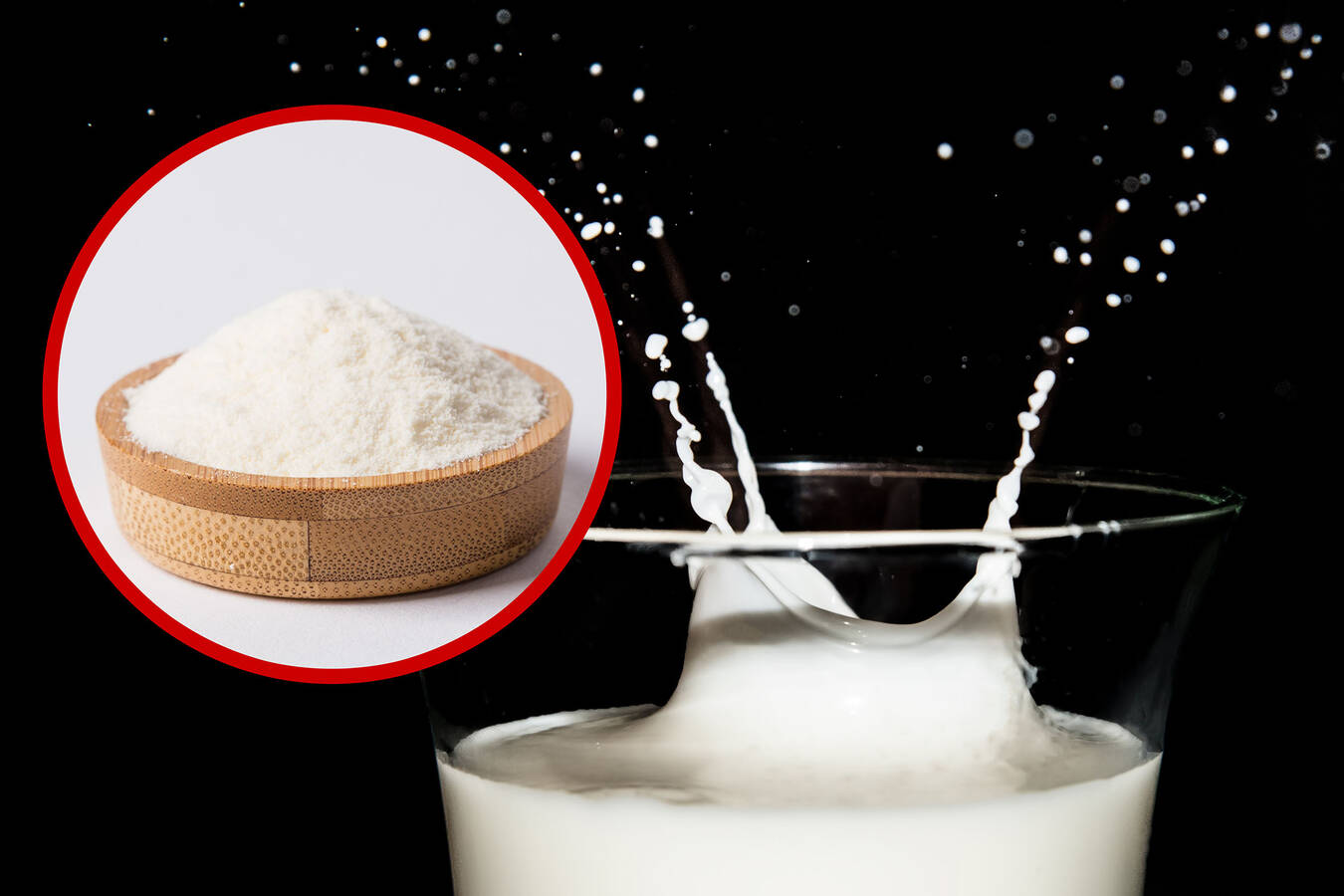
Spray agglomerating of plant-based milk alternatives Using fluidized bed spray agglomeration, particle size distribution, particle structure and particle properties can be specifically adjusted and improved.
Spray agglomerating of plant-based milk alternatives
Using fluidized bed spray agglomeration, particle size distribution, particle structure and particle properties can be specifically adjusted and improved. Spray agglomeration of plant-based milk alternatives for perfect wetting and dispersing properties Powdery substances often cause problems during dosing, filling and transport because of their high dust content and poor flowability. Low solubilities and dispersing properties also impair the application of the end product. With the help of fluidised bed spray agglomeration, the size distribution and structure of difficult-to-process particles can be specifically adjusted and improved. According to a study by the Research and Markets Institute, the global market for plant-based milk alternatives will grow at an estimated annual rate of 9.9% until 2025 (vegconomist 2020). Market shares of almond and soy milk are expected to grow particularly rapidly, at 40% and 37% respectively. At the same time, the application and use of powdered products is increasing. Benefits include the fact that less packaging required, which is more sustainable, and transport is both easier
01.08.2024  |  10654x  |  Specialist article  |   | 
Process Technologies to Optimize Detergent Manufacturing Cleaning agents and detergents can be produced environmentally friendly and effective, using fluid bed and spouted bed technologies. Experts from Glatt Ingenieurtechnik explain.
Process Technologies to Optimize Detergent Manufacturing
Cleaning agents and detergents can be produced environmentally friendly and effective, using fluid bed and spouted bed technologies. Experts from Glatt Ingenieurtechnik explain. As a manufacturer of consumer goods, the detergent industry must respond to megatrends like no other. One of these drivers is sustainability; eco-friendly biosurfactants have been available since 2009 and, now, alternative complexing agents such as α-ADA or MGDA-Na3 can be produced from renewable raw materials and used to replace phosphates. According to the German Zukunftsinstitut (Future Institute), the neo-ecology megatrend is causing a reorientation of the values of global society, culture and politics and will have a defining impact on the 2020s [1]. Consumers and business partners alike are asking about transparent value creation and whether social aspects are being considered. As an example, seamless traceability has long been standard practice. Yet, the ongoing microplastics debate calls for a rethink when it comes to encapsulated fragrances or when the fibres of functional clothing have to be fished out of wastewater. Solutions for all these requirements can
02.10.2020  |  17002x  |  Specialist article  |   | 

More items

Enrichment of animal feed with vitamins and minerals Optimal Animal Feed Mixtures: Taste masking. Homogeneous compounds. Processing enzymes, organic acids or essential oils.
Enrichment of animal feed with vitamins and minerals
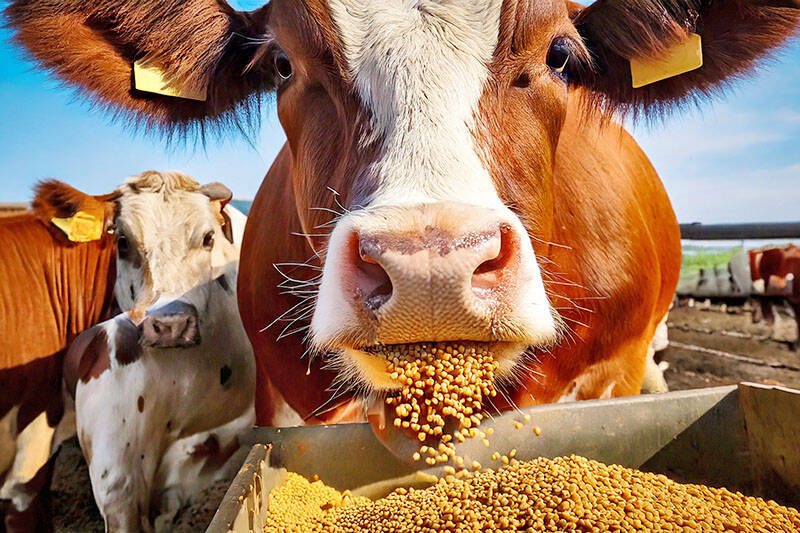
Optimal Animal Feed Mixtures: Taste masking. Homogeneous compounds. Processing enzymes, organic acids or essential oils. Gentle processing of animal feed additives Feed additives for large livestock today fulfill a wide variety of tasks. Weight gain in fattening cattle, increasing milk yield or reducing phosphate excretion are just some of the issues in the feed industry. Enzymes, organic acids or essential oils perform specific tasks. Since the ban on prophylactic antibiotic administration, bactericidal oils have become an integral part of feeds. All these products are usually used in feed mixtures and must therefore be robust and free-flowing. Glatt fluid bed and spouted bed technology Processes such as spray stiffening, a special variant of spray granulation, embed oleoresins and other essential oils in a fatty matrix, turning them into compact additives that mix well. Coating processes allow taste masking of bad smelling and tasting active ingredients. In addition, active substances are also often sensitive to temperature or oxidation and, with a protective coating, are given
04.07.2025  |  1299x  |  Product description  |   | 
Optimized Product Properties for Plant-based Milk Alternatives Drying Technologies for Milk, Whey and Vegan Raw Materials
Optimized Product Properties for Plant-based Milk Alternatives
Drying Technologies for Milk, Whey and Vegan Raw Materials Enhancing of products like animal proteins and peptides, plant-based instant beverages, lactose, enzymes, microorganisms, etc. Energy saving process options. Our expertise in particle design and plant engineering for functional powders, granules and pellets focuses on a wide range of products from almost all bulk solids processing industries. This also applies to milk, whey and vegan raw materials. There are numerous options for optimizing and functionalizing milk products, plant-based milk alternatives and ingredients: - dry liquids into free-flowing granulates, such as for plant-based instant drinks - produce instant products, food supplements, cosmetics with perfectly adjusted solubility like collagen and animal proteins - dry and stabilize microorganisms like probiotics and bacterials - granulate powder into tabletable agglomerates like lactose - control release of active ingredients, for example microorganisms like probiotics and bacterials - stabilize
05.06.2025  |  1198x  |  Product description  |   | 
Stabilize Oxidation-Sensitive or Volatile Substances Protection for essential oils, carotenoids, flavors and hydrophobic substances and other active ingredients by micro encapsulation
Stabilize Oxidation-Sensitive or Volatile Substances
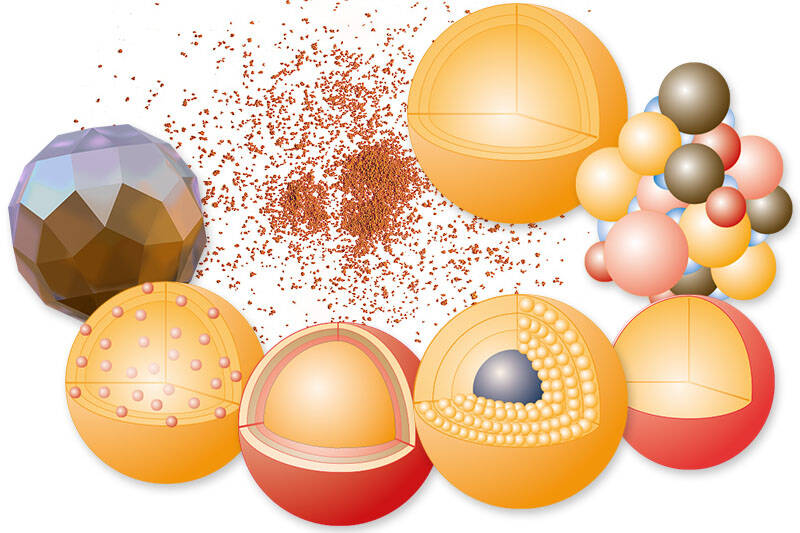
Protection for essential oils, carotenoids, flavors and hydrophobic substances and other active ingredients by micro encapsulation Protecting and drying hydrophobic substances by micro encapsulation Essential oils, carotenoids, flavors or even hydrophobic plant substances are challenging candidates in terms of formulation and process due to their chemical structure. Such substances are usually extremely sensitive to oxidation and to higher temperatures. For many applications, these substances are needed in solid formulations, for example in flavored teas and dessert mixes or as essential oils, neutral in taste and stable over time as additives in baby food. The micro encapsulation process combines the inclusion of hydrophobic substances in a matrix with granulation and drying. In the first process step, the oil is emulsified and encapsulated with an encapsulation material that protects against oxidation – such as modified starches, hydrocolloids or even proteins. Stabilization of the emulsion has a decisive influence on product quality. It prevents the microcapsules from being destroyed
04.04.2025  |  1635x  |  Product description  |   | 
Drying and Stabilization of Probiotics Increasing the availability of bioactive substances in the gut.
Protective coating increases the survival rate and specifically releases the bacteria
Drying and Stabilization of Probiotics
Increasing the availability of bioactive substances in the gut. Protective coating increases the survival rate and specifically releases the bacteria Drying, encapsulation and immobilization of microorganisms The health-promoting effect of probiotics has been proven by various studies in recent years and is undisputed. The multitude of dietary supplements but also enriched foods is a sign of this. The aim of all these products is the colonization of microorganisms in the intestine to support the existing intestinal flora. The efficiency of the products, especially the number of surviving microorganisms, is crucial for this. The diversity of bacterial strains, their temperature sensitivity and the specific requirements of their milieu rarely allow standard solutions. After fermentation, the organisms must be converted to a storage-stable state – usually by freeze-drying. Sometimes other drying methods are successful. The drying and stabilization of microorganisms in the fluidized bed was investigated in a case study using the example of a lactobacillus strain. The result proves that only a close interaction
19.02.2025  |  1794x  |  Product description  |   | 
Controlled release of active ingredients with the right coating The right coating for detergents, salts, fruit acids and many other products. Improve the functionality of your product through controlled release.
Controlled release of active ingredients with the right coating
The right coating for detergents, salts, fruit acids and many other products. Improve the functionality of your product through controlled release. Controlled release of active ingredients is a key task for the formulation of pharmaceutical dosage forms. In addition to bioavailability, the release of the active ingredient from the tablet or active ingredient pellets determines its concentration in the blood. The properties of the polymer film, the pH-dependent solubility, the film thickness or the defined porosity are just some of the adjustable parameters to achieve the desired reproducible release kinetics. The key to success lies in the right coating process. For demanding solutions, Wurster coating in the fluid bed has established itself here. Functional active or auxiliary substances are now also used in other branches of industry. As early as the 1990s, detergent and cleaning agent manufacturers started initial trials with fluid bed coating processes for the introduction of dishwasher tabs, in order to release individual components of the tabs at the right time. For example, a water-soluble component was
05.12.2024  |  2090x  |  Product description  |   | 
PORTALS
BulkSolids-Portal Schuettgut-Portal Recycling-Portal
Related
Bulkgids.nl
SIGN UP FOR OUR NEWSLETTER
Newsletter archive
Service and contact
ContactDisclaimerPrivacyAdvertising
FOLLOW US
Linked