Gypsum processing for the production of plaster boards using the ringl
The production process for plasterboard and gypsum fibre board starts with the specific preparation of the raw material. A ringlayer mixing system offers different advantages compared to other mixing processes.
Plasterboard and gypsum fibre board are used billions of times over in interior construction. A recent market report [1] estimates the global production volume for 2025 to be around 16.89 billion square metres. This figure is expected to increase to 22.76 billion square metres by 2030. Manufacturers of these building materials must therefore produce very large quantities of the required quality at an internationally competitive price.
The gypsum core of a board plays a key role in ensuring that plasterboard and gypsum fibre boards can fulfil their specific functions in drywall and acoustic construction to the highest standard, determining product properties such as flexibility, stability and fire resistance.
Preparation process
To ensure that the gypsum core is suitable for these tasks, the raw material – ground and calcined gypsum stone (calcium sulphate dihydrate, CaSO₄·2H₂O) – must be processed according to the relevant specifications. The result of this process is a mixture called “slurry” which is then processed into the finished board in the next production stage.
Prioir to producting the slurry, two supporting processes can be used: dry mixing or moistening. In dry mixing, the gypsum is mixed with powdered additives and fibres to optimise the mechanical properties and stability of the board. Fire resistance can also be improved by adding the appropriate additives. In moistening, water or other liquid additives are incorporated into the raw material. This can lead to reduced water consumption and lower drying costs in board production.
Both processes require industrial mixers that operate continuously due to the typically high throughputs in gypsum board production. Designed specifically for the material and application, these mixers enable precise additive addition and very homogeneous pulping of fibres or homogeneous moistening of all gypsum crystals for a uniform reaction. The liquid can be added from the inside via the shaft or from the outside. If both applications are to be combined in the process, the use of two machines connected in series is recommended.
The ringlayer process
The ringlayer process is a mixing process that demonstrates excellent distribution of additives at high throughput rates and high homogeneity in the preparation of gypsum compounds. Unlike other types of mixers, a ringlayer mixing system rotates at high peripheral speeds of up to 40 m/s resulting in a centrifugal force forming a so-called ringlayer of product. Within this concentric layer, there are enormous speed differences between the rapidly rotating mixing tools and the stationary drum wall. The consequence: there is particularly strong friction in the profile of the ringlayer.
This results in characteristic advantages over conventional continuously operating mixers where the mixing takes place in a fluid bed which causes less friction than the ringlayer due to the nature of the process.
Another advantage of the ringlayer process is that it enables shorter throughput times. This is because the application-specific tools of the mixing mechanism move the product through the mixing drum during the process in a manner similar to plug flow. As this process is extremely fast, the residence times are very short. When processing gypsum compounds, for example, they are only around 15 to 20 seconds, and even less for other applications. Finally, this means that even large throughputs can be achieved with comparatively small machines. Therefore, the use of ringlayer mixers offers various process-related advantages, making them particularly beneficial in terms of cost-effectiveness and versatility.
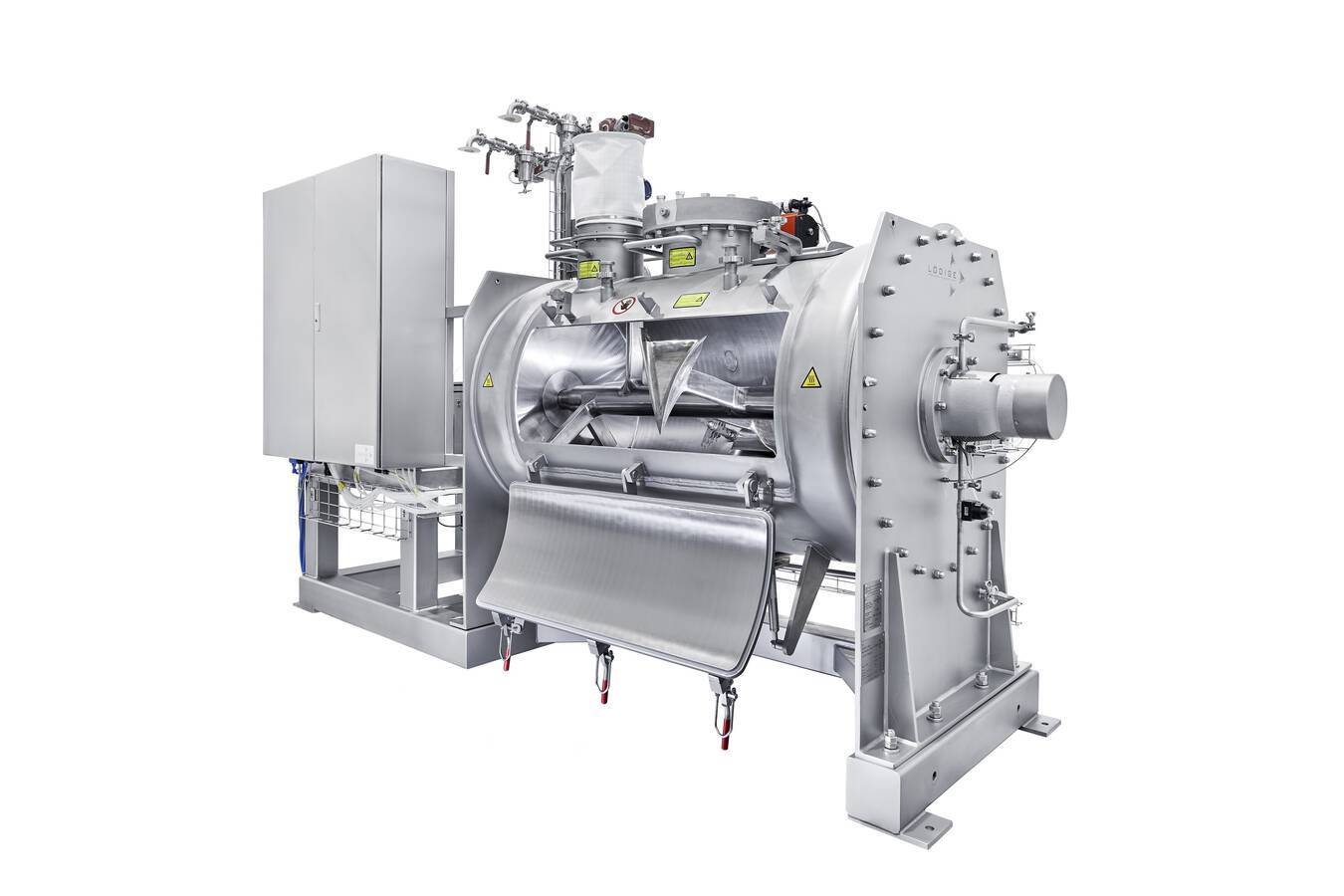
The CoriMix® type CM of make LÖDIGE
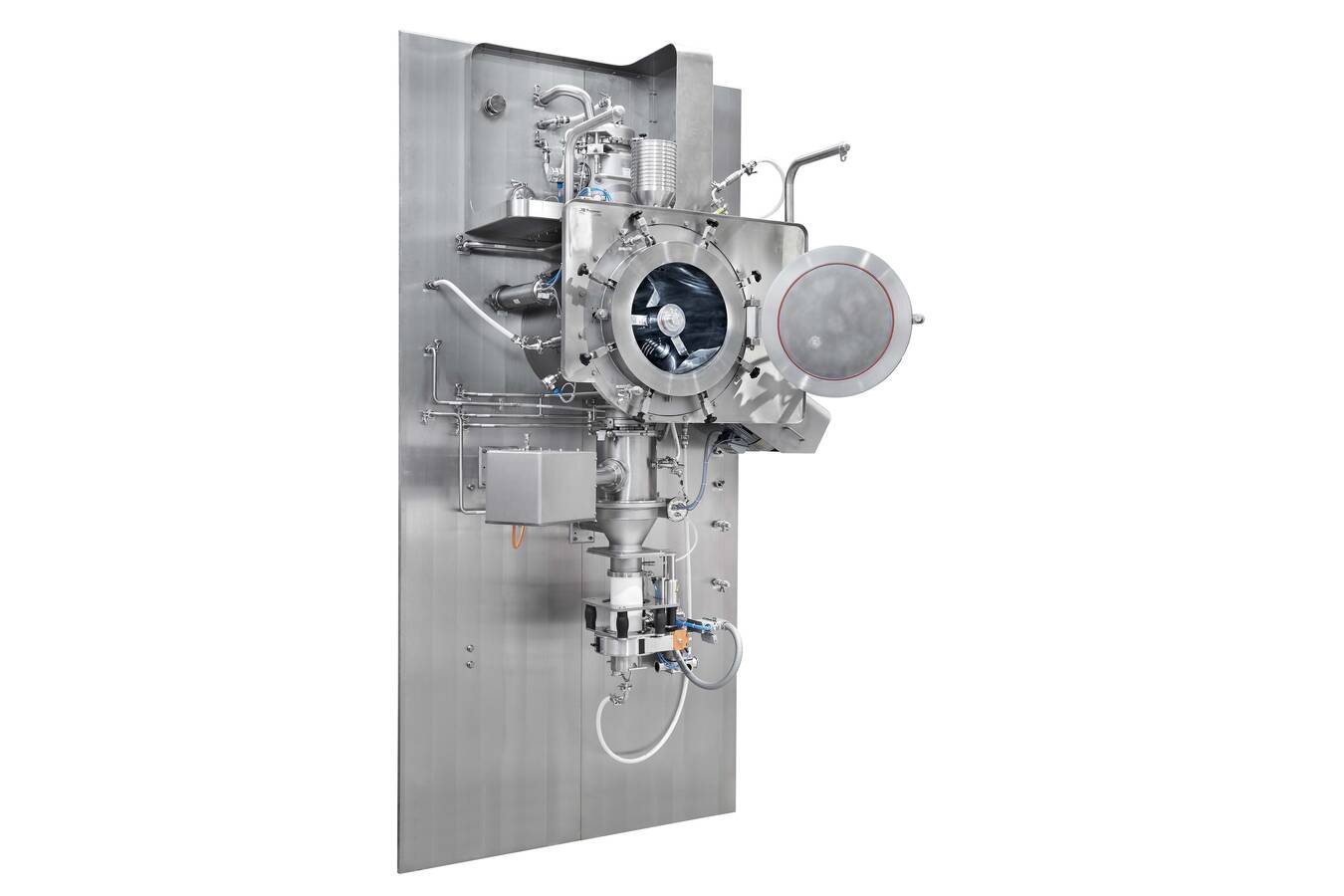
The LÖDIGE ringlayer mixer CoriMix® of type CM, tried-and-tested for years, offers the following advantages: low space requirements, easy handling and maintenance, effective cleaning and durability.
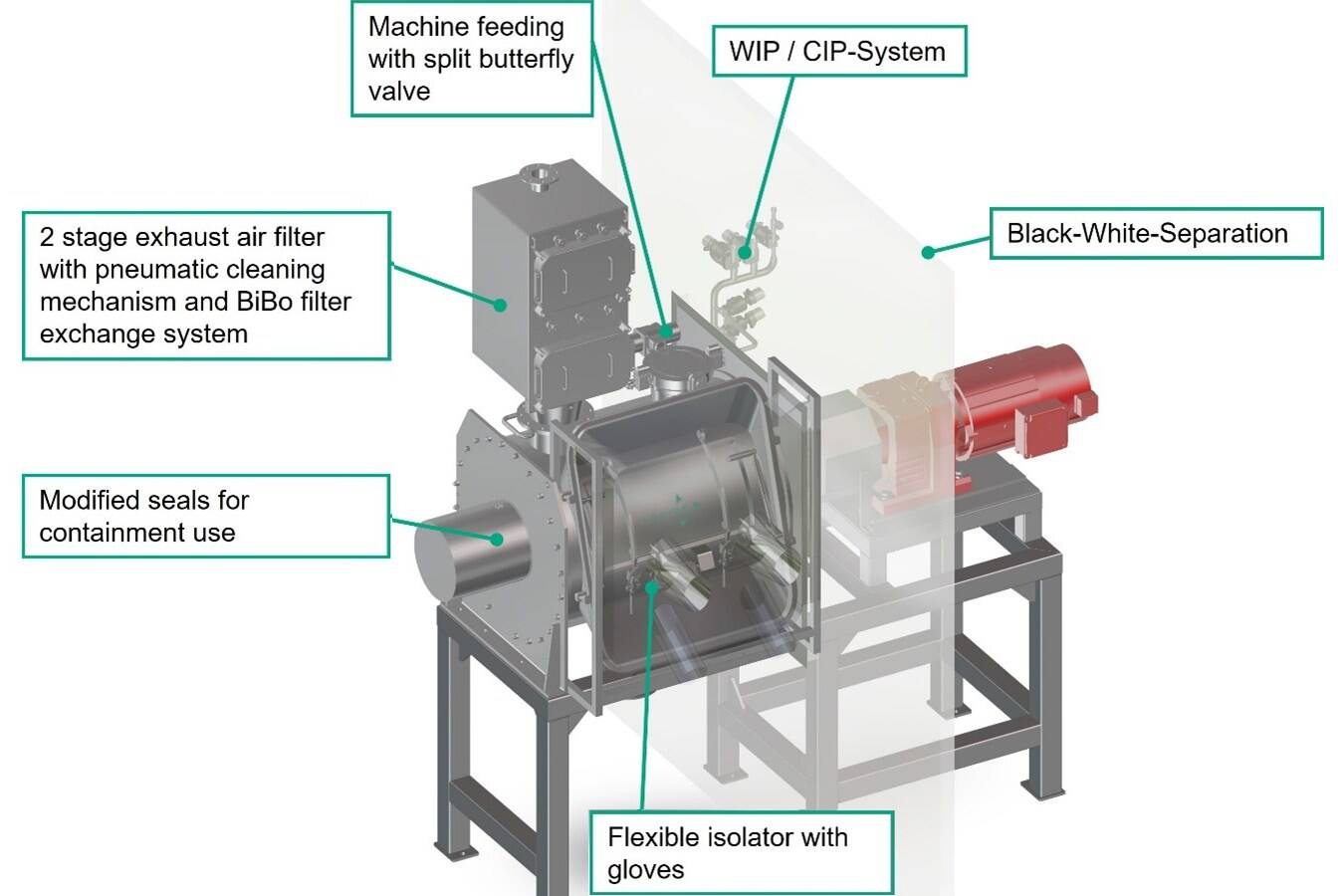
A heating/cooling jacket enables fine adjustment of the process parameters and maintains constant conditions even in the presence of friction energy. The mixing drum is divided in the middle along its entire length and can be opened to the top. This makes the mixing system easy to clean and maintain, and adaptable to new requirements if necessary. Ensuring high operational reliability and a long service life. All tools and the mixing drum can be provided in different materials and with additional wear protection to counteract possible wear.
Each CoriMix® mixer is designed and manufactured to meet the specific requirements of the customer or application. The machines are available with drum capacities from 5 to 3000 litres – i.e. from laboratory size for product development to large-scale industrial use. In processing gypsum used to produce gypsum boards, throughputs are typically around 10 to 120 t/h. Depending on the product and other process parameters, an average humidification process of around 30 t/h can be achieved with a 500 l machine volume.
The system also offers the option of dividing the mixing chamber into zones of varying shear intensity. This enables optimal adaptation to varying product properties. Liquid components are fed directly into the ringlayer, ensuring homogeneous distribution of the liquid in the product. This prevents unwanted wetting of the mixing shaft and mixer wall. The machine also meets all current ATEX-compliant construction requirements thanks to features such as temperature monitoring at the seal and bearing, as well as equipotential bonding.
Conclusion
The efficient processing of gypsum compounds is becoming increasingly important in view of increased production volumes. Ringlayer mixers such as the CoriMix® type CM of make LÖDIGE offer significant advantages in terms of homogeneity, throughput and cost-effectiveness. Thanks to their high level of flexibility and process precision, they ensure reliable product quality, even with challenging formulations. Their importance will continue to grow in the future – particularly due to the increasing demand for efficient and resource-saving production processes.
Authors:
Martin Schmitz und Thomas Wegener,
Technical Sales