Rising global potash demand, combined with geographically concentrated supply chains vulnerable to political disruption, has intensified the need for production optimization at existing facilities. Many operators discover that their primary capacity limitation lies not in major process equipment, but in screening operations within compaction and granulation circuits.
Screening as the Primary Production Constraint
Field analysis reveals that screening operations—particularly in compaction/granulation stages and final product classification—frequently constitute the primary throughput limitation in potash facilities. This constraint can be addressed through targeted interventions focusing on proper equipment sizing and material distribution optimization, rather than extensive facility reconstruction. Such projects typically achieve implementation within six-month timeframes while delivering production increases of 10–20%, with specialized configurations reaching 20–30% gains (equivalent to 100–150 t/h additional capacity) and investment recovery periods often under twelve months when enhanced output is fully utilized.
Operational Challenges in Current Systems
- Potash processing facilities commonly encounter three primary categories of screening-related limitations:
- Equipment Sizing Issues: Inadequately dimensioned or overloaded screening equipment in compaction and granulation stages restricts throughput, while irregular material distribution across screening surfaces diminishes separation performance and elevates recirculation requirements.
- Maintenance Intensity: Operational data indicates facilities require up to 8 hours monthly for manual screen cleaning, quarterly replacement of mechanical cleaning devices due to high-temperature operation, and conveyor belt changes approximately every three weeks, with dust accumulation compounding these challenges.
- Energy and Process Inefficiency: Elevated recirculation of oversized and undersized material increases energy consumption within the compaction-crushing-screening circuit while compromising stability in downstream operations.
Implementation Case: KCl Granule Facility Upgrade
A detailed project study at a muriate of potash (MOP) granule production facility demonstrates the practical benefits of strategic screening modernization. The initiative targeted capacity expansion from 400 t/h to 696 t/h (900 t/h design specification) in potassium chloride processing operations.
Baseline Conditions
- The facility operated four conventional product screening units at 100 t/h each, experiencing:
- 8-hour monthly manual cleaning requirements
- Quarterly mechanical cleaning component replacement due to thermal stress
- Three-week conveyor belt replacement cycles
- Irregular material distribution compromising operational efficiency
Modernization Approach
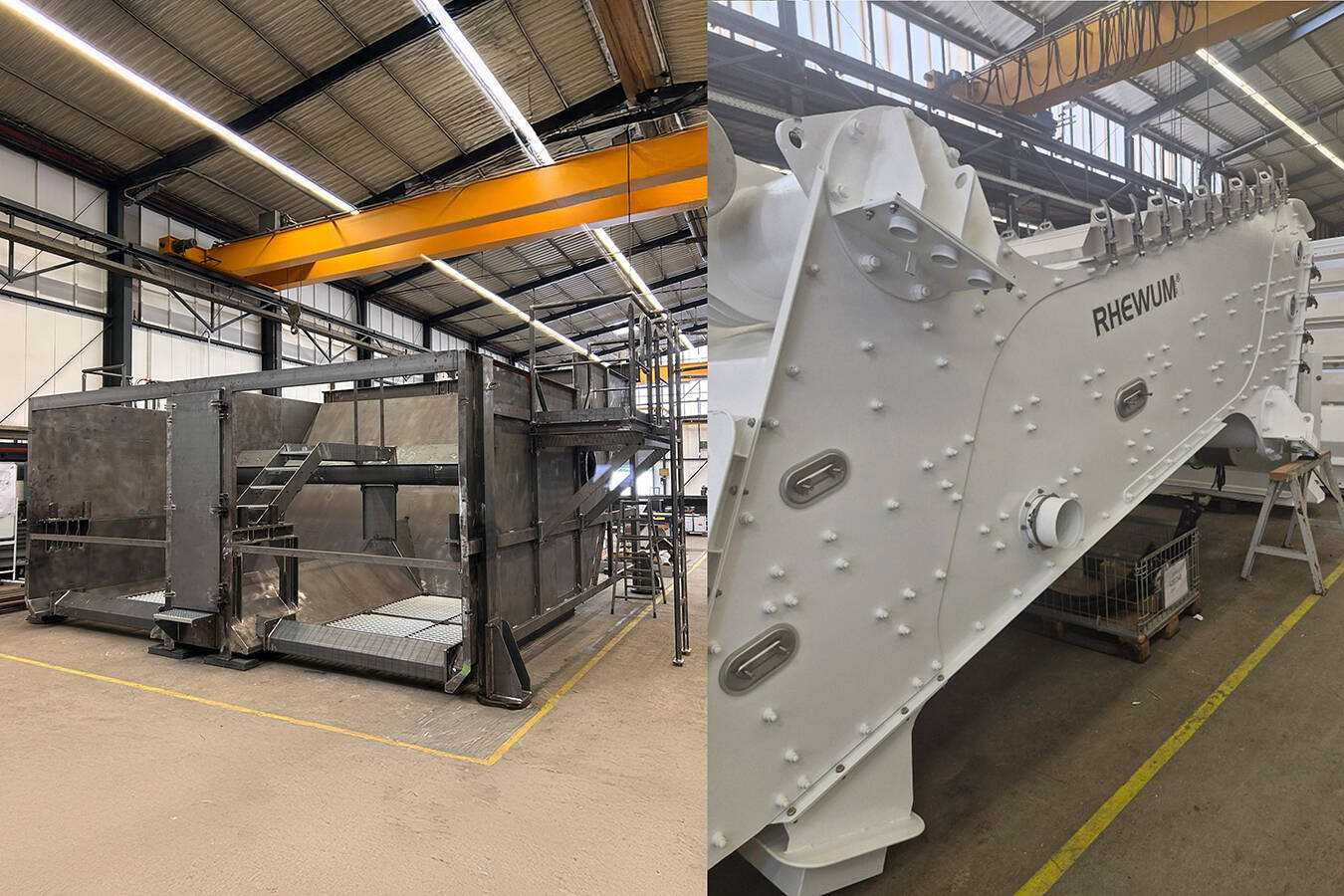
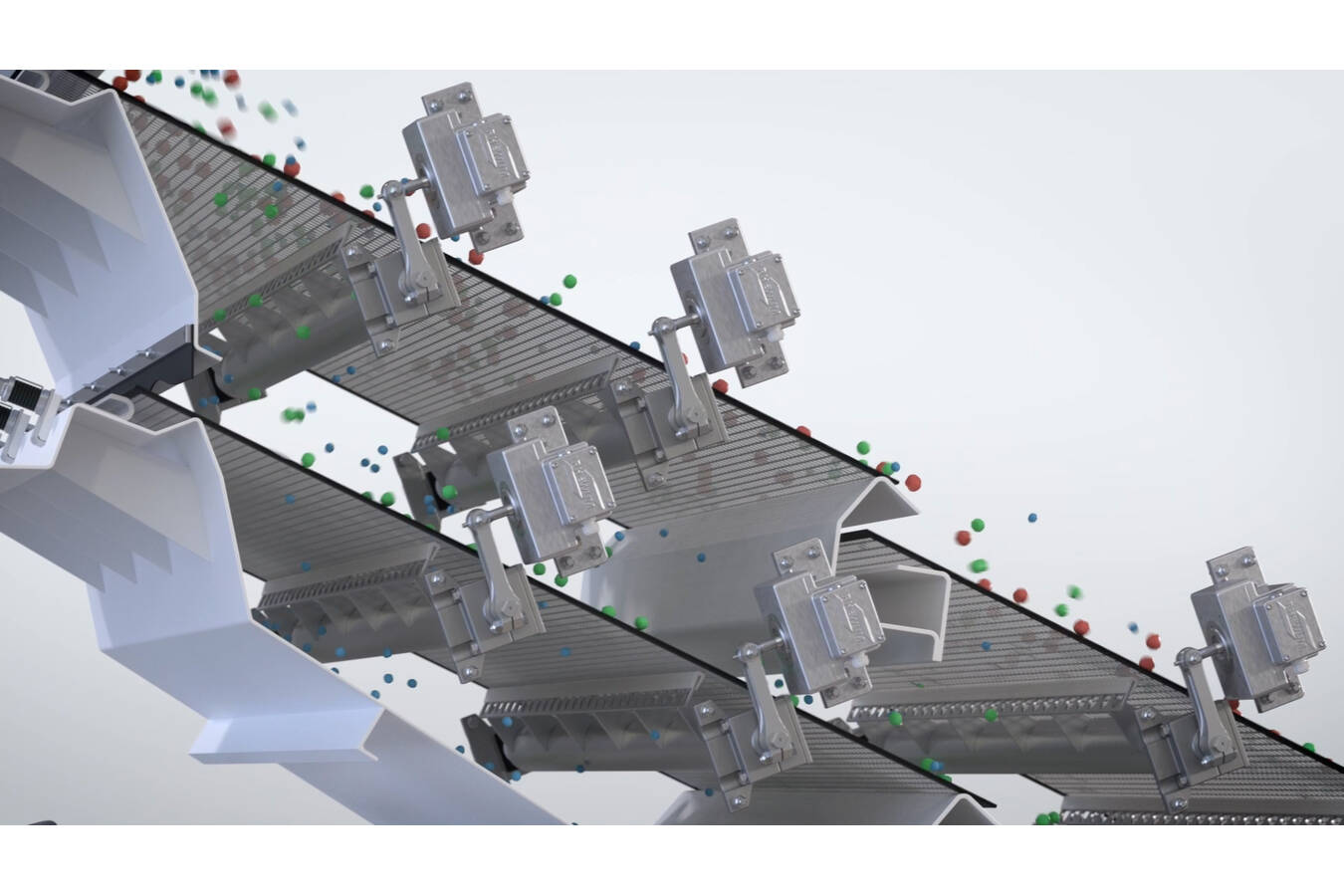
The upgrade incorporated two RHEduo® triple-deck screening systems, each rated for 348 t/h feed capacity (450 t/h design), integrated with RHEmid feeding equipment and custom distribution systems for consistent material loading.
Measured Performance
- Testing validated substantial improvements in the critical 4-2 mm product specification:
- Product purity: 77.6%
- Recovery rate: 90.57%
- Target fraction throughput: 155-138 t/h range
- Overall system capacity: 696 t/h (900 t/h design)
Engineering Design Features
Process Reliability
- Steep inclination configuration prevents material accumulation and reduces unscheduled shutdowns
- Static housing design enables permanent flange connections, eliminating compensator maintenance
- External drive positioning accommodates product temperatures up to 450°C
- Reduced vibration profile minimizes structural support requirements
Maintenance Reduction
- Chain-driven cleaning systems replace high-maintenance ball cleaning methods
- Automated deblinding capabilities reduce manual intervention needs
- Reliable cleaning performance eliminates periodic component replacement cycles
Final Product Quality Control
- Product finishing utilized a RHEflex® linear vibrating screen (146 t/h capacity) for dust removal, achieving:
- <2mm material: 98.6% purity, 35.31% yield
- 2-4mm material: 78.9% purity, 99.97% yield
High-frequency linear motion enables precise separation at narrow cut points, while modular construction facilitates retrofit installation without structural modifications.
Financial and Strategic Benefits
Screening circuit enhancement typically delivers investment recovery within one year per production line when additional capacity is fully marketed. Beyond immediate throughput improvements, facilities realize reduced shutdown frequency, extended maintenance cycles, decreased lifecycle costs, and improved market responsiveness.
Given industry exposure to geopolitical factors and supply chain disruptions, operational adaptability and capacity flexibility represent strategic requirements rather than competitive differentiators. Screening circuit optimization provides a scalable, economically efficient approach to capacity enhancement and sustained profitability.
Implementation Strategies
Facilities can address screening constraints through two principal methods: replacement of undersized equipment with properly scaled units, or installation of supplementary screening capacity upstream or downstream to alleviate system bottlenecks.