Traditional grain storage measurement methods often fail to reflect true stock levels, leading to significant inventory errors. Inside massive silos, uneven discharging and heavy dust create steep material cones and side-wall clinging that conventional sensors simply miss. To resolve these physical limits, 3DPro2300 Radar Scanner networks are moving facilities past single-point tracking into an age of absolute 3D inventory transparency. By modeling the entire bin in real time, this advanced approach secures precise stockpile volume measurement, multi-point surface tracking, and reliable data traceability to optimize raw material purchasing.
Disruption of Silo Inventory Management
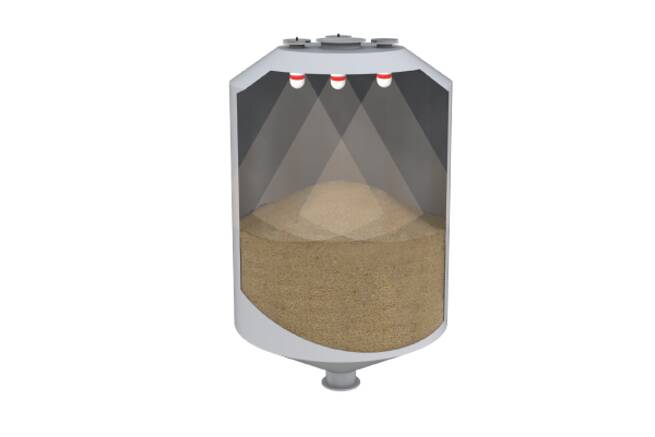
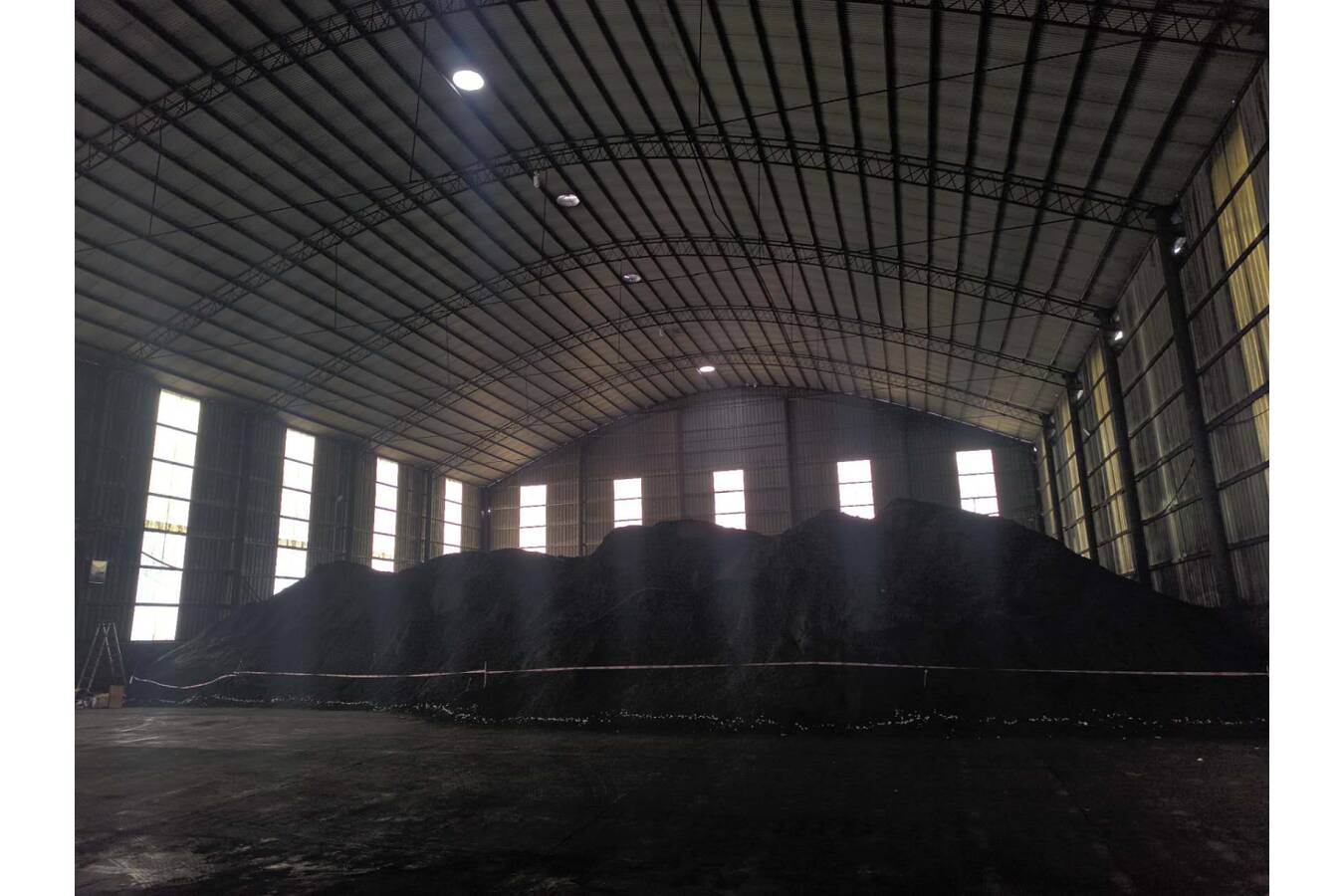
Accurate volume monitoring for large silos requires accounting for multiple complex physical factors. Inflowing grain naturally creates steep cone formations, while rapid emptying leaves deep, asymmetrical valleys. Furthermore, cohesive stocks like damp soybean meal frequently cling to internal steel walls, creating hidden pockets that compromise food safety and silo volume measurement inaccuracies. During high-speed grain transfer, rising dust clouds scatter standard light and sound waves, causing severe tracking errors. When surface mapping remains incomplete, local silo transparency drops, leaving procurement teams without the live material data needed to prevent costly warehouse discrepancies.
Advanced Grain Silo Monitoring Systems
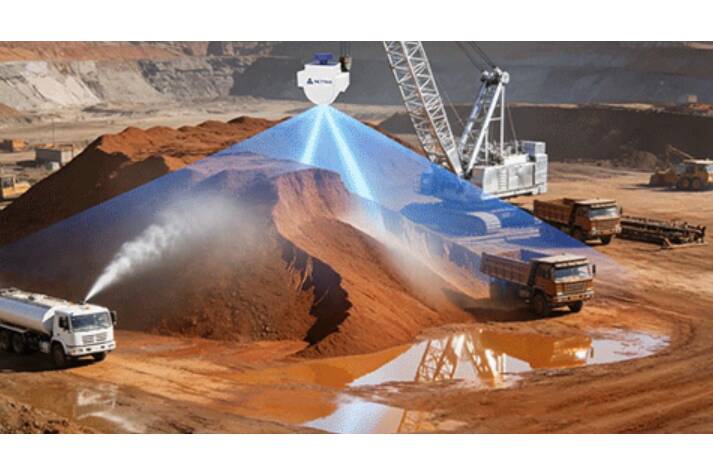
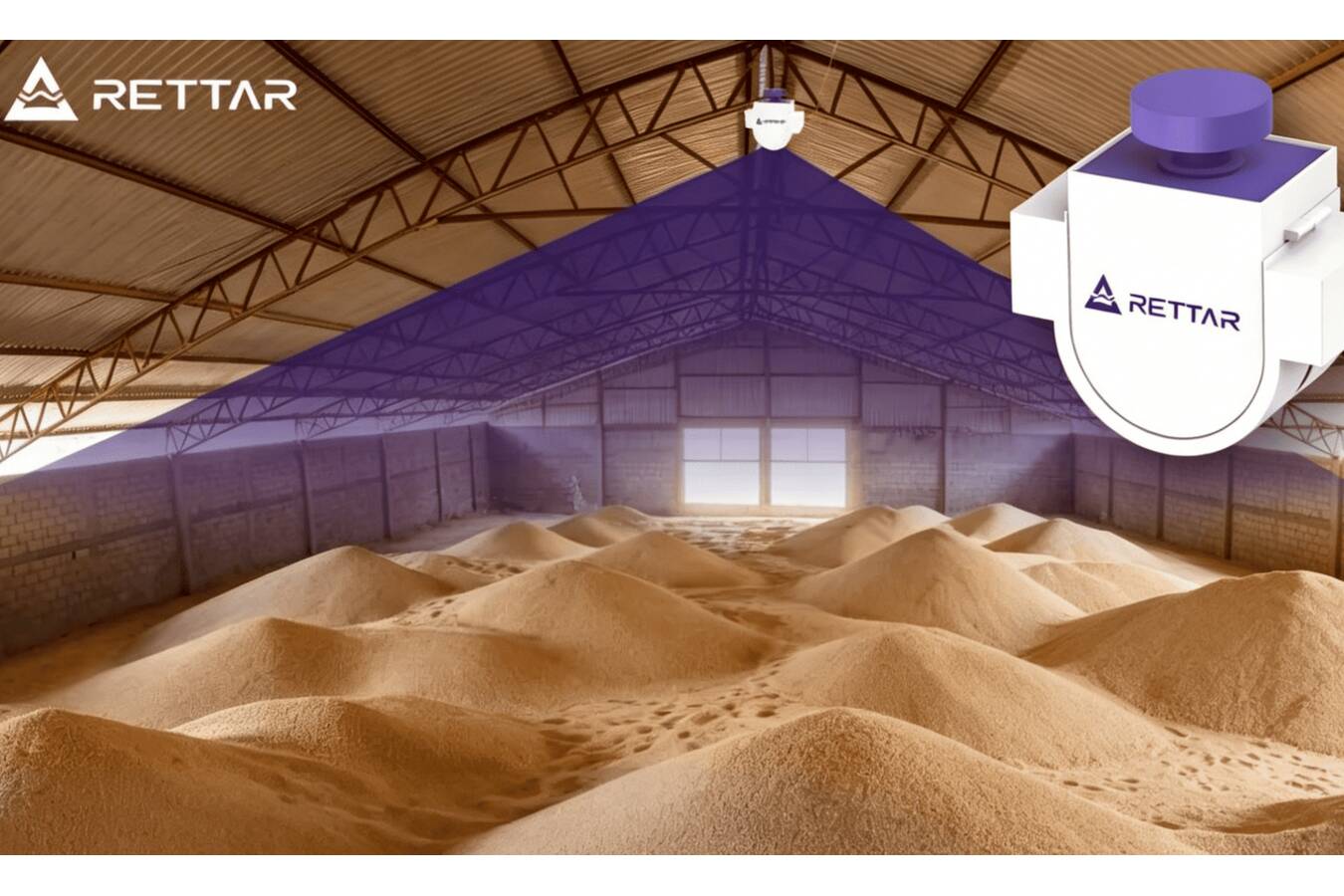
To overcome high-dust environments and surface irregularities, operators deploy advanced grain silo monitoring systems using FMCW radar. Backed by 19 years of dedicated industrial engineering expertise, the RETTAR 3DPro2300 Radar Scanner utilizes non-contact 80GHz microwave signals to penetrate dense airborne dust and resist surface buildup.
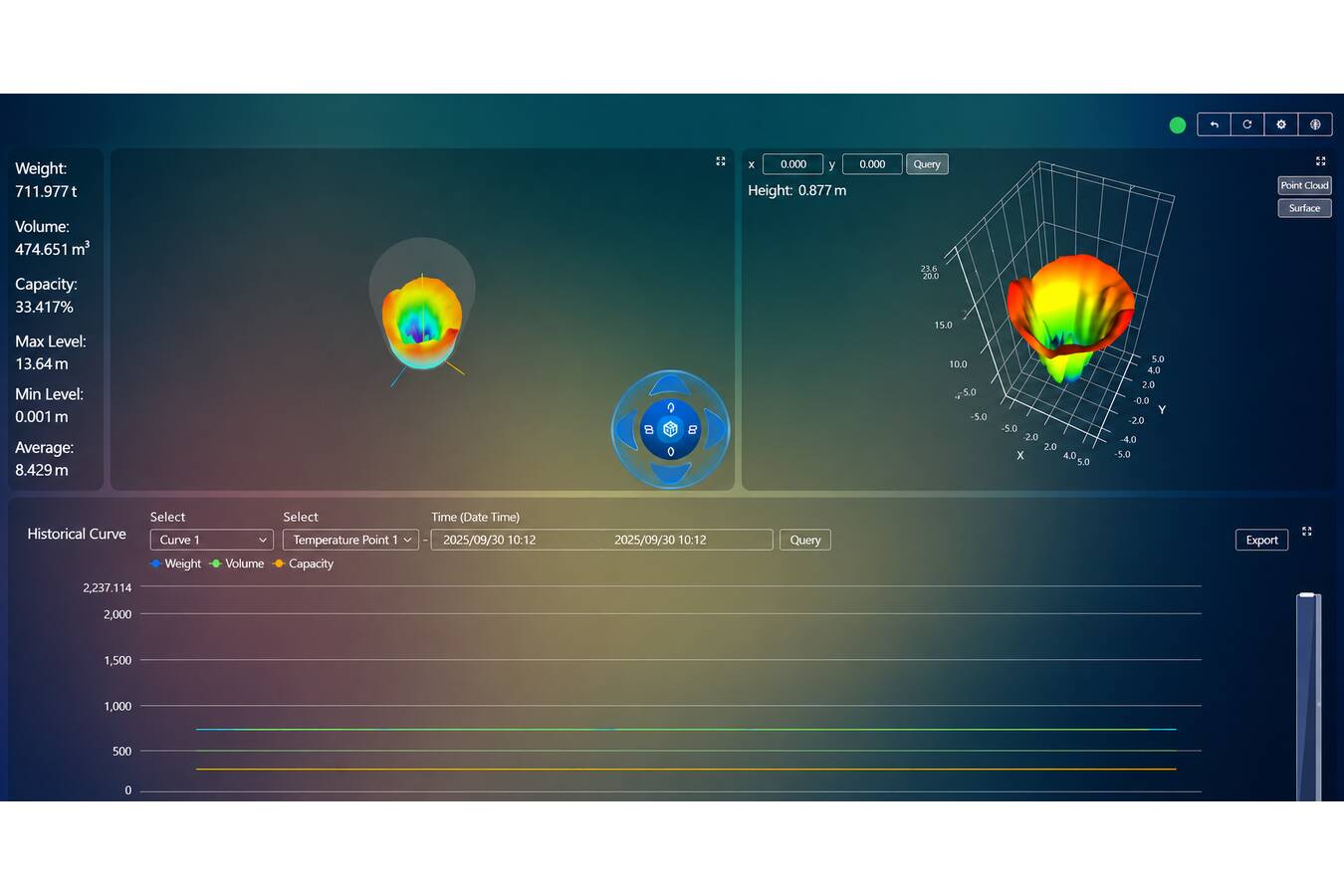
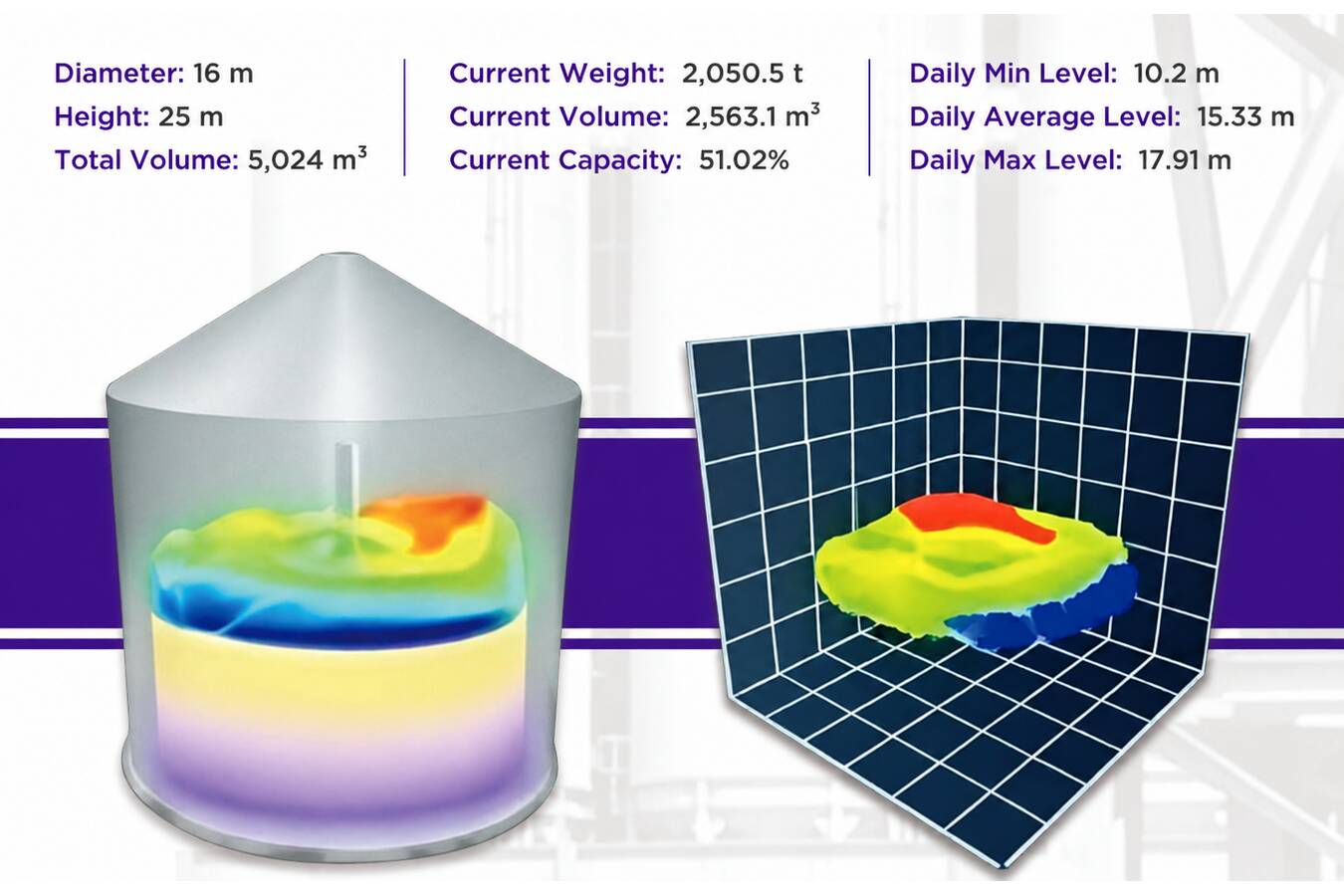
The internal mechanism carries out a 360° horizontal rotation and 90° wide vertical pitch adjustment to track thousands of distinct surface coordinates per cycle. This non-contact approach builds an automated, real-time 3D Surface Mapping of the grain surface without touching the material. The system tracks full range limits up to 120 meters to identify shifting material peaks, establishing stable data traceability and eliminating the blind spots that cause massive inventory errors.
Where to Deploy 3D Radar Level Scanners
Application Cases in Mills and Silos. This field-proven scanning technology scales easily to protect tracking accuracy across distinct industrial facilities and diverse bulk material layouts:
- Feed Mills: The non-contact scanner operates reliably without being effected by material sticking to the silo wall, cutting out routine maintenance even when handling sticky, cohesive materials like soybean meal.
- Corn Silos: The rugged structural design withstands rapid material movement, high-tonnage storage volumes, and continuous vibration during peak harvest seasons.
- Soybean Storage: Multi-point profiling detects asymmetrical pile shifts and material drawdowns, helping teams maintain highly accurate historical volume records.
Turning Data Into Actionable Procurement Plans
Moving from a single point of reference into a comprehensive 3D data network secures vital operational outcomes for the entire enterprise:
- Reduced Inventory Variances: True 3D volume mapping captures exact material contours, replacing rough mathematical estimates with highly accurate data to minimize inventory discrepancies.
- Optimized Material Purchasing: Live visual metrics stream straight to management desks, creating total data transparency that helps logistics teams schedule raw material purchases at optimal times.
- Zero-Climb & Zero-Risk Silo Operations: Automated remote tracking removes the need for manual inspection climbs, keeping technical crews safe from dangerous high-altitude catwalks and hazardous dust zones.
Establish Real-Time 3D Data Transparency
Do not let uneven material piles cloud operational tracking. Browse the official RETTAR website and download the latest product catalog today to explore field-proven 3D inventory solutions.