Supplier sign in
Home
STAY INFORMED
Subscribe to our monthly newsletter.
Your email address will never be disclosed to any third party.
Read our privacy notice.


Product news
01.05.2025  |  2193x
Share this item
Allow (tracking) cookies from YouTube and Vimeo to watch videos

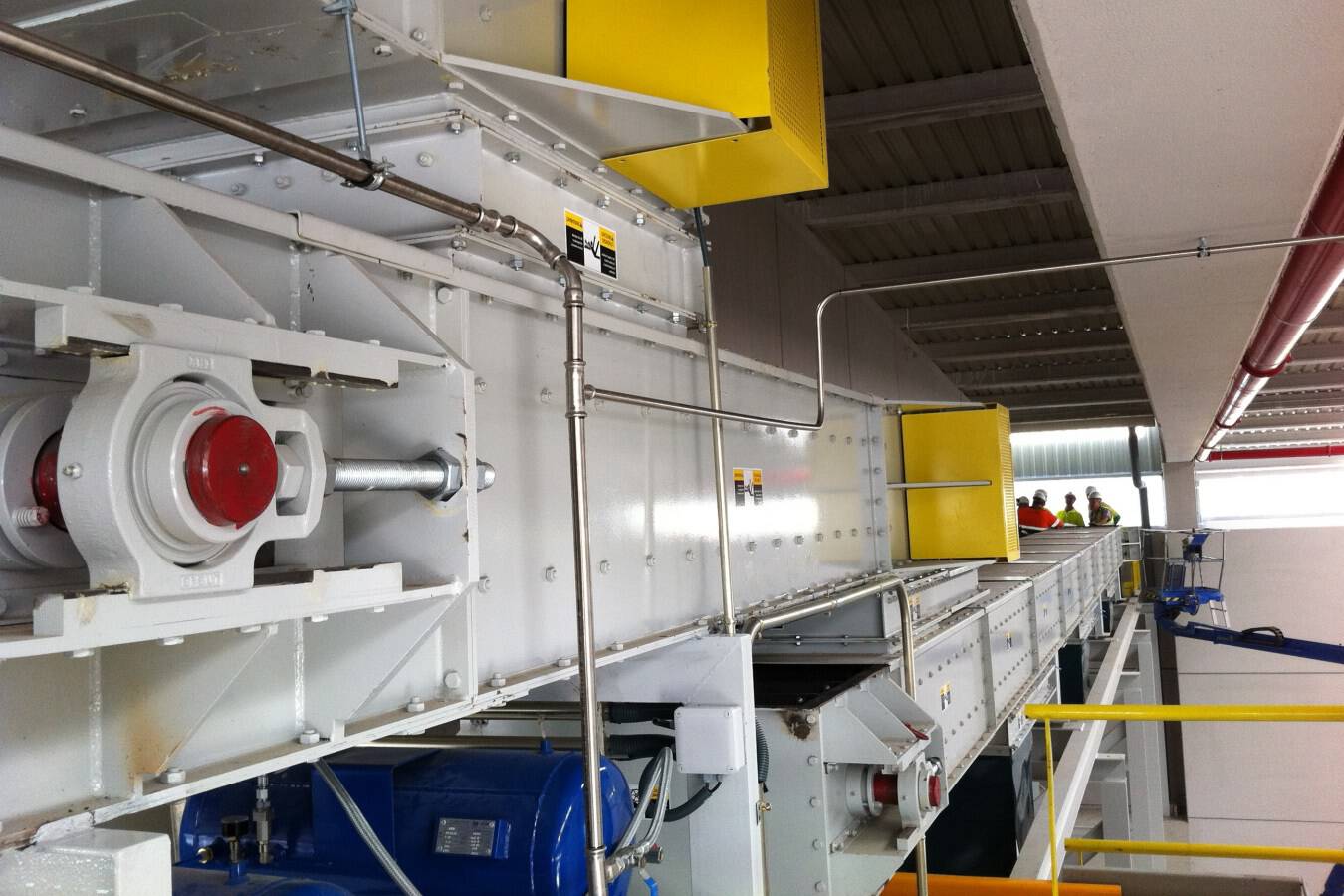
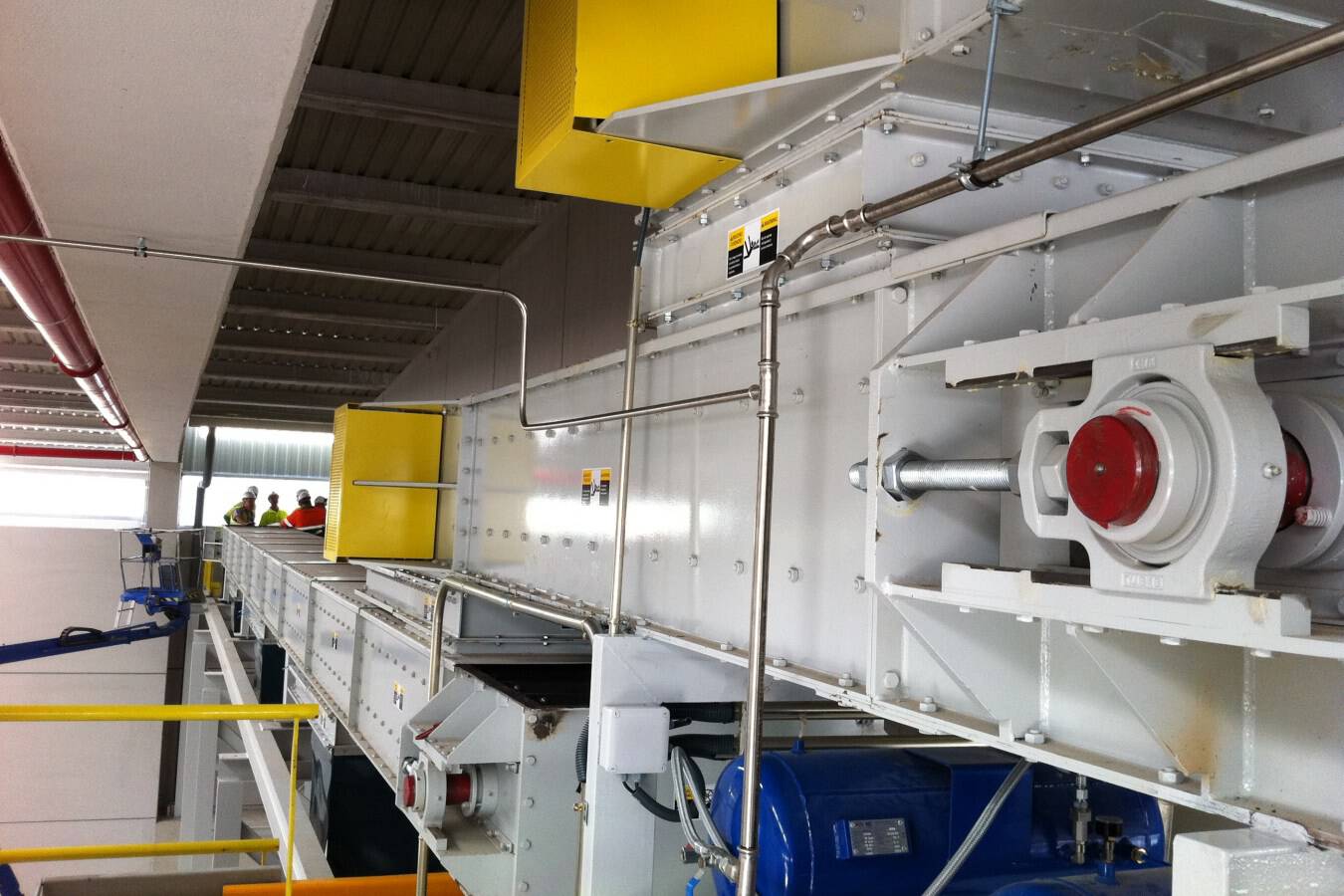
Custom made chain conveyors with material testing as starting point

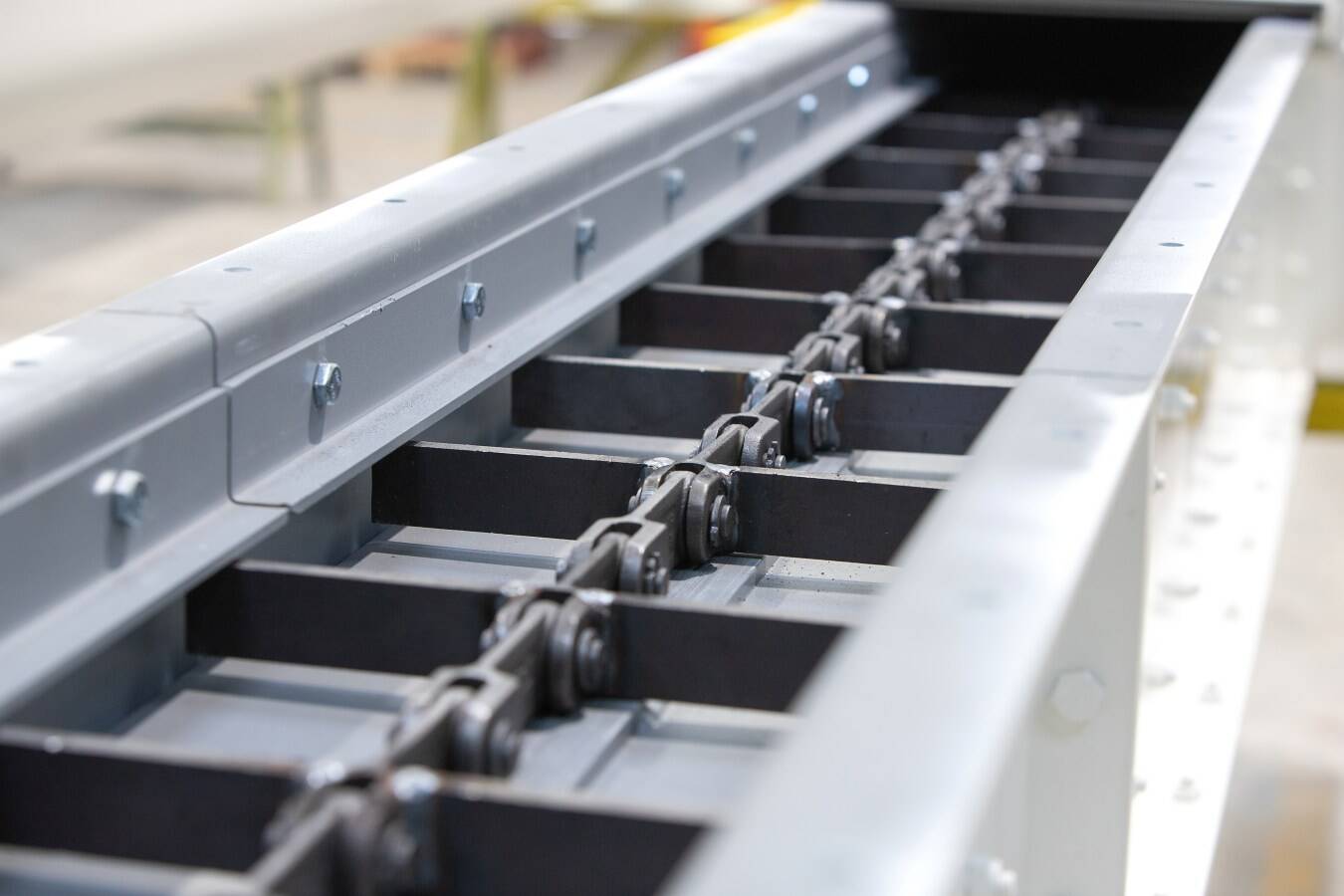
Material behavior: the key to robust and reliable design of chain conveyors, also called drag conveyors and Redlers
When handling bulk materials in demanding environments—especially those that are abrasive, corrosive, or volatile, chain conveyor (drag conveyor, Redler), is often the best solution. However, its performance and lifespan depend entirely on how well it is adapted to the specific properties of the material it will transport. And that adaptation begins with detailed material testing.

Robust and reliable design

Chain conveyors are commonly used where durability, sealing, and controlled flow are essential. This includes industries handling mineral products, fertilizers, or alternative fuels. For such applications, a one-size-fits-all design is not only inefficient but can result in severe equipment degradation and safety risks.
To avoid these issues, it’s vital to begin with a technical study of the bulk material’s behavior. The main properties to analyze are:
  • Bulk density
  • Particle size and shape
  • Flowability and angle of repose
  • Moisture content
  • Abrasiveness and hardness
  • Working temperature
Each of these factors influences chain wear, casing protection, material buildup, and overall performance of the conveyor system.

Testing for data-driven engineering

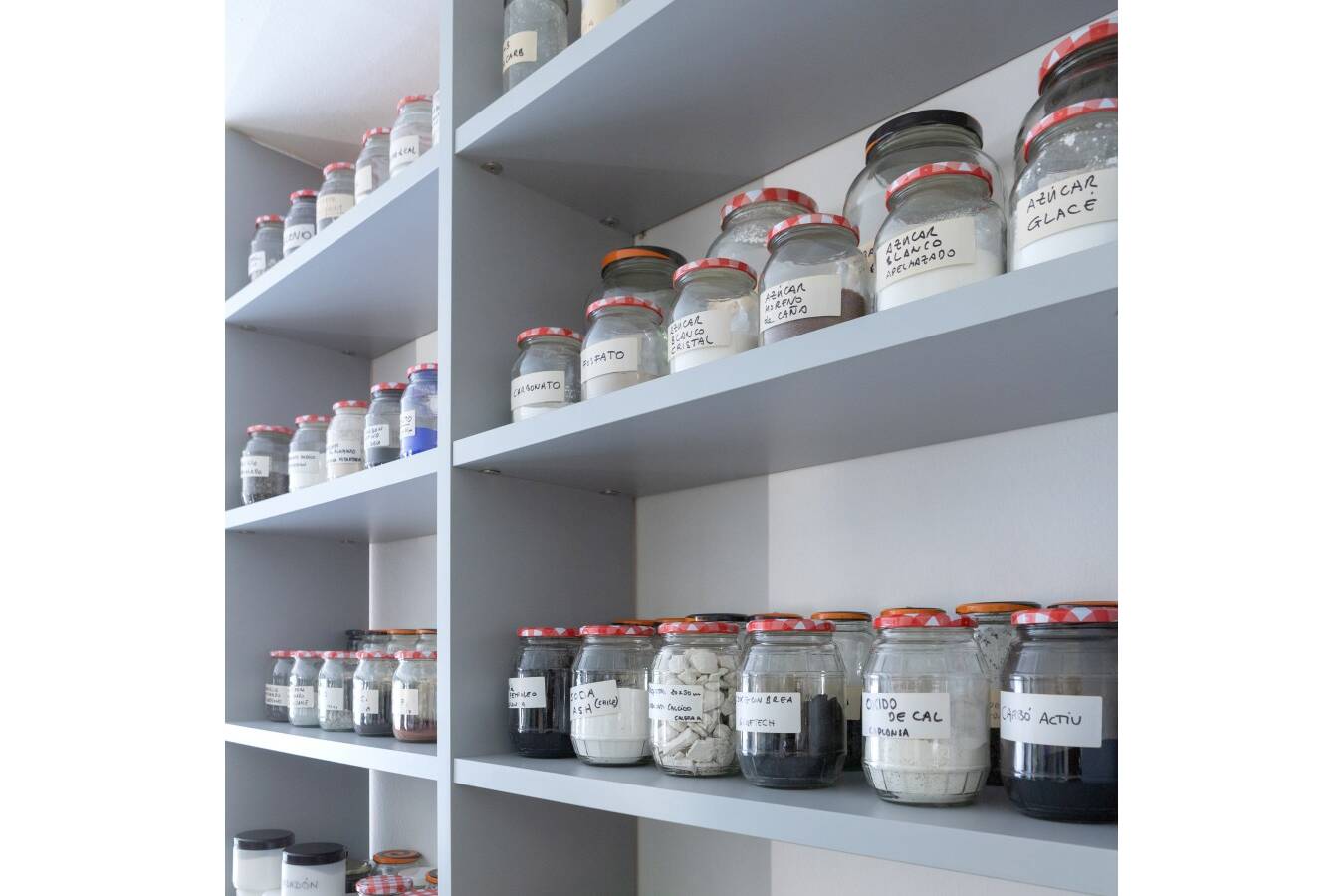
At Sinfimasa, our engineering approach is grounded in real data. Laboratory characterization and pilot plant trials are conducted to anticipate how the material will behave during transport. Tests include:
  • Particle size distribution
  • Cohesion and flow resistance
  • Abrasiveness and wear potential
  • Angle of repose and discharge patterns
  • Moisture impact on flow and adhesion

Challenging materials

Chain conveyors offer fully enclosed, low-dust transport with strong resistance to wear and corrosion—when they’re properly engineered for the product. Key design components:
  • Chain type and coating
  • Trough geometry and sealing
  • Self-cleaning systems and guides
  • Damping systems for vibration and impact

Custom design is critical for:

  • Abrasive materials like minerals or clinker, requiring reinforced chains, anti-wear linings, and robust casing
  • Corrosive materials such as chemical fertilizers, needing stainless steel structures, sealed joints, and corrosion-resistant chains
  • Volatile or low-density products (RDF, biomass), which benefit from precise flow control, enclosure, and systems to avoid product loss or dust emissions

Benefits of a custom-built chain conveyor:

  • Extended operational life
  • Fewer breakdowns or maintenance interventions
  • Safer handling of hazardous or volatile materials
  • High efficiency and low energy consumption

Conclusion

A standard chain conveyor may seem sufficient at first glance, but in complex industrial settings, only a custom-designed system—engineered with accurate product data—can deliver reliability and performance over the long term. At Sinfimasa, we start every project with material testing to guarantee that your chain conveyor is as robust and efficient as your process demands.


Company information

Sinfimasa
Sinfimasa
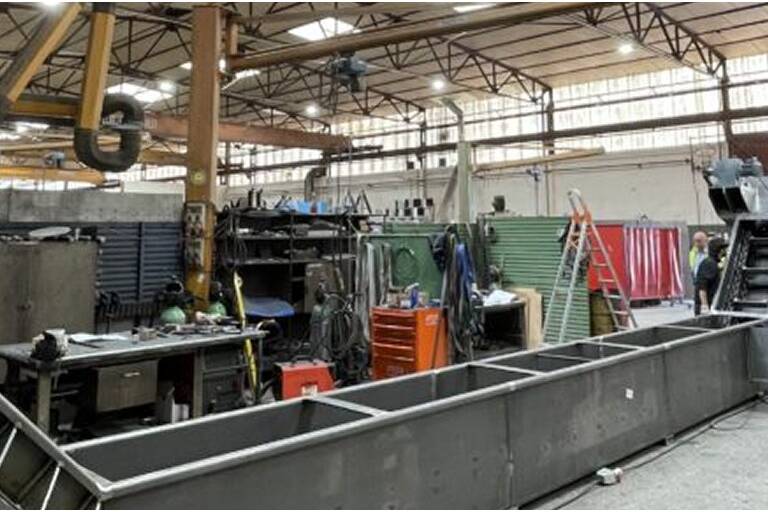
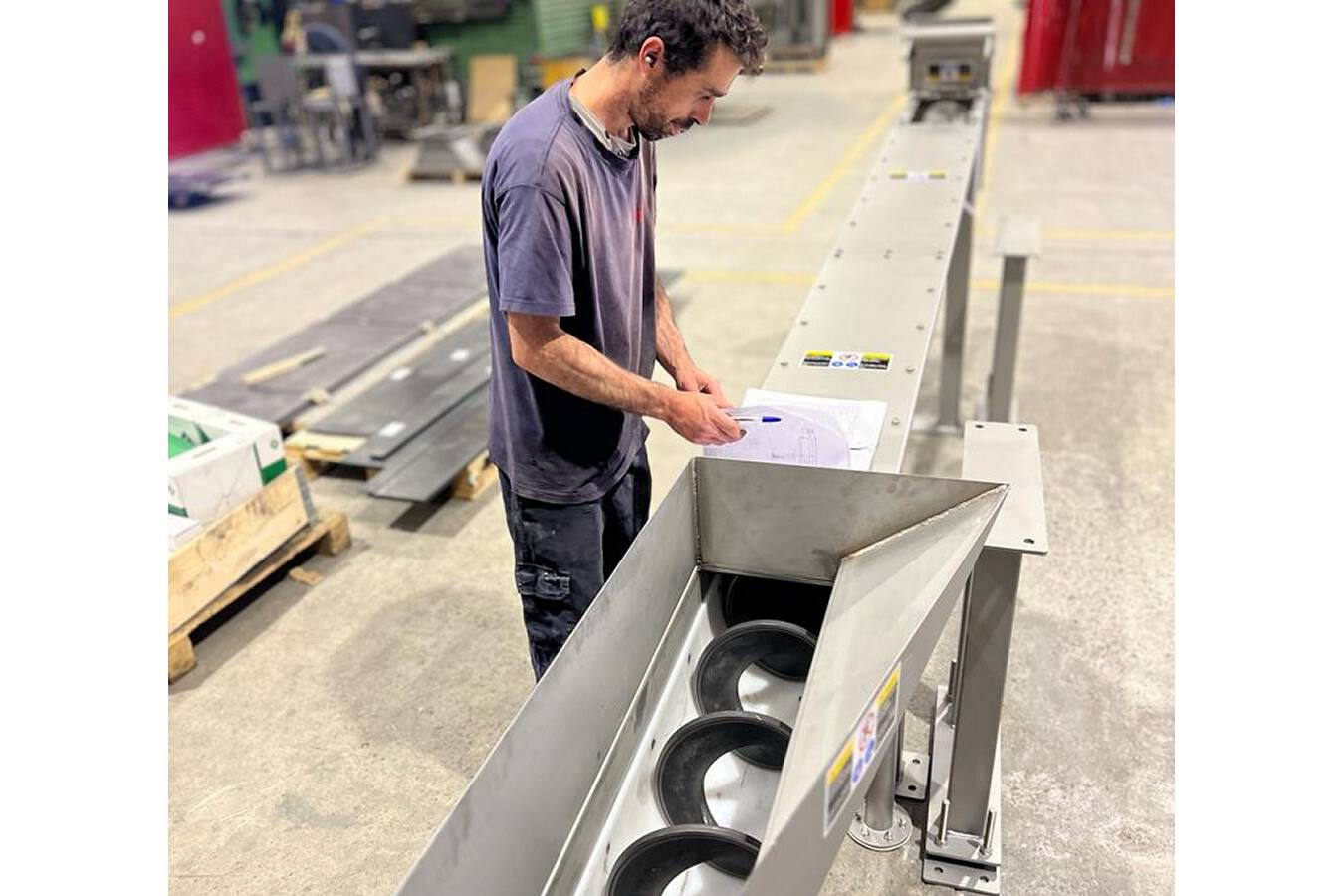
Experience and Commitment The main business of Sinfines y Maquinaria S.A. (Sinfimasa) is to understand the customer and design and manufacture conveyors according to project requirements and the specifications of the solid material to be handled. At our facilities in Guissona (Spain), we have our own engineering department with over 35 years’ experience, where we design machines that meet our customers’ technical specifications and make our commitment to their engineering project. We offer solutions for conveying and lifting bulk solids with uncompromising quality and precision, and we ensure equipment reliability in every situation in the processing plant. Safe, Robust, Reliable In our production plant we manufacture products with all types of finishes as required: pickled and passivated, electro-polished, lacquered, sandblasted and food-grade, etc. We work with different materials such as carbon steel, stainless steel and anti-wear steel. We use high quality and universally available components such as SEW gearmotors or SKF bearings. Our suppliers are also key to our success and we make a commitment to them. We have a test bench where, based on product samples from our customers, we research the best solution for the requirements of each project. We are committed to our customers and engineering companies to offer machines with guaranteed reliability. Sinfimasa has welding procedures and welders approved according to ASME Section IX (QW-484). We use an automated welding system to ensure that the entire length of the conveyors are welded evenly and are free from voids. At Sinfimasa we are rigorous and demanding, with numerous references in several countries on all five continents as our guarantee. Please ask us for more information as you require. Consult us about your project on no obligation. We will make you a reliable technical proposal that is 100% adapted to your requirements.
Last update: 08.04.2024

More items

Material Analysis for an Efficient Bulk Solids Conveyor Design Discover how bulk material analysis and flow testing are key to designing bulk solids conveyors fully tailored to the production line.
Material Analysis for an Efficient Bulk Solids Conveyor Design
Discover how bulk material analysis and flow testing are key to designing bulk solids conveyors fully tailored to the production line. An efficient conveyor system for handling bulk solids requires one crucial step before selecting the type of conveyor. The most critical—and often most underestimated—step is the thorough analysis of the material to be conveyed. Deep knowledge of the product’s characteristics ensures not only a technically accurate solution but also greater durability, lower maintenance costs, and optimized industrial productivity. Understanding the material to be conveyed Each bulk material has unique physical properties that directly impact conveyor performance. A generic or modular design for a screw conveyor, bucket elevator, or chain conveyor may lead to operational failures, blockages, premature wear, or even unexpected production line shutdowns. The design must begin with a data-driven approach based on the product these conveyors will handle. Below are the key properties to study and the methodology: Technical characterization of the material * Bulk density *
02.04.2025  |  2021x  |  Insight  |   | 
Chain conveyor for transport and cooling of ashes from biomass boilers Implementation of a submerged drag conveyor (redler) for effective cooling and transport.
Chain conveyor for transport and cooling of ashes from biomass boilers
Implementation of a submerged drag conveyor (redler) for effective cooling and transport. At Sinfimasa, we specialize in providing complete and customized solutions for bulk material handling, as evidenced by our latest project: a submerged chain conveyor specifically designed for a leading biomass boiler manufacturer, for turnkey plant construction in Chile. This system efficiently evacuates the ashes generated during combustion and cools them, ensuring optimal and safe handling of the by-product. High-temperature ash extraction The main challenge in this project was to develop a system that could handle ashes directly from the furnace exit to their evacuation point. Part of the conveyor was designed to be submerged in water, which helped control the temperature of the ashes. Given the high temperature and humidity environment, building a robust conveyor with special attention to chain tensioning was crucial to ensure precise guidance and extended durability. Moreover, a high-quality, corrosion-resistant chain was used due to its continuous contact
10.02.2025  |  1675x  |  Product news  |   | 
Shaftless screw conveyors for bulk solids transport   Sinfimasa specializes in bulk solids conveying. Below you find technical advantages and application examples of shaftless screw conveyors
Shaftless screw conveyors for bulk solids transport
Sinfimasa specializes in bulk solids conveying. Below you find technical advantages and application examples of shaftless screw conveyors In the transport of bulk materials, the design and configuration of the mechanical conveyor is crucial for the efficiency and economy of the process. One of the most interesting pieces of equipment in this area is the shaftless screw conveyors, also known as Archimedes’ screws without a shaft. Although commonly used in sludge transport, their application goes beyond this. In this article, we will explore when and why a shaftless screw conveyor should be used to transport bulk solids. What is a Shaftless Screw Conveyor? A shaftless screw conveyor is a type of conveyor that, unlike traditional screw conveyors, does not have a central shaft. It consists of a helix that rotates within a tube or trough, moving material along the conveyor. Technical Advantages * Lower Risk of Clogging; With no central shaft, there is less risk of material getting stuck or accumulating around the shaft, which is especially useful for sticky or wet materials. * Better Handling of
29.05.2024  |  2290x  |  Product news  |   | 
Which bulk material conveyor for which situation? Chain and screw conveyors versus belt conveyors. Sinfimasa manufactures chain and screw conveyors specifically for each customer and project.
Which bulk material conveyor for which situation?
Chain and screw conveyors versus belt conveyors. Sinfimasa manufactures chain and screw conveyors specifically for each customer and project. Which bulk material conveyor for which situation? Chain and screw conveyors versus belt conveyors There are several alternatives for conveying bulk materials. The most important of these are screw conveyors, belt conveyors and chain conveyors. Conveyors for bulk material should always be tailored to the situation: the movement path and the characteristics of the specific bulk material. Which type of conveyor is best for each situation? At Sinfimasa, we always say that the most important factor determining the choice of conveyor type is the product to be transported. Before the engineer defines the system, the properties of the product and conditions must be characterised. To mention are: the bulk density, grain size, abrasiveness, corrosivity, the temperature at which it will be transported, the power required, the degree of clumping, hygroscopicity, etc... Depending on the product and the configuration of the process or plant, one device will be better than
13.03.2023  |  4699x  |  Insight  | 
Chain conveyors for transport and elevation of Solid Recovered Fuel Sinfimasa designed three chain conveyors for the transport of SRF. Sectorization of two fire zones was important, so one of the conveyors was equipped with firewall slide gates.
Chain conveyors for transport and elevation of Solid Recovered Fuel
Sinfimasa designed three chain conveyors for the transport of SRF. Sectorization of two fire zones was important, so one of the conveyors was equipped with firewall slide gates. Solid Recovered Fuel (SRF) is a fuel prepared from non-hazardous waste, and used for energy recovery in incineration and co-incineration plants. It consists of small fractions of waste with a high calorific value. This makes it also suitable for use in cement kiln installations. Our client is a non-hazardous waste valorisation plant, and needed to build a conveying line to deliver different types of SRF into storage boxes after shredding, separation and classification process. The required output was 150 m3/h. Transport in 3 steps To solve this need, Sinfimasa designed three chain conveyors; the first one would transport the SRF at a horizontal distance of about 10m and would elevate it to a height of 8m. The second conveyor is positioned horizontally over a distance of 4,7 m. An important function of this conveyor is to ensure the sectorization of two fire zones, so it was equipped with firewall slide gates. A third conveyor was designed and manufactured
29.11.2022  |  3849x  |  Product news  | 
PORTALS
BulkSolids-Portal Schuettgut-Portal Recycling-Portal
Related
Bulkgids.nl
SIGN UP FOR OUR NEWSLETTER
Newsletter archive
Service and contact
ContactDisclaimerPrivacyAdvertising
FOLLOW US
Linked