Sifting is not simply sifting
Who thinks that sifting always works the same way is sorely mistaken. The right sifiting technology is crucial for quality, efficiency, and cost-effectiveness.
Plansifters the universal sifting solutions
Anyone who thinks that sifting simply works the same way is sorely mistaken. Depending on the requirements, product and objective, different types of sifting machines are used in industry – each with its own strengths and special features. Whether in the food, pharmaceutical, plastics or chemical industry: choosing the right sifting technology is crucial for quality, efficiency and cost-effectiveness.
1) Vibratory sifters – the classic choice
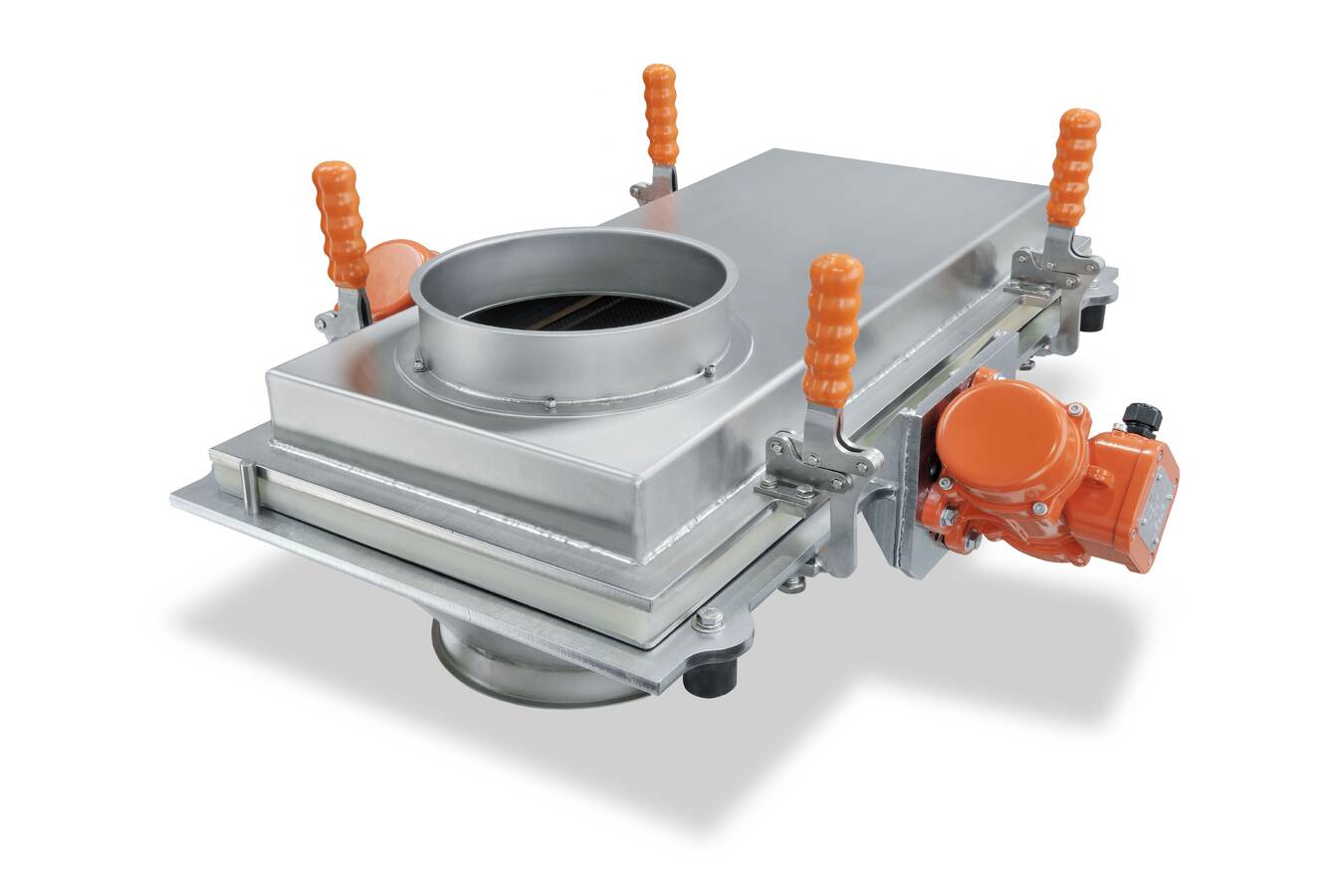
These are mostly used for simple applications such as control sifting, also known as safety sifting. In this process, foreign particles are separated from the ‘good’ product. In applications where oversized particles are to be sifted out, the term control sifting is not used, but the process is simply the same. In many cases, vibratory sifters are also used here. They can also be used for dedusting bulk materials. The fine particles are sifted out. Compared to other sifting technologies, they are particularly cost-effective and versatile. Comparison with all others: relatively inexpensive.
2) Cyclone sifters – the rotary sifters
With this type of sifting, the material to be sifted is thrown through a cylindrical sifting basket by a rapidly rotating rotor. The fine (good) bulk material is then passed through the sifting mesh by centrifugal force, while foreign particles or oversized particles remain in the sifting basket or are discharged from it through the opening at the front.
Compared to vibratory sifting machines, this type of sifting has the particular advantage that it requires less space for simply the same throughput capacity.
3) Tumbler sifters – the gentle vibrating sifters
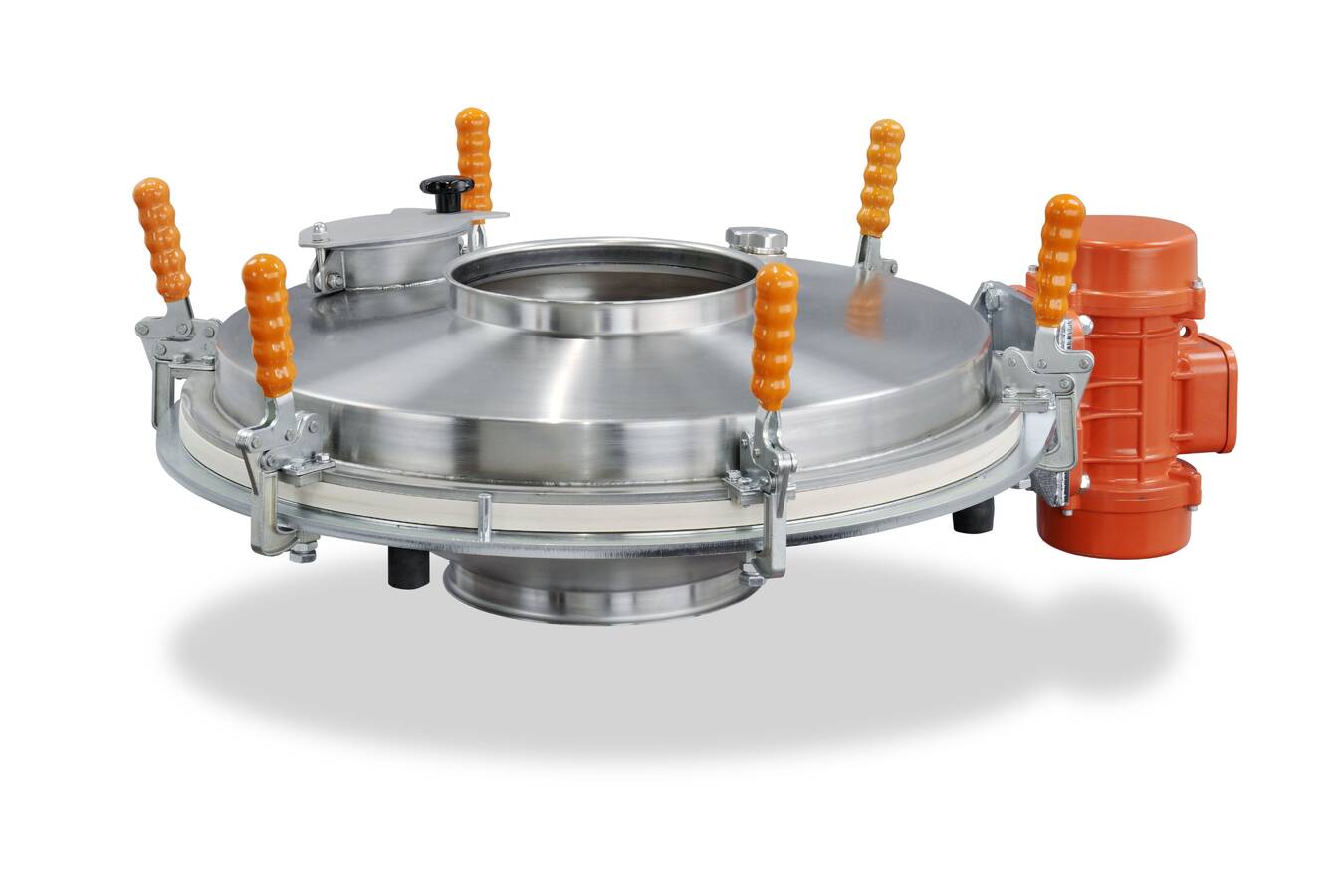
Tumbler sifting machines, also known as vibrating screens, are also ‘flat’ screens. The sieve is swung by an eccentric mechanism. As the material to be sifted is fed into the middle of the sieve, it must be transported to the outside. This process is accelerated by giving the sieve an incline. The inclination, together with the eccentric oscillating movement, results in a tumbling motion, which gives this type of screening machine its name.
Compared to vibratory sifters, the sifting movement is much slower and more harmonious. This has the advantage that the sifting process is much quieter. The material (of the sifter) is thus protected, and its service life is increased. Above all, however, sifting with a tumbling sifter is much more precise than with a vibratory sifter. I always try to explain this by asking people to imagine that they themselves are a grain – to be sifted – hovering above a hole that is moving more or less quickly. The faster the hole moves, the smaller it appears to them, or rather, the more difficult it is to fall through it. This explains why tumbling screens not only sift more precisely but also have a higher throughput capacity. The disadvantage of these sifters is that they are not particularly easy to use in terms of adjusting the tumbling.
4) Plansifters – The universal sifting solution
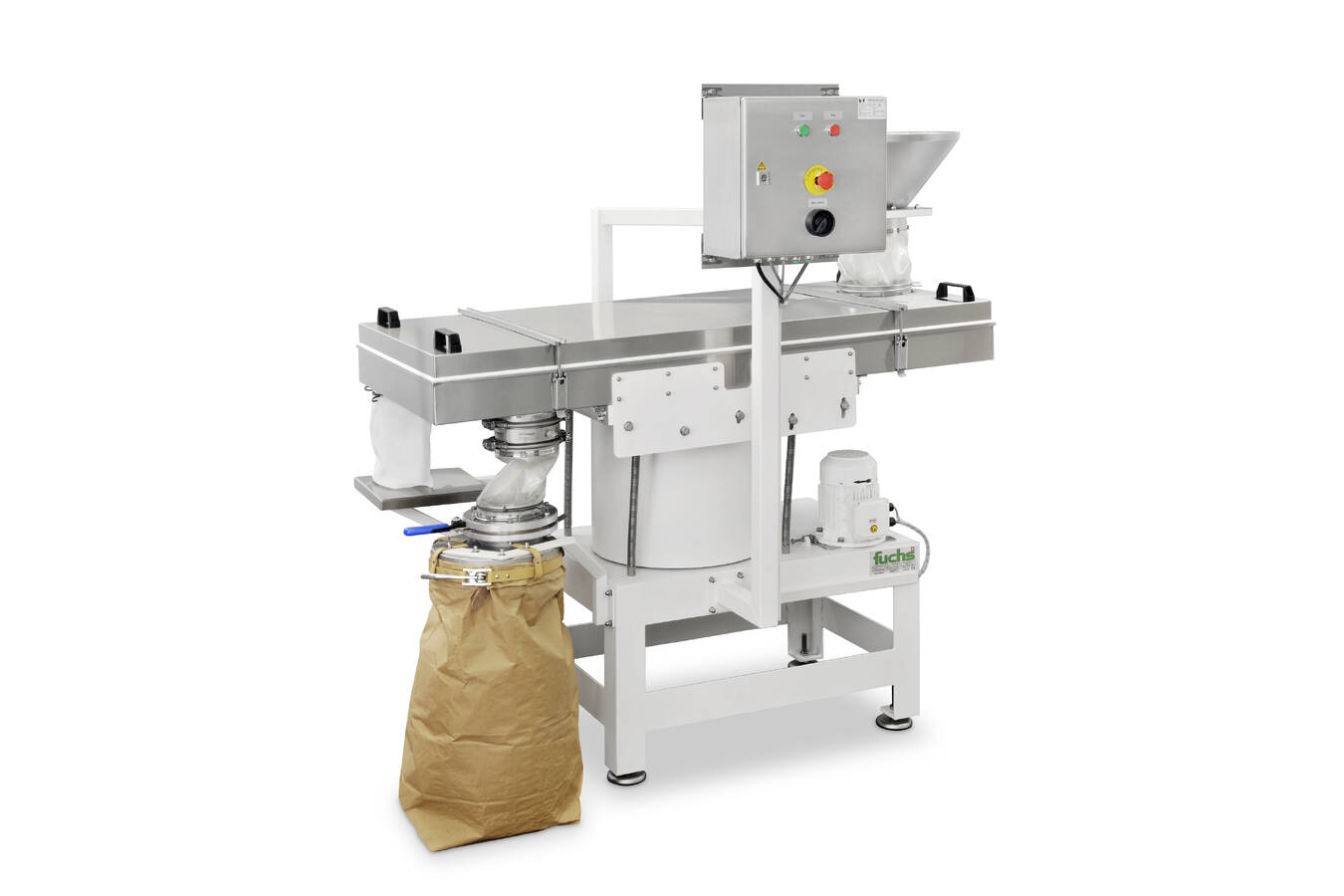
Plansifters have essentially the same advantages as tumbler sifters and function simply in much the same way. Instead of tumbling they also oscillate by means of an eccentric. However, due to their rectangular design, they do not tumble. Instead, the screen is installed in the sieve case at a slight angle (approx. 2% slope). The slope determines the direction in which the material being sifted is conveyed, and the steepness of the slope determines the speed of the product flow. The advantages of plansifters over the tumbler sifters lie primarily in the ease with which the slope can be adjusted, allowing the dwell time of the material being sifted on the screen to be precisely set. In some applications, the plansifters also have the advantage that the product can be conveyed over a certain distance. The plansifters of the SIFTOMAT type from FUCHS are available in 7 sizes and can be equipped with one, two, or three sieve decks. Just like the vibratory sifters, they are therefore ideal for the precise separation of bulk materials according to their particle size.
SIFTOMAT plansifters are used in particular where the most precise sifting possible is required. This is the case, for example, with masterbatches in the plastics industry, where “longs” and/or “twins” need to be separated from the good product, as well as the fine particles.
Thanks to their simple design, they can be dismantled extremely quickly, which makes cleaning very easy. This makes SIFTOMAT plansifters so popular not only in the food industry but also in the pharmaceutical sector. The machines are also very low-maintenance and have an incomparably long service life.