Rotary silo discharge system for difficult-flowing products
Poeth's rotary silo discharge system ensures controlled flow of challenging, bridging-prone bulk solids, preventing compaction and blockages.
Reliable discharge from silos containing difficult-flowing and bridging-prone products is a well-known challenge in the bulk solids industry. Products such as whey fat concentrates, cocoa cake and other cohesive bulk materials can form bridges above the silo outlet. This can result in an irregular product flow or even complete blockage of the silo outlet.
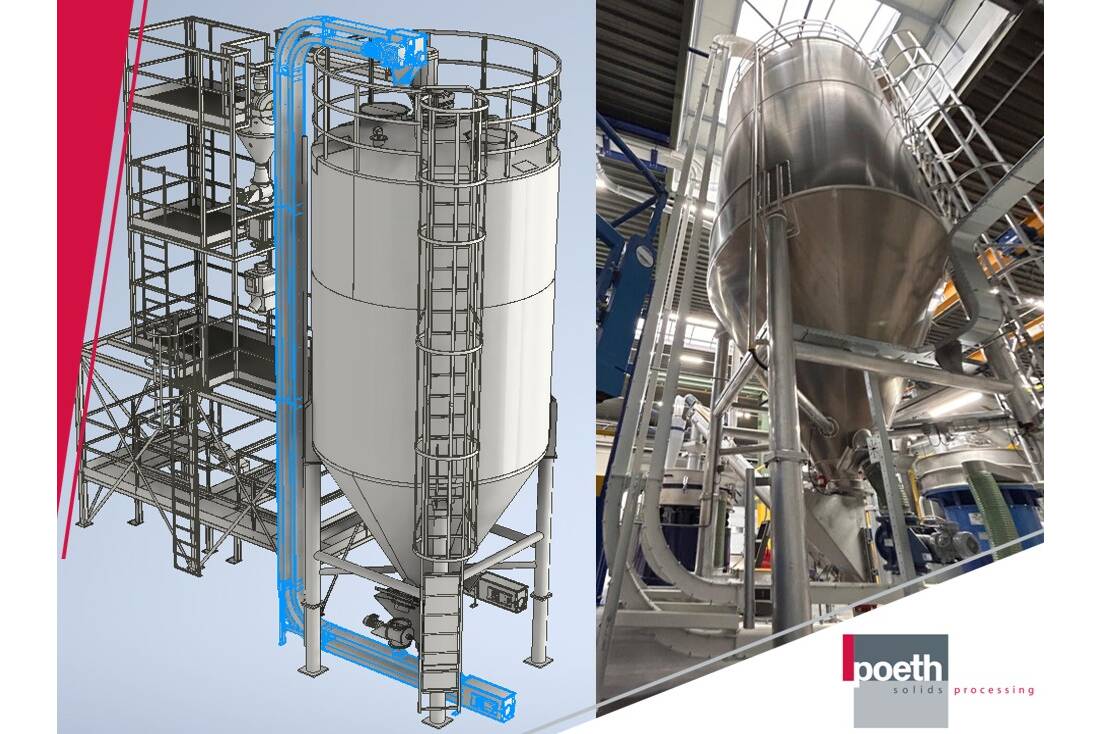
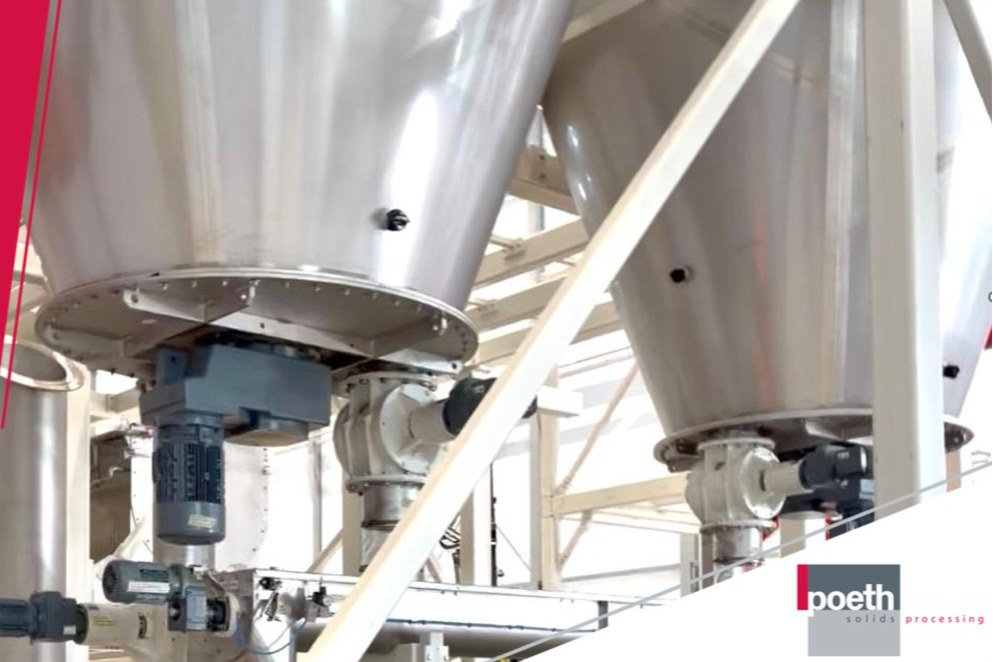
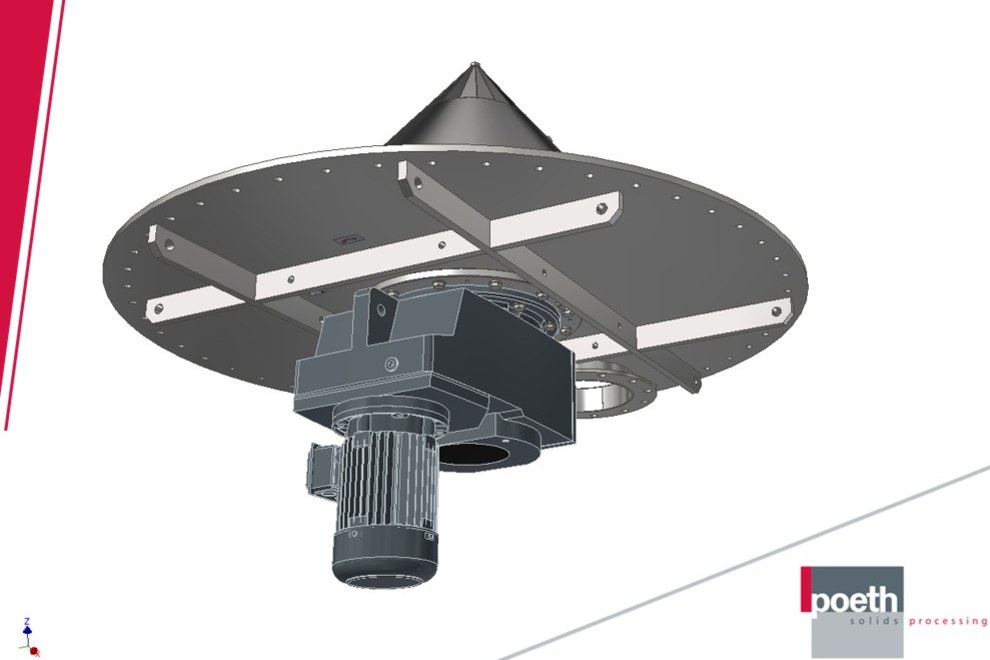
For these applications, Poeth uses a rotary silo discharge system. The product at the bottom of the silo is mechanically activated by a slowly rotating discharge element. This element covers a large area of the silo bottom and moves the material in a controlled manner towards one or multiple outlets.
Alternative to a vibrating bin discharger
Vibrating bin dischargers or vibrators are frequently used to promote product flow from silos. However, for certain products, vibration can have the opposite effect. Materials that are sensitive to compaction may become increasingly compacted or consolidated when exposed to prolonged or intensive vibration. This increases internal cohesion and can actually make the product more difficult to discharge. Technical literature therefore distinguishes between products for which vibration is an effective flow aid and products that tend to consolidate further when subjected to vibration.
The rotary silo discharge system operates according to a different principle. Instead of subjecting the entire product column to vibration, the product is mechanically activated at low speed and conveyed towards the outlet. This helps break up bridging while maintaining a controlled and consistent product discharge.
One or multiple silo outlets
Depending on the application, the system can be equipped with one or multiple outlets. This makes it possible to feed different conveying systems, dosing lines or downstream processes from a single silo.
The discharge system is designed according to factors such as product characteristics, silo diameter, bottom geometry, required capacity, residence time and the number of outlets. Particularly for cohesive products that do not flow freely under gravity, a mechanical silo discharge system can provide a more reliable alternative to conventional silo outlets.
The result is a controlled and reliable discharge solution for difficult-flowing and highly bridging-prone bulk materials, enabling products such as whey fat concentrates and cocoa cake to be discharged reliably from silos and bunkers.