The Key to the Optimal Filling and Packaging Line
The production of premixes, vitamins, additives, and functional ingredients for the agricultural and food industries is characterized by a wide variety of products, small batch sizes, and diverse material properties. This complexity directly impacts the filling process, packaging, and palletizing. A high-performance, flexible, and hygienic packaging solution is therefore crucial to ensuring consistent quality, safety, and cost-effectiveness.
Key Factors for Designing an Efficient Filling Line
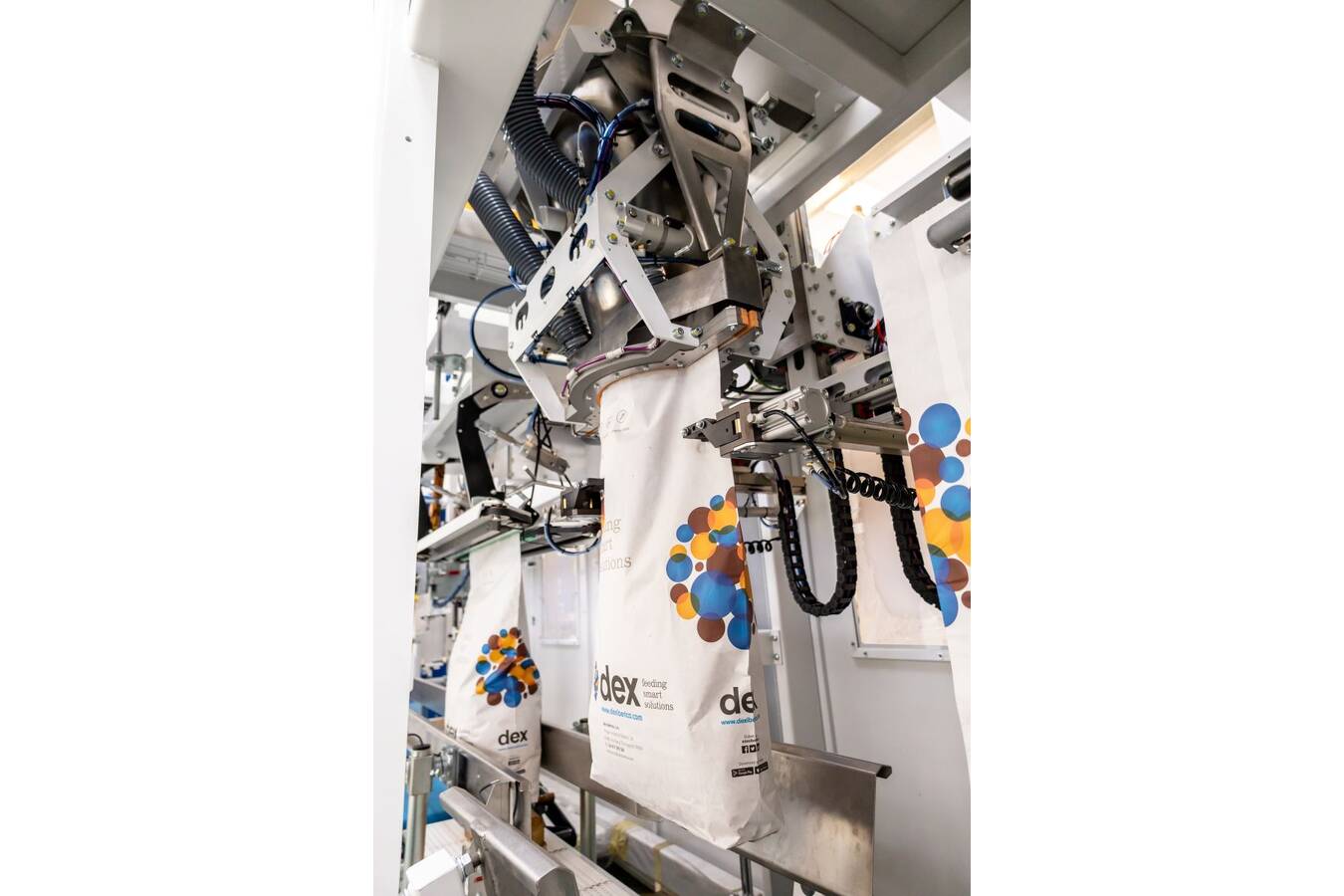
- Material and product properties: Depending on the structure – pellets, granules, or fine powders – dosing and weighing systems vary considerably. Powdered products require dustproof systems, extraction systems, airtight or breathable bags, and venting or compaction solutions for stably filled bags and their closure.
- Packaging and transport logistics: Selecting the right pallets and packaging materials to protect against contamination, moisture, or other environmental influences, as well as pallet stability and transport safety, is also a crucial criterion. Suitable packaging and side protection prevent damage and avoid returns.
- Product diversity and batch management: Many formulations and frequent product changes increase cleaning effort and downtime. Rapid changeovers, tool-free accessibility, and hygienic design are required to prevent cross-contamination.
- Hygienic design, maintenance access, and user-friendliness: Food and feed processing require clean, easy-to-clean machine surfaces and readily accessible areas. Fast and thorough cleaning reduces downtime and increases plant availability.
- Space Requirements and Plant Layout: When creating a plant layout, the available space at the customer’s site must be taken into account. This is straightforward with a greenfield solution (new construction). Here, the existing building structure can be adapted to the plant design. However, plants usually have to be integrated into existing environments, which presents a significant challenge and demands considerable flexibility.
Case Study: Automated Pet Food Packaging
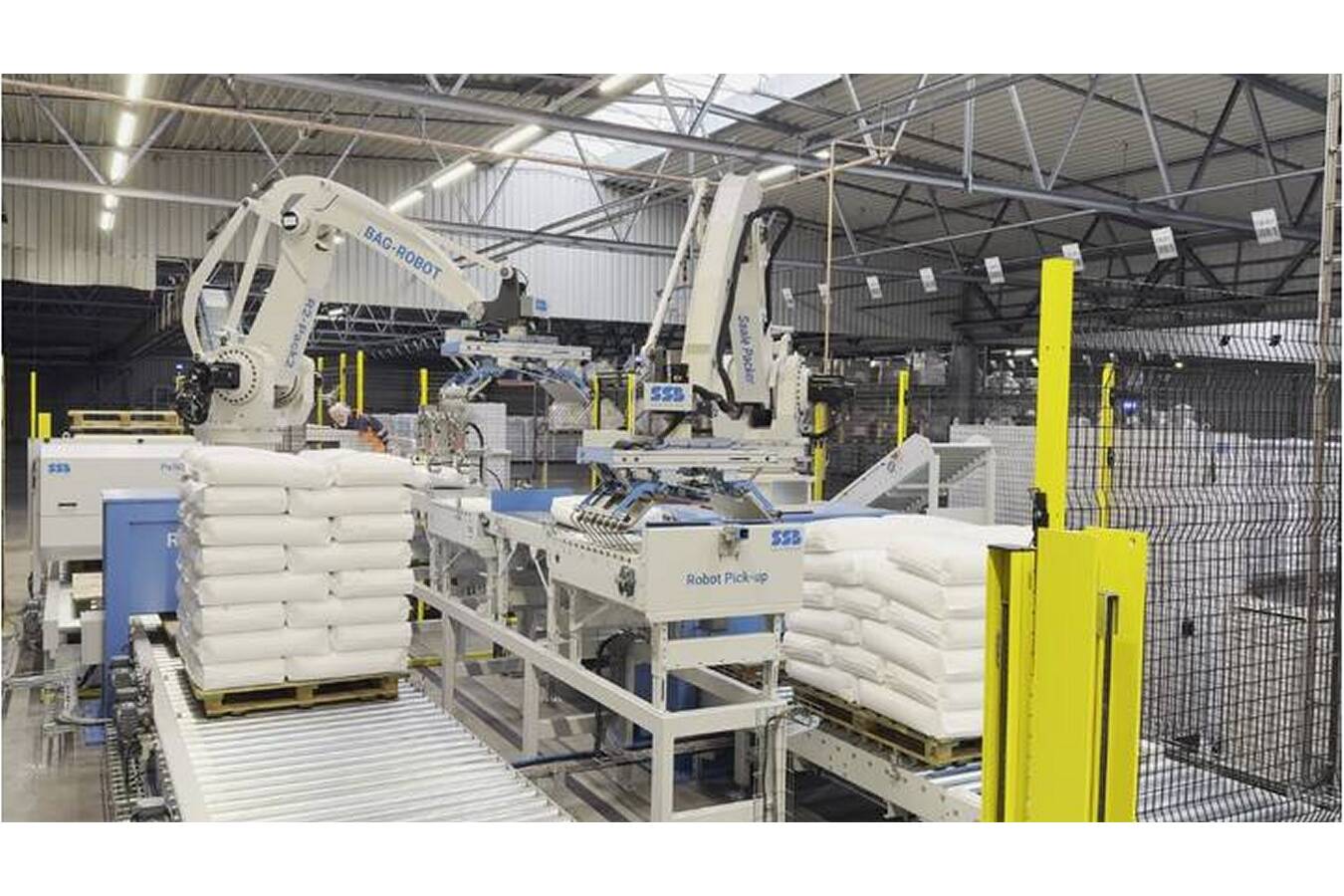
A manufacturer of powdered pet food additives originally filled its products manually into aluminum and PE bags. The process was labor-intensive, limited output, and made stable palletizing difficult. To automate the process, SSB Wägetechnik, in collaboration with TMI, developed an integrated bagging and palletizing system. Following laboratory analyses of the products’ density, flow properties, and dosability, a compact solution was developed.
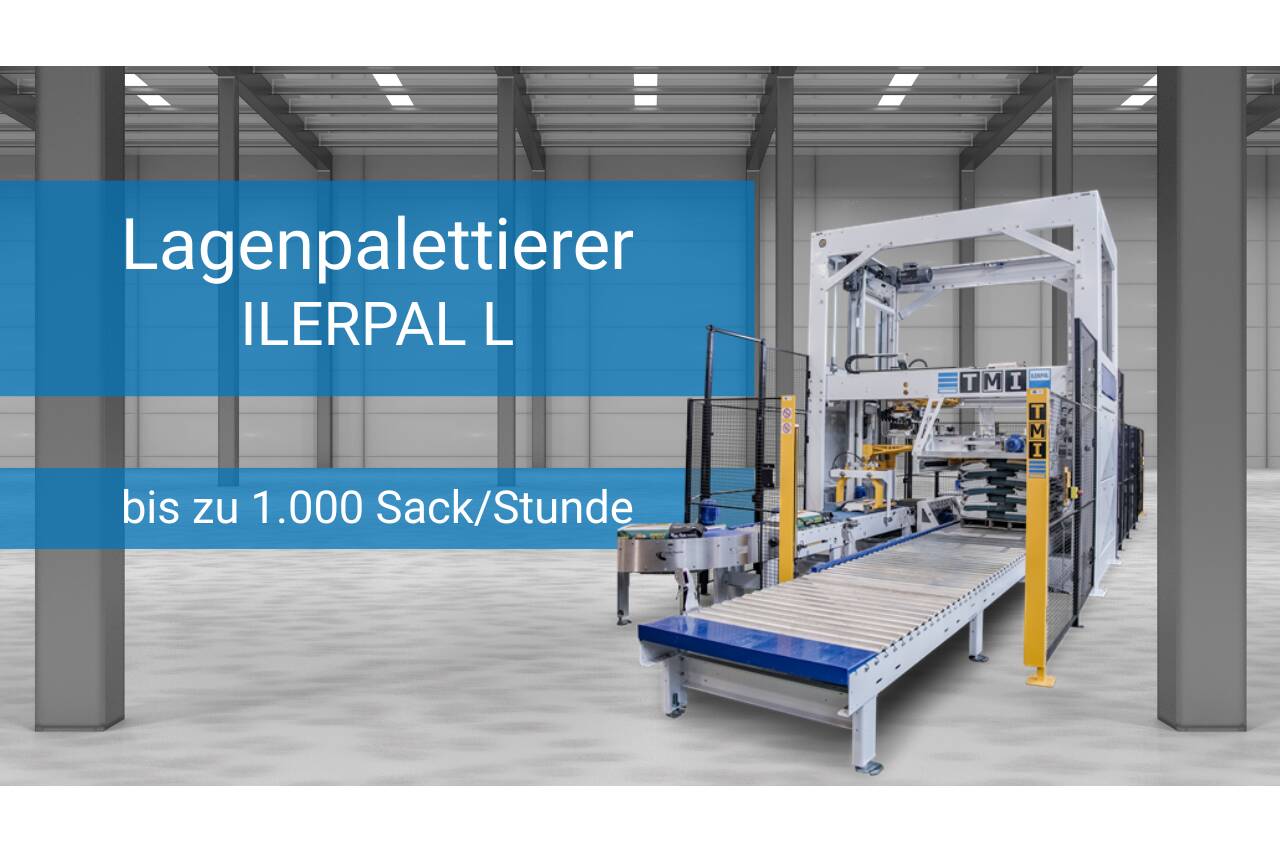
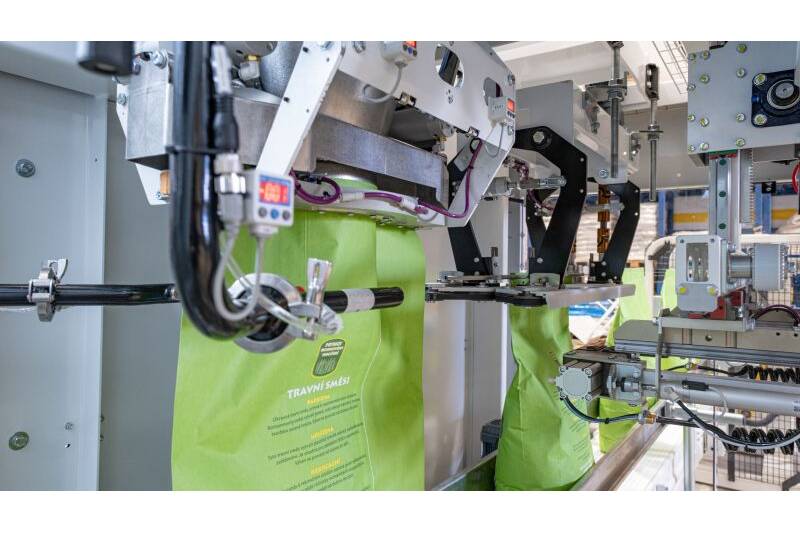
The Ilersac HCBSD automatic bagging machine handles filling, venting, and sealing, while the Ilerpal H hybrid layer palletizer ensures stable palletizing. Finally, the Ilergir stretch wrapping machine and Ilerbox cardboard side pallet protection protect the pallets for transport.
All process steps—from precise weighing, filling, sealing, weight control, and rejection to palletizing, wrapping, and side protection—are automated in an area of approximately 75 m². The hygienic machine design reduces dust emissions, simplifies cleaning, and significantly increases uptime.
The result: A compact, flexible, and hygienic overall solution that increases productivity, reduces downtime, and enables a safe and economical packaging line for a wide variety of food and feed ingredients.