Supplier sign in
Home
STAY INFORMED
Subscribe to our monthly newsletter.
Your email address will never be disclosed to any third party.
Read our privacy notice.


Product description
25.11.2025  |  362x
Share this item

Reliable conveyor belts, specially designed for every application

Reliable belt conveying for diverse bulk environments, with options from light to heavy duty tailored to intensity and application needs.
In almost every bulk process line, the belt conveyor determines the flow, the energy consumption and the availability of the installation. When a conveyor belt shows wear, is incorrectly dimensioned or not aligned with the application, the risk of downtime increases. As a result, the need grows for reliable, carefully engineered conveying solutions that operate seamlessly in various environments such as recycling, bulk terminals, minerals, food industry and grain storage.

Variants of belt conveyors

At Jansen&Heuning we distinguish several variants within belt conveying. The main choices are the heavy duty and light duty version. The division between the belt conveyors is directly linked to the intensity of use. Consequently, different variants have emerged, each addressing a specific load level.
Belt conveyors ensure a continuous material flow with low rolling resistance. As a result, they are suitable for both horizontal and inclined conveying. For trajectories where standard belts lose grip, Jansen&Heuning provides an elevator belt that handles steep angles and limited space without difficulty.
Problems arise when a conveyor does not match the actual process conditions. This may be related to insufficient belt width, an incorrect trough shape, an incorrectly selected drum diameter or a belt type that provides insufficient grip.
Below is a technical outline of the four main variants, with emphasis on application, construction and dimensioning.

1. Heavy Duty belt conveyors

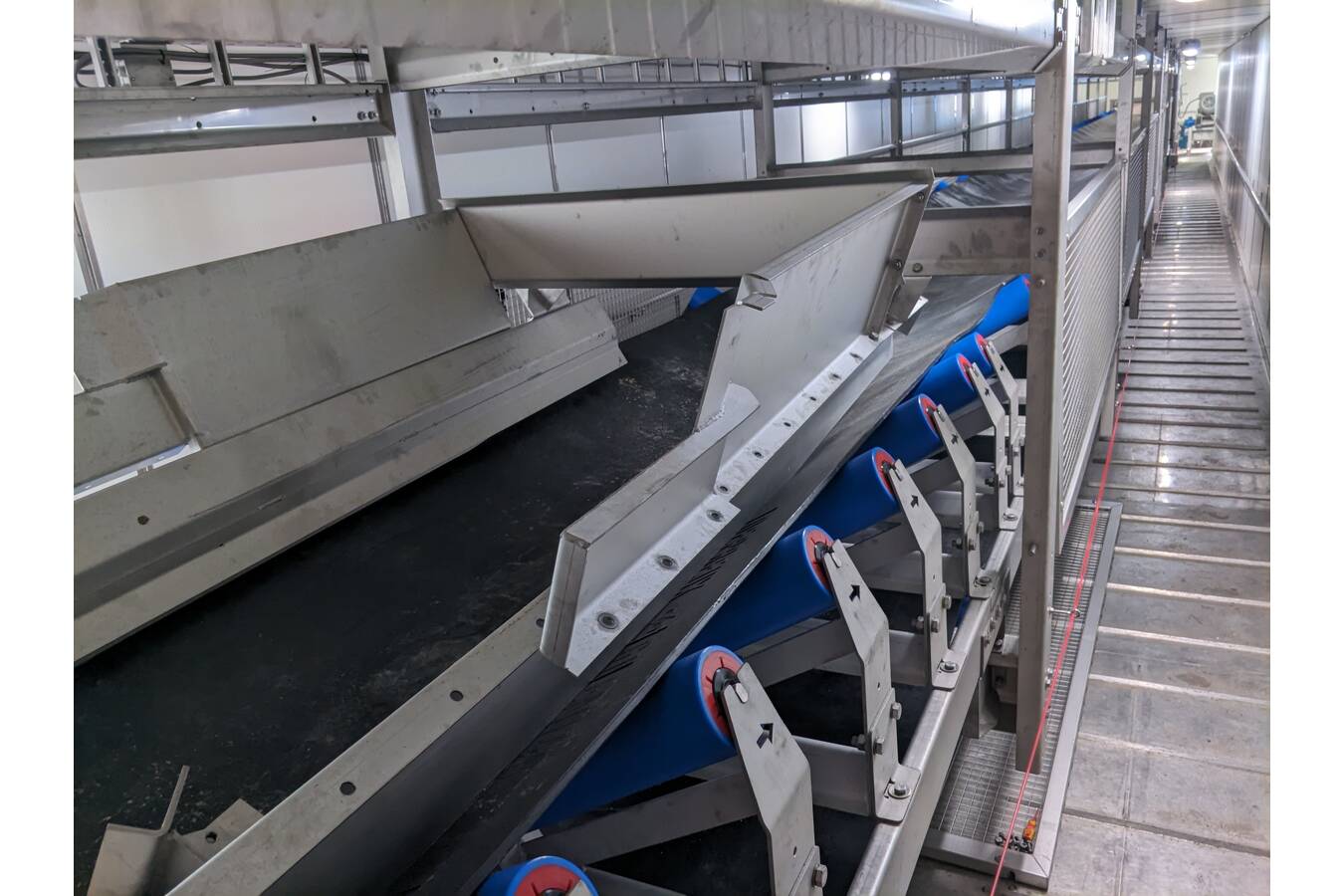
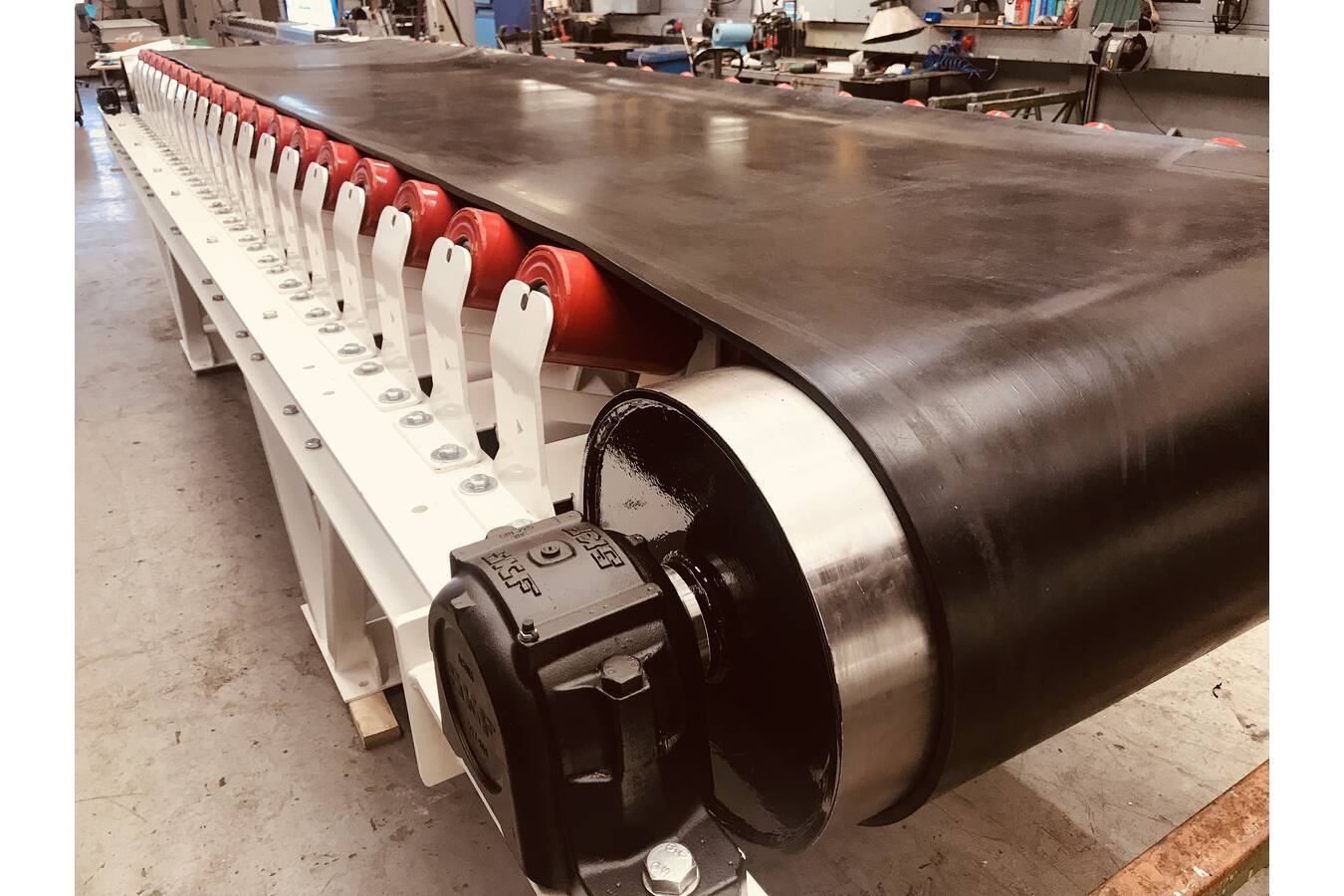
Heavy industrial use requires a conveyor with high load capacity, a strong frame construction and a drive that supports continuous operation without effort. This variant is suitable for environments such as recycling, minerals processing, concrete industry, bulk terminals and heavier agro processes.
Technical specifications of previously built variants:
  • Belt widths: 500 mm to 1400 mm
  • Capacity: approx. 65 to 710 m³ per hour at 1 metre per second
  • Drive: drum motor or drive drum with shaft-mounted motor
  • Drum types: rubber-lagged, cage roller, closed drum
Heavy duty belt conveyors are used in applications with high impact, heavy loads and long-term continuous operation. Drum selection, tensioning system and belt type determine both lifetime and availability.

2. Light Duty belt conveyors

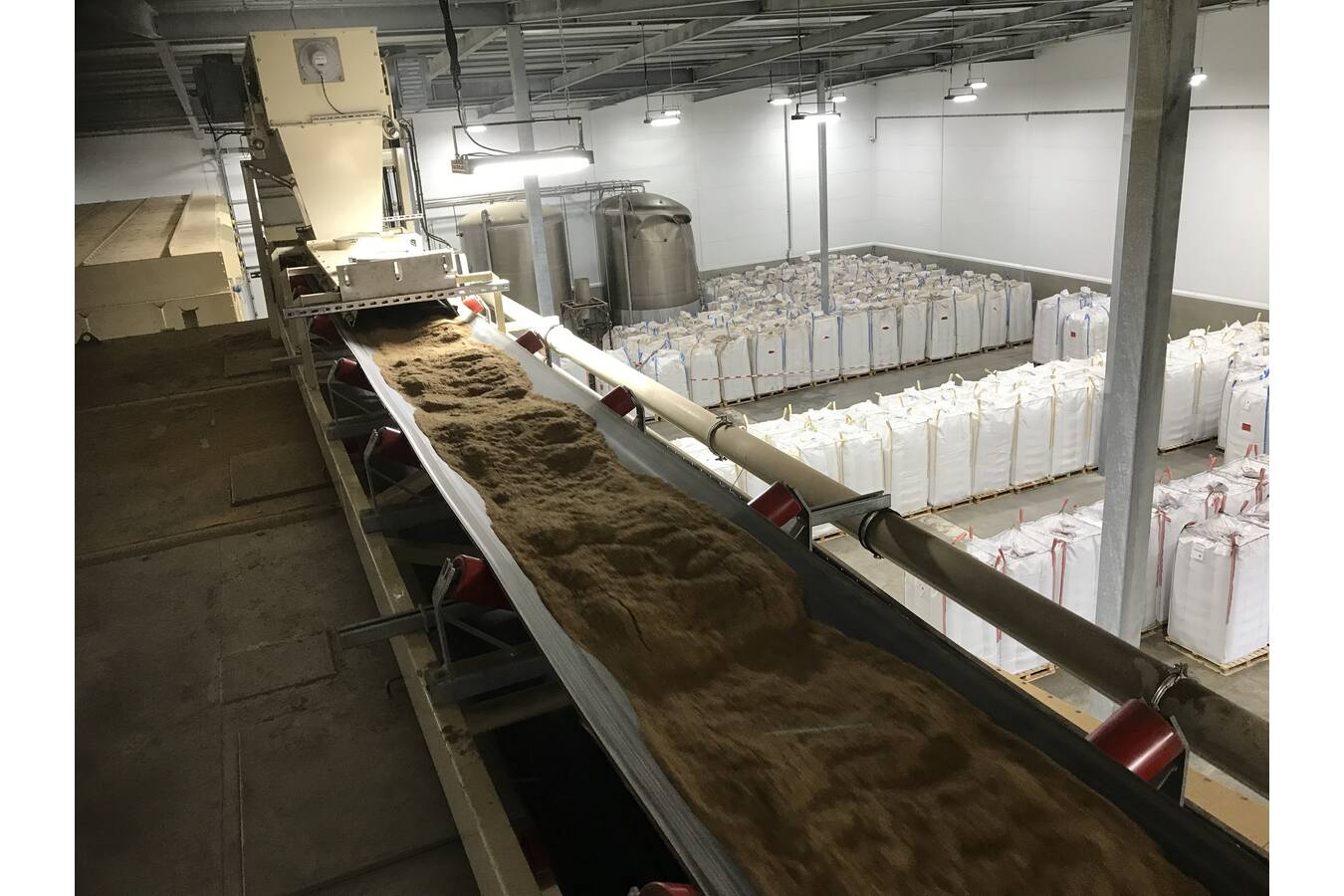
The light duty belt conveyor is developed for light to medium-weight bulk work within storage, logistics and agricultural processes. The design is compact and efficient, and performs reliably on medium-length conveying routes.
Technical specifications of previously built variants:
  • Belt widths: 500 mm and 650 mm
  • Frame widths: 550 mm and 750 mm
  • Trough angle: up to approx. 20 degrees
  • Roller diameters: 63 mm or 89 mm
Light duty conveyors often operate as distribution belt, loading belt or internal feed line. Thanks to the compact construction, this conveyor can be installed quickly in existing logistics environments.

3. Inclined belt conveyors

When space is limited or when product flows must be conveyed vertically or at steep angles, the inclined belt offers an efficient configuration. By building the belt in a straight, kinked, L or Z shape, a compact installation is created with minimal floor space and maximum conveying height.
Technical specifications of previously built variants:
  • Incline angles: 10 degrees to 90 degrees
  • Belt widths: from 300 mm
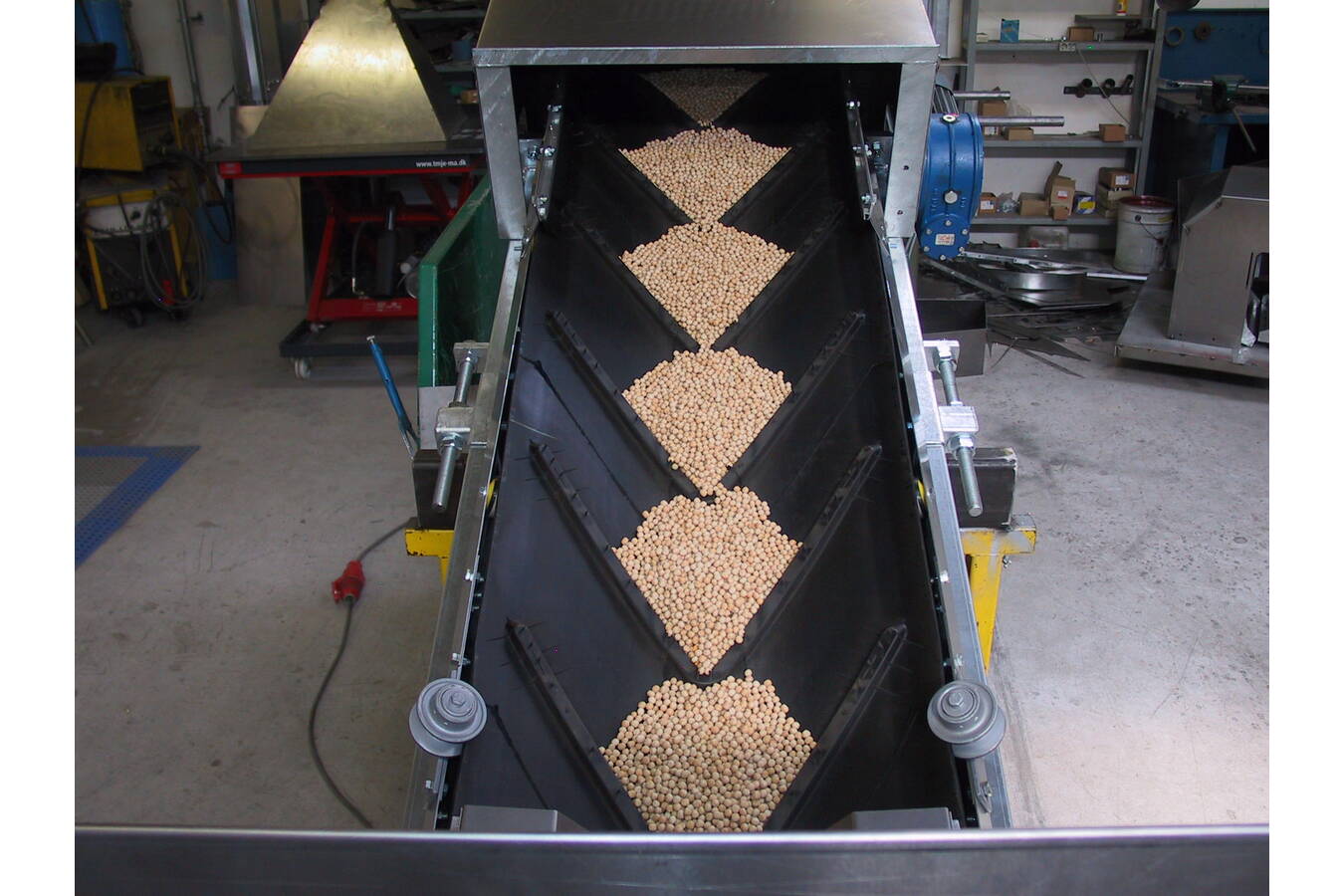
  • Special version: elevator belt with sidewalls and cleats for steep conveying angles
Inclined belts are used when smooth or profiled belts provide insufficient grip. The elevator belt transports product stably, even with varying flow rates and different material types.

4. Belt conveyors for grain

The grain version is specifically developed for applications in grain storage and agricultural logistics. The construction is similar to the light duty belt, but fully aligned with grain, seed and comparable products.
Technical specifications of previously built variants:
  • Capacity: approx. 60 to 150 tons per hour (at 750 kilograms per cubic metre)
  • Belt widths: 400 mm to 650 mm
  • Incline: up to approx. 35 degrees with profile belt
This variant is ideal for distributing grain in long storage sheds, filling storage bays or connecting cleaning and drying.

Operational conditions for variant selection

Problems arise when a conveyor does not match the actual process conditions. The performance of a belt conveyor is directly linked to correct dimensioning. Crucial parameters include:
  • Material type and bulk density
  • Capacity in m³ per hour or tons per hour
  • Belt width and belt speed
  • Incline angle (if applicable)
  • Length of the conveying route
  • Type of drive and required power
  • Choice between idler sets or sliding support
  • The type of industry, such as food, chemicals, agro, minerals or recycling

Integration and future readiness

Companies increasingly opt for modular belt conveyors that can be easily adjusted when processes change or capacity needs to be expanded. Factors such as lower energy demand, improved maintenance, longer lifetime and better accessibility for service teams also play an important role.
By choosing a correctly engineered conveyor, energy consumption decreases and the reliability of the entire installation improves. Contact our specialists so we can assemble a solution that fits your situation.


Company information

More items

Selecting the Right Industrial Mixer An overview of key mixing technologies used in the processing of bulk materials. It outlines operational principles, benefits and challanges of different mixer types.
Selecting the Right Industrial Mixer
An overview of key mixing technologies used in the processing of bulk materials. It outlines operational principles, benefits and challanges of different mixer types. The relevance of mixing A common step in bulk handling is the mixing of various bulk materials, sometimes with the addition of small or large quantities of liquids. Jansen&Heuning offers several types of mixers in a wide range of sizes and configurations. Each system is built on a modular design platform and can be tailored to the specific characteristics of the material, such as particle size, sensitivity to breakage, or cleaning requirements. 1. Double-shaft paddle mixers with coupled drive * Advantages: These mixers ensure fast and intensive mixing because the paddles bring the product into a fluidized bed. They are suitable for both powders and granules, even with large batch volumes. The mixing time is relatively short, and the system can also distribute sensitive additives evenly. * Disadvantages: Energy consumption is relatively high. The construction is complex, which entails higher purchase and maintenance costs. With highly abrasive products, wear occurs
07.08.2025  |  1212x  |  Product description  |   | 
Bulk Conveyor Calculation Program With the Bulk Conveyor Calculation Program from Jansen&Heuning, you can calculate your needs within seconds—efficiently, accurately, and without complexity.
Bulk Conveyor Calculation Program
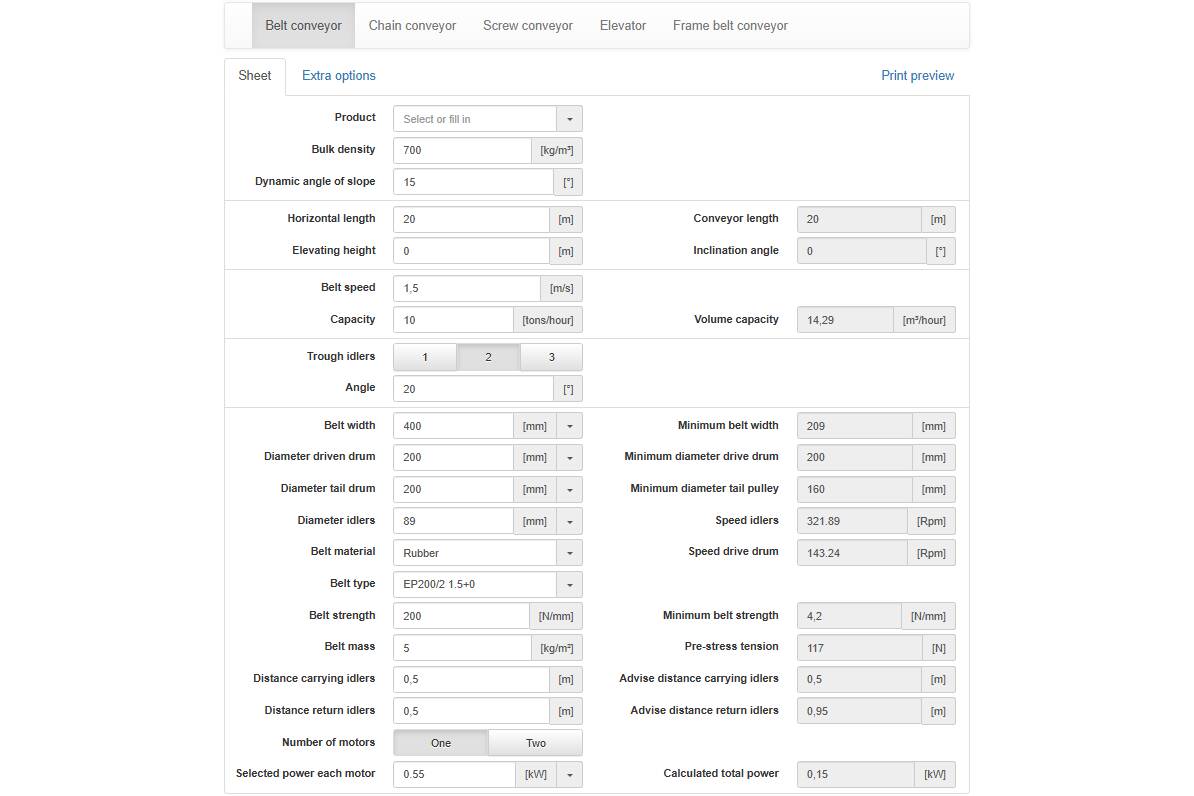
With the Bulk Conveyor Calculation Program from Jansen&Heuning, you can calculate your needs within seconds—efficiently, accurately, and without complexity. Designing a conveyor system that precisely matches your process requirements can be complex—unless you use the right tools. At Jansen&Heuning, we’ve developed an intuitive and technically robust online calculation program that enables engineers and plant designers to quickly generate basic designs for various bulk handling systems. The tool allows the user to calculate the optimum specifications for five different conveyor types: * Belt conveyors * Chain conveyors * Screw conveyors * Bucket elevators * Frame belt conveyors (including support structure design) Each module is tailored to the specific mechanical and operational characteristics of the system type, providing accurate results based on your input values such as product properties, capacity, dimensions, and environmental factors. Comprehensive Input Possibilities The tool supports a wide range of bulk solids with a built-in material database containing densities and friction values for
05.06.2025  |  1640x  |  Press release  |   | 
Custom Made Screw Conveyors from Jansen&Heuning Since 1901, Jansen&Heuning designs screw conveyors that combine proven reliability with custom made solutions for bulk handling.
Custom Made Screw Conveyors from Jansen&Heuning
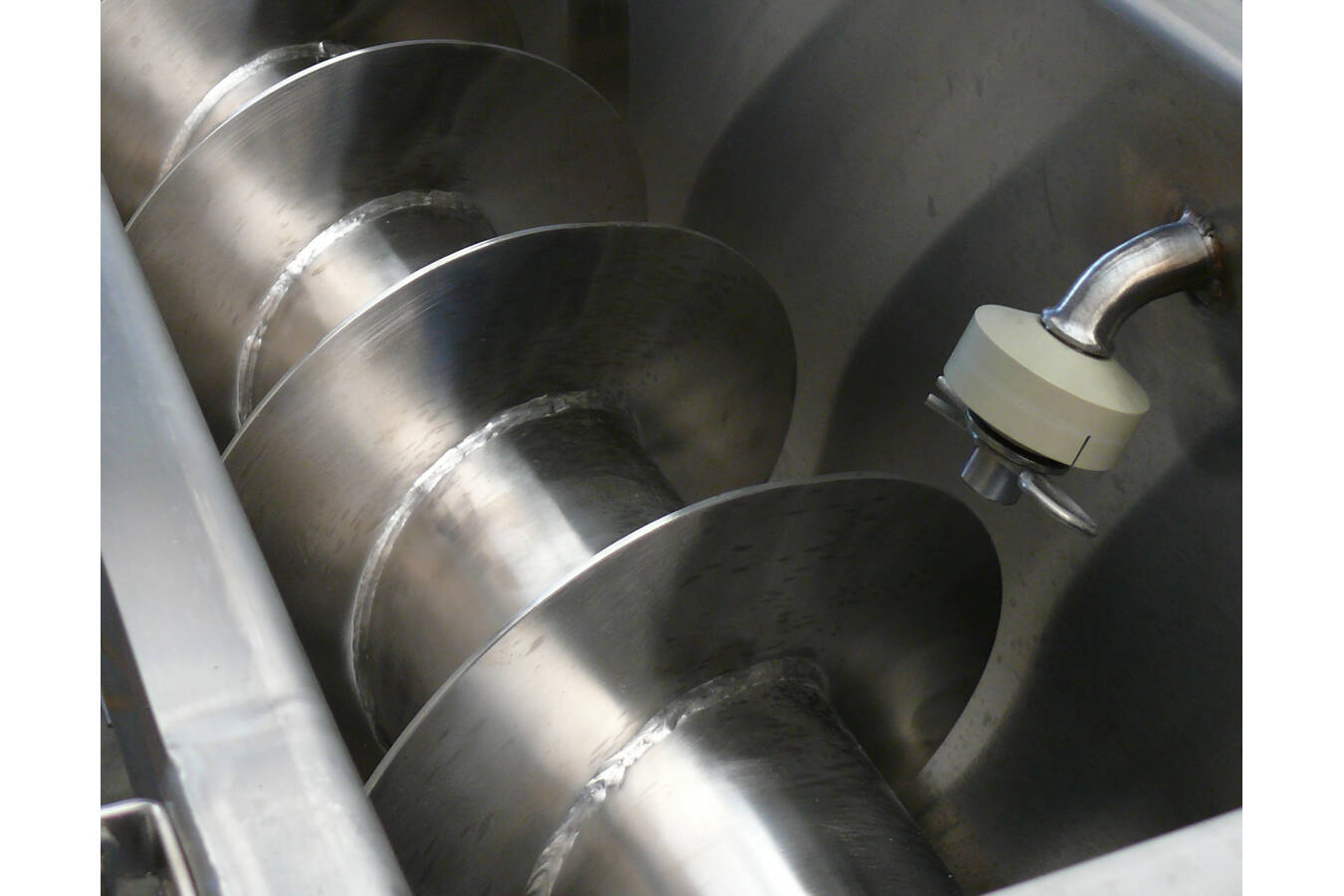
Since 1901, Jansen&Heuning designs screw conveyors that combine proven reliability with custom made solutions for bulk handling. Screw Conveyors: Proven and modern Proven bulk handling technology in modern production, closed or open, controlled conveying for bulk materials. Screw conveyors are systems designed for controlled conveying of bulk materials over short to medium distances. A rotating screw, driven by a geared motor, moves the product through a pipe or trough. Depending on the layout, screw conveyors support horizontal, inclined, and also vertical transport, with multiple possible inlets and outlets.​ The possibility of an enclosed design ensures dust-free operation, making it suitable for applications requiring dosing, mixing, cooling, or heating. When equipped with a dosing screw, the screw conveyor provides precise product feed.​ Applications Across Industries Jansen&Heuning’s screw conveyors are widely used in sectors such as food processing, chemicals, recycling, and many others. Their modular design allows for easy customization to specific product characteristics and
01.05.2025  |  2280x  |  Product news  |   | 
Reduction of dust emissions during ship loading Dust emissions during ship loading are often a burden on the environment. It is possible to minimise dust emissions by fairly simple means.
Reduction of dust emissions during ship loading
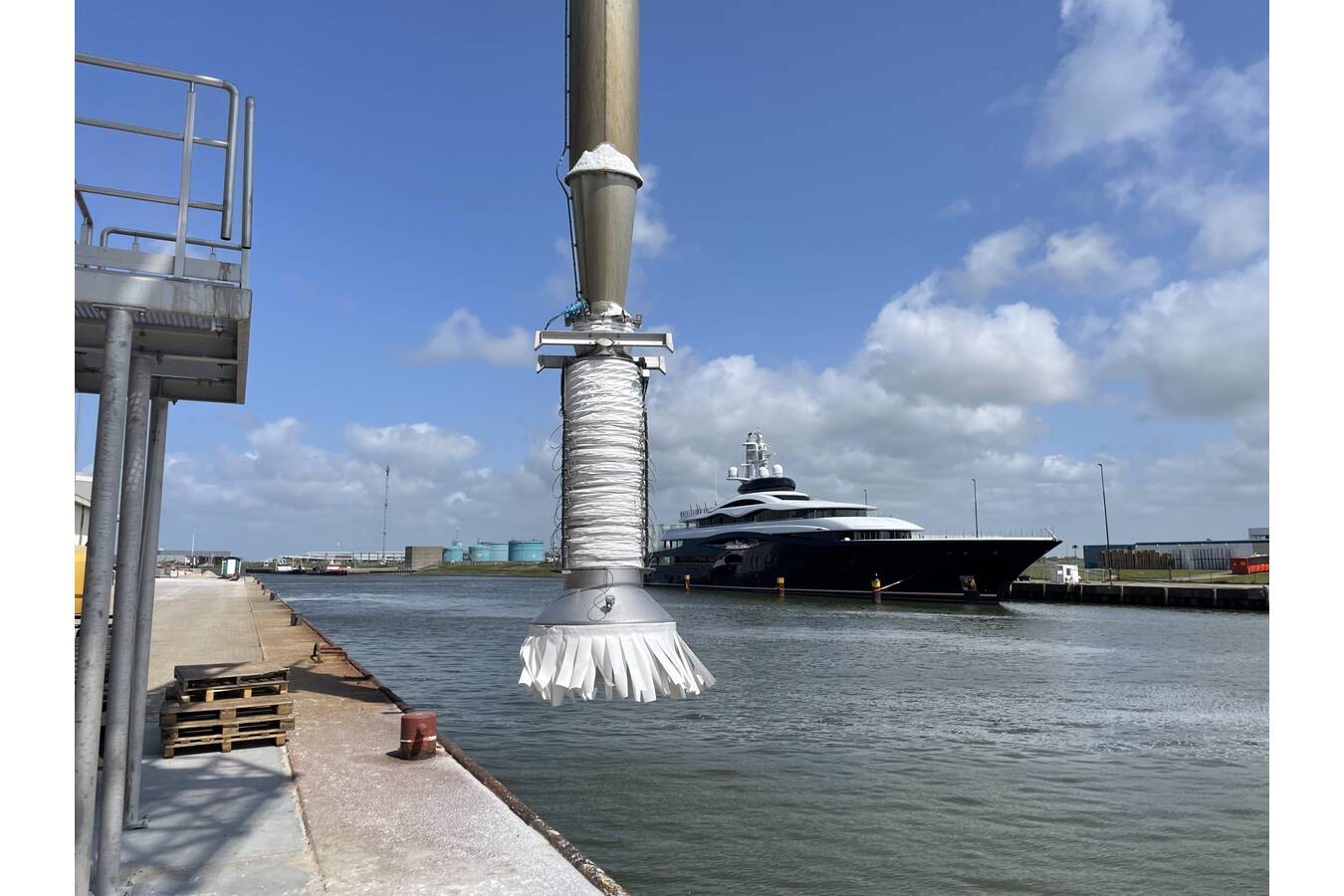
Dust emissions during ship loading are often a burden on the environment. It is possible to minimise dust emissions by fairly simple means. When loading ships, product flows down a loading pipe from a great height and gains a lot of speed. When the material flow collides with the product mountain in the ship’s hold, a lot of energy is released. This leads to violent movement of the material, which can stir up a lot of dust. The loading pipe (or loading conveyor) is often telescopic and pivoting, in order to load the vessel as efficiently as possible. Sometimes a dump pipe is used, equipped with a loading bellows at the end. To minimise dust generation, two basic solutions are possible, which can also be applied in combination: * A sealing of the product surface and possible extraction. * A speed reduction of the material flow from the loading pipe. Reducing dust emissions with dust skirt An example of closure is the deployment of a dust skirt under the spout. An automatic height adjustment ensures that the skirt rests on the product surface. A well-designed dust skirt is very effective, especially
06.01.2025  |  2146x  |  Press release  | 
Bucket elevators, an efficient solution
How can you use your expensive soil economically efficient? This is possible with a bucket elevator. If you raise your product with an elevator to a height of, for example, 30 meters, you only need a ground surface of approximately 2 m². A belt conveyor quickly reaches a length of 60 meters, with supports the surface area needed will easily be 120 m². What you need for a bucket elevator * a good foundation * a metered supply of product * lateral support per 10 meter height Suitable means of transport The bucket elevator has already proven its value as an extremely reliable means of transport for the transport of dry materials such as grains and flours. Due to the development and application of rubber belts and plastic inserts, there is hardly any elongation and the powers to be transferred have been greatly improved. Because of this and the use of modern plastic cups, the elevator is also very suitable as a means of transport for sand, gravel and other abrasive
05.11.2024  |  3037x  |  Insight  | 
PORTALS
BulkSolids-Portal Schuettgut-Portal Recycling-Portal
Related
Bulkgids.nl
SIGN UP FOR OUR NEWSLETTER
Newsletter archive
Service and contact
ContactDisclaimerPrivacyAdvertising
FOLLOW US
Linked