Supplier sign in
Home
STAY INFORMED
Subscribe to our monthly newsletter.
Your email address will never be disclosed to any third party.
Read our privacy notice.


Product description
07.08.2025  |  1152x
Share this item
Allow (tracking) cookies from YouTube and Vimeo to watch videos

Selecting the Right Industrial Mixer

An overview of key mixing technologies used in the processing of bulk materials. It outlines operational principles, benefits and challanges of different mixer types.

The relevance of mixing

A common step in bulk handling is the mixing of various bulk materials, sometimes with the addition of small or large quantities of liquids. Jansen&Heuning offers several types of mixers in a wide range of sizes and configurations. Each system is built on a modular design platform and can be tailored to the specific characteristics of the material, such as particle size, sensitivity to breakage, or cleaning requirements.

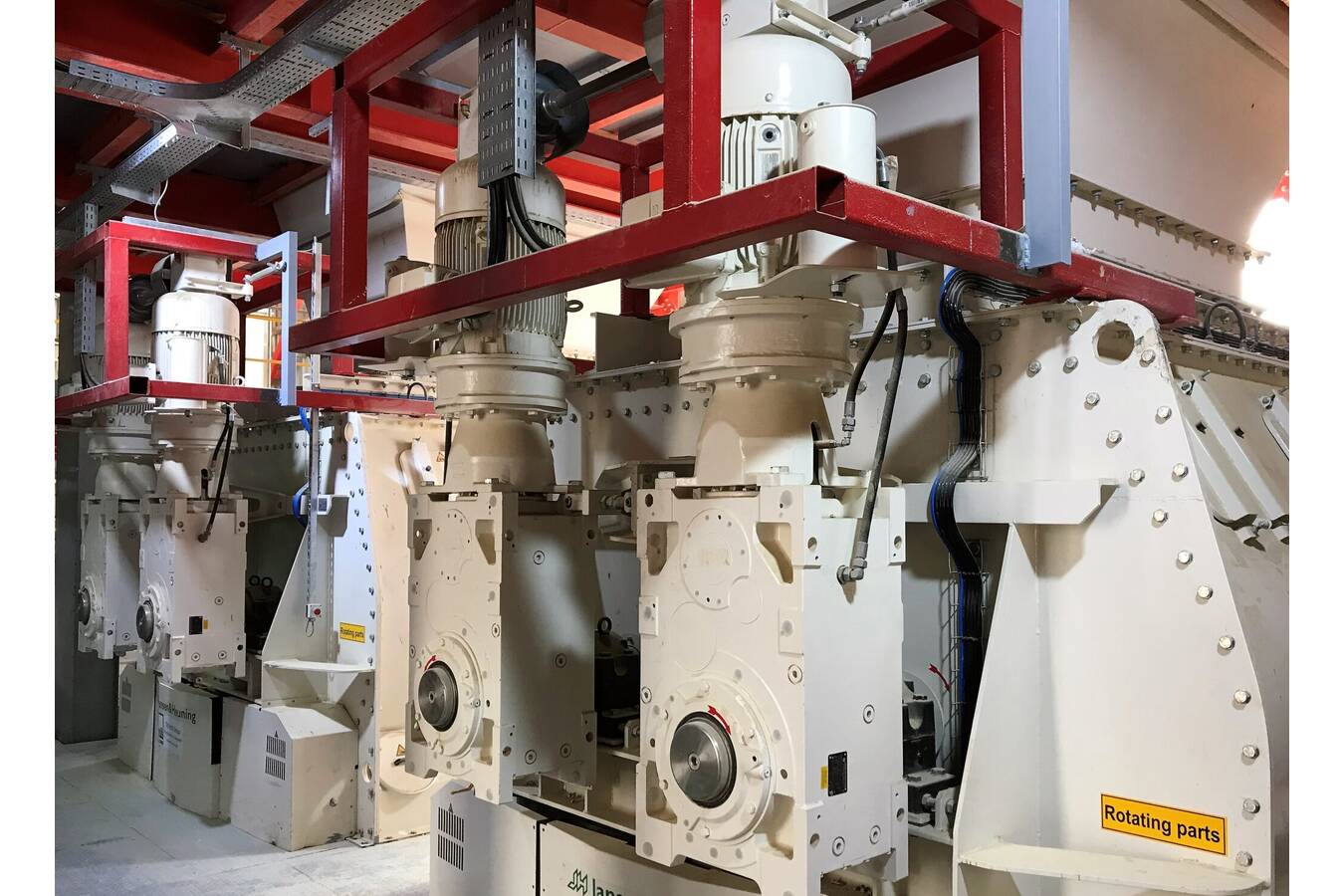
1. Double-shaft paddle mixers with coupled drive

  • Advantages: These mixers ensure fast and intensive mixing because the paddles bring the product into a fluidized bed. They are suitable for both powders and granules, even with large batch volumes. The mixing time is relatively short, and the system can also distribute sensitive additives evenly.
  • Disadvantages: Energy consumption is relatively high. The construction is complex, which entails higher purchase and maintenance costs. With highly abrasive products, wear occurs on the paddles and tank.
  • Jansen&Heuning product range: capacity up to 10,000 liters; 50 tons/hour, 100 m³/hour; drive up to 2 x 55 kW

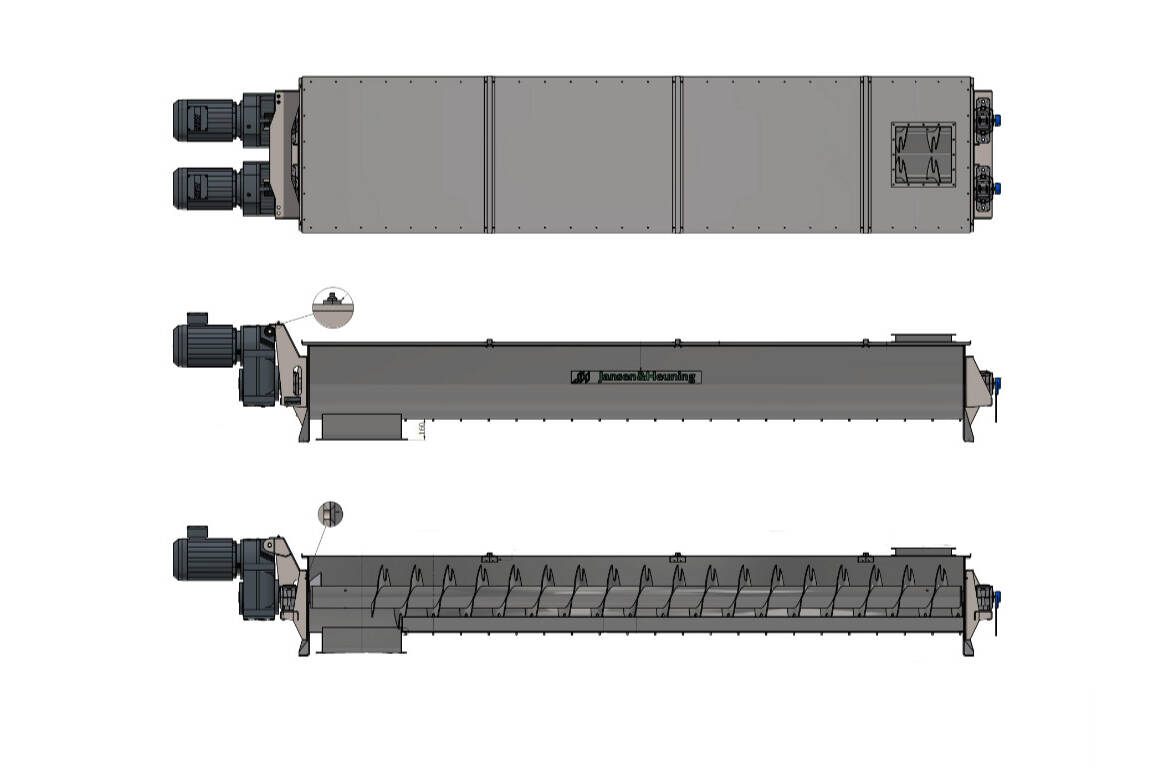
2. Twin-shaft screw mixers

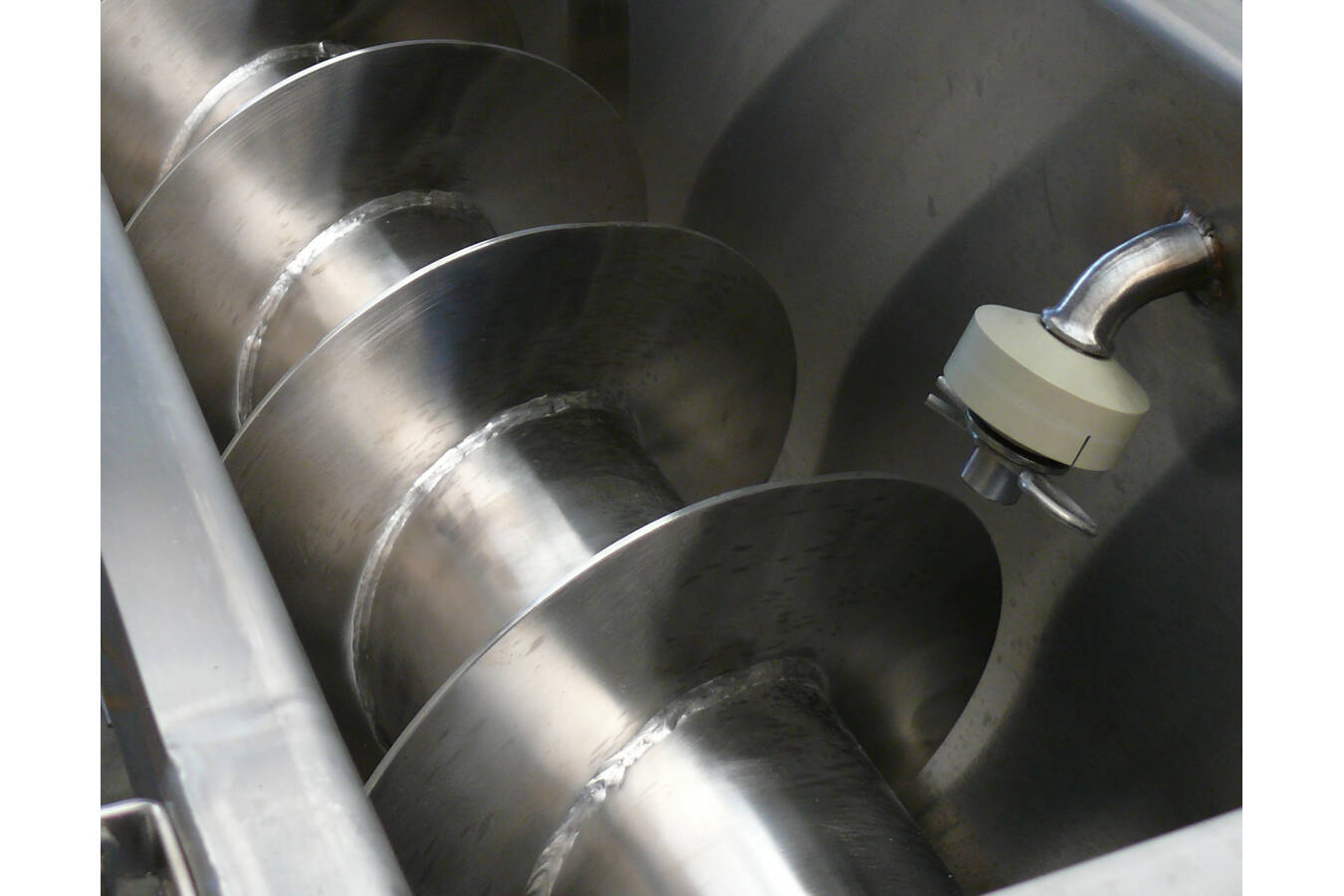
  • Advantages: These mixers have a gentle mixing action that causes minimal damage to particles. They are suitable for homogeneous mixing of large volumes, even with products of different densities. They often have a high loading and unloading capacity and can operate continuously or in batches. The mixing shafts can be equipped with paddles, special screw blades with recesses or ribbons.
  • Disadvantages: The mixing time is longer than with intensive mixers. The system is less suitable for evenly mixing very small additives in low dosages. The construction height can be considerable, which makes installation in existing buildings difficult.
  • Jansen&Heuning product range: up to a diameter of 1,200 mm. The design can be freely adapted to customer requirements

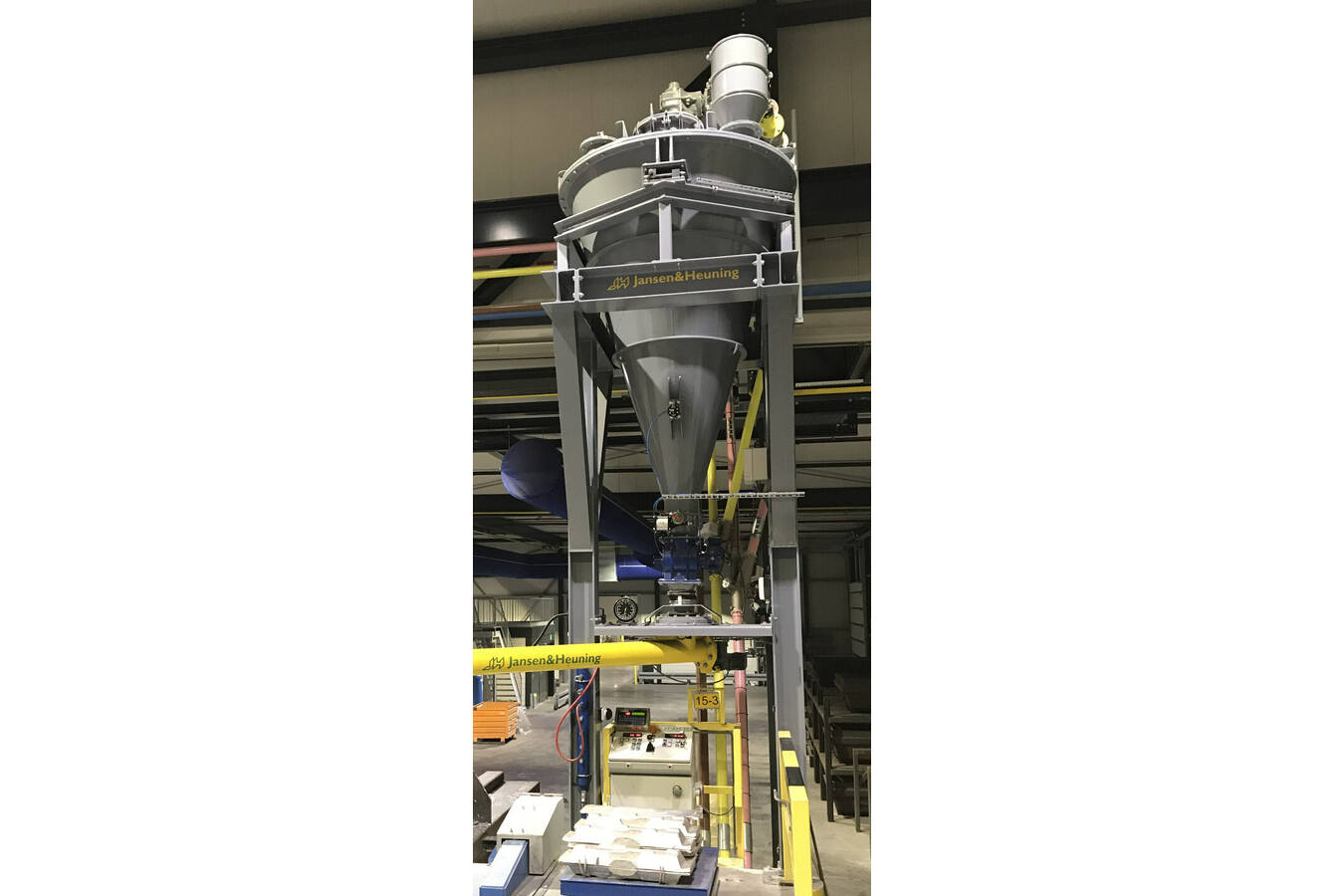
3. Conical mixers

  • Advantages: These mixers are very suitable for delicate products and powders with large particle size differences, as they cause virtually no breakage. They offer gentle but effective mixing and are easy to clean. Their conical shape ensures that little product remains behind.
  • Disadvantages: The mixing time is relatively long. The capacity per unit of time is lower than with intensive mixers. They are less suitable for highly cohesive or sticky products.
  • Jansen&Heuning product range:  capacity up to 20,000 liters

Considerations selecting a mixer

The choice of mixer type depends largely on product properties such as particle size, cohesion, abrasiveness and fragility, but also on process requirements such as batch size, mixing time, ease of cleaning and possible combination with liquid dosing. A compromise is often sought between mixing quality, process efficiency and product integrity.

Mixing quality (COV)

The COV (coefficient of variation) is a commonly used measure for assessing the mixing quality of mixers for powders and granules. It indicates how homogeneously the components are distributed in a mixture.

What is the COV?

The COV is calculated as the standard deviation divided by the average of the measured concentrations, often expressed as a percentage. A low COV means that the mixture is homogeneous, while a high COV indicates uneven distribution. In a formula: COV = Standard deviation / Average × 100%

Guidelines for mixers in animal feed and bulk powders

  • Well mixed: COV ≤ 5%
  • Acceptably mixed: COV between 5 and 10%
  • Poorly mixed: COV > 10%

Typical COV-values

  1. Double-shaft paddle mixer: COV 3 to 5%; Average mixing time 2 – 4 minutes.
  2. Ribbon blender: COV 5- 10% ; Average mixing time 8 – 15 minutes.
  3. Conical mixer (Nauta): COV 5- 8% ; Average mixing time 15 – 30 minutes.
A low COV is essential for consistent product quality (e.g. efficiency, taste or solubility), safety (when adding medicines or supplements to animal feed) and accurate dosing of micro-ingredients.
In the animal feed industry, a COV of 5 percent or lower is often set as a target. For premixes, where micro-ingredients such as vitamins or medicines must be evenly distributed, stricter requirements sometimes apply (3 to 5 per cent).

Factors that influence the COV

  • Mixing time: Too short a mixing time leads to a higher COV. The mixing time must be long enough to achieve stable homogeneity, but mixing for too long can cause segregation.
  • Filling level; Mixers have an optimum load capacity (usually 60 to 80 percent of the mixing volume). Too much or too little filling increases the COV.
  • Particle size and density; Large differences in particle size or density can cause segregation, which worsens the COV.
  • Addition of liquids; The injection of liquids can cause clumping or uneven distribution, which negatively affects the COV.
  • Measurement of COV; In practice, samples are taken from different places in a mixture. The concentration of a marker (e.g. salt, microtracer or coloring agent) is analyzed. The COV is calculated using these values.


Company information

More items

Bulk Conveyor Calculation Program With the Bulk Conveyor Calculation Program from Jansen&Heuning, you can calculate your needs within seconds—efficiently, accurately, and without complexity.
Bulk Conveyor Calculation Program
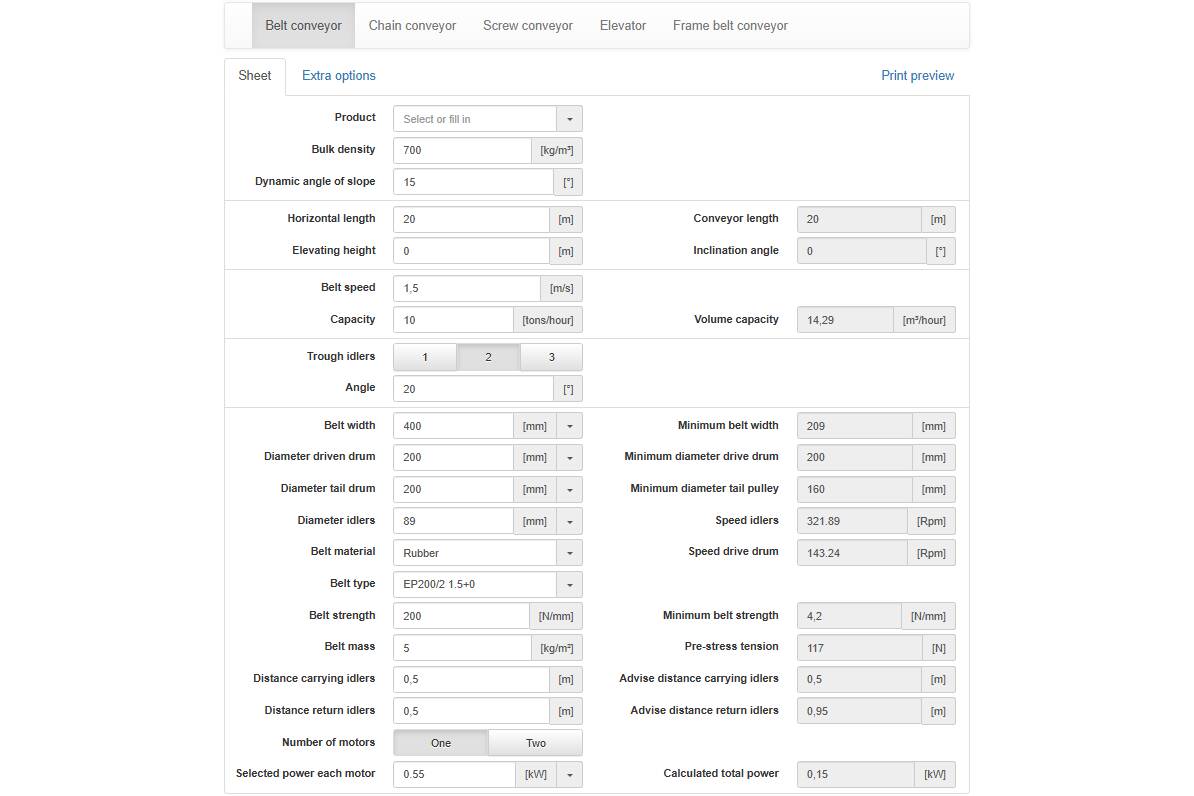
With the Bulk Conveyor Calculation Program from Jansen&Heuning, you can calculate your needs within seconds—efficiently, accurately, and without complexity. Designing a conveyor system that precisely matches your process requirements can be complex—unless you use the right tools. At Jansen&Heuning, we’ve developed an intuitive and technically robust online calculation program that enables engineers and plant designers to quickly generate basic designs for various bulk handling systems. The tool allows the user to calculate the optimum specifications for five different conveyor types: * Belt conveyors * Chain conveyors * Screw conveyors * Bucket elevators * Frame belt conveyors (including support structure design) Each module is tailored to the specific mechanical and operational characteristics of the system type, providing accurate results based on your input values such as product properties, capacity, dimensions, and environmental factors. Comprehensive Input Possibilities The tool supports a wide range of bulk solids with a built-in material database containing densities and friction values for
05.06.2025  |  1559x  |  Press release  |   | 
Custom Made Screw Conveyors from Jansen&Heuning Since 1901, Jansen&Heuning designs screw conveyors that combine proven reliability with custom made solutions for bulk handling.
Custom Made Screw Conveyors from Jansen&Heuning
Since 1901, Jansen&Heuning designs screw conveyors that combine proven reliability with custom made solutions for bulk handling. Screw Conveyors: Proven and modern Proven bulk handling technology in modern production, closed or open, controlled conveying for bulk materials. Screw conveyors are systems designed for controlled conveying of bulk materials over short to medium distances. A rotating screw, driven by a geared motor, moves the product through a pipe or trough. Depending on the layout, screw conveyors support horizontal, inclined, and also vertical transport, with multiple possible inlets and outlets.​ The possibility of an enclosed design ensures dust-free operation, making it suitable for applications requiring dosing, mixing, cooling, or heating. When equipped with a dosing screw, the screw conveyor provides precise product feed.​ Applications Across Industries Jansen&Heuning’s screw conveyors are widely used in sectors such as food processing, chemicals, recycling, and many others. Their modular design allows for easy customization to specific product characteristics and
01.05.2025  |  2233x  |  Product news  |   | 
Fully Automatic Bigbag Crusher: Consistent FIBC Conditioning Based on the success of previous models, Jansen&Heuning now offers a fully automatic bigbag crusher — the most efficient way to condition bigbags.
Fully Automatic Bigbag Crusher: Consistent FIBC Conditioning
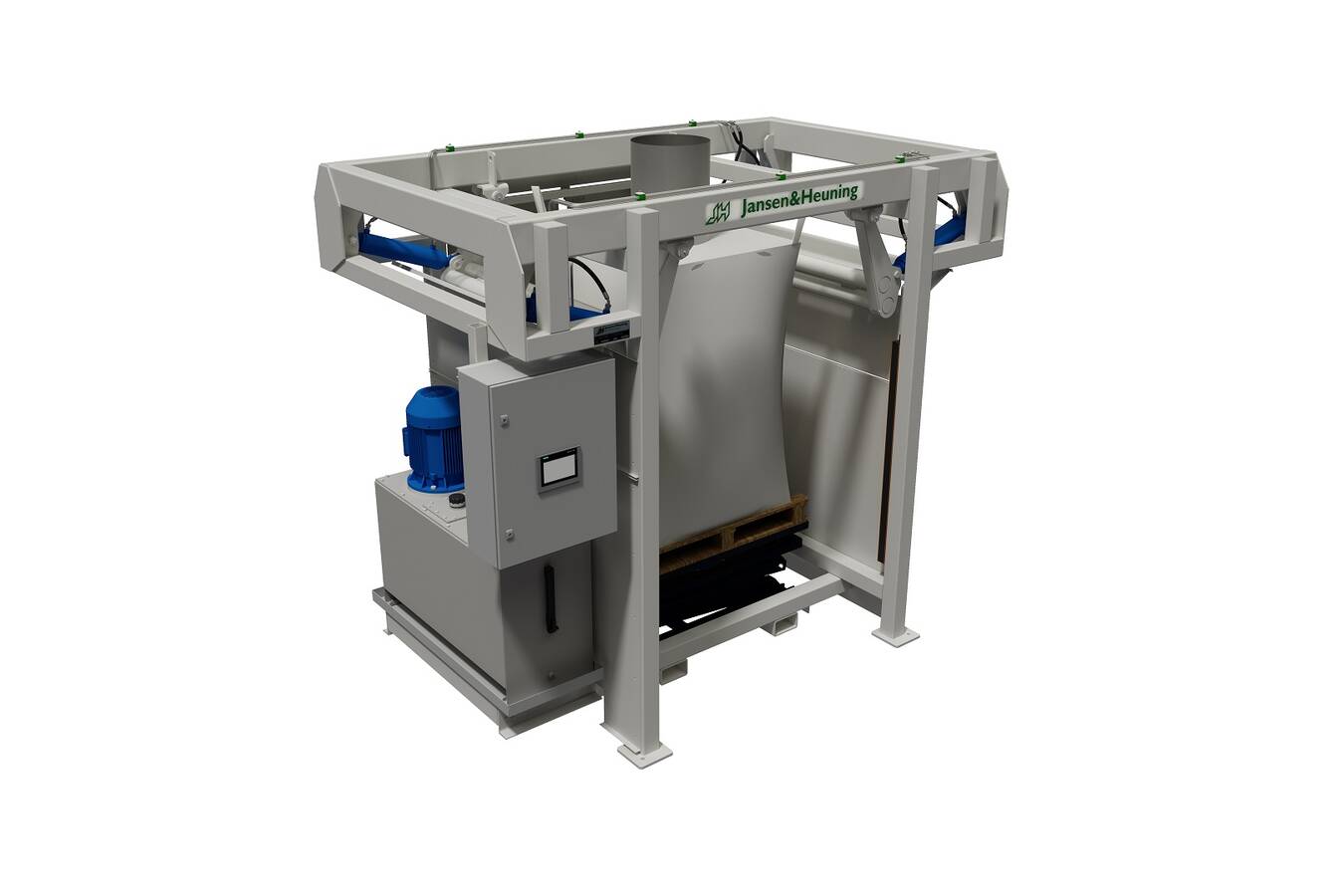
Based on the success of previous models, Jansen&Heuning now offers a fully automatic bigbag crusher — the most efficient way to condition bigbags. In bulk solids handling, compacted materials within Flexible Intermediate Bulk Containers (FIBCs) can significantly disrupt production lines. Jansen&Heuning’s Fully Automatic Bigbag Crusher provides a robust and intelligent solution, conditioning hardened contents swiftly, safely, and hands-free at the touch of a button. Automated Crushing for Maximum Efficiency Engineered for demanding industrial applications, this bigbag crusher employs hydraulic force and programmable motion to compress FIBCs from multiple sides and heights. A rotating scissor lift table and two hydraulic pressing arms work in unison to break down compacted materials into a flowable form. Operators position the bigbag on the lifting table using a forklift. After selecting a pre-set or custom program via the integrated HMI touchscreen, the crushing cycle commences. The bigbag undergoes compression in up to 12 programmable steps, with the table rotating 90° to ensure thorough conditioning
07.04.2025  |  2426x  |  Product news  |   | 
Reduction of dust emissions during ship loading Dust emissions during ship loading are often a burden on the environment. It is possible to minimise dust emissions by fairly simple means.
Reduction of dust emissions during ship loading
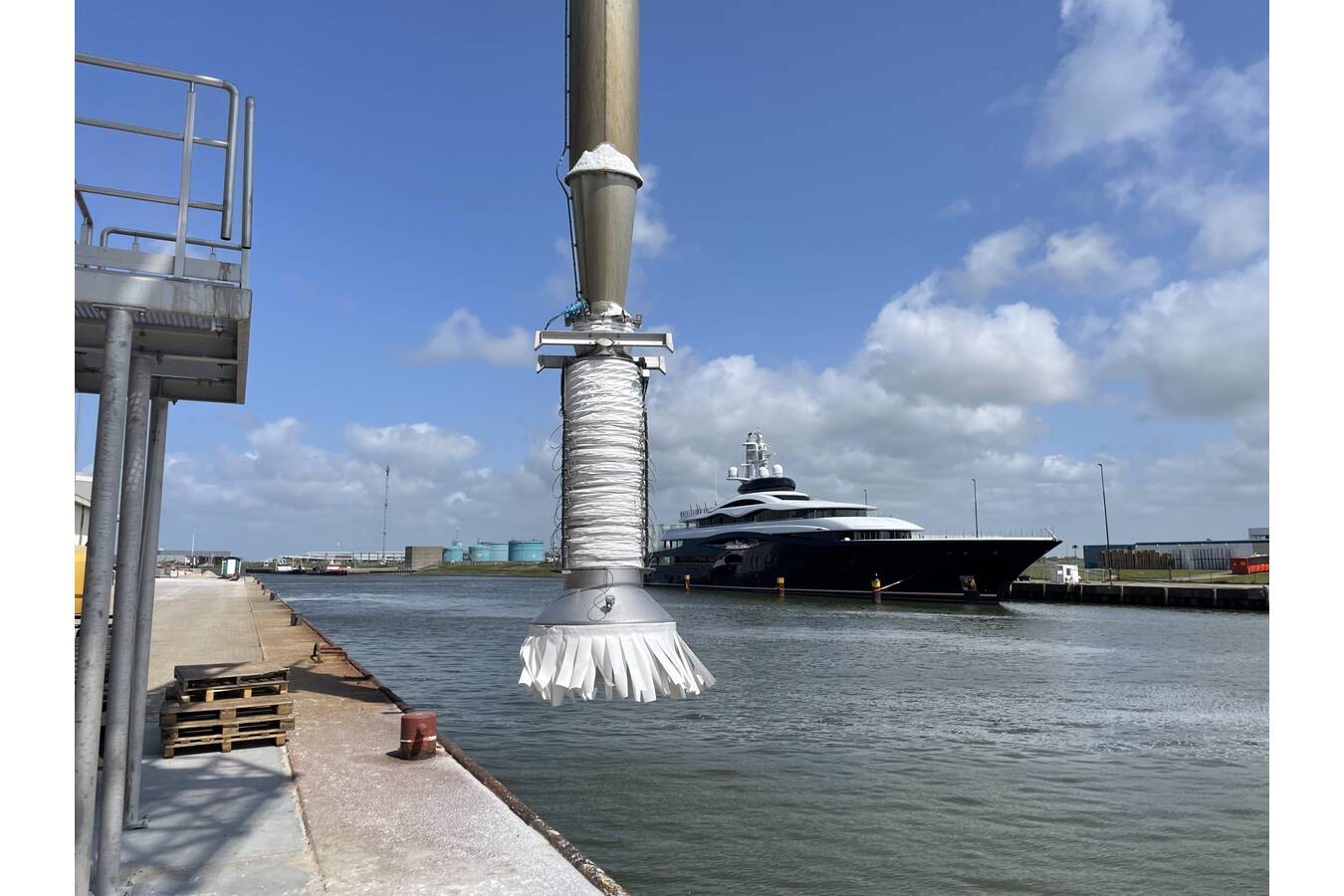
Dust emissions during ship loading are often a burden on the environment. It is possible to minimise dust emissions by fairly simple means. When loading ships, product flows down a loading pipe from a great height and gains a lot of speed. When the material flow collides with the product mountain in the ship’s hold, a lot of energy is released. This leads to violent movement of the material, which can stir up a lot of dust. The loading pipe (or loading conveyor) is often telescopic and pivoting, in order to load the vessel as efficiently as possible. Sometimes a dump pipe is used, equipped with a loading bellows at the end. To minimise dust generation, two basic solutions are possible, which can also be applied in combination: * A sealing of the product surface and possible extraction. * A speed reduction of the material flow from the loading pipe. Reducing dust emissions with dust skirt An example of closure is the deployment of a dust skirt under the spout. An automatic height adjustment ensures that the skirt rests on the product surface. A well-designed dust skirt is very effective, especially
06.01.2025  |  2100x  |  Press release  | 
Bucket elevators, an efficient solution
How can you use your expensive soil economically efficient? This is possible with a bucket elevator. If you raise your product with an elevator to a height of, for example, 30 meters, you only need a ground surface of approximately 2 m². A belt conveyor quickly reaches a length of 60 meters, with supports the surface area needed will easily be 120 m². What you need for a bucket elevator * a good foundation * a metered supply of product * lateral support per 10 meter height Suitable means of transport The bucket elevator has already proven its value as an extremely reliable means of transport for the transport of dry materials such as grains and flours. Due to the development and application of rubber belts and plastic inserts, there is hardly any elongation and the powers to be transferred have been greatly improved. Because of this and the use of modern plastic cups, the elevator is also very suitable as a means of transport for sand, gravel and other abrasive
05.11.2024  |  2951x  |  Insight  | 
PORTALS
BulkSolids-Portal Schuettgut-Portal Recycling-Portal
Related
Bulkgids.nl
SIGN UP FOR OUR NEWSLETTER
Newsletter archive
Service and contact
ContactDisclaimerPrivacyAdvertising
FOLLOW US
Linked