Qlar presents Loss-in-Weight Feeder SIMPLEX FB at K 2025
The green transformation of material processing. Qlar (formerly Schenck Process) presents Loss-in-Weight Feeder SIMPLEX FB at K 2025
At the K-Messe, which takes place in Düsseldorf from October 8 to 15, Qlar (formerly Schenck Process) will be presenting itself as a partner for green transformation and digitalization in sustainable material processing. At booth G46 in Hall 10, the company will use the SIMPLEX FB loss-in-weight feeding system to show how different materials can be fed reliably and continuously, ensuring an efficient and smooth process flow.
Driving circular transformation
„Driving circular transformation“ – under this motto, Qlar is driving sustainable and digitalized processes. The expert for process-critical bulk solids applications will be showing what this looks like in practice at the K-Messe, the world’s leading trade fair for the plastics and rubber industry. The company relies on innovative hardware in combination with intelligent, digital integration to maximize productivity, minimize downtimes, and sustainably optimize the material flow at every stage of the recycling and processing processes. Qlar thus supports its customers in achieving the ambitious goals of climate neutrality by 2050.
Intelligent process control
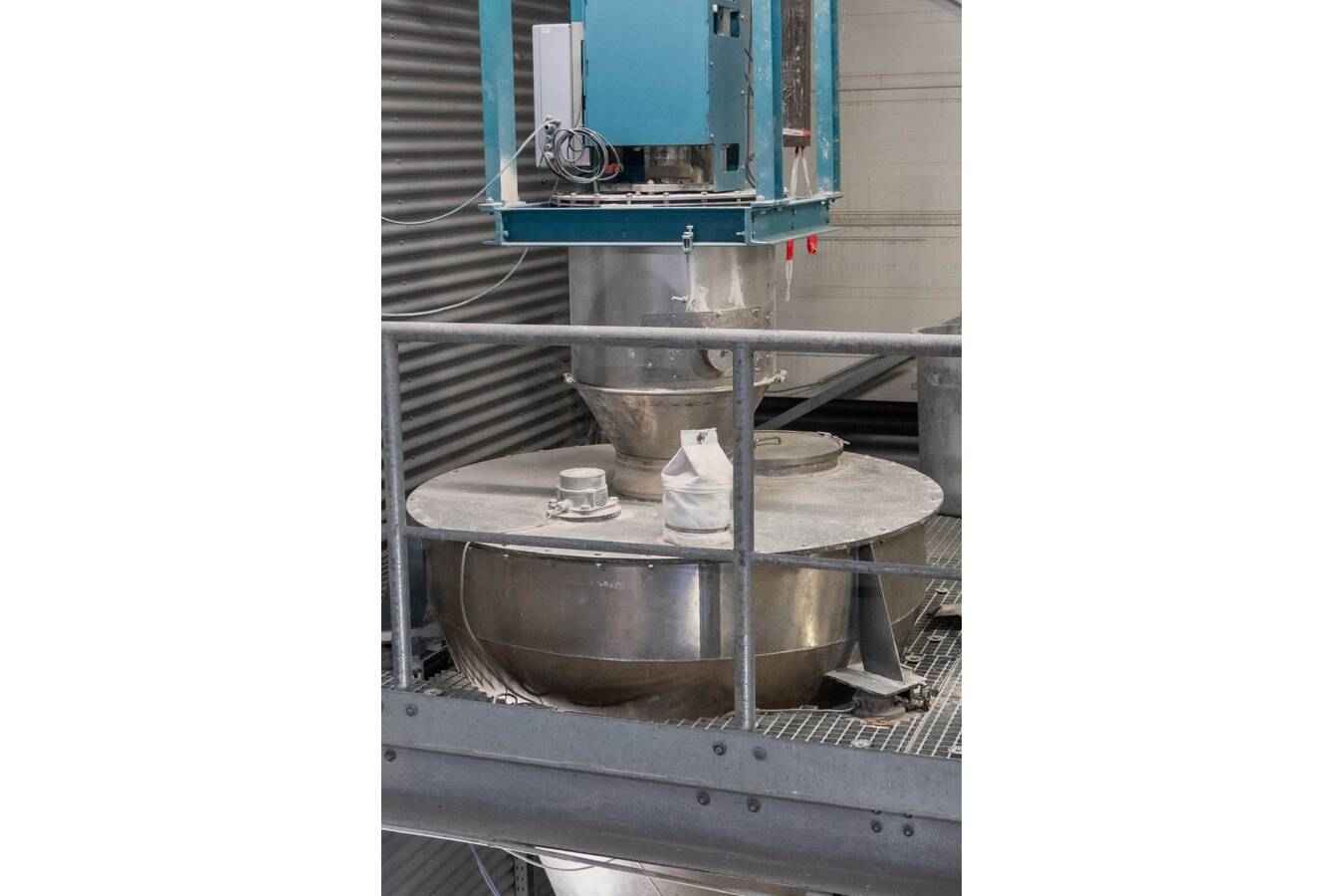
A highlight of the trade fair appearance is the SIMPLEX FB, a gravimetric stainless steel feeder with high conveying capacity, which can be used to feed different materials – from glass and carbon fibers to plastic flakes, cellulose, and other new or recycled materials. „The SIMPLEX FB shows its particular strengths when dealing with post-consumer material,“ says Frederik Hanß, Head of Sales Chemicals & Performance Materials EMEA at Qlar. „Thanks to the bottom-driven agitator and the low center of gravity, even difficult-to-feed regrind or plastic flakes can be processed.“ Integrated sensors enable data to be collected and transmitted in real time. The intelligent system thus enables fill level measurement and bridge detection as well as moisture measurement of the material. Possible blockages in the discharge are detected early on – jammed material can be removed in good time before a larger backflow occurs. Depending on the speed and fill level, optimal operating values can be determined and stored for different materials. Ultimately, the digitalization of the feeding processes creates a perfect basis for long-term process optimization.
Visitors to the K-Messe can find out how intelligent, networked data increases operational safety and leads to efficiency gains via an interactive touch display at Qlar’s booth 10G46. The expert for process-critical bulk solids applications looks forward to deepening the dialog with customers and industry experts and actively helping to shape the future of the circular economy.