Conveyor Belt Mass Flow Measurement: Radiometric versus Belt Scales
Mass flow measurement on conveyor belts is essential for bulk solids. Radiometric systems offer non-contact, low-maintenance precision despite higher acquisition costs, in contrast to load cell systems.
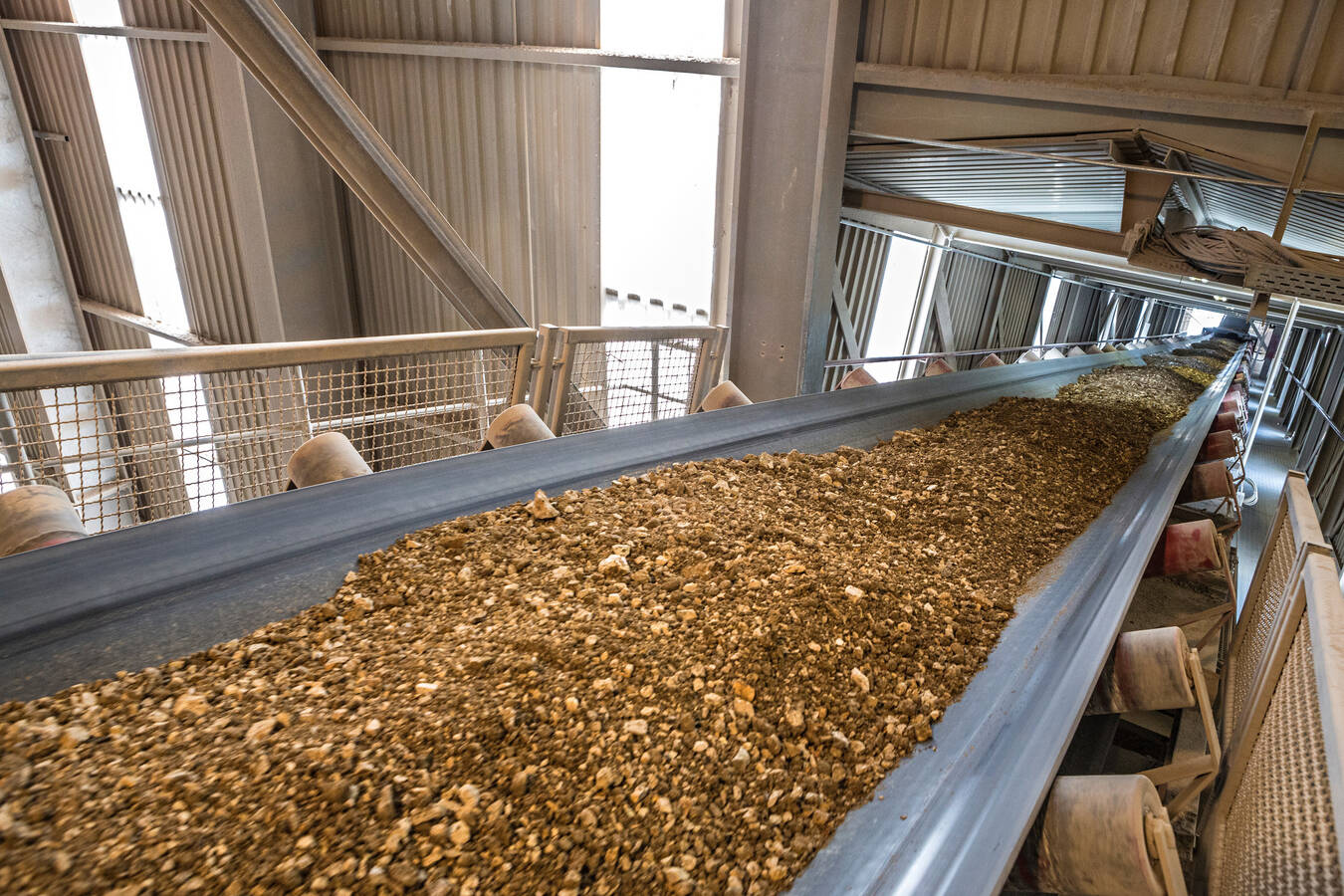
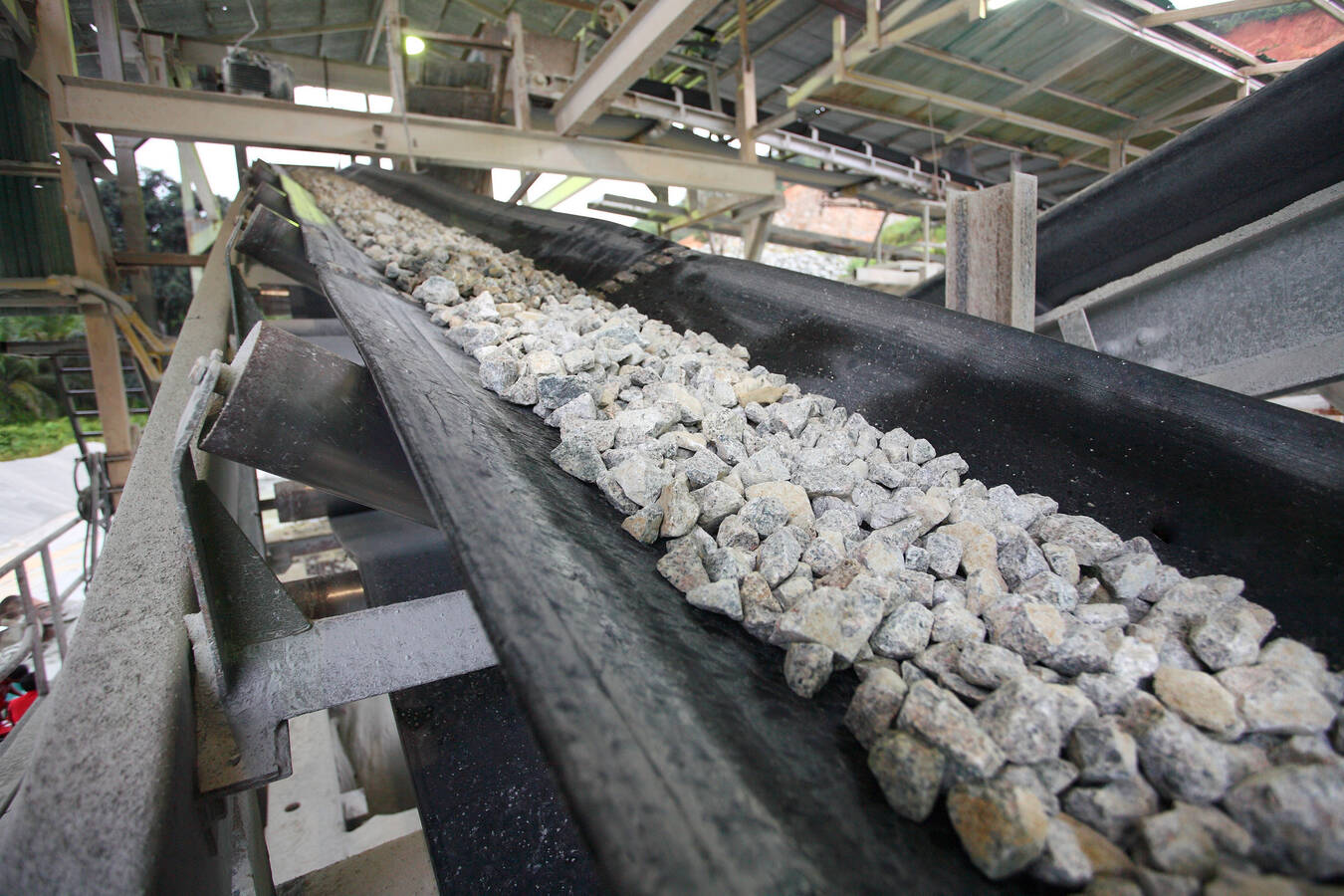
Mass flow measurement on conveyor belts is common practice and required in many different industries. Whether in mines, paper mills or power plants, operators move materials on conveyor belts or on screw and chain conveyors. Conveyor belts are also a popular means for loading and unloading trucks, barges, and railcars at plants.
Mass flow is continuously recorded and transmitted to an automation system. This system can, for example, adjust the speed of a conveyor belt to control the material feed for subsequent process steps, such as feeding ore to a crusher or supplying wood chips in a paper mill. The same measurement technology can also be used for dispensing a secondary material in mixing systems.
Industry consensus says that precise and reliable mass flow measurement is of central importance. While some operators rely on radiometric measuring methods, others prefer to use load cell systems for conveyor belts.
Radiometric measuring principle
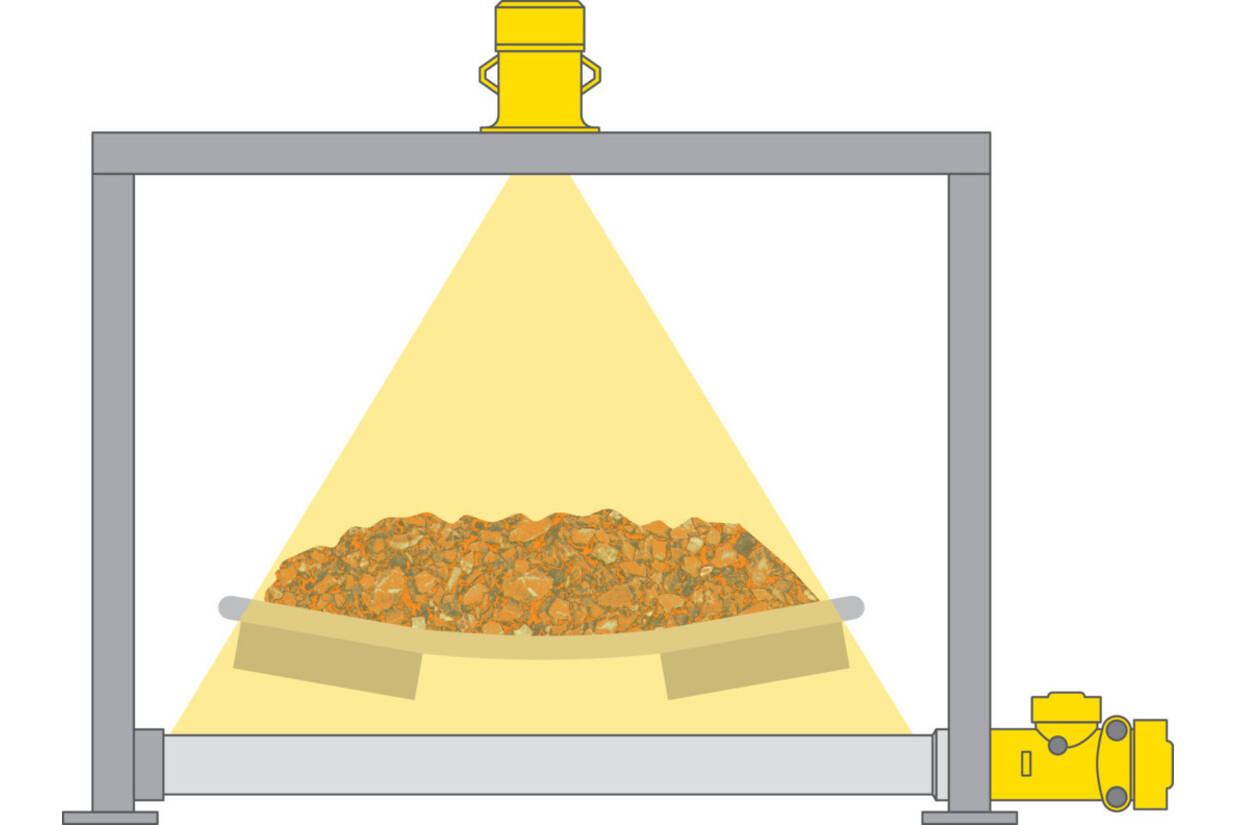
The radiometric measuring system consists of three main components: a radioactive radiation source, a radiation shield and at detector. The source and the detector are mounted opposite each other on the conveyor system. In most applications, the radiation source is mounted above and the detector below. The radiation source emits high-energy gamma radiation, which travels along a defined path to the opposing detector.
When radiation penetrates material on the conveyor belt, the intensity of the gamma rays is attenuated. If the total mass per area on the belt or screw conveyor changes, the amount of radiation reaching the detector changes. The greater the load or mass on the conveyor belt, the weaker the radiation field at the detector. The amount of radiation measured at the detector is therefore proportional to the amount of material on the conveyor and is converted by the detector into an output signal.
Practical application: radiometry
Radiometric mass flow measurement works best with uniform medium to high loads. Conveyor belt widths from approximately 0.5 to 3.0 meters can be accommodated, while belts wider than this are better suited for measurement with load cells.
The electronics of the radiometric sensor feature an analog and a digital input for detecting a speed or RPM signal. This signal is required to determine the transport speed of material on variable-speed conveyor belts. Based on this, the electronics can precisely calculate the mass flow rate and the accumulated total tonnage of the material passing through.
The digital input typically processes a frequency signal, for example, from a tachometer. Alternatively, a 4…20 mA signal for speed transmission can be read in via the analog input.
Radiometric mass flow measurement has proven to be extremely reliable even under extreme process conditions. The non-contact measuring principle is immune to vibration, which is common in conveyor systems, and is not affected by ambient temperatures up to approximately 60 °C. What is more, the evaluation electronics can compensate for other process parameters, such as belt or screw speed, and convert the measured values into a mass flow rate or a total tonnage output.
While this measuring method is usually more expensive to acquire, it offers an extremely stable measurement solution with minimal maintenance. The typical measurement accuracy is approximately ±1% and is not affected by of dust, corrosion, or material spillage.
Installation is relatively simple, as the measuring system is supplied with a frame that is mounted directly on the conveyor belt substructure. Furthermore, the system can be relocated with little effort and also used on inclined conveyor belts without compromising measurement accuracy.
Commissioning requires a run-through with an empty and with a loaded conveyor belt for system calibration. Various options are available for this, including a HART interface, an integrated display and operating module, or DTM-based commissioning.
Radiometric detectors usually have multiple output signals for direct connection to automation systems. Typical interfaces include analog 4...20 mA outputs with or without HART, as well as digital fieldbus systems like Profibus PA or Foundation Fieldbus.
Load cells for conveyor belts
Load cell systems for conveyor belts replace a section of the belt support with a specially mounted carrier roller. The mass flow rate is calculated using the measured weight force of the bulk material and the belt speed, taking into account the tare weight of the belt. The evaluation electronics required for this are usually part of the system.
These systems are comparatively inexpensive to acquire and are suitable for a wide range of material weights as well as very wide conveyor belts. However, installation requires a long, straight and mechanically stable belt section. Once installed, changes to the installation location are only possible with considerable effort.
Due to belt tension variability and the impact of vibration on the weighing system, operators often need to perform calibration checks, which frequently require test weights and significant downtime. Calibration is more often required in applications with low conveyor belt loading, as only a small amount of weight needs to be measured.
Comparison of the two methods in a real application
A limestone quarry transported its product several hundred meters on a conveyor belt and used a load cell system for mass flow measurement to optimize its process. Because of the high maintenance requirements, the operator sought alternatives. A radiometric solution from VEGA proved convincing due to the significantly lower operating costs, with an ROI analysis showing an amortization period of less than one year.
Concerns regarding the radioactive source were addressed by providing information on its low activity and effective shielding and a comparison with natural background radiation. After weighing the costs and benefits, the quarry opted for the radiometric measuring method. Installation and calibration were completed within four hours thanks to setup and commissioning with DTM technology.
The system exceeded expectations. The investment paid for itself within eight months, and maintenance work was significantly reduced. Due to this positive experience, the quarry now operates multiple radiometric measuring systems.
Conclusion
Load cells lend themselves well for wide conveyor belts and highly variable loads but require extensive maintenance. Radiometric measuring systems are more expensive to acquire but offer a non-contact, robust and economically viable long-term solution. Which technology is the better choice depends on the specific application conditions. Many users opt for a radiometric measuring system due to the cost savings.Learn more about VEGA’s radiometric solutions: