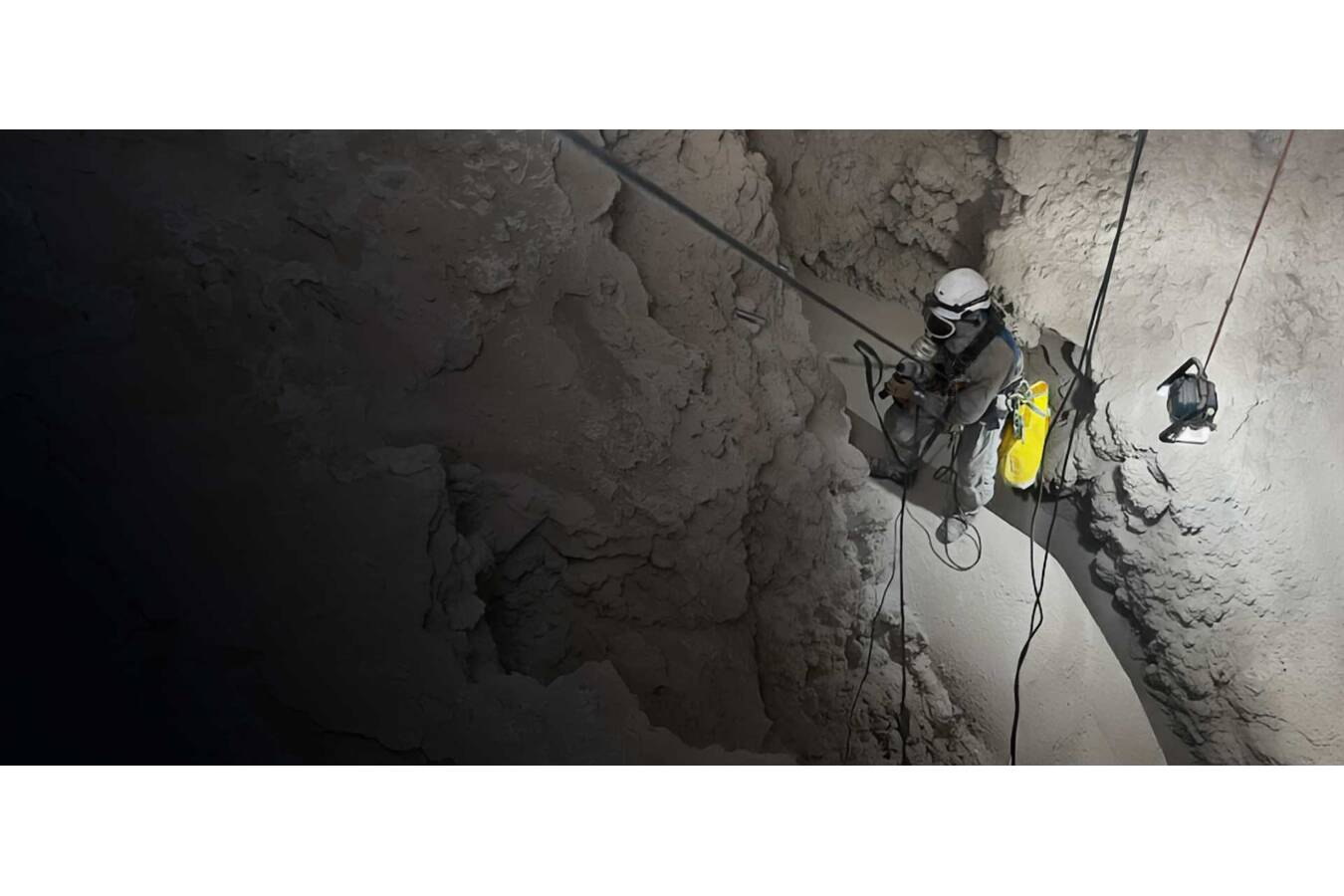
Efficient Restoration of Discharge Functions Using Controlled Impulse
Blasting technology enables the targeted removal of bulk material blockages in silos and discharge systems using controlled impulse energy. Following material suitability testing and expert evaluation, even severe consolidations can be reso
In the bulk solids industry, discharge blockages are among the most critical operational disturbances. Consolidated materials, bridging effects, or compaction in the cone section often cause silos and bunkers to completely lose their discharge capability. Plants in the cement, lime, gypsum, chemical, and building materials industries are particularly affected, especially where hygroscopic or reactive materials are stored.
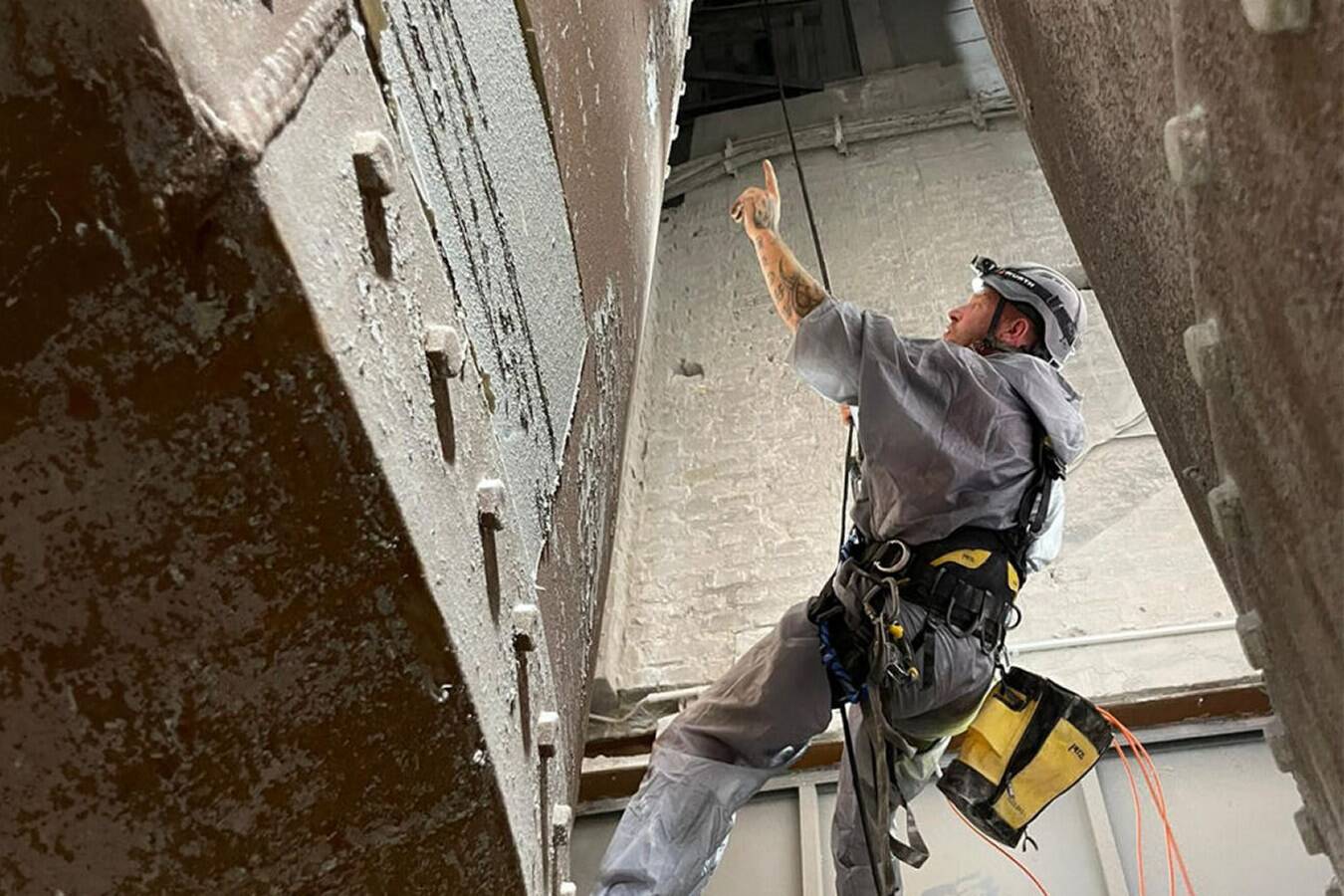
Conventional blockage removal methods are usually time-consuming and associated with significant risks. Mechanical breaking, high-pressure water cleaning, or manual intervention inside silos regularly result in extended downtime, high personnel requirements, and considerable safety challenges. In many cases, success remains limited because only parts of the consolidation are removed while the structural blockage persists.
In this context, blasting-based blockage removal represents a highly specialized method in which consolidated material structures are selectively resolved using controlled impulse energy. The objective is not a classical explosion but a precise, locally limited energy input that destabilizes the internal structure of the blockage and restores material flow. A key factor is the accurate adjustment of the applied energy to the material properties and the geometry of the installation.
Before each deployment, a material assessment is carried out. Samples of the affected bulk material are taken and analyzed with regard to their physical characteristics. These include compressive strength, moisture content, particle structure, and bonding behavior. On this basis, the so-called blasting suitability of the material is determined. This analysis is essential to define the required impulse energy while simultaneously preventing any structural stress on the plant.
The method can be applied both in inertized and non-inertized plant areas. Particularly in ATEX zones or nitrogen-inerted silos, precise planning is required, as operating conditions impose specific requirements on safety and initiation systems. Blasting-based blockage removal can be performed under these conditions without lifting the inertization, thereby preserving the safety integrity of the installation.
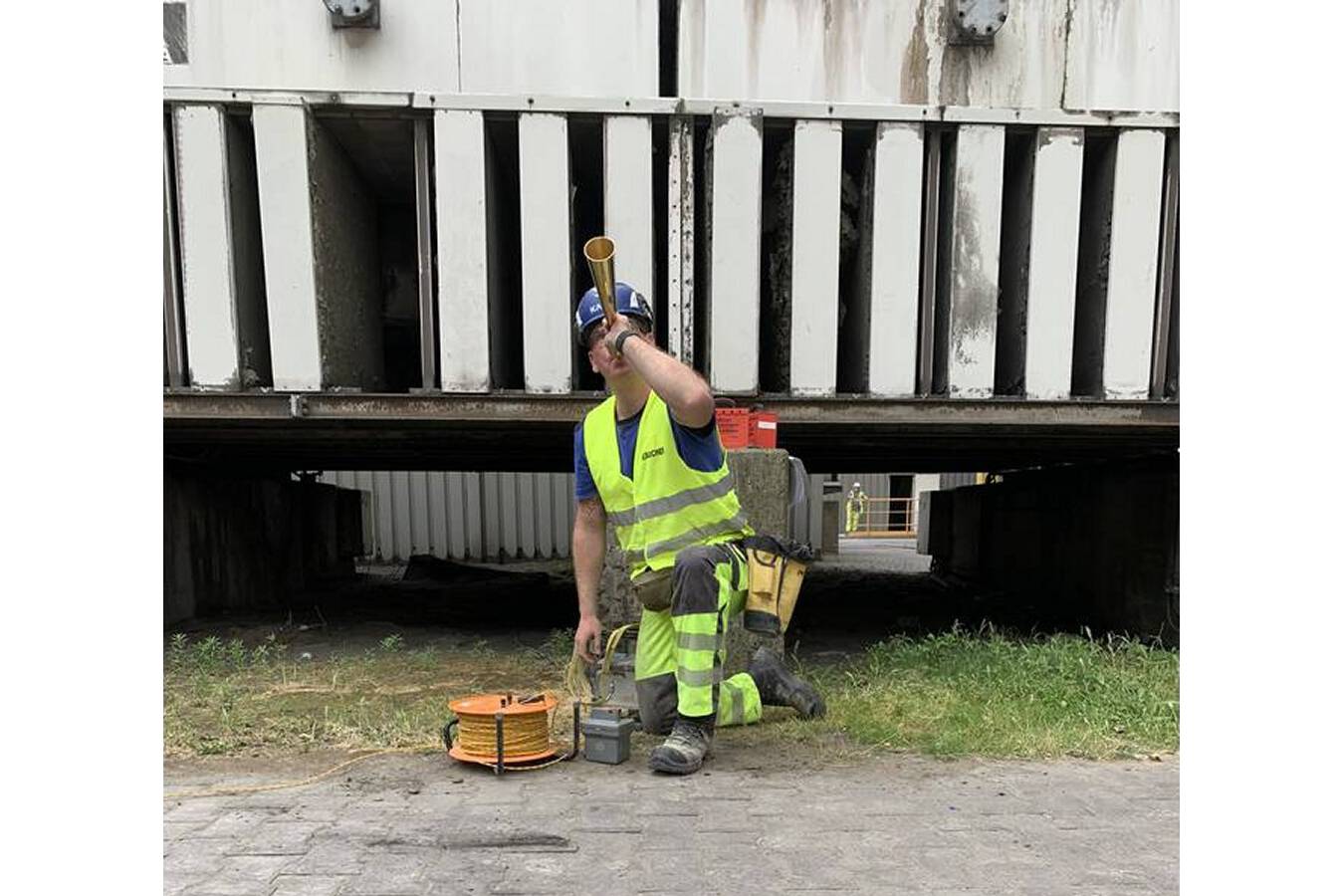
The actual impulse application follows detailed planning. Positions for energy input are selected so that the blockage is structurally weakened. Through targeted fragmentation, the consolidated material breaks apart and discharge can resume. In many cases, the full restoration of discharge function is achieved within only a few hours.
The economic advantage of this method lies primarily in the drastic reduction of downtime. While conventional procedures often require several days, blasting-based blockage removal enables rapid recommissioning of the plant. At the same time, personnel requirements are minimized, as no manual intervention in hazardous areas is necessary. This results in a significant improvement in occupational safety.
Another decisive aspect is the expert supervision of the measure. The evaluation of blasting suitability, determination of energy input, and safety approval are carried out based on a qualified expert assessment. This ensures that the measure is both technically effective and legally compliant. The combination of material analysis, blasting planning, and safety evaluation enables application even in complex plant structures.
Typical applications include clinker silos, lime and gypsum plants, blast furnace sand bunkers, and chemical bulk material processes. The blasting method demonstrates particular advantages with strongly consolidated materials where mechanical approaches reach their limits. The targeted energy input acts directly at the core of the blockage and enables complete dissolution of the material structure.
Blasting-based blockage removal therefore represents a highly effective specialized solution used where conventional methods are no longer economically or technically viable. By combining material analysis, precise impulse planning, and safe execution, even massive discharge blockages can be resolved within a very short time.
For plant operators, this means a significant reduction in downtime, improved operational reliability, and predictable resumption of production. In many cases, the method completely replaces complex mechanical interventions and enables rapid, controlled restoration of plant functionality.
One could say: instead of fighting hardened material for days with pneumatic hammers, physics is applied once in a targeted manner. It works remarkably well, even if it ruins the romantic idea that brute force solves everything.