PVC dry blend: Mixaco compares two mixing processes
PVC dry blend production requires homogeneous dispersion of additives and controlled thermal processing. Manufacturers can choose between conventional heating/cooling mixers and dual-tool mixing systems.
Conventional heating and cooling mixer setup
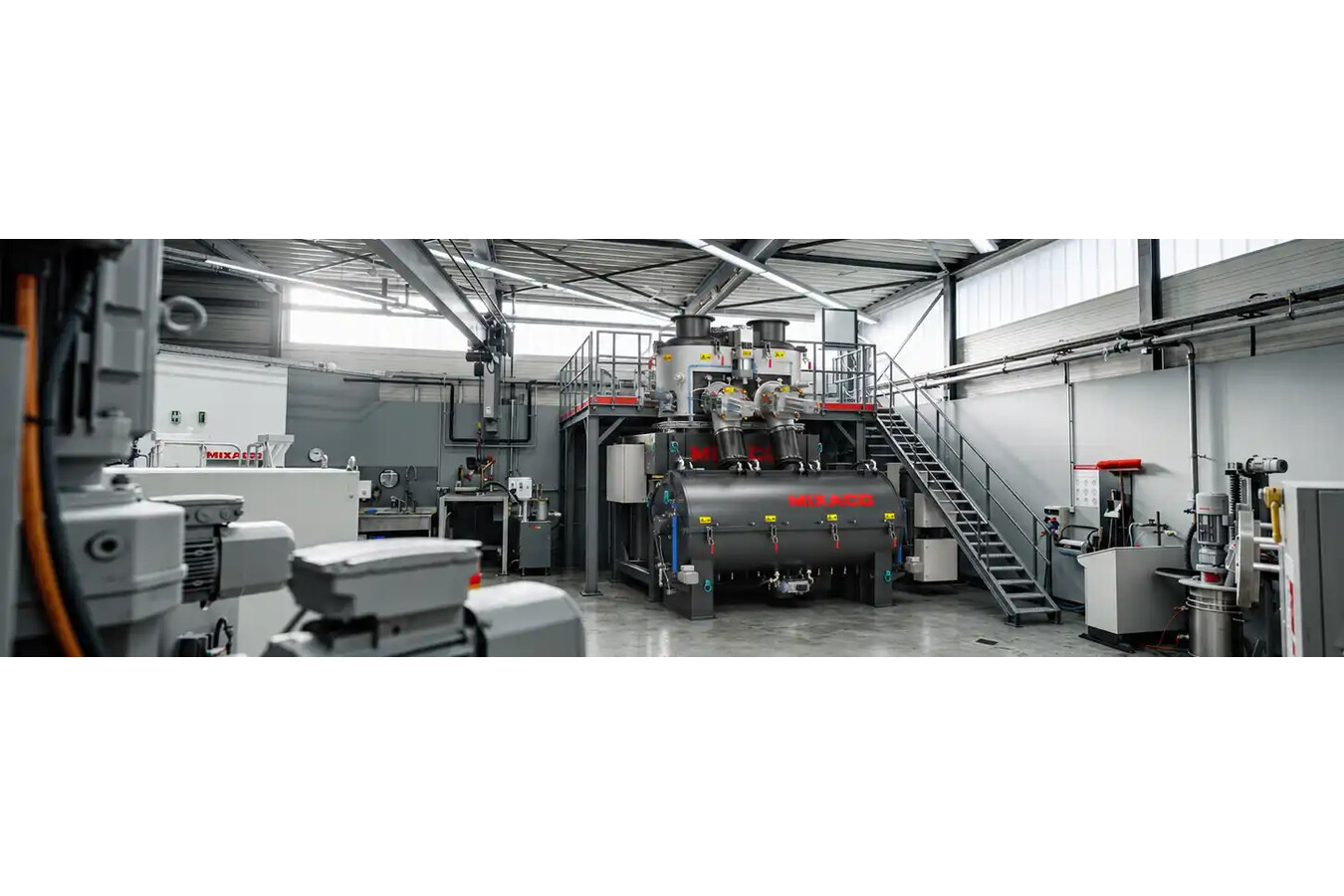
In PVC dry blend production, stabilisers, pigments, fillers and additives must be homogeneously dispersed prior to extrusion or further processing. Traditionally, this is achieved using a heating mixer combined with a horizontal cooling mixer. Friction heats the material and incorporates additives in the heating stage before the hot mixture is transferred to the cooling mixer. Systems of this design handle throughputs exceeding 8,000 kg/h with short cleaning times and proven process stability.
Twin-vessel technology with interacting tools
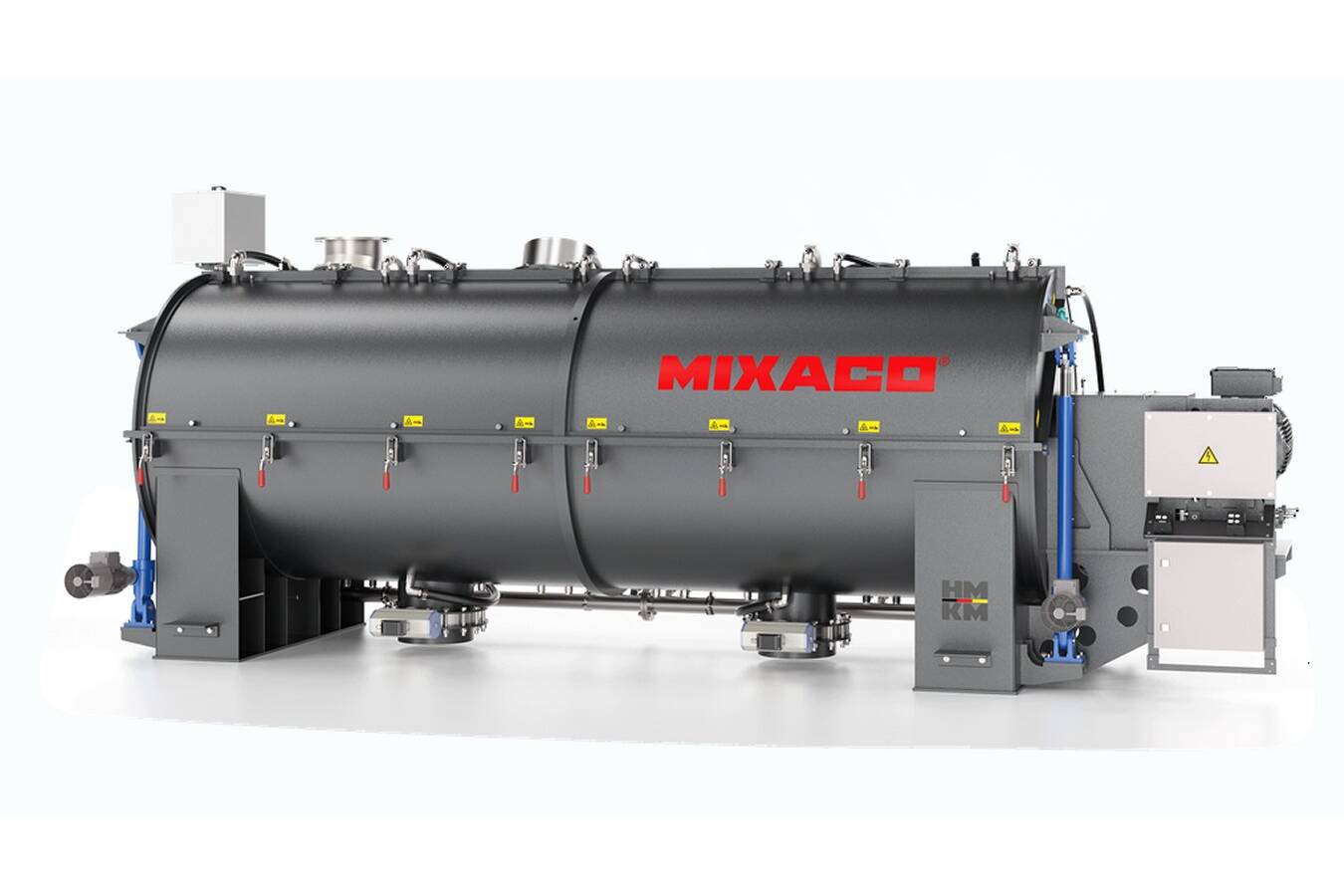
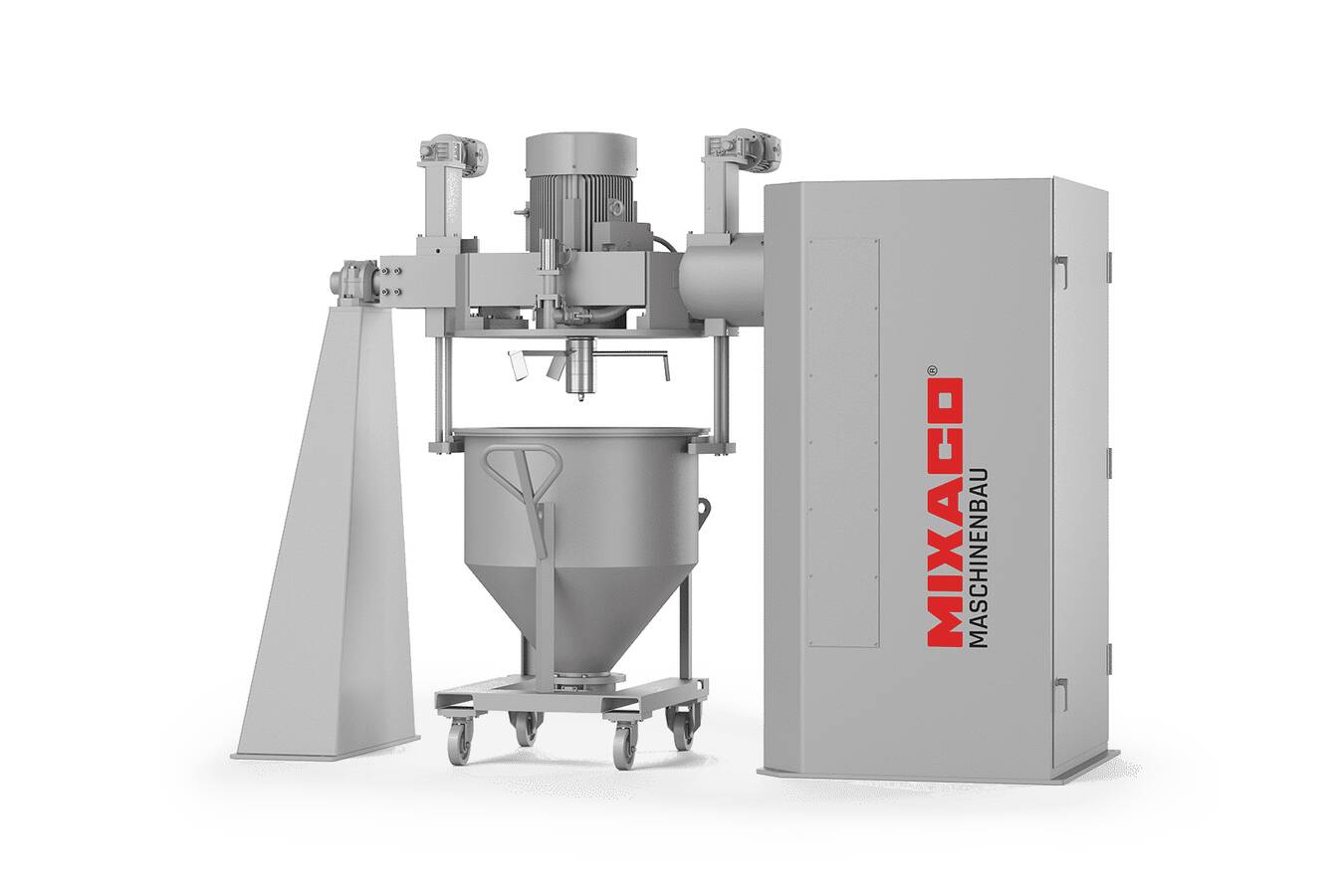
As an alternative processing route, Mixaco offers a combination featuring the Infinity Mixer alongside a cooling mixer. Replacing the conventional heating mixer, this system employs a dual-vessel geometry with two interacting mixing tool systems. Operating in co-rotating or counter-rotating modes, the tools create overlapping flow paths and multiple shear zones, significantly reducing dead zones compared to standard vortex circulation.
Enhanced flexibility for complex formulations
The dual-tool configuration provides faster homogenisation and controlled additive dispersion. Available in capacities ranging from the IM 200 with 170 litres useful volume up to the IM 4500 with 3,825 litres, the system allows precise control over tool geometry, speed and operating mode. This flexibility offers operational advantages when processing complex formulations or managing frequent batch changes.