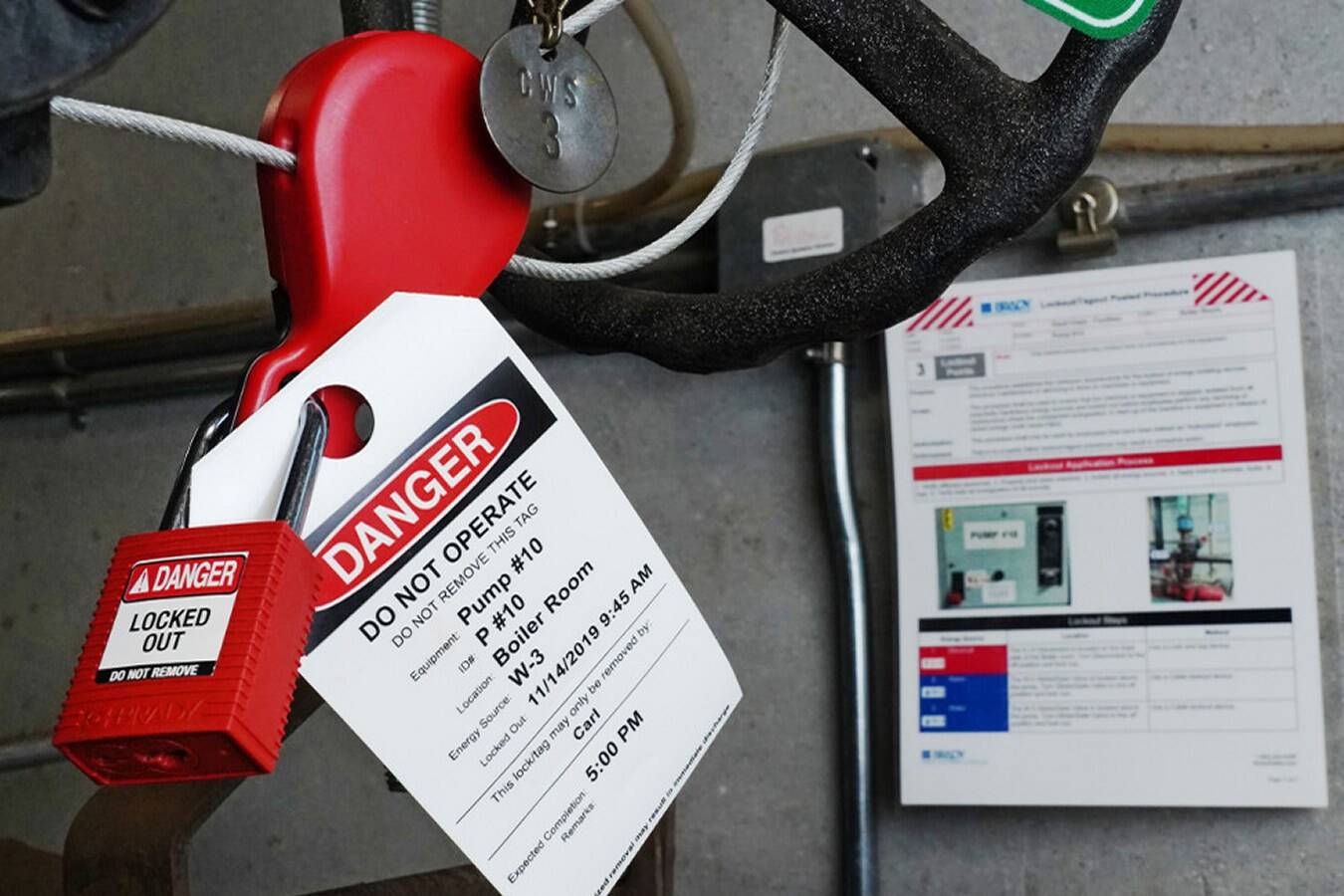
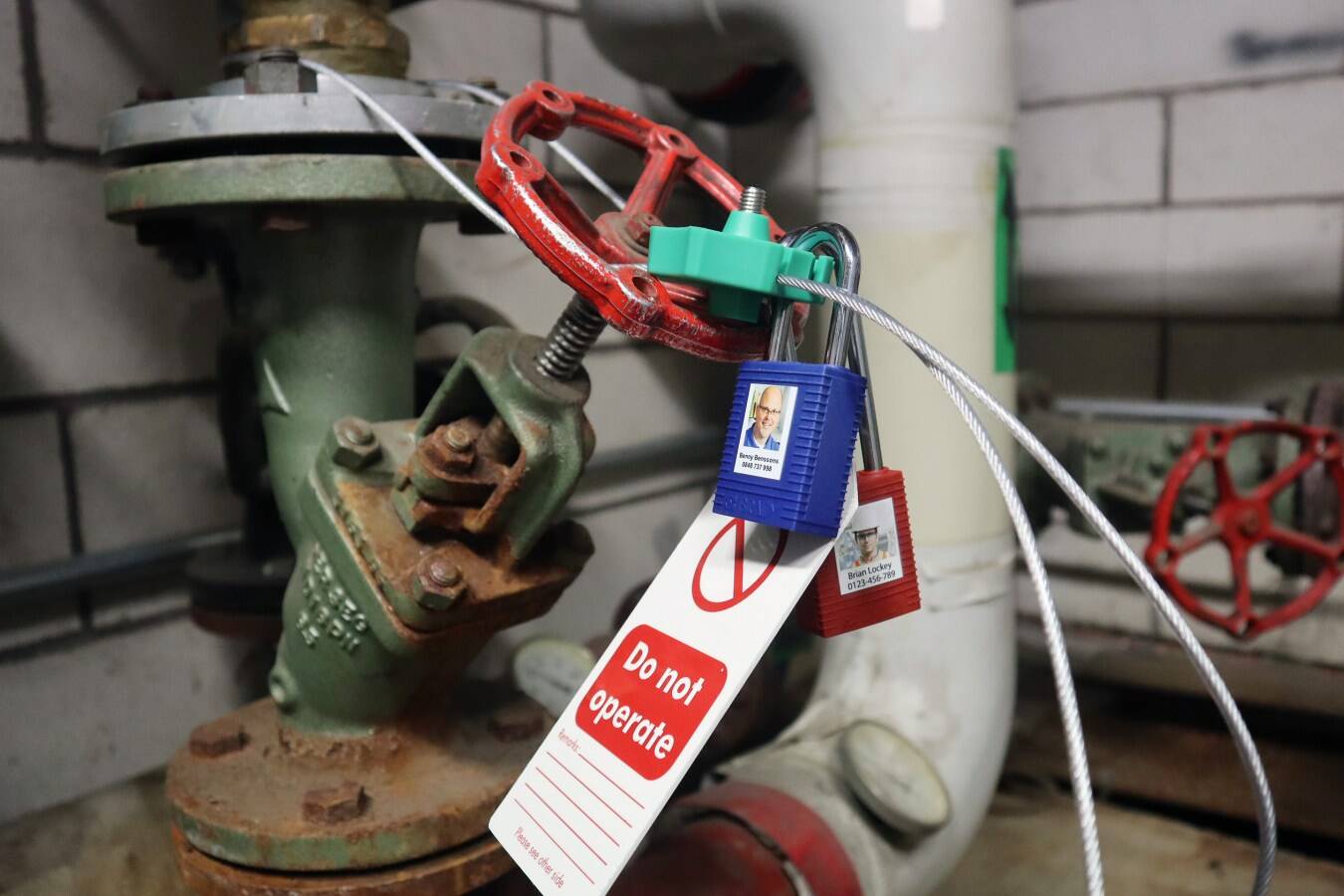
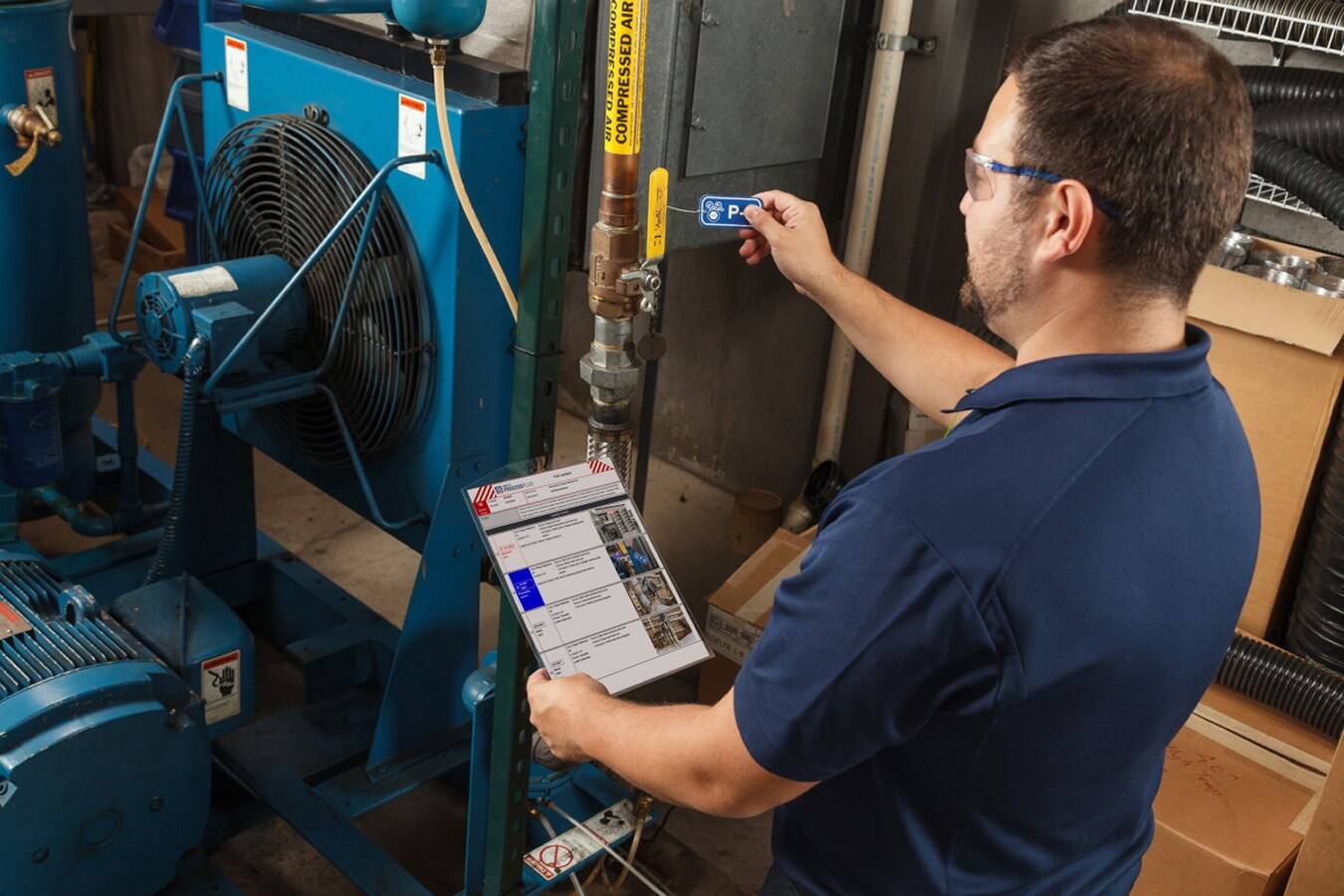
The norm can further increase the safety and efficiency of Lockout/Tagout programmes in a wide range of industries.
A task based safety framework
10%-15% of fatal workplace accidents in Europe’s industries are related to maintenance operations according to data from the European Agency for Safety and Health at Work. Many of these result from underestimating risks involved in specific tasks such as machine greasing, sensor adjustment or a quick cleaning that are not always seen as ‘maintenance activities’. They are kept outside the scope of Lockout/Tagout programmes even though workers are exposed to similar risks. European Norm (EN) 17975 addresses these grey zone risks by using task based risk analyses as a starting point.
“EN 17975 does not require an energy zero state for every machine or pipeline during every intervention”, said Mustafa Ekseri, EMEA Safety Engineer at Brady Corporation, a supplier of quality
Lockout/Tagout solutions. “Not having to halt an entire production line for every intervention can save valuable time - if it is possible in a safe way. To achieve this, EN 17975 proposes a layered approach based on risks related to specific tasks on specific machines and pipes. These risks are to be highlighted in a risk analysis. In absence of a risk analysis, machine zero energy states remain the safety standard. In that sense, EN 17975 builds on ISO 14118 by providing more options for compliance with European workplace safety legislation. Impacted activities can be defined using EN 17007 and EN 13306 and are also listed in EN 17975.”
Risk analysis guidance
With machine and pipe intervention safety hinging on identified risks, industries will need thorough task-based risk analyses. Guidance can be found in other standards. “ISO 12100, primarily intended for machinebuilders to take into account their customers’ workplace safety, can be used as a basis for machine intervention risk analyses. ISO 31000 provides guidelines for managing risk in general, including 8 core principles, a framework and a process.”
“EN 17975 proposes 6 steps to analyse the risk in any machine intervention task, starting with the identification of the task, all the way to a feedback loop for continuous improvement. That includes a thorough energy source inventory and identification. The standard also requires a risk analysis update before applying Standard Operating Procedures, and during maintenance activities. In addition, EN 17975 advocates clearly identified degraded situations that may deviate from the standard risk assessment.”
Task-based isolation
EN 17975 uses a task based risk approach that was captured earlier in the French norm X60-400. Based on a task risk analysis, the European Norm proposes 4 types of risk control processes:
- Neutralisation: a process that, through design of the control systems, shuts down an item of equipment so that a list of predetermined tasks can be conducted in safety.
- Standard isolation: a process that results in the removal – by locking in position a single or double isolating device – of all energies & fluids where the presence, accidental retention, unexpected appearance does not have hazardous consequences for workers, the environment, and items.
- Reinforced isolation: a process that results in the removal – by separation or by a combination of isolating and opening devices (e.g. valve, tap, etc.) – of all energies & fluids where the presence, accidental retention, unintended appearance does not have hazardous consequences for workers, the environment, and items.
- Specific provisions: a process that results in the implementation of organisational or technical measures enabling observation, diagnostics, testing activities and work on settings for the item in service to be carried out safely, with energies & fluids present.
“All 4 risk control processes require an inventory of energies and fluids per machine with their effects on people, property and the environment, a mapping of the isolating devices and an identification sheet of energies, fluids, components and lockout devices. It also requires a shared risk assessment grid and process. EN 17975 describes the aim, application conditions, type of activities and other relevant factors for each of the 4 risk control processes.”
Lockout/Tagout guidance
Complying with EN 17975 requires a human, organisational and technical approach, all of which are outlined in the norm.
EN 17975 identifies 9 steps to carry out reinforced and standard isolations by Lockout/Tagout of energies and fluids. Steps involve separation of energies and fluids, isolation, lock out, tagout, identification, dispersion of energies, check, contain and inspect. “The ‘check’ step in EN17975 is already widely known in the industry as the ‘Tryout’ in Lockout/Tagout/Tryout or LoToTo. It is a vital step to help make sure that measures are implemented correctly and that they are still effective.”
“Brady safety engineers can help industries implement isolations by
writing machine- and task specific lockout procedures. These can include all 9 steps from EN 17975, and they must be based on company task risk assessments. In addition, we can offer the right Lockout/Tagout tools for procedure compliance, set up a hands-on demo by locking out a specific machine, and provide training to relevant employees. Alternatively, a gap analysis can be made that identifies steps to be taken from the current state to arrive at compliant, best practice Lockout/Tagout.”
Impact on existing safety programmes
EN 17975 is not a legal requirement. “The standard however considerably facilitates compliance with EU workplace safety legislation. It sets a clear expectation for any machine intervention: if no risk analysis for the task is available, a machine zero energy state is required.”
“Because many safety programmes already involve complete machine isolation from every energy source, for every task, it is likely that the new norm will impact existing Lockout/Tagout-programmes. Based on the risk analysis, machine zero energy states may not be needed for every type of intervention.”
“Adversely, some tasks that were considered ‘small and safe’ may unveil more risk after a thorough risk analysis. This means a single machine could have several Lockout/Tagout procedures. The right procedure can be included with, or communicated via a QR-code on a work permit for example.”
“Some forms of automated safety may not be sufficient for every task without an underlying risk analysis. Take a safety cage for example, equipped with sensors that deactivate moving machine parts the moment someone enters the cage. Do these nullify any residual energy that may pose a risk? Is gravitational, and other potential energy taken into account? The goal of EN 17975 is to prevent accidents, and to avoid a false sense of safety that does not provide any real protection.”
With the European Norm 17975, industries in Europe can now rely on a common standard for compliance with EU and national safety legislation that involve risk control processes of energies and fluids in maintenance activities. The norm is or will be implemented by the national standards organisations of Austria, Belgium, Bulgaria, Croatia, Cyprus, Czech Republic, Denmark, Estonia, Finland, France, Germany, Greece, Hungary, Iceland, Ireland, Italy, Latvia, Lithuania, Luxembourg, Malta, Netherlands, Norway, Poland, Portugal, Republic of North Macedonia, Romania, Serbia, Slovakia, Slovenia, Spain, Sweden, Switzerland, Türkiye and the United Kingdom.
Get the Brady EN 17975 Lockout/Tagout webinar recording
Go from zero machine energy to zero intervention risk with task based Lockout/Tagout, driven by the European Norm 17975. Get your copy of the
EN 17975 webinar from an experienced, worldwide Lockout/Tagout solution provider.
Discover more about:
- the unique European framework EN 17975 provides to achieve safety and efficiency
- how EN 17975 focuses on task-based safety, rather than machine zero energy states
- how EN 17975 can be used to address ‘Grey zone’ risks
- 4 risk-based energy isolation levels presented by EN 17975
- 6 steps to control risks
- Lockout/Tagout procedure writing
- Lockout/Tagout device and padlock types
Get the webinar recording now >>Draw inspiration from our free guidebook on how to best implement Lockout/Tagout:
Download the free guide >>Photo 4:
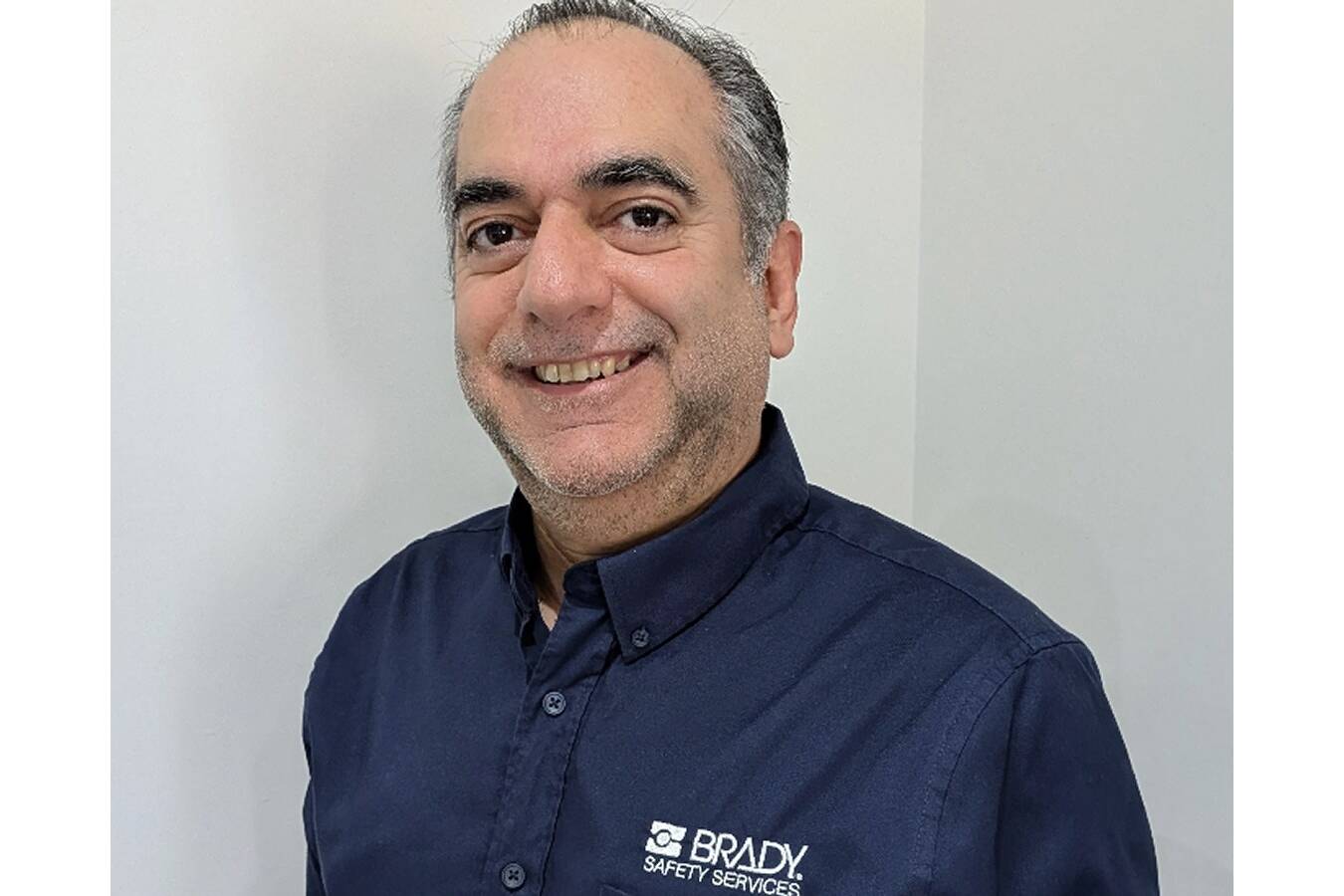
Mustafa Ekseri works as a Safety Engineer for Brady Europe, Middle East and Africa. He is involved in planning, writing procedures and rolling out Lockout/Tagout programmes at manufacturing and logistics workplaces throughout Europe. He is a Prevention Advisor Level 2, a Belgian legally regulated curriculum that equips professionals to handle safety and health risks in businesses.