Supplier sign in
Home
STAY INFORMED
Subscribe to our monthly newsletter.
Your email address will never be disclosed to any third party.
Read our privacy notice.


Product news
23.09.2025  |  1310x
Share this item

Optimal dedusting capacity at soybean processor thanks to DCP

A processor of soybeans and rapeseed has fitted a number of belt conveyor transfer points with durable spot filters from Dust Control Partners (DCP). Despite the limited installation space, optimal dust control performance has been successfully achieved.
Businesses are increasingly recognizing the importance of safe and environmentally responsible working conditions. Government rules and regulations are being strictly observed, and the health of employees is paramount. Processors of dust-sensitive products also recognize the importance and necessity of controlling and minimizing dust emissions. For example, a processor of soybeans and rapeseed in the Rotterdam port area has fitted a number of belt conveyor transfer points with sustainable dedusting equipment from Dust Control Partners (DCP). “In the previous situation, it was actually not possible to enter the area without respiratory protection. Now, the dust is extracted at its source, and is returned directly into the product flow”, says Henrik Baas, account manager at DCP.

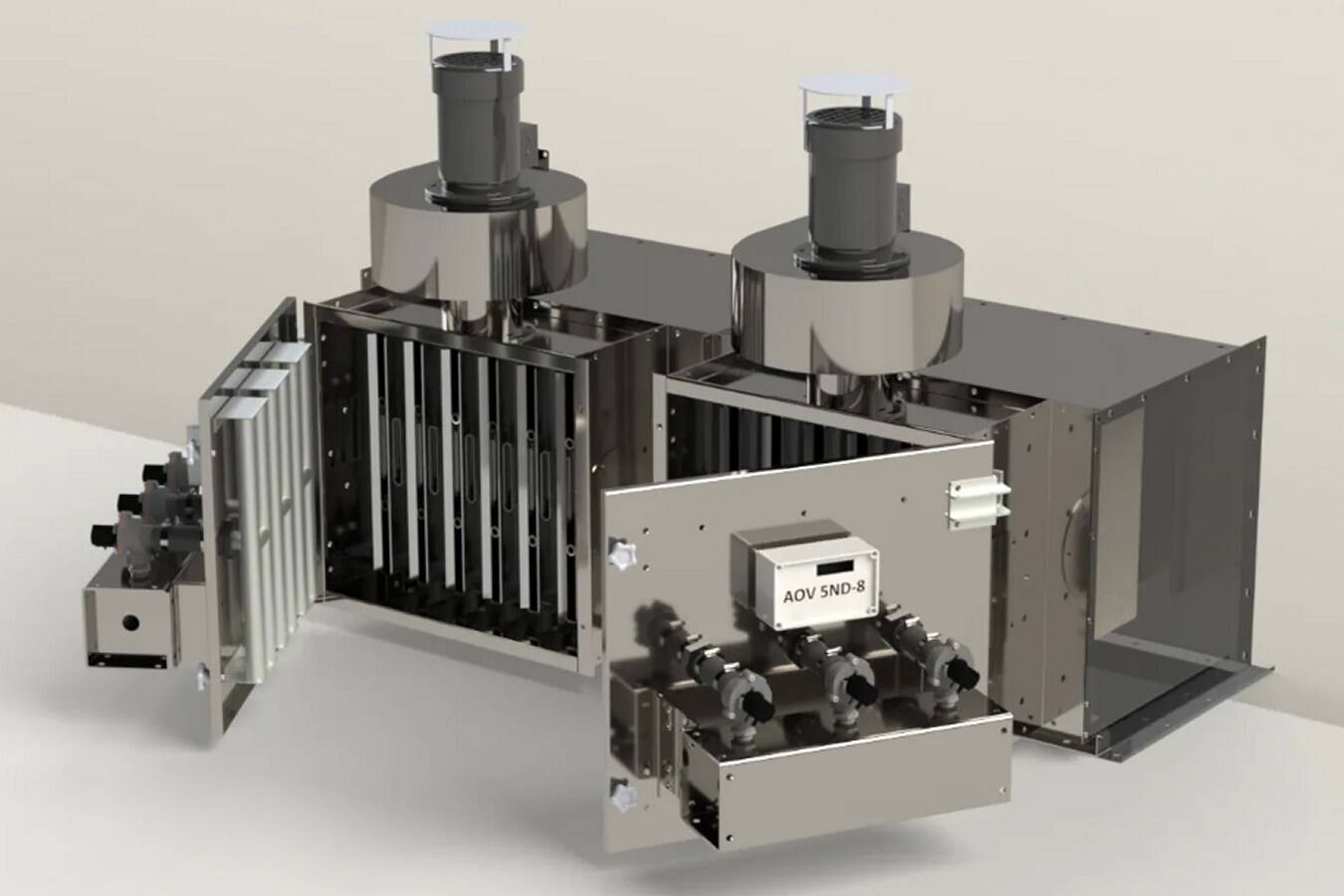
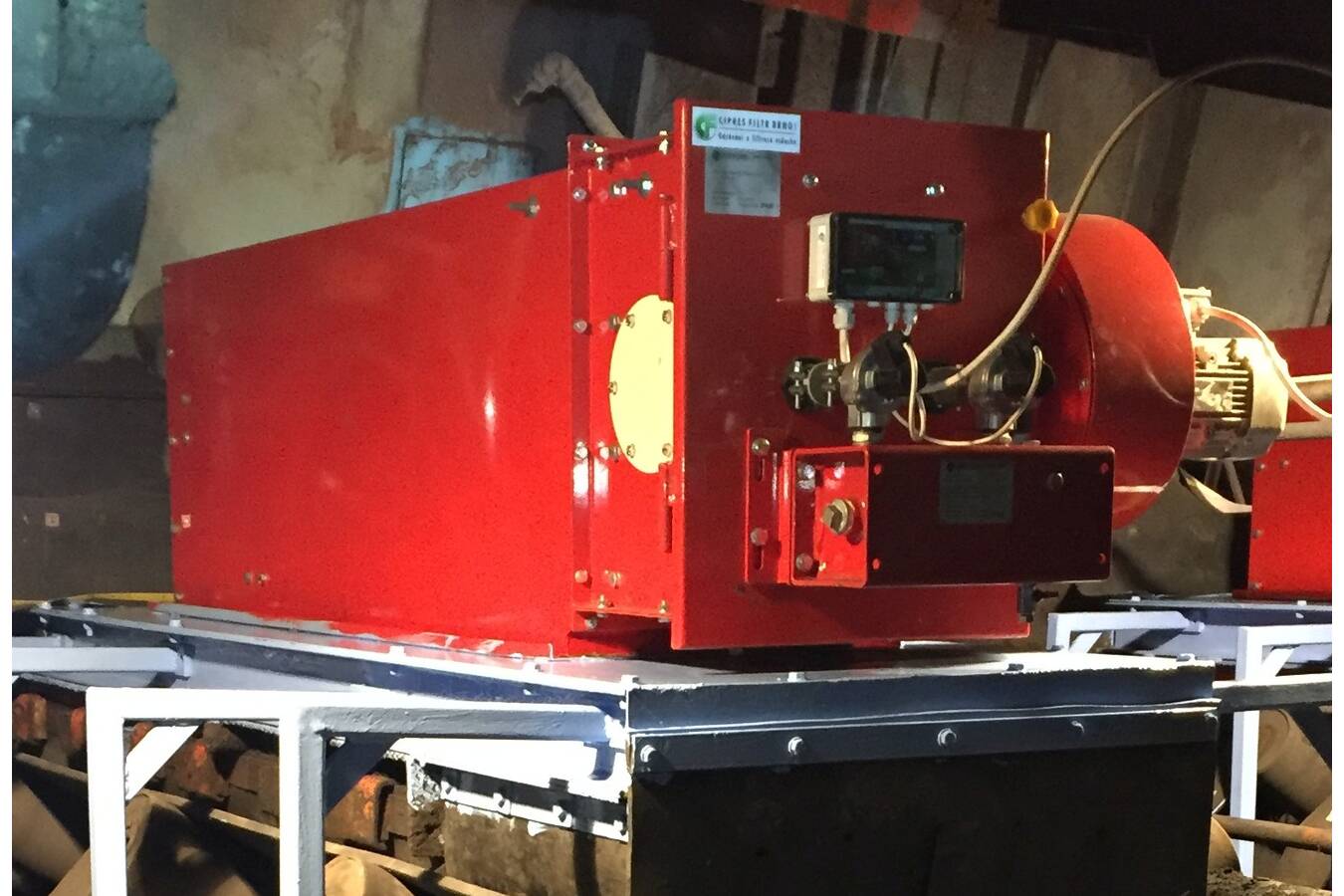
This project at the port of Rotterdam can justifiably be called unique. In order to achieve the most effective extraction, DCP equipped four transfer points in a very limited space with four custom-made spot filters. The access doors on the filters were adapted, and a compact compressed air cleaning system used. As a result, optimal dedusting performance was achieved despite the limited space. An advanced control box, equipped with Profibus for remote monitoring, ensures that the filter is cleaned while in operation. Resistance across the system remains virtually the same during operation.

No product loss

“When a product drops from one conveyor belt to another, a dust cloud is created. However, it is important to lose as little product as possible. A fan is used to suck the dust into the filter, where the dust is separated from the air flow”, the account manager explains. “When the filter elements are cleaned, the dust falls back into the product flow.”

DCP’s sustainable solution ensures that virtually none of the extracted product is lost. The filters are located in an Atex 22 zone, and are therefore designed so that no ignition sources can occur. This means that, for example, the fan will not produce sparks, or that no electrostatic charge is able to be generated at the filter elements. The use of blow-off silencers means that noise emission is minimal.

Detailed analysis

Dust Control Partners not only focus on the installation and maintenance of their own equipment, but also inspect and maintain filter installations from other manufacturers on request. When carrying out this work, DCP performs detailed analyses, during which not only the dust filter, but the entire dedusting system is examined. Experience has shown that, over the years, additional connections are added to what had originally been a well-functioning pipeline network. The result? A far less efficient extraction system. In order to return the system to correct operation, sometimes only minor adjustments are required. However, refurbishing the old and poorly performing filters at the Rotterdam bulk terminal was no longer a viable option.

Improved efficiency

“At the terminal, we have many transfer points where regular work takes place, such as cleaning, inspection and sampling”, said a spokesman for the Rotterdam processor. “The inadequate performance of the old dust filters led to undesirable situations, such as poor working conditions and an increased risk of dust explosions. We were also keen to remove the dust filters from the roofs and locate everything indoors. In the event of damaged filter fabric, there is no direct emission to the environment. Moreover, when indoors, the filters are less exposed to weathering by the salty sea air, which means a longer life span. Maintenance has also become easier and safer, since technicians no longer need to go onto the roof. Another benefit is the improved extraction efficiency, because we extract directly at the source.”

Specialist customization

DCP provide specialist customization, and take care of the entire project, from engineering to commissioning. DCP are part of the TBK Group, which enables them to integrate various disciplines from within the group. “Think, for example, of belt seals, tracker rollers, belt scrapers and industrial screens”, says Henrik Baas. “In many situations, this allows us to offer a total solution. We are not an unwieldy, large organization, where customers simply select their complete dust control systems from a brochure. Our broad expert knowledge of bulk goods handling, combined with an open dialogue with customers, means that we can offer them that little bit extra.”


Company information

More items

TBK spillage control develops DusTek Spot Filter Specifically designed for a conveyor transfer point, linking standardized extractor units, for maximum flexibility of filtration surface and exhaust flow
TBK spillage control develops DusTek Spot Filter
Specifically designed for a conveyor transfer point, linking standardized extractor units, for maximum flexibility of filtration surface and exhaust flow The DusTek Spot Filter is specifically designed to be installed at a conveyor transfer point, with the option to link standardized extractor units together for maximum flexibility of both filtration surface and exhaust flow. If required, the extractor units can be supplied with or without a filter housing that is accessible for maintenance from the side of the transfer box. Extractor units which conform to ATEX 114 (Directive 2014/34EU) for use in zone 22 are also available. Avoidance of dust Transfer points in conveyor belt systems are often characterized by the formation of enormous dust clouds, exacerbated by the dust created in the transfer box. This happens because the bulk goods that flow through the transfer box push along the air in the transfer point, while the descending bulk goods simultaneously suck in more air through the available openings: these are significant cubic metres of air, which most transfer points are not designed to deal with. Result?
11.10.2023  |  3240x  |  Product news  | 
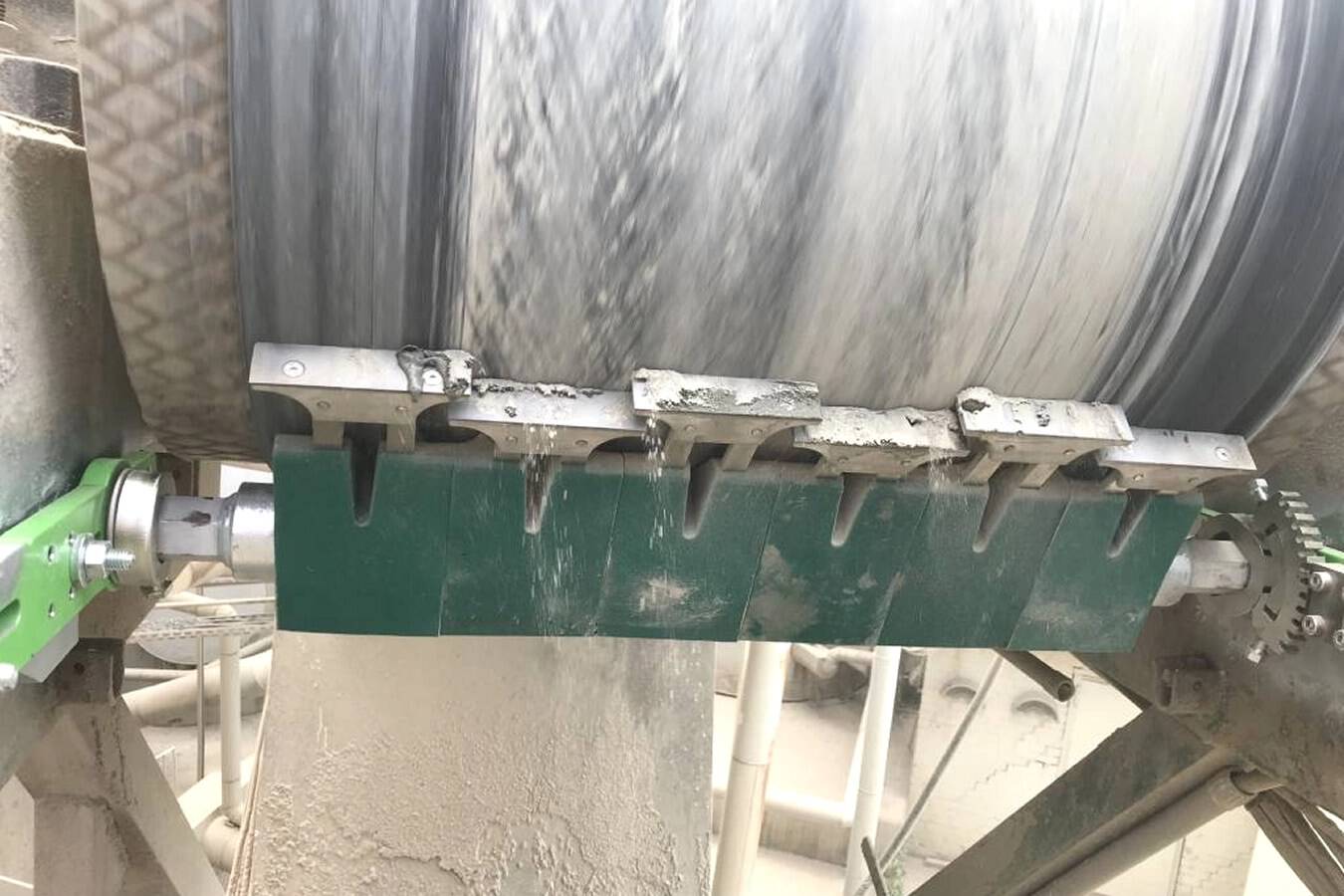
Contamination and downtime conveyor belts minimised at AEB Amsterdam StarClean belt scrapers work very accurately and are less prone to wear, says François van den Hoek, installation manager of separation plant at AEB Amsterdam.
Contamination and downtime conveyor belts minimised at AEB Amsterdam
StarClean belt scrapers work very accurately and are less prone to wear, says François van den Hoek, installation manager of separation plant at AEB Amsterdam. The Amsterdam waste processing company AEB processes 1.4 million tonnes of waste annually, recycles residual materials and converts heat released from incinerated residual waste into heat and electricity for households and businesses. A sustainable and clean way of producing energy, which requires a streamlined production process without pollution and conveyor belt downtime. ”Dry material is not a problem, but organic wet fraction (ONF) will stick to a belt. TBK Spillage Control has solved this problem by attaching belt scrapers with counter-pressure rollers against the conveyor belt, keeping the conveyor belt clean,” says François van den Hoek, installation manager of the separation plant at AEB Amsterdam. Every day, an average of 150 trucks unload household waste at the waste processor’s separation plant. At the separation plant, various materials are sorted by machine. These include hard plastics, foils, paper, cardboard, beverage cartons, metals and non-ferrous
20.04.2023  |  3925x  |  Product news  | 
Spill and dust control at glass factory Vidrala Santos Barosa To avoid wasting raw materials in glass production, TBK Group carried out a technical inventory and steps were taken to avoid spillage and dust at the conveyor belts.
Spill and dust control at glass factory Vidrala Santos Barosa
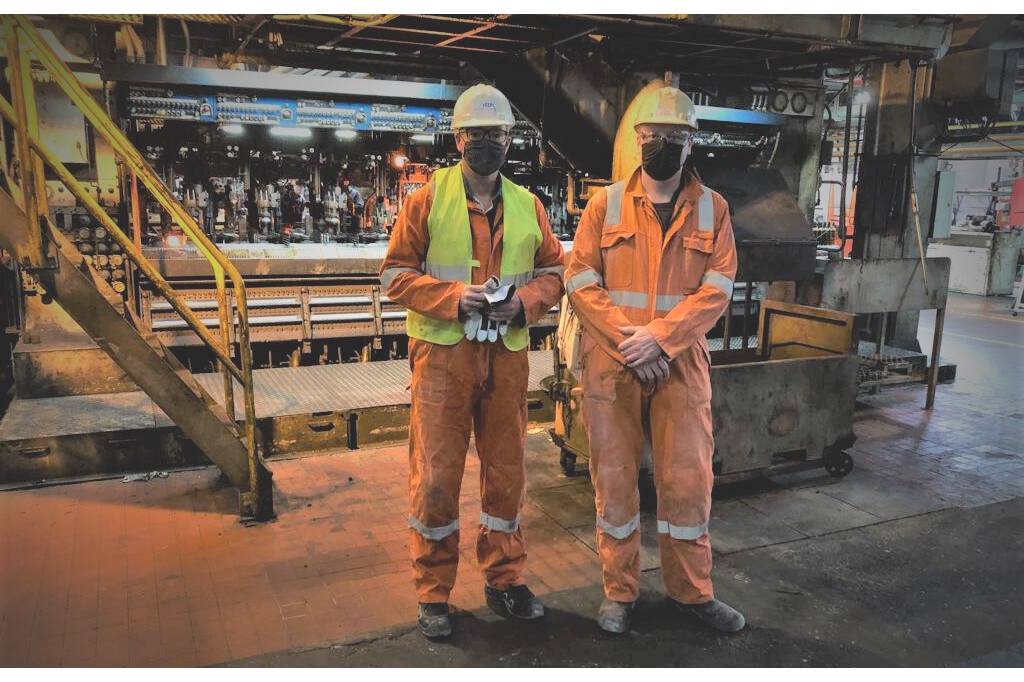
To avoid wasting raw materials in glass production, TBK Group carried out a technical inventory and steps were taken to avoid spillage and dust at the conveyor belts. The Portuguese glass factory Vidrala Santos Barosa enlisted the help of TBK Group to avoid wasting raw materials in glass production. During a visit to the factory last April, a technical inventory was carried out and the first steps were taken to avoid spillage and dust at the conveyor belts. The over 130 year old glass factory was taken over in 2017 by the Spanish concern Vidrala. This group owns several glass factories in Spain, Portugal and Italy, among other countries. In the factory, where tradition and modernisation merge, around 425 million glass bottles for beer and wine are produced each year. Prevention of waste Glass is a product that consists of various, precisely combined raw materials, which are processed at very high temperatures. ”The conveyor belts are the heart of the raw material supply for glass production in the factory,” explains Micha Bermentloo, export manager at TBK Group. After the raw materials are deposited on the conveyors,
08.08.2022  |  4043x  |  Product news  | 
CenTrax belt trackers with unique swivel bearing The perfectly sealed swivel bearing, wear-resistant diamond profiled rollers and a sophisticated design make that the CenTrax belt alignment system remains operational under all conditions.
CenTrax belt trackers with unique swivel bearing
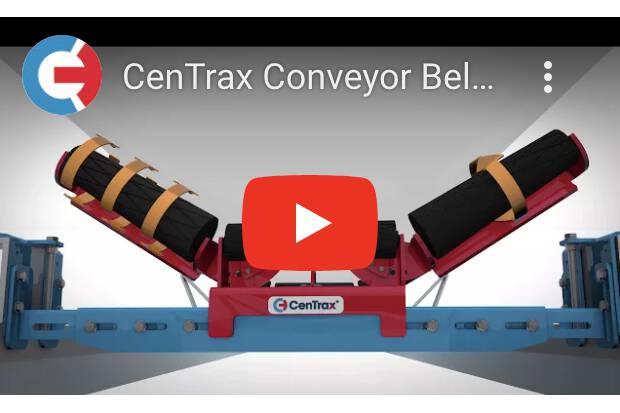
The perfectly sealed swivel bearing, wear-resistant diamond profiled rollers and a sophisticated design make that the CenTrax belt alignment system remains operational under all conditions. CenTrax Operating principle See the video for a graphic display of mounting options and working principle. As soon as the conveyor belt starts to mistrack, the two tapered rollers on the sides will show a difference in the rotation speed. When this happens, the CenTrax belt tracker immediately engage and guides the conveyor belt back to its correct position. Unique swivel bearing The heart of any tracking system is the pivot. A common problem is that dirt, dust and moisture is blocking the pivot, which makes the belt tracker stops working. With our expertise, based on 60 years of experience, we have developed a pivot point – which we call a swivel bearing – that is insensitive to the influences of dirt, dust and moisture. Low in maintenance The swivel bearing is oil bath lubricated and completely maintenance free. Due to wear-resistant diamond profiled rollers and a sophisticated design that prevents build-up of dirt, CenTrax remains operational under
20.09.2021  |  5480x  |  Product description  |   | 
PORTALS
BulkSolids-Portal Schuettgut-Portal Recycling-Portal
Related
Bulkgids.nl
SIGN UP FOR OUR NEWSLETTER
Newsletter archive
Service and contact
ContactDisclaimerPrivacyAdvertising
FOLLOW US
Linked