Supplier sign in
Home
STAY INFORMED
Subscribe to our monthly newsletter.
Your email address will never be disclosed to any third party.
Read our privacy notice.
Product description
09-09-2026  |  79 x
Share:

Precision Dosing and Weighing Control for High-Speed Bagging Lines

Payper highlights how advanced weighing controllers optimise dynamic dosing in high-speed bagging systems. Real-time algorithms eliminate overfilling and boost productivity.

Challenges in Dynamic Bagging Weighing

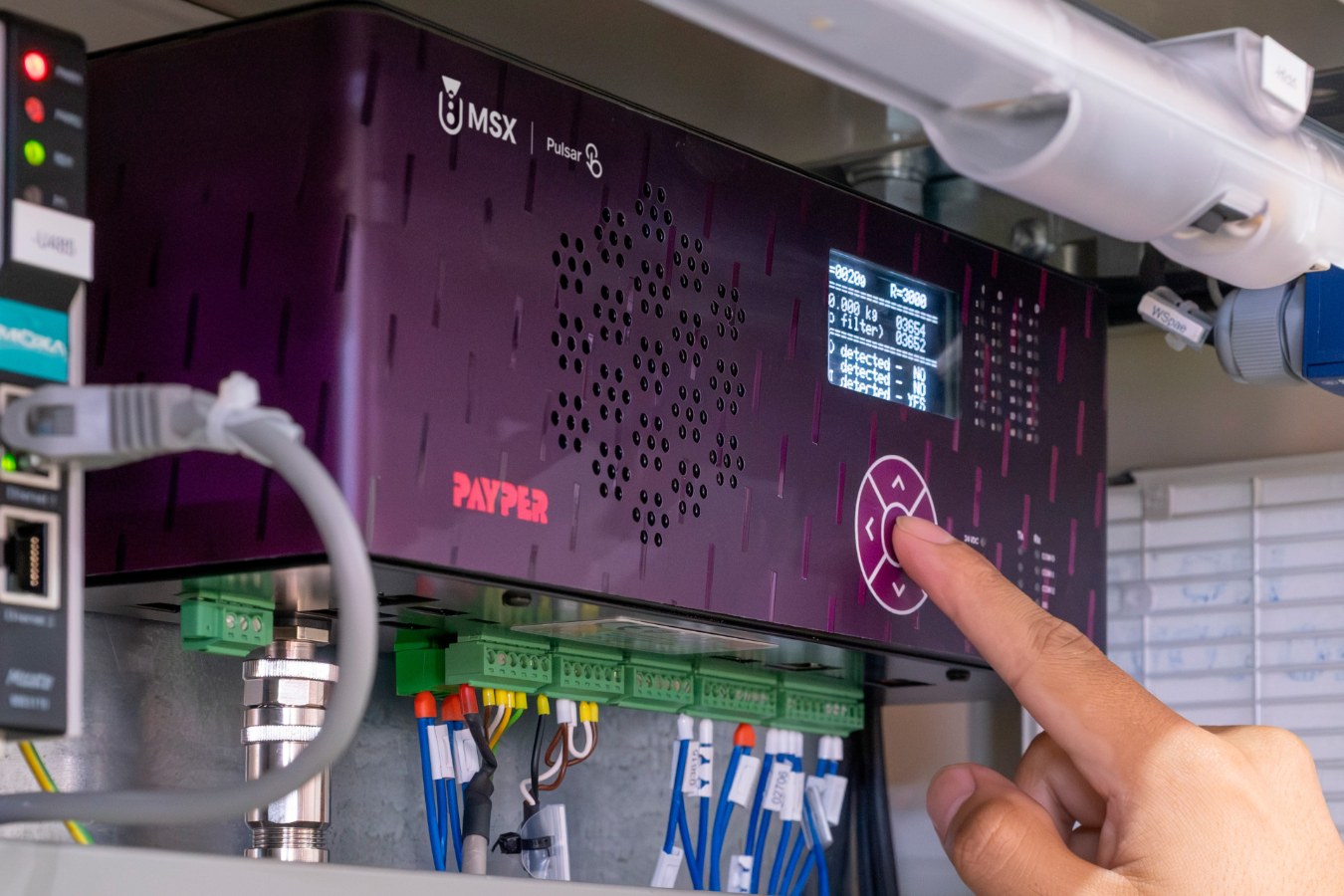
In high-capacity bagging installations operating at speeds above 2,000 bags per hour, maintaining weighing precision within a few grams requires real-time control of product velocity, flow behaviour, vibrations, and material remaining in flight. To address these variables, Payper has developed proprietary weighing control technologies that integrate electronics, software, and mechanical systems.

Dual-Flow Dosing and Flying Product Control

Most industrial dosing systems rely on a dual-flow strategy, combining a rapid coarse feeding phase with a fine adjustment stage. Because bulk materials continue moving after the feed closure signal, advanced algorithms must anticipate material behaviour and accurately calculate the in-flight product. This prevents systematic overfilling without requiring long stabilization pauses for impact forces and mechanical vibrations.

Closed-Loop Communication Boosts Output

Integration between the weighing controller, such as Payper's MSX system, and an end-of-line checkweigher eliminates unproductive waiting times. By continuously exchanging measurement data while filling proceeds, subsequent cycles are automatically adjusted based on checkweigher feedback. Data indicates that this continuous closed-loop communication can increase overall installation productivity by approximately 5%.

Field Results and Industry 4.0 Integration

In a practical application at a German petrochemical plant running near 2,200 bags per hour, the MSX technology reduced average weighing deviation from a target tolerance of 10 grams down to 3 grams. This reduction in overfilling resulted in material savings of approximately 14 tonnes per year. Additionally, modern controllers offer stored recipes, operational logs, and remote diagnostics for predictive maintenance.


Company information

More items

Construction Bagging: Why Choose a Valve Bag Filling Machine PAYPER’s PFG valve bag filling machine delivers precise, dust-free bagging for construction materials, boosting productivity, flexibility and automation.
Construction Bagging: Why Choose a Valve Bag Filling Machine
PAYPER’s PFG valve bag filling machine delivers precise, dust-free bagging for construction materials, boosting productivity, flexibility and automation. As the building industry continues to demand greater efficiency, precision and automation, bagging has become a key stage in the production of dry mortars, specialty cements, tile adhesives, gypsum, lime and other powdered construction materials. PAYPER’s PFG valve bag filling machine has been developed to meet these requirements, combining high weighing accuracy, reduced dust emissions and reliable productivity. Designed for powdered products and fine granules, it can achieve production rates of up to 500 bags per hour per spout, while maintaining consistent bag quality and precise filling. The valve filling system minimizes product loss and dust generation, improving workplace safety and ensuring cleaner operations. Its interchangeable spouts provide the flexibility to handle different valve bag formats and adapt quickly to a wide range of products with varying flow characteristics. Beyond improving bagging performance, the PFG integrates easily with automated palletizing…
25-08-2026  |  206  |  product description  | 
Continue reading
FFS Technology in the Petrochemical Industry: Why Choose This System PAYPER’s ASSAC FFS technology boosts efficiency and product protection in petrochemical bagging, with outputs of up to 2,600 bags per hour.
FFS Technology in the Petrochemical Industry: Why Choose This System
PAYPER’s ASSAC FFS technology boosts efficiency and product protection in petrochemical bagging, with outputs of up to 2,600 bags per hour. As the petrochemical industry faces increasing pressure to improve efficiency, reduce operating costs and ensure consistent product quality, bagging has become a critical stage in the production process. Manufacturers of resins, polymers, masterbatch, PVC, polyethylene and other high-value granular materials require solutions that combine high productivity, weighing accuracy and reliable product protection. Bag forming, filling and sealing in one system FFS (Form Fill Seal) technology has emerged as one of the most efficient solutions for these demanding applications. By integrating bag forming, filling and sealing from tubular polyethylene film into a single automated machine, FFS systems eliminate the need for pre-made bags, simplify plant logistics and optimize storage while delivering consistent packaging quality. Up to 2,600 bags per hour Designed for high-capacity production environments, PAYPER’s ASSAC FFS bagging machines can achieve outputs of up to 2,600…
10-07-2026  |  1025  |  product description  | 
Continue reading
PAYPER strengthens leadership with bottom-up system at Interpack PAYPER will showcase its powder bagging solution and host a technical webinar ahead of the fair to present its applications and advantages.
PAYPER strengthens leadership with bottom-up system at Interpack
PAYPER will showcase its powder bagging solution and host a technical webinar ahead of the fair to present its applications and advantages. At the upcoming Interpack trade show (May 7–13, Düsseldorf), PAYPER will showcase its bottom-up filling system at its booth (Hall 12 – C06), a solution specifically designed to optimize the bagging of fine powdered products. The technology, which has already been introduced in specialized technical forums, expands the company’s portfolio of dosing solutions and addresses one of the most common challenges in industrial bagging: dust generation and the unstable behavior of certain products during filling. A common challenge in bagging powdered products In bagging processes involving products with very fine particle sizes, it is common for air entrapment and dust generation to occur during bag filling. These situations can lead to the dispersion of airborne particles, increased vacuuming requirements, or product loss. The bottom-up filling approach modifies traditional filling dynamics to reduce the product drop height during the dosing process. This principle…
02-04-2026  |  1374  |  press release  | 
Continue reading
PAYPER Optimizes Aqua Feed Quality Through Advanced Bagging The conditioning of aquaculture feed into bags is a critical step to ensure pellet stability. PAYPER’s integrated solutions enhance logistics and preserve nutritional value in post-extrusion production.
PAYPER Optimizes Aqua Feed Quality Through Advanced Bagging
The conditioning of aquaculture feed into bags is a critical step to ensure pellet stability. PAYPER’s integrated solutions enhance logistics and preserve nutritional value in post-extrusion production. Strategic Importance of Bagging in Aquaculture Aquaculture feed is a highly sensitive product that requires precise handling after the extrusion and drying stages. Modern bagging systems must protect pellets and microparticles from external factors while maintaining strict weight accuracy to prevent product loss and ensure consistency for the end producer. Overcoming Specific Material Challenges The industry faces diverse requirements, including fluctuating bulk densities and the need for various bag formats. * High-performance MSX weighing controllers ensure precision. * Adaptable lines handle multiple bag materials and sizes. * Robust construction withstands humid and dusty environments. * Integrated labeling systems facilitate full batch traceability. Automation and Digitalization of the Production Line Beyond filling, the transition to automated palletizing and digital monitoring is essential for operational efficiency. * Automated palletizers create…
09-03-2026  |  1154  |  product description  | 
Continue reading
Precision and Protection: The Future of Pet Food Bagging As the pet food market expands, packaging technology is shifting toward high-speed flexibility and superior shelf-life preservation to meet rising consumer expectations for quality and convenience.
Precision and Protection: The Future of Pet Food Bagging
As the pet food market expands, packaging technology is shifting toward high-speed flexibility and superior shelf-life preservation to meet rising consumer expectations for quality and convenience. Adaptability in a Diversifying Market The pet food industry continues to grow worldwide, driven by the increasing number of pet-owning households and a strong focus on quality nutrition. This evolution has placed pet food bagging at the center of the production process, as packaging plays a crucial role in product protection, safety, logistics, and brand presentation. Versatile Solutions for Modern Formats Modern pet food bagging must protect the product from moisture and contamination, ensure accurate weight, and offer practical and durable formats for consumers. As demand shifts toward a wider range of bag sizes—especially smaller, more convenient formats—manufacturers require flexible and efficient bagging solutions capable of adapting quickly without sacrificing productivity. Engineering Excellence in Bagging and Sealing PAYPER automatic bagging machines are designed to meet these needs, allowing fast format changes and precise bag handling. Advanced…
09-02-2026  |  1103  |  product description  | 
Continue reading
PORTALS
BulkSolids-Portal Schuettgut-Portal Recycling-Portal
Related
Bulkgids.nl
SIGN UP FOR OUR NEWSLETTER
Newsletter archive
Service and contact
About, ContactDisclaimerPrivacyAdvertisingControl panel login
Follow us
Linked
Supplier sign in