Supplier sign in
Home
STAY INFORMED
Subscribe to our monthly newsletter.
Your email address will never be disclosed to any third party.
Read our privacy notice.


Product description
20.08.2025  |  992x
Share this item

How does a packaging machine work?

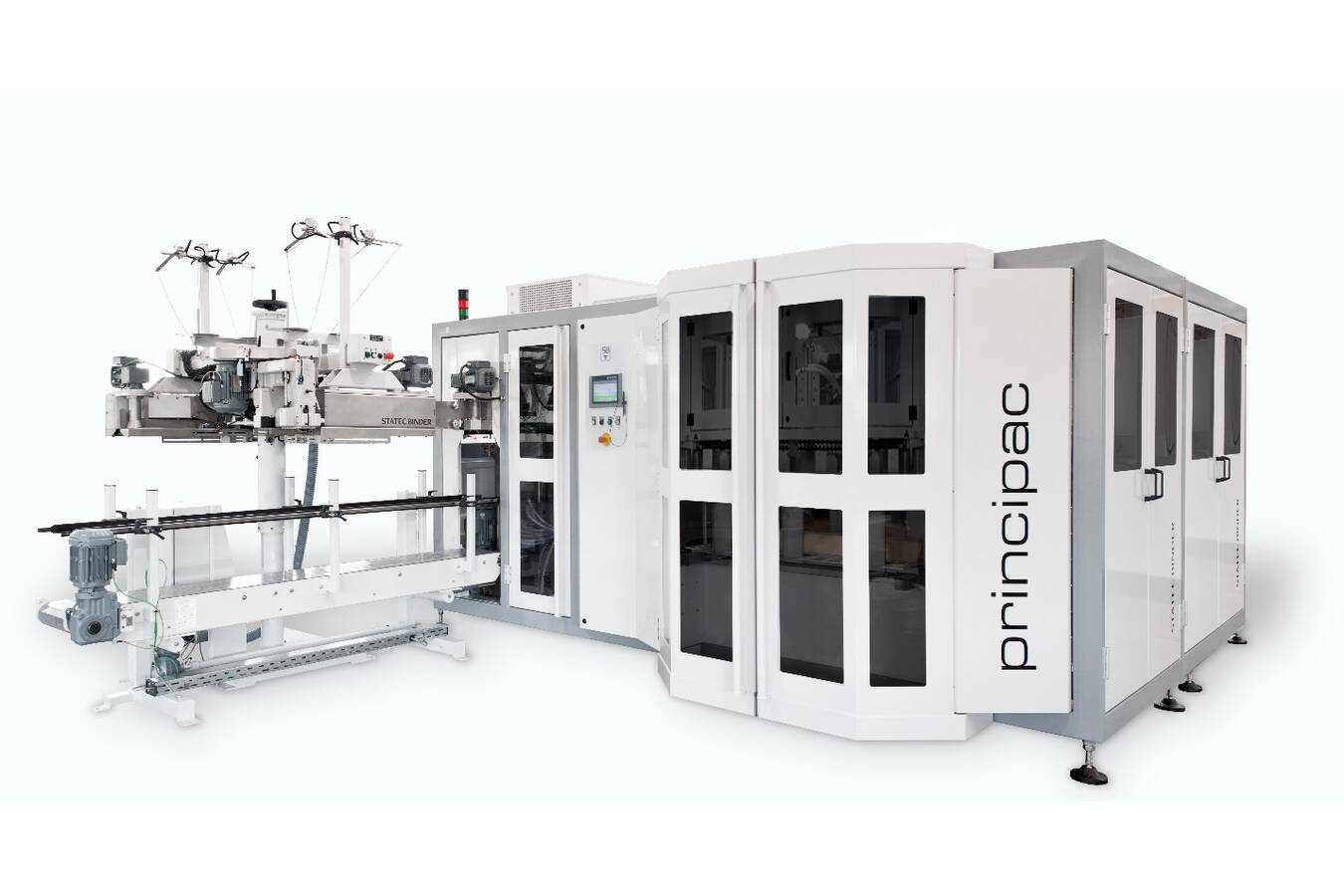
The purpose of any packaging machine is basically always the same: to package products as efficiently and, above all, safely as possible.
But how does such a packaging machine basically work? Depending on the type of packaging machine, in our case open-mouth bags or FFS (form-fill-seal) for free-flowing to powdery products, the packaging process runs differently. The basic principle is the same:
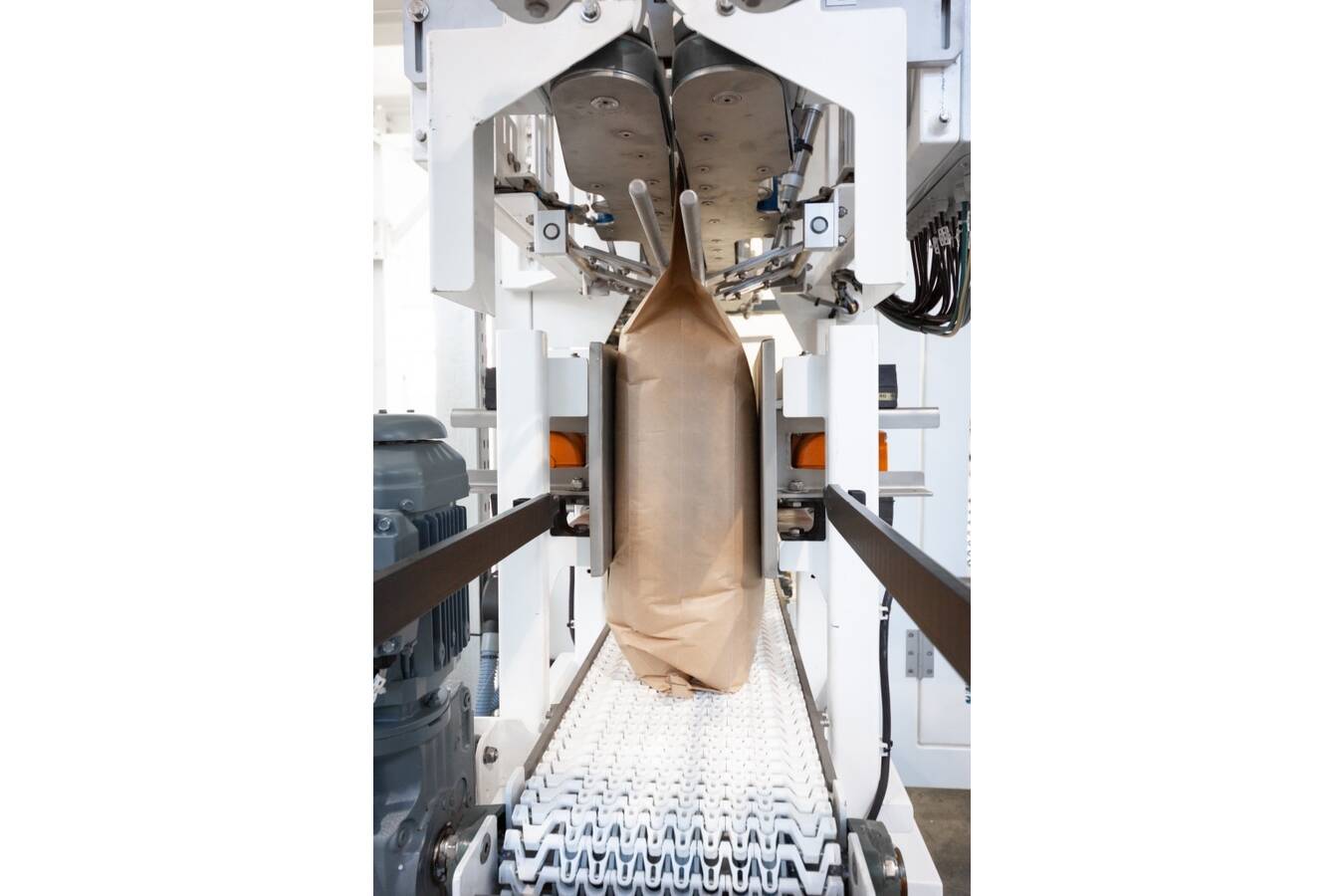
  1. A single bag, made of woven PP, PE or paper, is placed on the filling clamp
  2. The product is precisely filled into the bag after the product is previously weighed by a scale
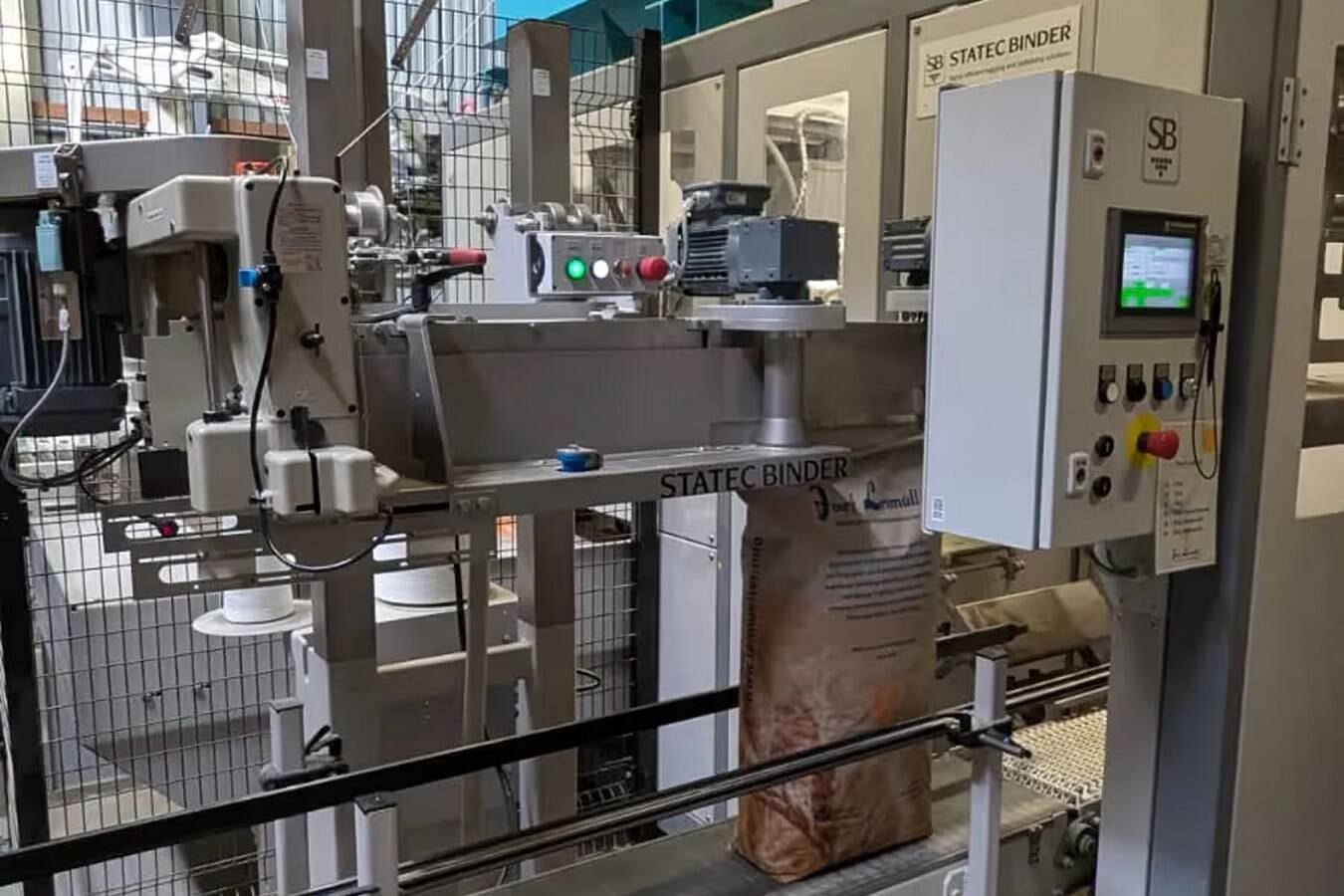
  3. It is conveyed to a closing machine.

Sounds like a simple process. The complex thing about packaging machines is not the basic process, but the adjustments and precision of the components. Fully automatic packaging machines only function reliably when specific process steps are coordinated with each other.
The interaction is of utmost importance here, because otherwise it could happen that a filled bag is released too early or the product flows without a bag having been attached to the filling clamp. Such scenarios must of course be prevented and this requires precise programming, commissioning and operation.
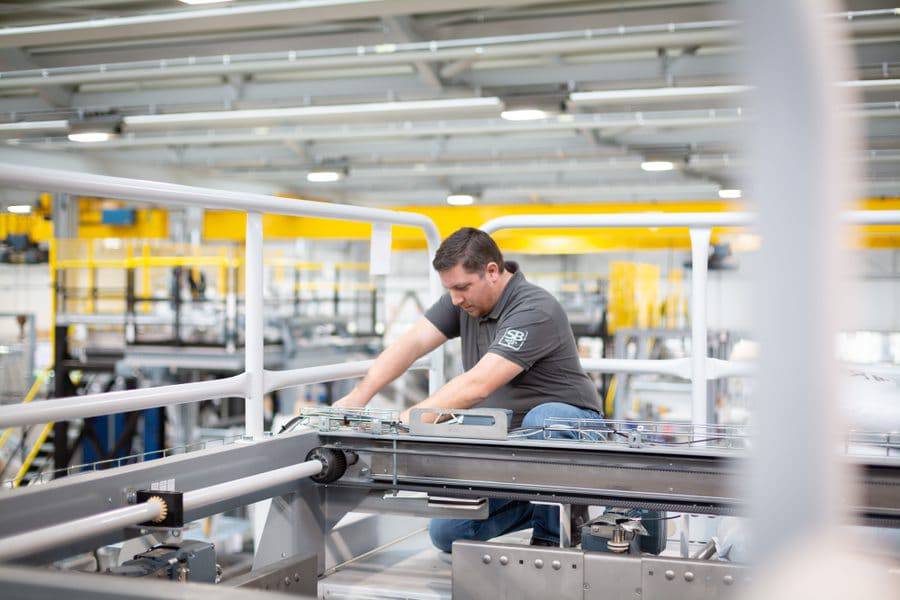
If cleaning and maintenance measures are then carried out regularly, a packaging machine will provide several decades of good service.

Most common types of packaging

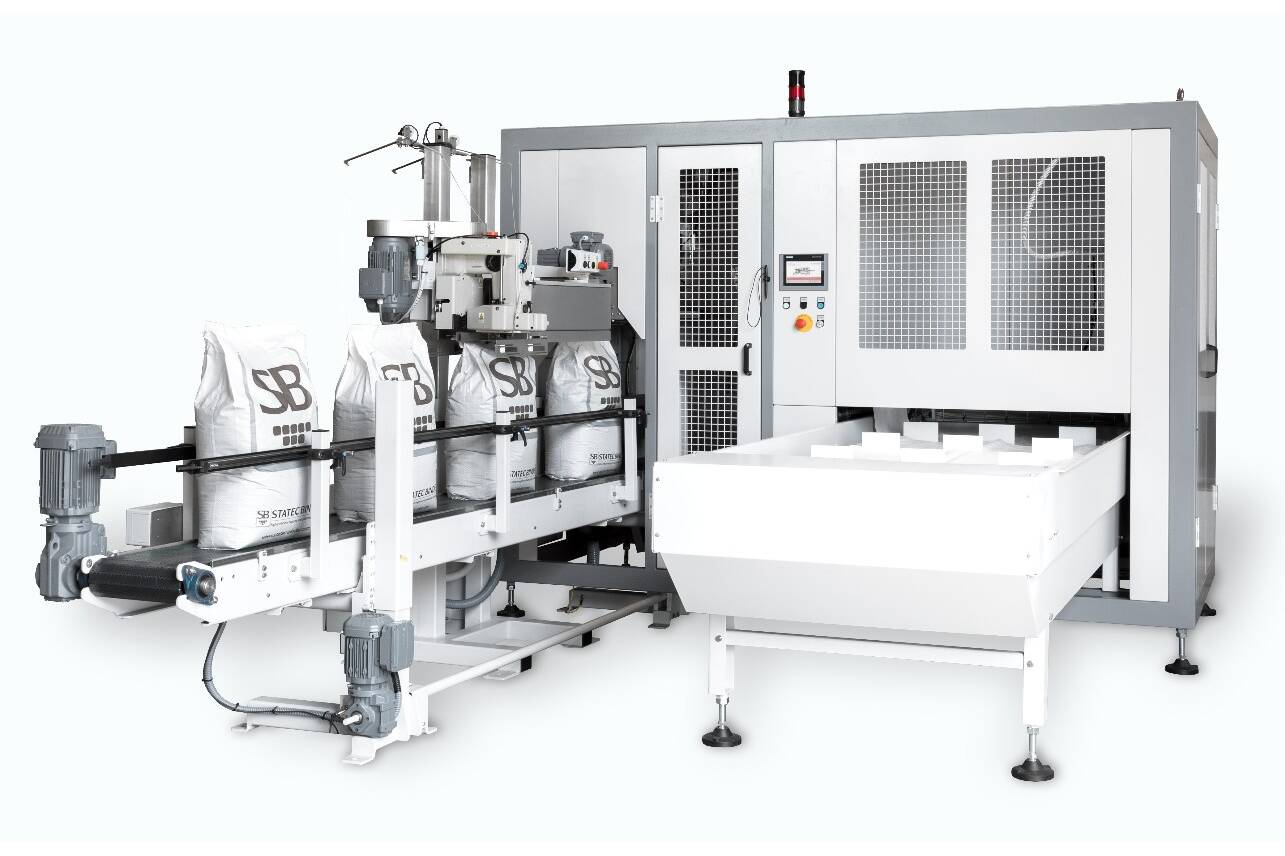
  • Open-mouth packaging machines, using a pre-made bag made of paper, PE or woven PP
  • FFS (Form-fill-seal) packaging systems
  • Big Bag Filling stations

Open-Mouth versus FFS bagging:

The modes of operation of the two machines clearly show the differences between the two types of packaging machines. Whereas open-mouth bagging machines use a prefabricated bag and either sew, seal or heat-seal it after filling, the FFS packaging machine makes the bag before filling and always seals it. Depending on the product to be packed and the required output, either an open-mouth or FFS machine is the better choice.

Open mouth bagging machines

The processes up to the filled and sewn bag are designed to be simple but effective. Prefabricated bags made of woven PP, PE or paper are separated from a stack in the magazine with the aid of vacuum suction cups and transported to the deposit table.
Here, the bag is opened by means of a squeegee, placed on the filling clamp, clamped and filled. The filled bag is then picked up and placed on the conveyor belt and from there transported to the bag closing machine, which sews, welds or heat-seals the bag depending on the material.

FFS (form-fill-seal) bagging machines:

The work stations of the machine are divided into forming, filling and sealing the bags. Due to this principle, three bags can always be processed at the same time.
The advantage of this is that the cycle time of each work step is optimized and, even at high production speeds, it is ensured that the bags are always formed, filled and sealed at exactly the right time.
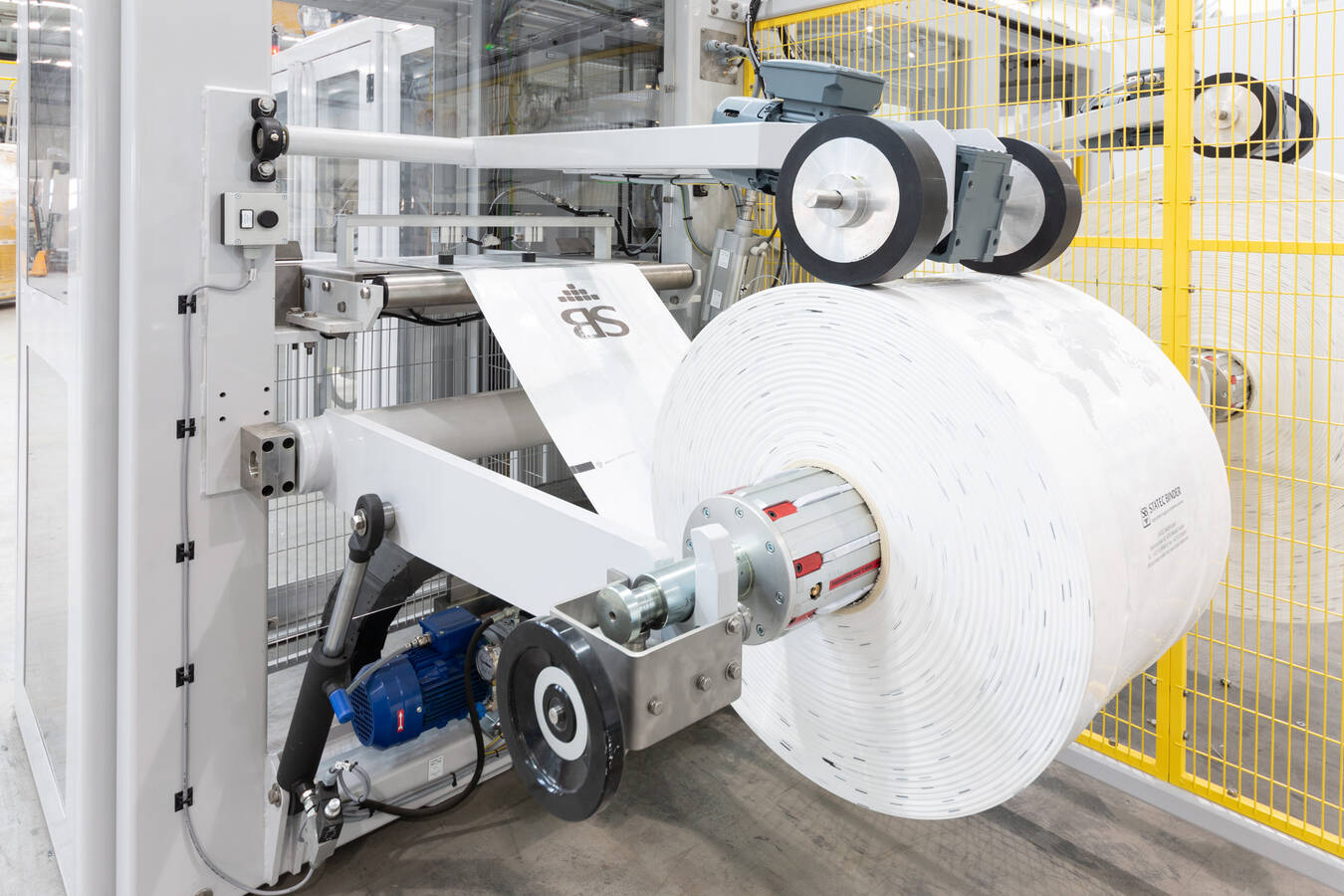
  1. The tubular film is pulled to the first sealing bar with the help of a dancer roller/balancing rocker, where the bottom of the bag is sealed and a knife cuts the individual bag from the roll.
  2. The bag is then passed to the filling station and placed on the filling clamp.
  3. Once the bag is filled, it is passed to the next welding station where the top weld is made.
  4. As soon as this is finished, the bag is transported by conveyor belt, e.g. to a palletizer.

Vertical FFS bagging machine

  1. The flat film is pulled over a forming shoulder, which has a low-friction coating, and formed into a tube.
  2. A permanently heated sealing bar performs the vertical overlap sealing.
  3. The weighed product enters the bag via the filling tube.
  4. Two electronically controlled sealing bars seal the finished pack at the top and simultaneously form the bottom seal for the next pack.
  5. Intensive air cooling enables the shortest possible cycle times.
  6. A built-in knife separates an already filled bag from the tube.
  7. The bag is then transported via a conveyor belt to a palletizer.

Differences in product handling

The basic structure above the machine is similar for both FFS and open-mouth. An infeed hopper is installed above the packaging machine. On a steel frame placed above the machine is a scale, depending on the product with gravity, belt or screw dosing, which in turn is placed below a product silo or the product infeed.
Depending on the characteristics of the product, machines can be equipped with, for example, a dust-tight filling clamp or, in the case of abrasive products, with a special casing.

How does a palletizer work?

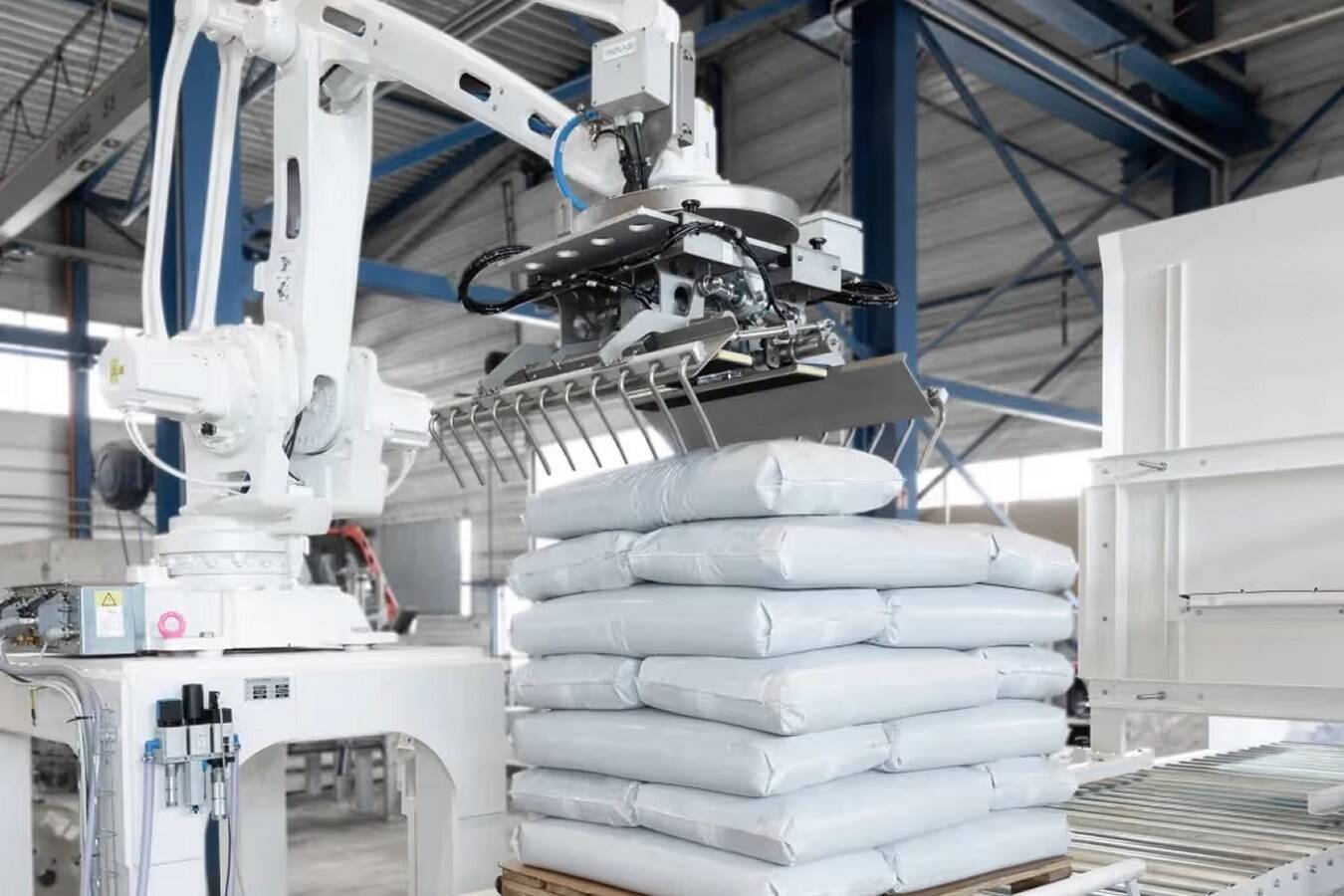
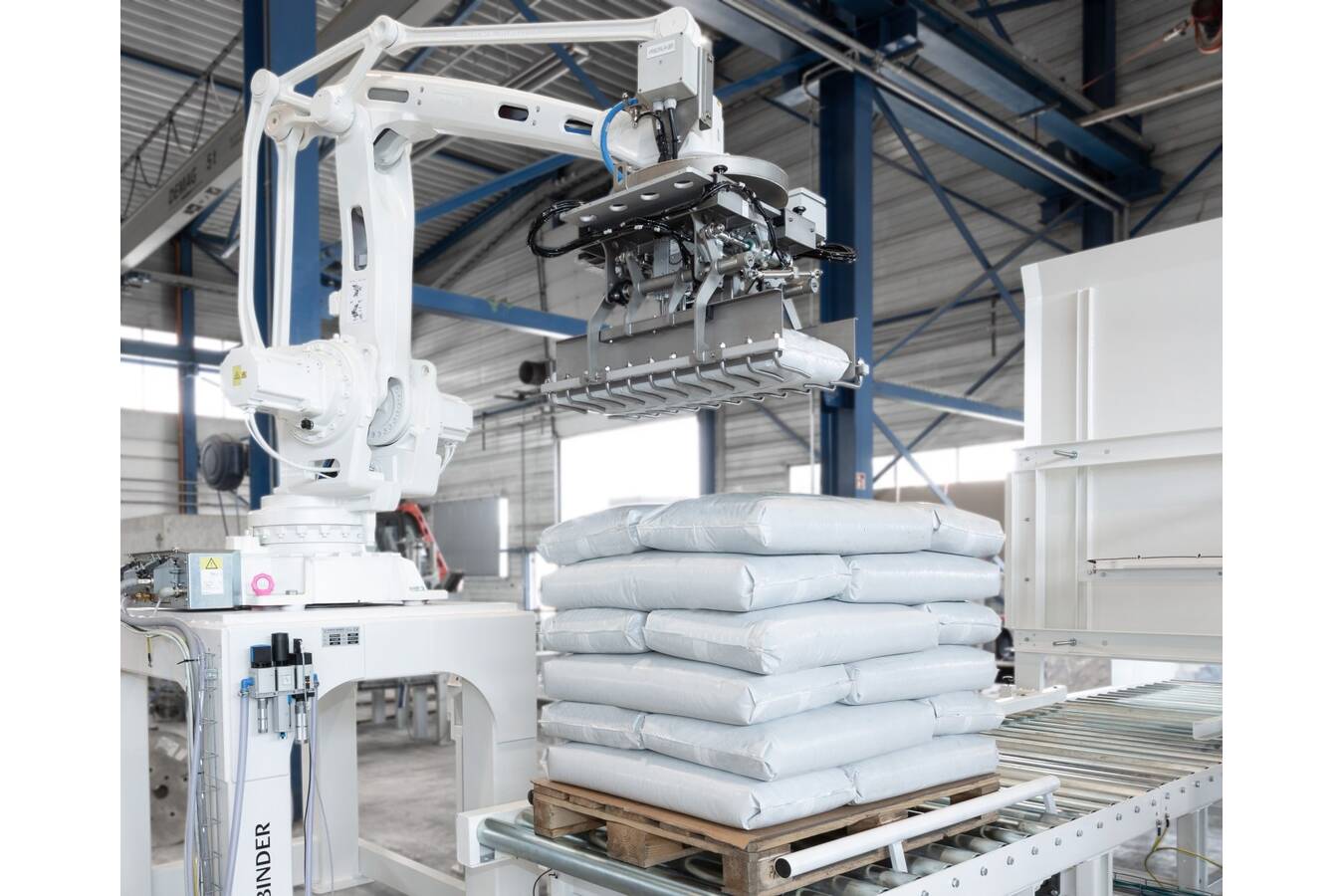
In palletizers, whether high-level or robotic palletizers, bags or cartons are stacked on a pallet and then secured for storage or shipping, for example. A simple description of how a palletizer works:
  1. A bag or carton arrives at the palletizer via a conveyor belt.
  2. It is brought into the correct position and positioned on the pallet.
  3. As soon as the layer is finished, the next layer is started and thus bags or cartons are stacked more and more on top of each other.
  4. When the defined number of layers has been reached, the entire pallet is conveyed to the pallet securing unit.

Degrees of automation in packaging systems

  1. Manual: In the case of manual bagging systems, personnel are always required during operation of the machine to place the bag to be filled on the filling clamp, fasten it and, after filling, guide it to be sewn or welded. All these steps must of course be carried out in compliance with various safety precautions.
  2. Semi automatic: If a semi-automatic packaging machine is used, only personnel are required to place the bag to be filled on the filling clamp. The machine fills the bag and places it back on the conveyor belt, which transports the bag to a closing machine, without the intervention of personnel.
  3. Fully automatic: Fully automatic packaging systems clearly have the advantage that the machine works independently and carries out processes automatically. For this reason, personnel are only required to monitor the safe operation and settings of the machine. This means that personnel resources can be used more efficiently. In addition, fully automatic bagging systems can increase performance and thus output. A variety of safety precautions ensure reliable and, above all, safe operation.


Company information

More items

Packaging and palletizing petrochemical goods The high-quality packaging machines from Statec Binder are used worldwide for  packaging a wide variety of products. This includes plastic granules and plastic powder for  the petrochemical industry.
Packaging and palletizing petrochemical goods
The high-quality packaging machines from Statec Binder are used worldwide for packaging a wide variety of products. This includes plastic granules and plastic powder for the petrochemical industry. More than 250 individual machines for packaging and palletizing plastic granules as well as plastic powders have already been sold worldwide. The highly efficient systems impress with their high speed, their reliability in operation and their user-friendly operation, which saves companies time and money in the packaging process. Statec Binder is an expert in this field thanks to its many years of experience in filling, packaging and palletizing petrochemical bulk goods. When bagging petrochemical products, it is not only the customer’s plant requirements that are important. Above all, care must be taken to handle explosive products safely. As various products from this industry can become statically charged and thus lead to a risk of explosion. Therefore, Statec Binder systems are designed in an ATEX version if required. This means that all necessary safety measures can be taken. In addition, the machines have numerous safety sensors that guarantee an
05.06.2025  |  2073x  |  Product news  | 
Statec Binder Robot-Palletizer for the Sugar Industry How Statec Binder supported a Polish sugar producer in the shift to fully automatic palletizing, with the Principal-R palletizing system
Statec Binder Robot-Palletizer for the Sugar Industry
How Statec Binder supported a Polish sugar producer in the shift to fully automatic palletizing, with the Principal-R palletizing system The fully automatic Principal-R palletizing system from Statec Binder was implemented at one of the ten largest sugar beet farmers in Poland, in cooperation with our Polish representative Agencia Techniczna Hanza Sp.J. Requirements * Fully automatic palletizing of 25kg and 50kg sugar sacks * Changeover to fully automatic packaging of sugar * Increased performance of the palletizing process * Durable robotic palletizer * Easy operation and maintenance of the machine Solution A high-performance Principal-R robotic palletizer from Statec Binder was supplied, as this palletizer perfectly met the customer’s requirements. The machine was designed specifically for the sugar application. Due to the high flexibility of the Principal-R, it was a clear choice for the Polish sugar producer. The different layer patterns make it possible to always arrange the various 25kg and 50kg bags into a well-shaped full pallet. Additionally, the Principal-R convinced due to its
09.04.2025  |  1863x  |  Product description  |   | 
Packaging of compound feed with STATEC BINDER  With the ACROPAC open-mouth bagging machine and the PRINCIPAL-R high-performance robot palletiser, Josef Leimüller GmbH now has a fully automated packaging process for over 170 different feed mixtures.
Packaging of compound feed with STATEC BINDER
With the ACROPAC open-mouth bagging machine and the PRINCIPAL-R high-performance robot palletiser, Josef Leimüller GmbH now has a fully automated packaging process for over 170 different feed mixtures. The company Josef Leimüller GmbH from Salzburg has been packaging a wide variety of feed mixtures of the highest quality for birds, rodents, horses and many other species since 1983. Josef Leimüller GmbH currently produces over 170 different feed mixtures. Previously, the various products were packaged manually. Together with STATEC BINDER, the company recently finalized the switch to a fully automated packaging process. With the help of the open-mouth bagging machine ACROPAC and the high-performance robot palletizer PRINCIPAL-R, STATEC BINDER was able to successfully support the company. Requirements * The aim of the project was to efficiently bag and palletize 4000 tons of quality compound feed per year. * Packaging and palletizing 200 bags of feed per hour * Filling of paper bags (pillow bags) * Filling weight of 15 kg - 30 kg of compound feed * Development and integration of very compact machines for the limited space capacities in the production hall *
05.02.2025  |  1734x  |  Product news  | 
New assembly hall for Static Binder in Gleisdorf  Static Binder has extended her assembly hall to  5000 square meters, incorporating 19 office workstations and a warehouse for spare parts.
New assembly hall for Static Binder in Gleisdorf
Static Binder has extended her assembly hall to 5000 square meters, incorporating 19 office workstations and a warehouse for spare parts. The construction of our new assembly hall at our headquarters in Gleisdorf has been successfully completed. We have recorded the most important steps of the project for you – from the construction site to the finished building. See the video for the construction of the hall in a fast motion. On 5000 square meters the bagging and palletizing systems are now assembled and tested for our customers. The existing assembly hall has been doubled in size – 2500 square meters of floor space have been increased to 5.000. This has also resulted in a significant increase in assembly capacity. In addition, 19 office workstations are now in the extension as well as the warehouse with the dispatch of spare parts. The old and new buildings are now housed together in one large hall, thus combining the entire assembly process at one location.
20.10.2021  |  4038x  |  Press release  |   | 
PORTALS
BulkSolids-Portal Schuettgut-Portal Recycling-Portal
Related
Bulkgids.nl
SIGN UP FOR OUR NEWSLETTER
Newsletter archive
Service and contact
ContactDisclaimerPrivacyAdvertising
FOLLOW US
Linked