Influence of steel quality on surface properties
Customer requirements are among the most important sources for new developments
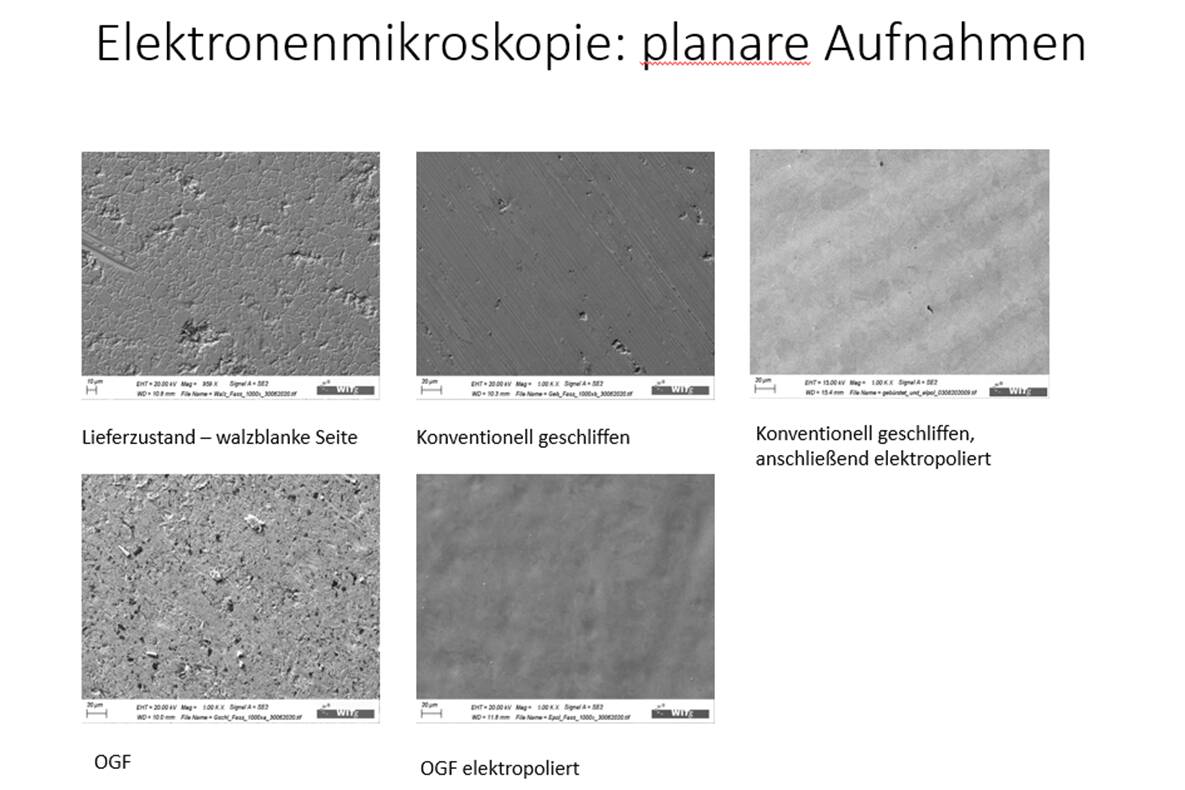
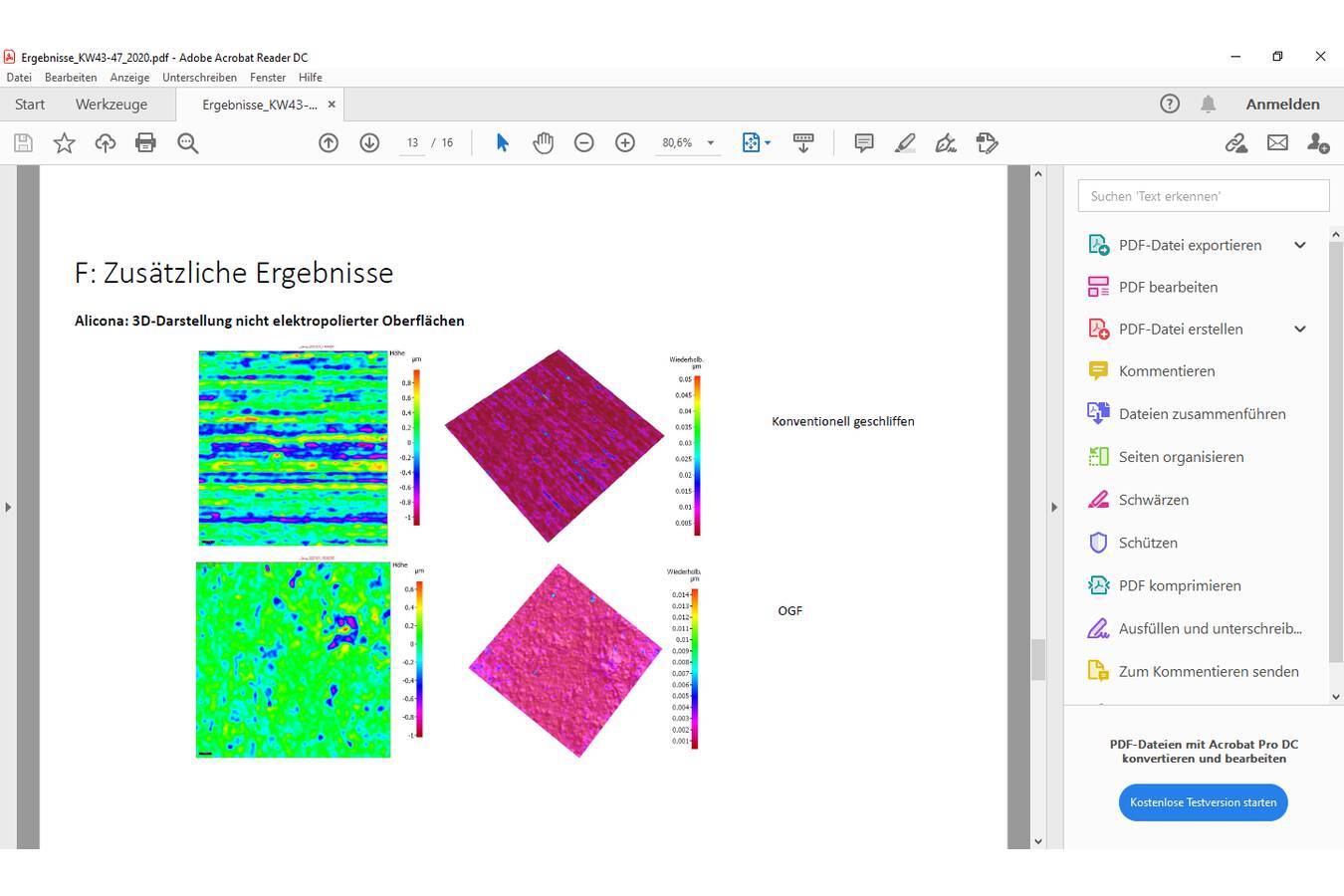
Customer requirements are among the most important sources for new developments. A fundamental customer requirement for users of containers and equipment for sensitive applications, e.g. in pharmaceutical and medical technology applications, is the permanent cleanliness of surfaces. Under the given conditions, the material must not react with potential reactants (air, water, contact substances), or only to a negligible extent; foreign substances should not adhere and should not be carried over under any circumstances. In addition to the topography of the surface (roughness, waviness, cracks, pores), physical/chemical properties such as absorption, adhesive forces, etc. are determined by the properties of the microstructure, in particular by the defects/imbalances in the microstructure. In addition to the surface topography, the condition of the material directly below the surface is therefore an important influencing factor that has often been neglected in the past.
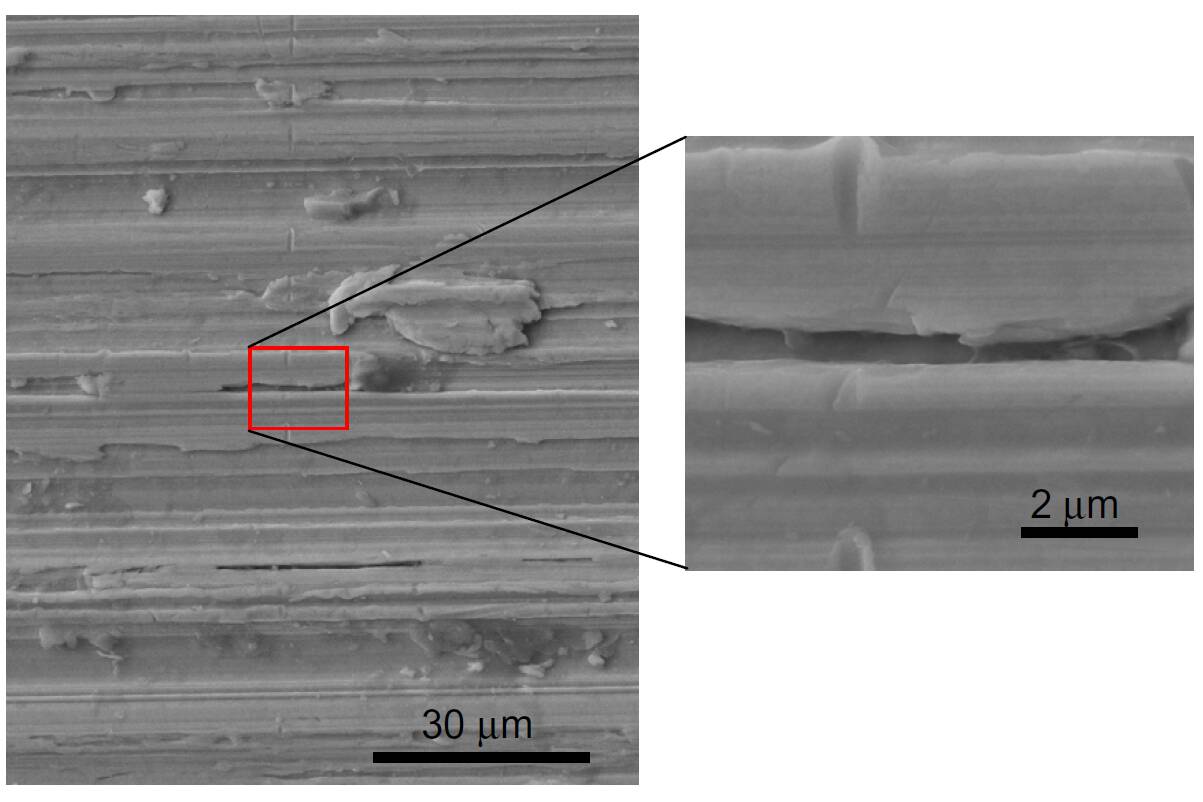
In the production of stainless steel components, however, the surface must be treated at the end of the manufacturing process, i.e. after forming, cutting and welding. The aim is to remove impurities and create a closed surface with the desired roughness. Unfortunately, it is unavoidable that during such mechanical processing on the surface, the microstructure in an area directly on or under the surface is brought out of equilibrium. The damaged microstructure zone should then be removed by an electrochemical process, which, however, is only possible in the range of a few micrometers and without side effects.
A chance finding during process optimization has shown that extremely gentle mechanical surface treatment, known as Optimized Grind Finishing (OGF), can change the structural damage near the surface in such a way that the adhesive forces to the contact material are altered. This means that in some applications, customers have found that particles or even viscous drug formulations, milk powder, flow better or adhere less and less residue remains, which is easier to remove. As this is a system property, i.e. the interaction of the surface with a contact material, the results are influenced by both components and should not be generalized.
About the optimization of the entire process and the effect on the surface quality will be reported.