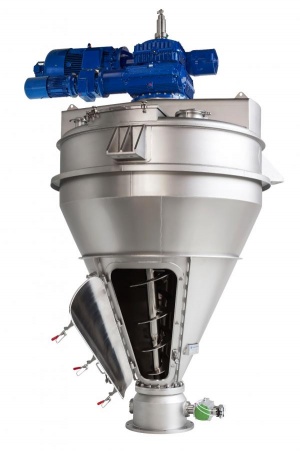
Smarter Mixing: simple, fast and flexible
Instant Soup
Instant soups were first launched some 50 years ago. Initially as an additional product line for vending machines that served tea, coffee and hot chocolate. At that time, the instant soup mixes were largely supplied to the vending machine companies in bulk. The amount of choice was limited and recipes were simple (starch, salt, fat, colourings and flavourings). Since then, the world of instant soups has grown substantially, and is now a global market segment.
One important accelerator has been the improved quality and variety of ingredients that has managed to keep up with ever-changing consumer tastes and expectations. These improvements, combined with rising production costs, have led manufactures to scrutinise the production processes over the past 15 or so years. At Hosokawa Micron B.V., we have followed these developments closely, and produced a new mixing technology that is perfect for the manufacture of instant soup: the Vitomix®.
Process optimisation
The challenge in the mixing of instant soups lies with the complexity of the recipes. These vary greatly in terms of composition and properties, resulting in two different mixing phases. Conventionally speaking, these are handled by two mixing processes, namely:
Mixing phase 1 - High shear mixing:
In this mixing phase the basic ingredients (powders) are mixed intensively with oil/fat, aromas and flavourings. In order to achieve a homogenous mixture and avoid build-up of agglomerates (lumps), a great deal of mixing energy is required. A conventional mixer used for this process would be a plough shear mixer possibly fitted with choppers.
Mixing phase 2 - Low shear mixing:
The low shear mixer will be fed by the plough shear mixer (phase 1) to name one example, after which, it mixes fragile ingredients such as leafy vegetables and mushrooms, and ingredients such as croutons can be added to the basic mixture. In many cases, our own Vrieco-Nauta conical mixer is used here. It mixes accurately with minimum damage to the product and is used simultaneously as a live hopper for feeding the packaging line.
By combining these two mixing phases into a single mixer, we have overcome a number of challenges, including how to handle ingredients with differing product properties, but also the issue of and need for large capacities. We were faced with the question of how to mixing homogeneously (which demands a great deal of mixing energy) in combination with the fragile ingredients (which requi