Compaction of Ultra-Lightweight Powders: Why ship air?
Compaction of Ultra-Lightweight Powders as a Logistics Efficiency Factor
Ultra-lightweight powders such as pigments, carbon black, silica, cellulose fibres or specialty additives present a fundamental challenge: During filling, the material contains a high proportion of air. If this air is not specifically removed, it significantly reduces the effective product quantity per bag and per transport unit.
The Influence of Bulk Density on Container Utilization
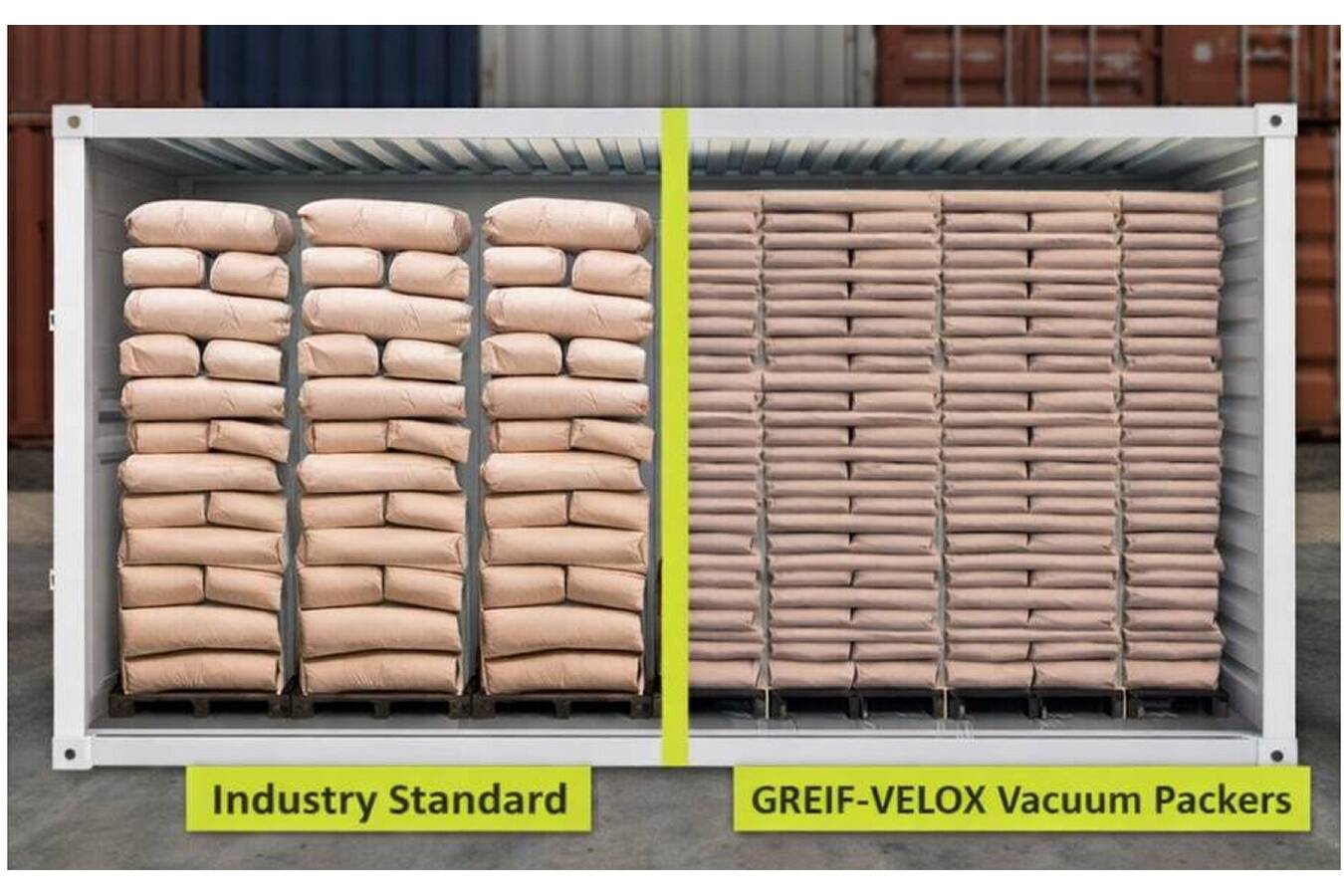
A standard 20-foot container typically holds approximately: 10,080 kg per container when pigments are packed using conventional filling methods.
By applying vacuum-assisted compaction during the filling process, container loads of up to 27,600 kg per container can be achieved.
This corresponds to an increase of: +17,520 kg of product per container.
The product, container size and mode of transport remain unchanged.
The difference lies solely in the reduction of the air content within the bag.
Economic Considerations
Assuming a product value of €200 per kilogram, the calculation is as follows: 17,520 kg × €200/kg = €3,504,000 additional product value per container. This example illustrates the significant impact