How Material Behaviour Affects Bulk Solids Dosing in Water Treatment
Explores how material properties influence bulk solids dosing in water treatment, with a focus on system design, testing, and auger-based equipment.
Bulk solids handling issues in water and wastewater treatment are often attributed to equipment performance. However, in many cases, the root cause lies not with the equipment itself, but with how the material behaves under process conditions.
Powder behaviour is influenced by properties such as flowability, bulk density, particle size, and moisture content, all of which determine how materials move, compact, and discharge. Understanding these behaviours is particularly important in water treatment applications handling materials including hydrated lime, powdered activated carbon (PAC), polymers, and salts.
Understanding Material Behaviour in Bulk Solids
Powders do not behave like liquids. Their flow properties can change depending on environmental conditions, storage time, and handling method. Cohesive materials may compact and form stable structures, while aerated powders can become fluidised and difficult to control.
These behaviours can lead to common issues such as bridging, rat-holing, inconsistent feed rates, and segregation. In dosing applications, this results in fluctuating discharge, poor process control, and increased chemical consumption.
Understanding material behaviour is therefore critical when selecting and configuring dosing equipment.
How Material Properties Affect Dosing Accuracy
Accurate dosing depends on maintaining a consistent and controlled flow of material into the process. When material behaviour is not properly accounted for, even minor variations in bulk density or flow characteristics can lead to significant deviations in feed rate.
For example, a cohesive powder may not discharge evenly from a hopper, leading to intermittent feeding. Similarly, lightweight or aerated materials may fluctuate in density, affecting volumetric dosing accuracy. In both cases, the result is reduced process stability and increased operator intervention.
Without accounting for material behaviour, consistent dosing performance cannot be achieved.
Aligning Equipment Design with Material Properties
Effective bulk solids handling systems are designed with the material in mind. In water treatment applications, auger-based equipment such as screw feeders and screw conveyors are commonly used for dosing and conveying, where performance is closely linked to material behaviour. This requires not only selecting the appropriate equipment, but also ensuring that all system elements work together to promote consistent flow.
Hopper design plays a key role in encouraging reliable discharge, particularly for cohesive or compressible powders. The inclusion of agitators within feeder bodies or at conveyor inlets can help maintain even filling and prevent flow interruptions.
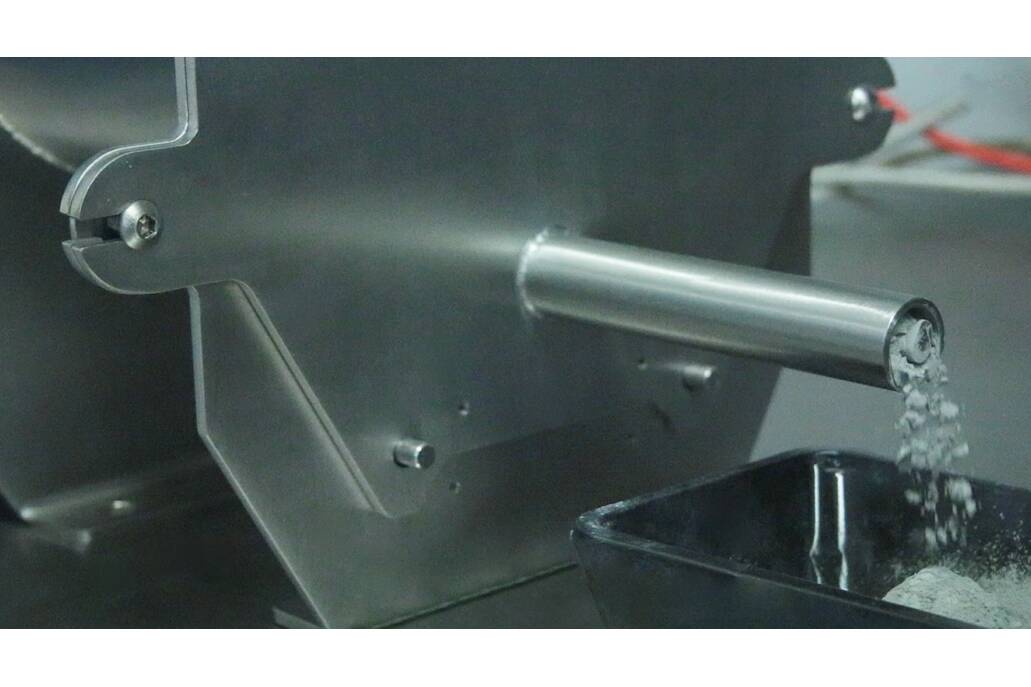
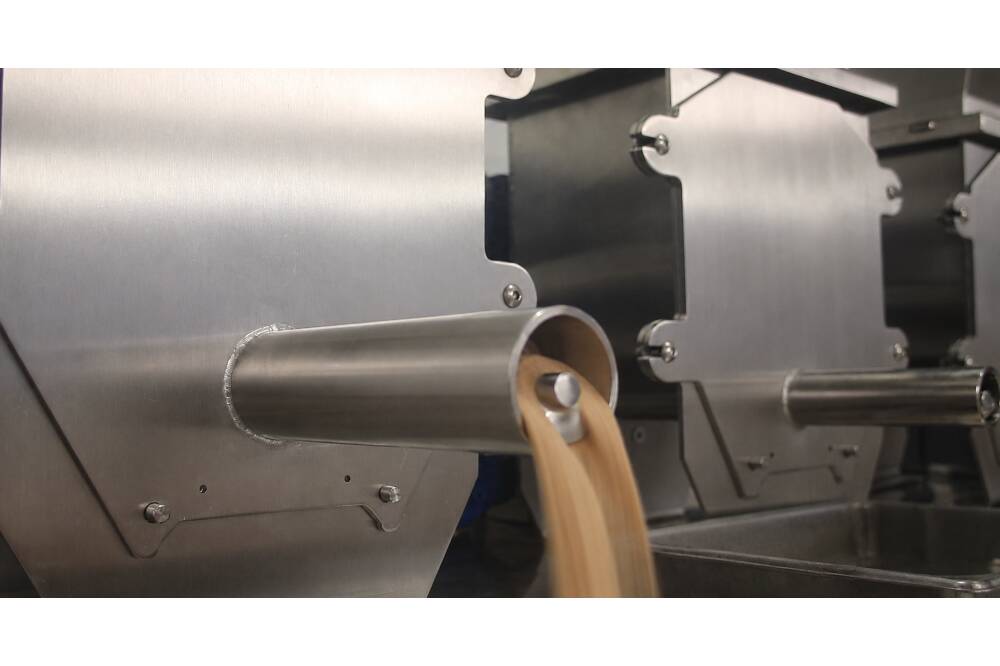
Screw feeders are commonly used where accurate and repeatable dosing is required, as they regulate material flow from a hopper into the process. However, their performance depends heavily on consistent inlet conditions and stable material behaviour.
For material transfer, flexible screw conveyors offer routing flexibility in complex plant layouts, while rigid screw conveyors provide a more robust solution for handling abrasive, fibrous, or higher-throughput applications. In both cases, selecting the correct screw or spiral design is essential to minimise product disturbance and maintain uniform flow.
Using Material Testing to Optimise Performance
Given the variability of powder behaviour, material testing is often a critical step in system design. Testing allows key properties such as flowability and bulk density to be evaluated under controlled conditions.
By understanding how a material behaves, equipment can be configured and optimised to suit the specific application. This may include selecting the appropriate auger design, refining the hopper geometry, and determining whether agitation is needed to ensure consistent and reliable performance.
Material testing helps reduce uncertainty during system design and supports the development of solutions tailored to specific material characteristics and process requirements.
From Equipment Selection to System Performance
Reliable bulk solids dosing is rarely achieved through equipment selection alone. It requires a combined approach that considers material behaviour, system design, and process requirements.
In practice, this often involves integrating multiple technologies. Material may be transferred using a flexible or rigid screw conveyor into a hopper, where a screw feeder then meters it into the treatment process. When designed correctly, this approach ensures both efficient transfer and accurate dosing.
Ultimately, understanding the relationship between material behaviour and system design is key to achieving consistent, long-term performance in water treatment applications.