Analysis of Material Moisture as a Critical Quality Factor in Industry
Precise moisture measurement is of high importance in the wood, agricultural, and plastics industries. Discover how the Moisture Analyser PCE-UX 3081 optimizes quality assurance and process efficiency through thermogravimetric analysis.
The exact determination of water content represents one of the most important pillars of quality assurance in numerous industrial sectors. Especially in the timber, agricultural, and plastics industries, the efficiency of production processes and the quality of end products depend directly on the precision of moisture measurement. Since materials such as wood chips, animal feed, and plastic granules possess completely different physical properties, high demands are placed on the flexibility and accuracy of the measuring technology used.
In the timber industry, determining the moisture content of biomass is crucial for calculating the calorific value. Wood chips with an excessively high water content reduce energy yield and can damage combustion plants through slagging. The situation is similar in the agricultural industry during the production of animal feed. Here, the focus is primarily on storage stability, as even minor deviations from the target value can lead to microbial decay or mold growth, rendering the entire batch unusable.
The plastics industry provides a technological contrast. In the processing of granules, extremely low moisture levels in the range of a few hundredths of a percent are often required. Hygroscopic plastics such as polyamide or polycarbonate must be intensively dried before extrusion or injection molding. If excessive residual moisture remains in the granules, it leads to hydrolytic degradation during processing, resulting in bubbling, surface defects, and significantly reduced mechanical strength of the components.
Modern moisture analyzers operate according to the thermogravimetric principle, also known as the oven-drying method, but in a significantly accelerated form. The device functions as both a precision balance and a drying unit in one. During the process, the sample is continuously weighed while a heating element drives out the moisture. This automated real-time monitoring of weight loss makes it possible to define the end point of the measurement exactly—either after a fixed period or as soon as weight constancy is achieved. This eliminates manual calculation errors and reduces analysis time from hours to just a few minutes.
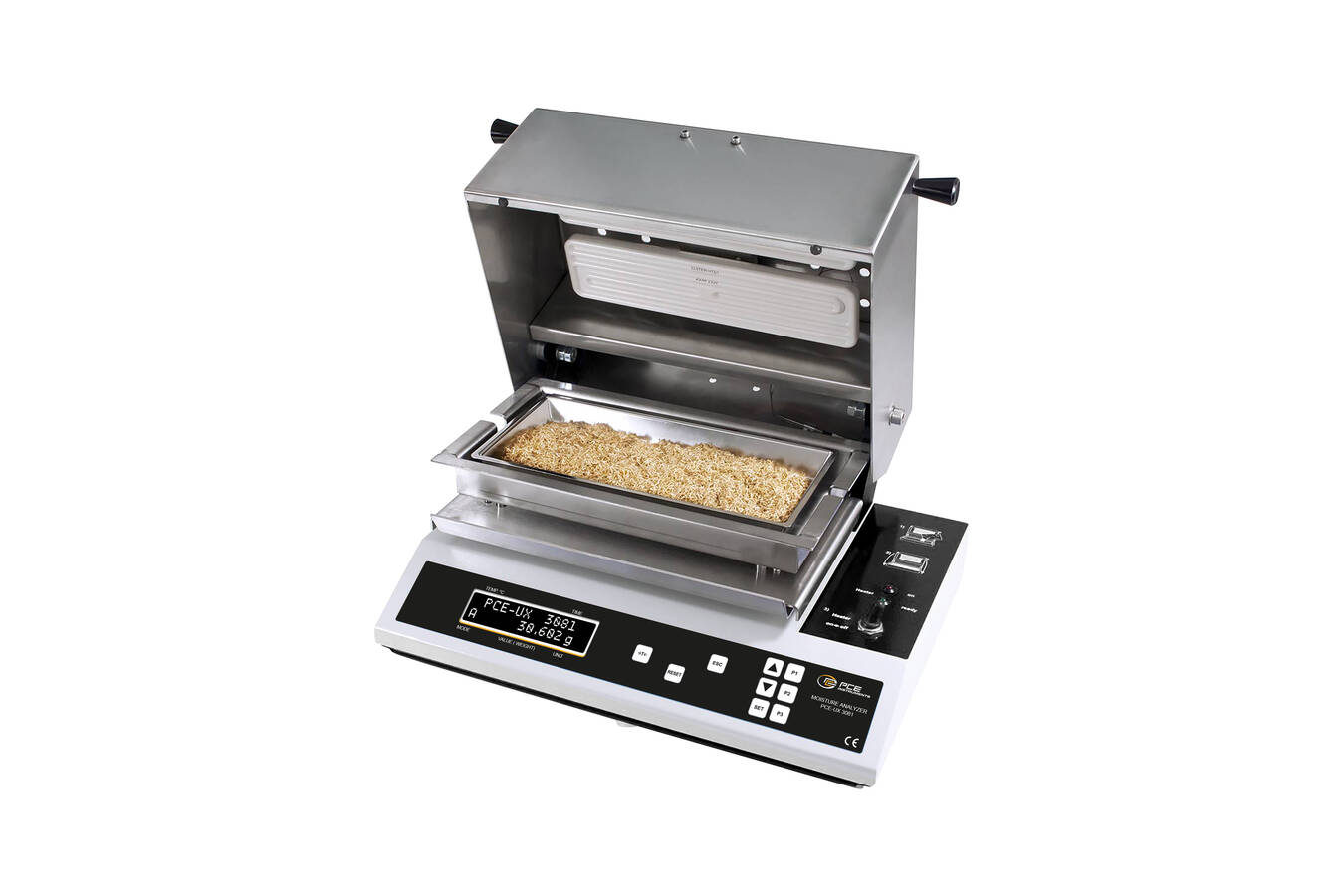
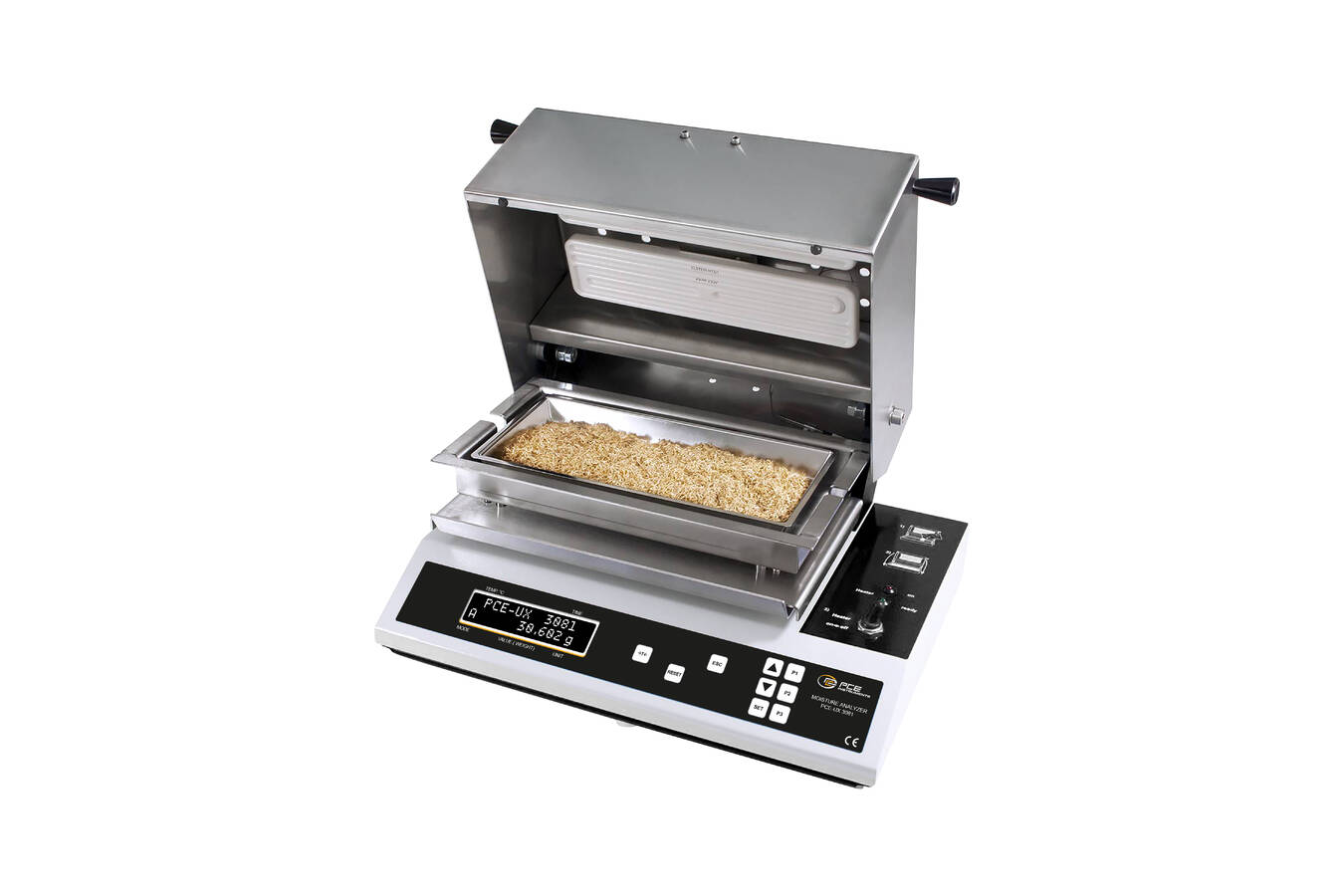
To meet these diverse requirements, the PCE-UX 3081 moisture analyzer has proven to be the optimal solution for the industrial environment. This device is characterized by its technological superiority in measuring materials with very low moisture contents, making it particularly qualified for the high standards of plastics processing. Precise resolution is essential here to reliably detect even the smallest amounts of water.
A decisive constructive advantage for the timber and agricultural sectors is also the integrated large weighing pan of the PCE-UX 3081. This allows for a sufficiently large sample quantity of voluminous or lightweight materials, such as wood chips and feed, to be spread out flat. A wide distribution of the sample is essential for measurement quality, as it is the only way to guarantee homogeneous heating without heat accumulation or incomplete drying in the sample core. Through this combination of highly sensitive sensor technology for minimal moisture and generous sample management, the PCE-UX 3081 offers a level of process reliability that conventional laboratory methods often lack.