Supplier sign in
Home
STAY INFORMED
Subscribe to our monthly newsletter.
Your email address will never be disclosed to any third party.
Read our privacy notice.


Product news
23.01.2026  |  58x
Share this item

Precision Control via Relative Values in Bulk Processing

Hydronix examines how relative measurement values improve automation in bulk solids processing by offering high repeatability without the time-consuming complexities of traditional sensor calibration.

Optimising Moisture Management in Bulk Solids

Modern industrial processing relies on automation to maintain consistent quality. While moisture is a critical variable in production, manual testing is often too slow for real-time control. Inline sensors provide the necessary responsiveness, but the choice between absolute and relative values dictates the efficiency of the system.

Differentiating Absolute and Relative Values

Absolute moisture measurement represents the literal percentage of water in a material, requiring extensive laboratory testing and precise calibration. In contrast, relative values focus on the stability and repeatability of the sensor signal. This approach allows a controller to react to whether a material is wetter or drier than a set target.

The Advantage of Repeatable Control Loops

For automated processes like material conditioning or drying, absolute values are less critical than consistent feedback. A repeatable relative measurement allows the system to adjust water addition or drying times proactively. This method ensures predictable material behavior and high-quality output without the burden of constant recalibration.

Digital Sensors and Machine Learning

Digital microwave sensors provide the stable signals required for this control strategy, remaining unaffected by changes in particle size or dust levels. Integrating machine learning further enhances the process by analyzing historical data to predict moisture changes. This technology minimizes manual intervention and automatically compensates for raw material variability.

Strategic Value of Relative Measurement

  • Simplifies sensor setup by removing the need for complex calibration.
  • Enhances real-time responsiveness in automated control loops.
  • Reduces energy consumption through optimized drying and mixing cycles.
  • Minimizes production interruptions caused by raw material fluctuations.
  • Frees operators to focus on high-value tasks instead of manual adjustments.

Company information

More items

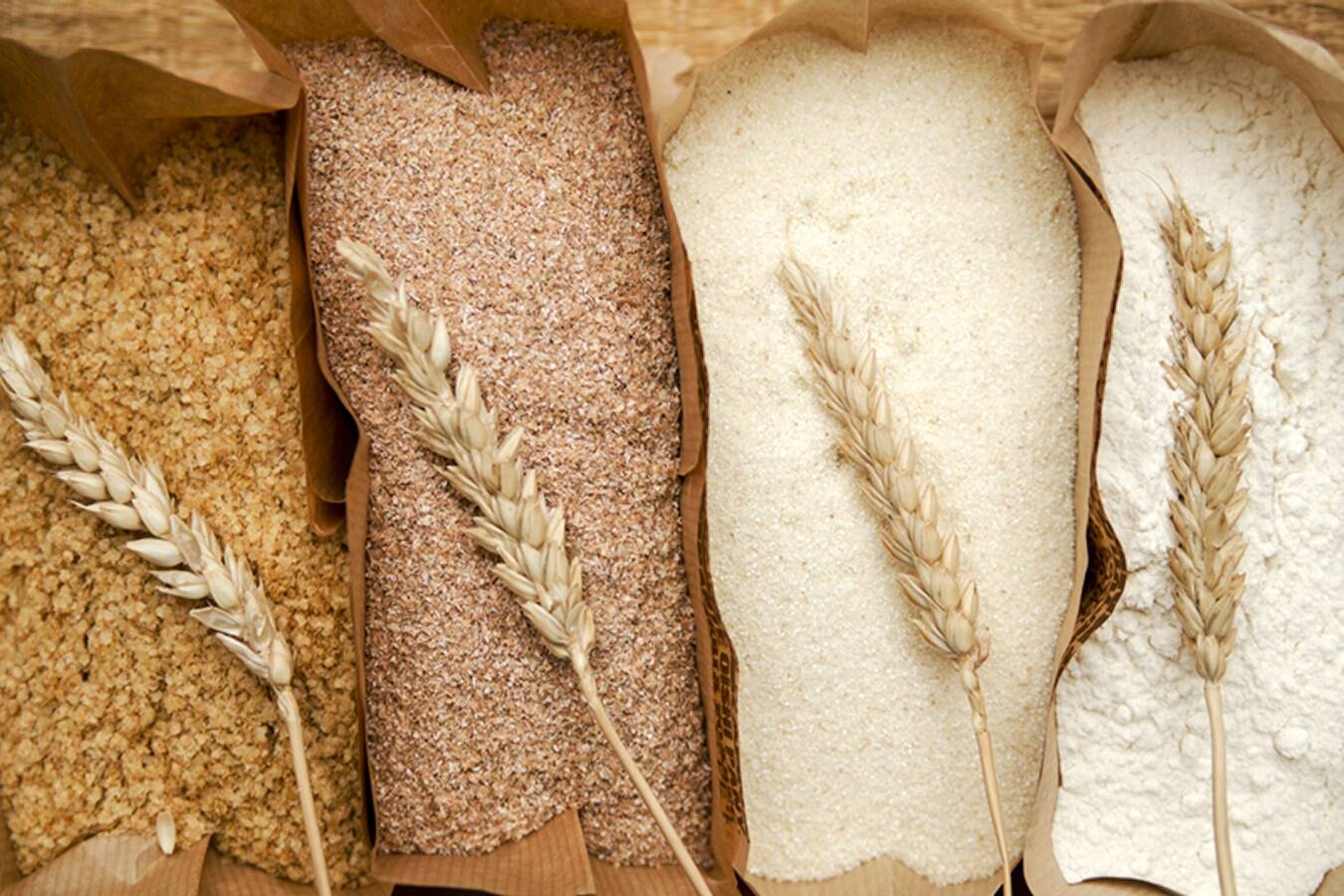
The importance of moisture measurement and control when milling flour  The moisture content of grain is crucial for the milling process. This article describes how moisture content can be controlled to achieve benefits in terms of quality, environmental sustainability and profitability of the final product.
The importance of moisture measurement and control when milling flour
The moisture content of grain is crucial for the milling process. This article describes how moisture content can be controlled to achieve benefits in terms of quality, environmental sustainability and profitability of the final product. Introduction Grain is a natural product, so the moisture in the bulk material varies due to several factors, including different growing conditions, weather conditions during harvest, the threshing operation, and post-harvest storage conditions. After harvest, industrially processed grain is often handled in a mill where it is flaked, rolled or ground into flour. Moisture levels are a critical factor throughout the mill because they affect machinery performance, material plasticity or malleability, and final product quality. Also, achieving the correct moisture content of the final product is important to prevent premature spoilage and a short shelf life. By measuring and controlling the water content of the material at each step of the milling process, it is possible to improve efficiency, reduce energy consumption, and save money. Consistent moisture control also enables a miller to achieve higher yields of better quality with less waste. The main process measurement
08.10.2025  |  970x  |  Product news  | 
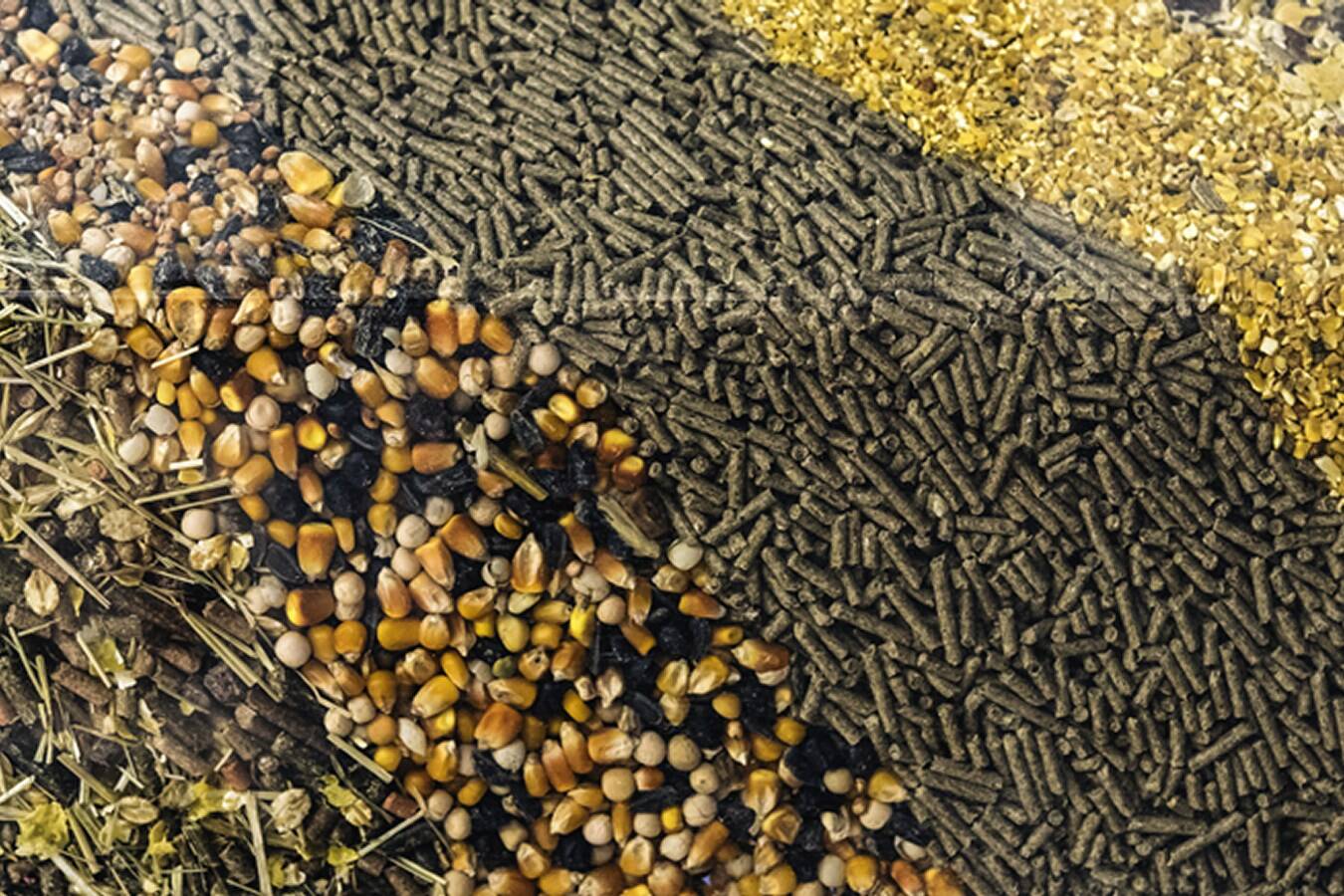
Moisture Control in Animal Feed Production One of the big challenges in the animal feed industry is the large number of different formulations. Controlling and measuring the moisture enables the correct calibration for each of the different formulations.
Moisture Control in Animal Feed Production
One of the big challenges in the animal feed industry is the large number of different formulations. Controlling and measuring the moisture enables the correct calibration for each of the different formulations. One of the big challenges in the animal feed industry is the number of different formulations that can be produced by a single plant. For each batch, it is essential to ensure that the quality of the product is correct so that the animals are fed a balanced nutritional diet optimised for their type and stage of development. For this reason, moisture sensors are often used in conjunction with a control system that manages the formulation parameters. Controlling and measuring the moisture enables the correct calibration for each of the different formulations. Moisture control is a key factor in ensuring the final feed is palatable, retains its nutrients, and is consistent. Benefits of Moisture Control * Improve nutritional consistency * Reduce spoilage and waste * Improve shelf life * Optimise pellet durability * Increase plant efficiency * Reduce process downtime Where to Measure Moisture Effective moisture control of the entire process requires the
30.06.2025  |  1374x  |  Product news  | 
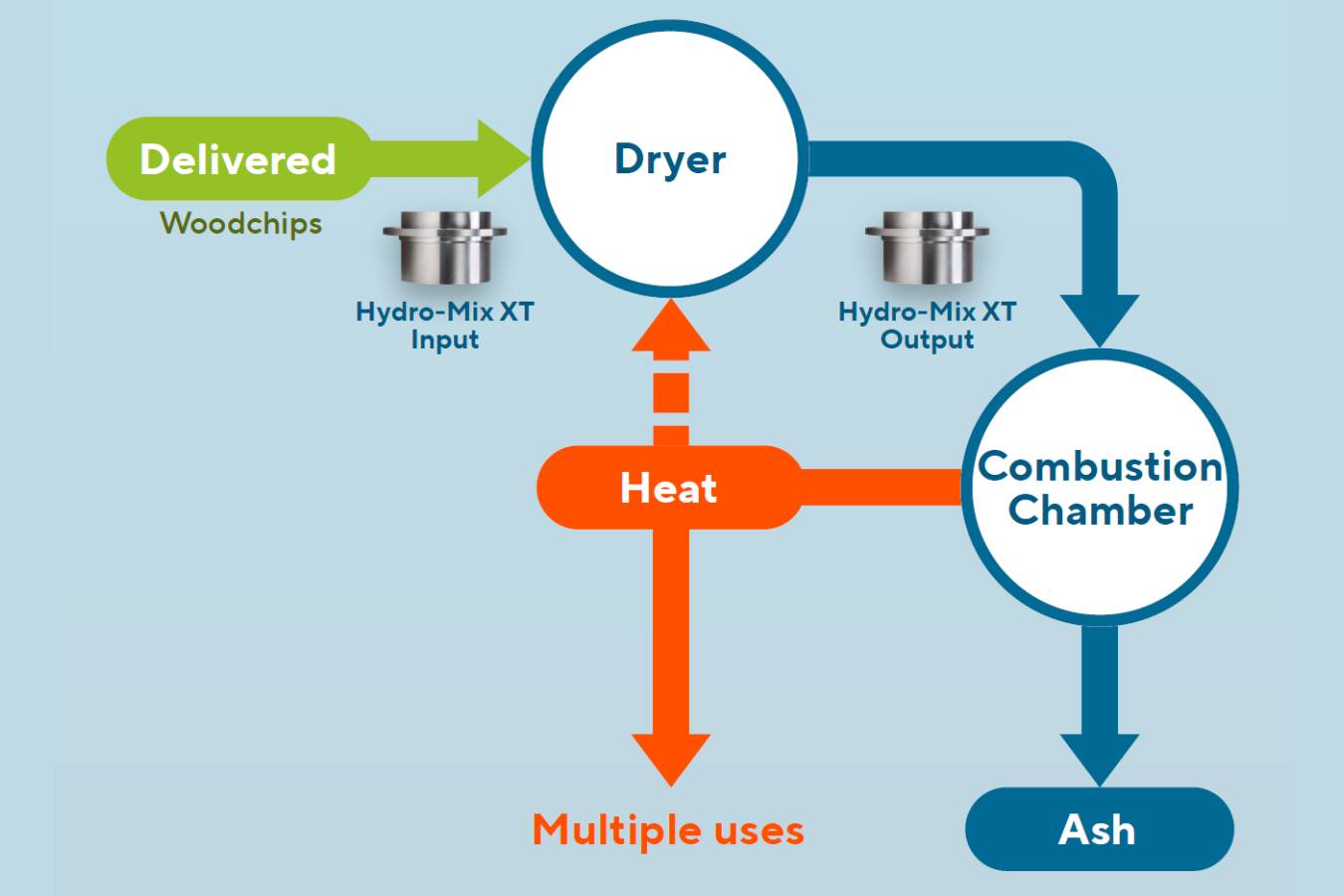
Moisture Control in Woodchips with Hydro-Mix XT (EX)  Working with the correct moisture of wood is important to prevent damage to process equipment, so measuring the moisture online with precision sensors ensures optimum efficiency.
Moisture Control in Woodchips with Hydro-Mix XT (EX)
Working with the correct moisture of wood is important to prevent damage to process equipment, so measuring the moisture online with precision sensors ensures optimum efficiency. The moisture in wood stockpiles varies constantly with local environmental conditions, both during harvesting and storage. Working with the correct moisture of wood is important to prevent damage to process equipment, so measuring the moisture online with precision sensors ensures optimum efficiency. Typical applications include biofuel for boilers for CHP or power generation applications, syngas production, and processing wood into intermediate products, such as charcoal briquettes and wood pellets. Benefits of Moisture Control: * Consistent quality of the woodchips * Ensure correct moisture for storage, reducing the risk of spoilage * Increased control of the final product * Lower wastage and product degradation * Direct, continuous, real-time control of the burning process * Optimised combustion Where to Measure Moisture? After the woodchips are delivered, they are dried before entering a Combustion Chamber where they are burnt to generate heat
20.05.2025  |  2352x  |  Product news  | 
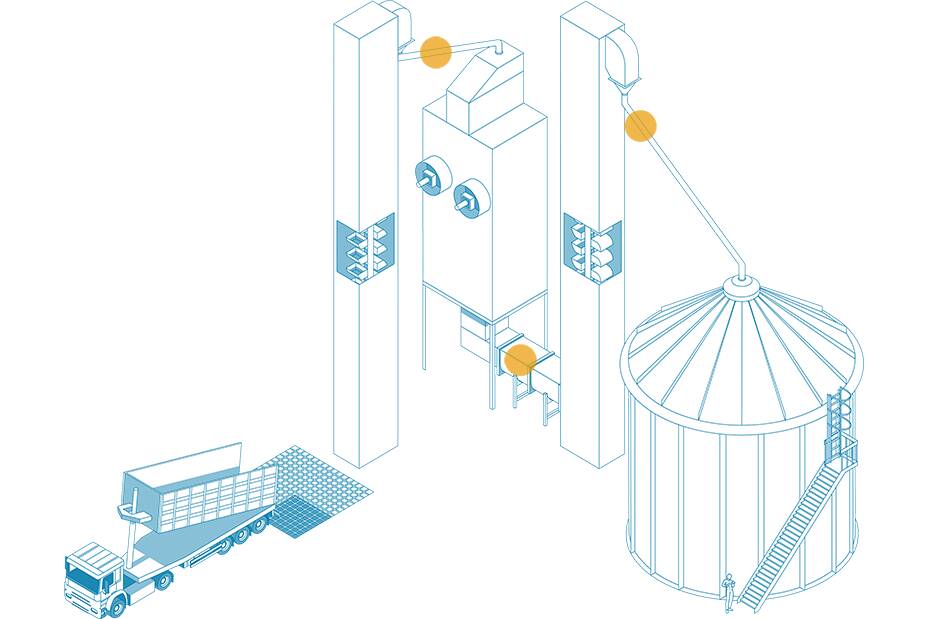
Precise Moisture Measurement Sensors for Grain Producers Easy to use, reliable, accurate and cost-effective. Not affected by dust, colour or temperature. Enabling real-time optimisation of your process
Precise Moisture Measurement Sensors for Grain Producers
Easy to use, reliable, accurate and cost-effective. Not affected by dust, colour or temperature. Enabling real-time optimisation of your process The sensors below have been designed to provide an easy method for producers to precisely measure the moisture content of the material and make real-time adjustments to optimise the process. These sensors are not affected by dust or colour and are temperature compensated. They are easy to use, reliable, accurate and cost-effective. * Hydro-Mix XT; Moisture sensor: Flush mount for mixers and conveyors * Hydro-Mix XT-EX; Moisture sensor: Flush mount. Process temperatures up to 60°C (Zone 20/21) * Hydro-Mix XT-FS; Moisture sensor: Food Safe flush mount for mixers and conveyors * Hydro-Probe XT; Moisture sensor: For bins, chutes and conveyor belts * Hydro-Mix HT; Moisture sensor: Process temperature range up to 120°C * Hydro-Mix HT-EX; Moisture sensor: Flush mount. Process temperatures up to 120°C (Zone 20) Hydronix service To ensure that our customers receive the best possible sales and support assistance, Hydronix has offices located across the world. Our
01.05.2025  |  10594x  |  Product news  | 
Microwave and NIR. Complementary, not competitive, technologies NIR and microwave sensors: Both can measure moisture, but each has its advantages and disadvantages. These must be taken into account when measuring and monitoring moisture.
Microwave and NIR. Complementary, not competitive, technologies
NIR and microwave sensors: Both can measure moisture, but each has its advantages and disadvantages. These must be taken into account when measuring and monitoring moisture. There is a common misconception that, where moisture measurement is required, there is a choice between NIR and microwave sensors. Both technologies can measure moisture, but each has its advantages and disadvantages in different applications that must be considered. This article compares both NIR and microwave systems and explains that, when it comes to measuring and controlling moisture, these technologies do not compete against each other but are complementary solutions. Each system should be selected based on what they do best. Comparison: NIR and Microwave NIR sensors can, in addition to moisture, measure other constituents like fat and protein content. They do not require contact with the actual substance being measured; and as they measure only the surface layer are able to measure small amounts and static material. As they only measure the surface of the material NIR sensors will not give a representative measurement if the surface layer is a different
15.08.2024  |  3766x  |  Insight  | 
PORTALS
BulkSolids-Portal Schuettgut-Portal Recycling-Portal
Related
Bulkgids.nl
SIGN UP FOR OUR NEWSLETTER
Newsletter archive
Service and contact
ContactDisclaimerPrivacyAdvertising
FOLLOW US
Linked