Moisture determines winter service operations
In winter service operations, every minute counts. When road salt no longer flows freely, problems occur at the worst possible time, during active deployment. In many cases, the cause is not the spreading technology itself but the material. The water content of road salt is a critical quality factor that is often underestimated in practice. Even small amounts of moisture can impair entire systems and lead to avoidable operational failures.
Why road salt is particularly sensitive to moisture
Road salt is hygroscopic and absorbs moisture from the surrounding air. Critical conditions include fluctuating temperatures, high moisture and extended storage periods. Even salt that appears free-flowing on the surface can already have an elevated water content inside. This directly affects storage stability, flow behaviour and dosing accuracy and usually remains undetected without measurement.
Typical consequences of excessive moisture content are:
- Caking and clumping in silos
- Reduced flowability
- Irregular or delayed discharge
- Increased maintenance effort
- Unreliable planning of winter service operations
Measure directly instead of guessing
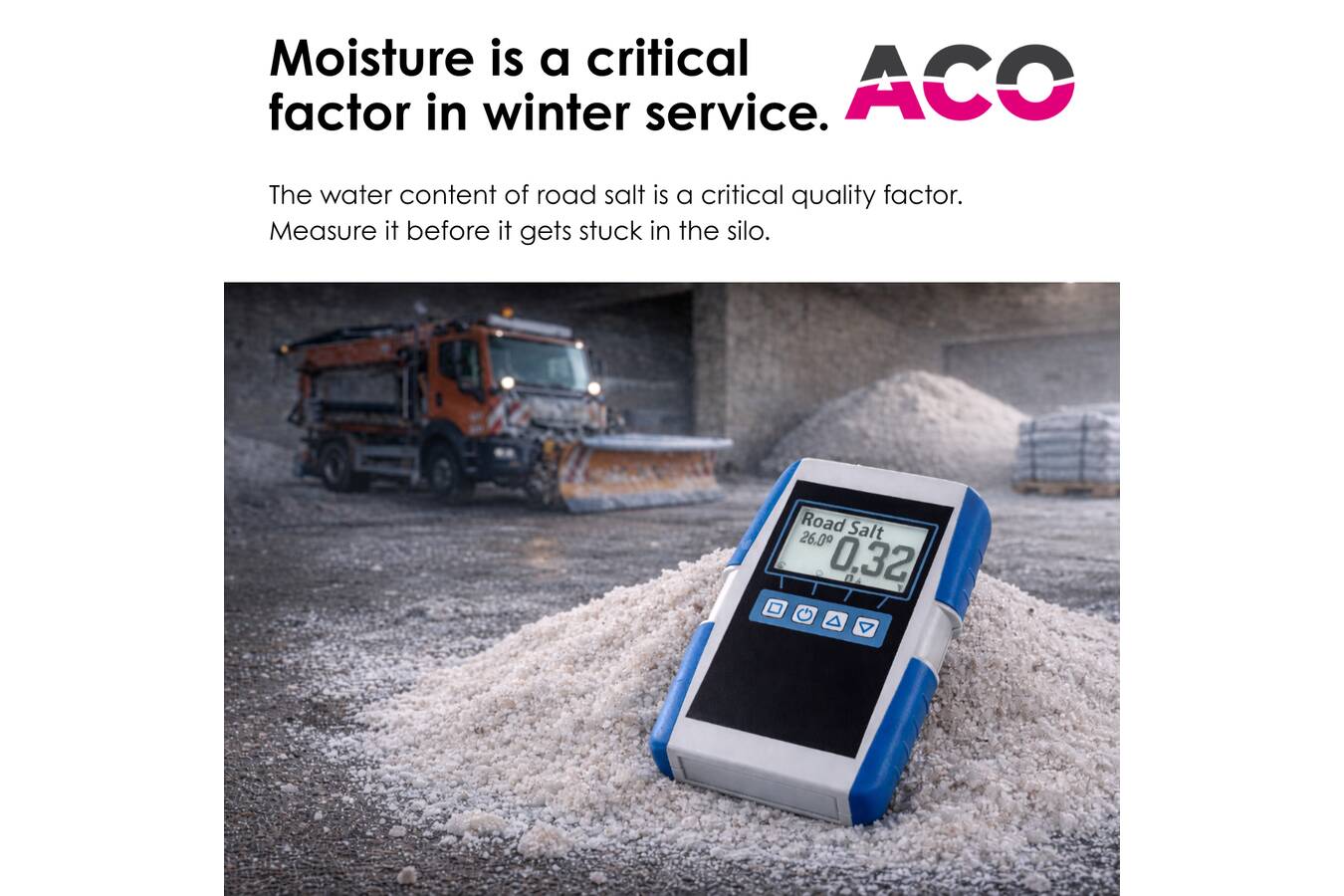
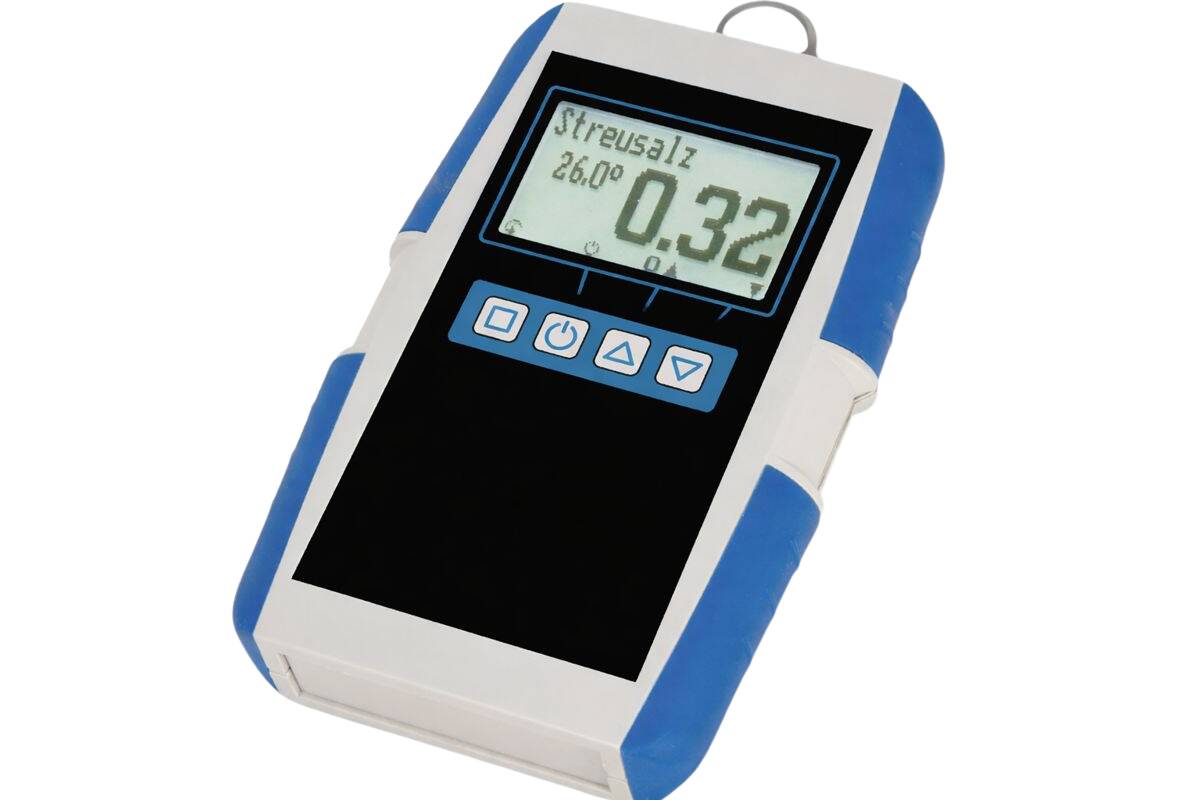
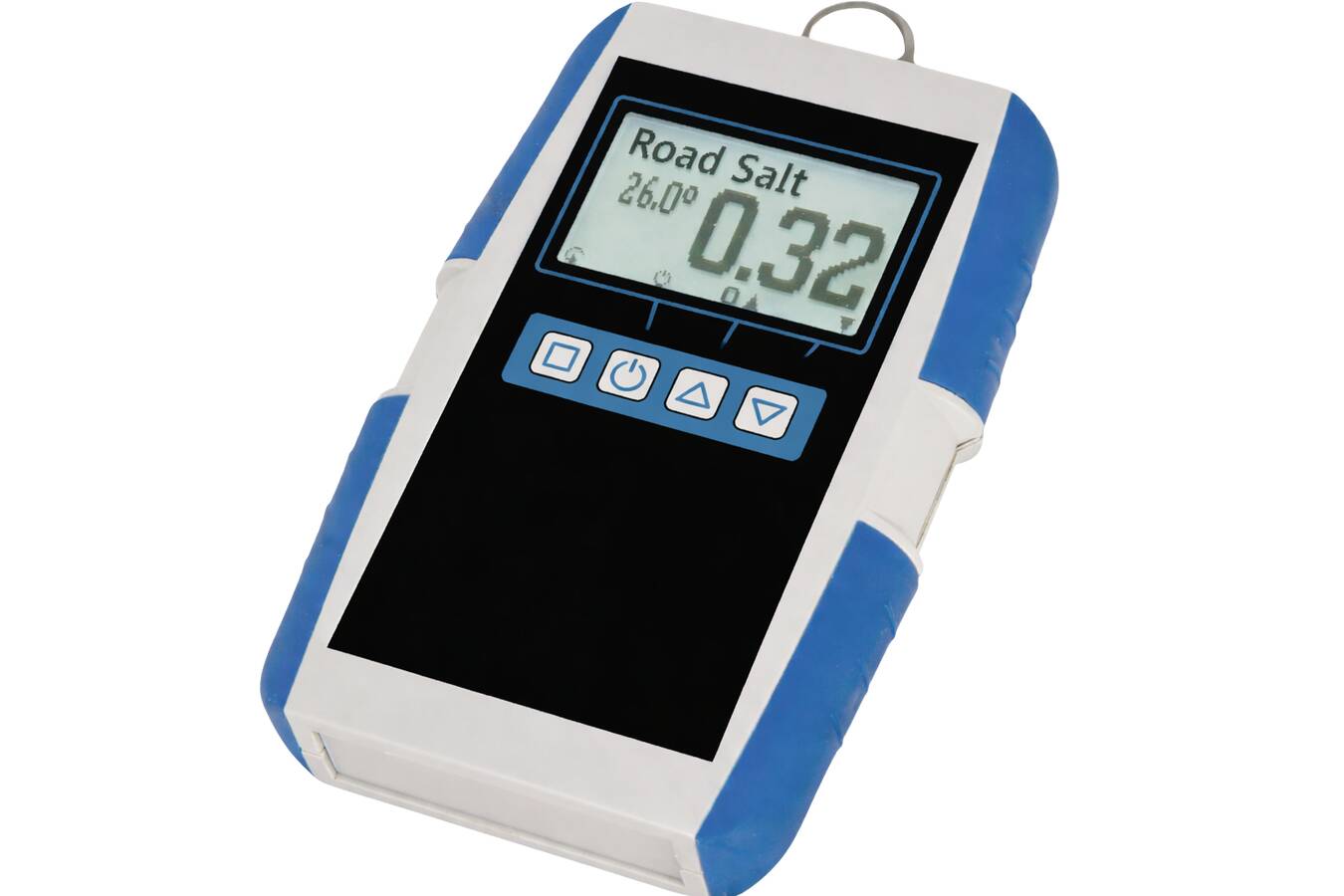
Moisture measurement directly on the road salt provides clarity. Using a suitable handheld moisture meter, the water content can be determined directly in the bulk material without sample preparation and without time delay. The measurement takes only a few seconds and provides a reliable value on site. This allows the condition of the road salt to be checked already at goods receipt, during relocation or throughout storage.
Practical moisture measurement of road salt
For road salt, low moisture contents are relevant. Accordingly, the measurement technology must be designed specifically for this range. High resolution, sufficient penetration depth and reproducible results are essential. Only then can even small deviations be reliably detected and assessed.
Typical practical requirements include:
- Measurement range in the low percentage range
- High resolution for reliable decision-making
- Sufficient penetration depth for representative results
- Direct measurement in the material
- Ability to store and document measurement values
Greater operational reliability during winter operations
Regular monitoring of the water content of road salt significantly increases operational reliability. Problematic batches can be identified at an early stage, silo disruptions are reduced and deployments can be planned more reliably. Especially under critical weather conditions, it is essential to be able to rely on both material quality and technology.
Conclusion
In winter service operations, it is not only the quantity of road salt that matters, but above all its condition. Water content is a key factor for storage stability, dosing accuracy and operational safety. Measuring moisture before problems arise helps avoid failures, reduce downtime and ensure stable winter service processes.