Classification of the measurement method
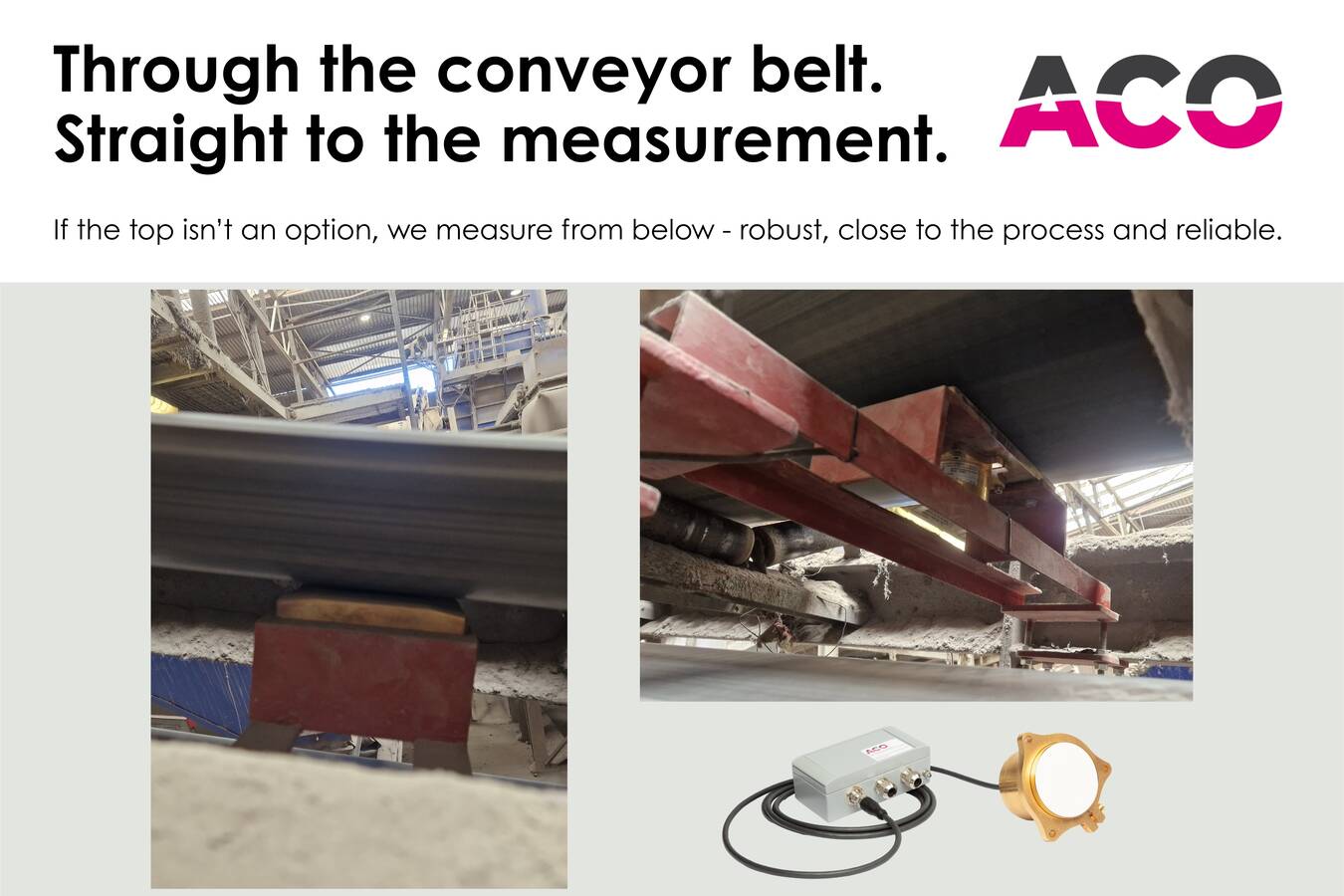
In many bulk material processes, online moisture measurement is typically performed from above on the conveyor belt. However, not every plant provides suitable conditions for this approach. Problems occur in particular when the material height is low, the particle size distribution varies significantly between coarse and fine fractions, or when the operation involves heavy contamination and mechanical stress. Under these conditions, stable and reproducible measurements from above are often not achievable. In such cases, an alternative installation point has proven effective. Moisture measurement is performed from underneath, through the conveyor belt.
Design and operating principle
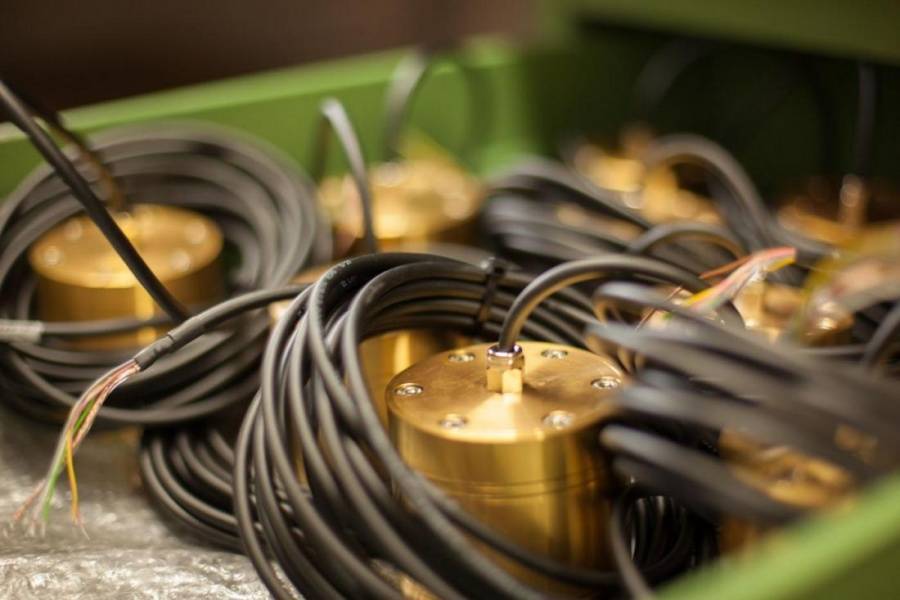
The sensor is mounted in a sled made of hardened tool steel directly beneath the belt. The sled and the ceramic measuring surface remain in mechanical contact with the underside of the conveyor belt. The robust design is engineered to operate reliably under high belt speeds and abrasive material conditions. Despite the signal attenuation caused by the belt, the capacitive measuring principle remains evaluable and provides continuous moisture values for process control.
Technical features
- Suitable for plants where installation from above is not possible or not stable
- Capacitive measurement technology, reliably evaluable even with reduced signal amplitude
- Highly robust construction using tool steel and industrial ceramic
- Standard process signals such as 4–20 mA, 0–10 V, Profibus or Profinet
Typical applications
- Sand-lime brick production
- Sewage sludge
- Iron ore and other ores
- Sinter material
- Slag
Advantages of measuring underneath the belt
Installing the sensor beneath the conveyor enables continuous online moisture measurement even where conventional measurement points reach their limits. This method is particularly suitable when the belt conditions do not provide a constant material layer or when the upper side of the belt is subjected to heavy mechanical load.
If an evaluation is required to determine whether this method is suitable for a specific material and plant setup, we are available to provide a technical assessment.