Supplier sign in
Home
STAY INFORMED
Subscribe to our monthly newsletter.
Your email address will never be disclosed to any third party.
Read our privacy notice.


Product news
23.10.2024  |  2011x
Share this item

Protein Shifting and Enrichment with Dry Grinding and Classifying

The global food supply chain is undergoing significant changes. With the world’s population growing, the demand for food, especially proteins, is increasing. This demand cannot be met solely by animal proteins due to the extensive land required for livestock and water usage. Additionally, consumers are increasingly demanding sustainable production methods. Therefore, alternative protein sources obtained from plants, mushrooms, insects as well algae or bacteria fermented biomass are crucial for future needs and are intensively investigated nowadays.

A well-established source are plant-based proteins. Focusing on the production of meat alternatives, protein isolates from soy with a protein content > 80 % are the means of choice as major ingredient therefore – mostly obtained through diverse wet extraction methods.

But due to ongoing developments in dry fractionation technologies and seed breeding, the process has become an energy-efficient method to produce high-quality protein concentrates with significant lower plant investment as wet technologies. The goal is to achieve a protein-rich fraction with a significantly higher protein content than the original material through dry grinding and air classification.

Starting mostly from dehulled pea, mung or faba bean, the resulting protein fractions are achieving protein concentration generally between 55 and 70% - just mechanical treated with full functionality and native state of the protein. Without question, an economical yield of the fraction of 25 – 40% (dm) should be generally achieved. Main influencing factors are species, moisture and protein starting level of each legume.

To understand the main principle of the protein shifting process, we must look on the kotyledone of a suitable legume, like pea: The size difference between big, elastic starch bodies (40 µm) and small protein granules (3 -10 µm) is the essential condition of the raw material.

Processing step 1 – Production of fine flour

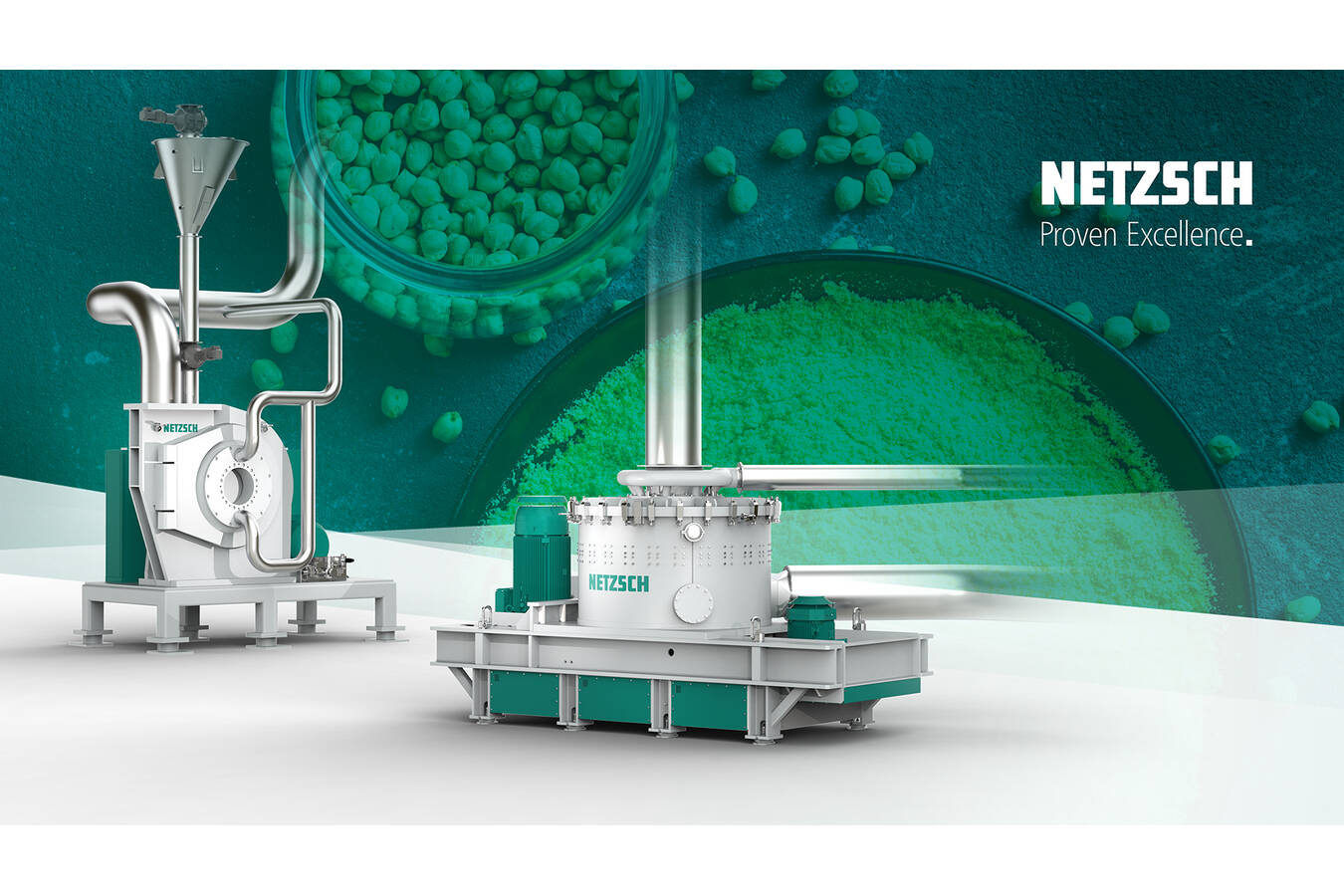
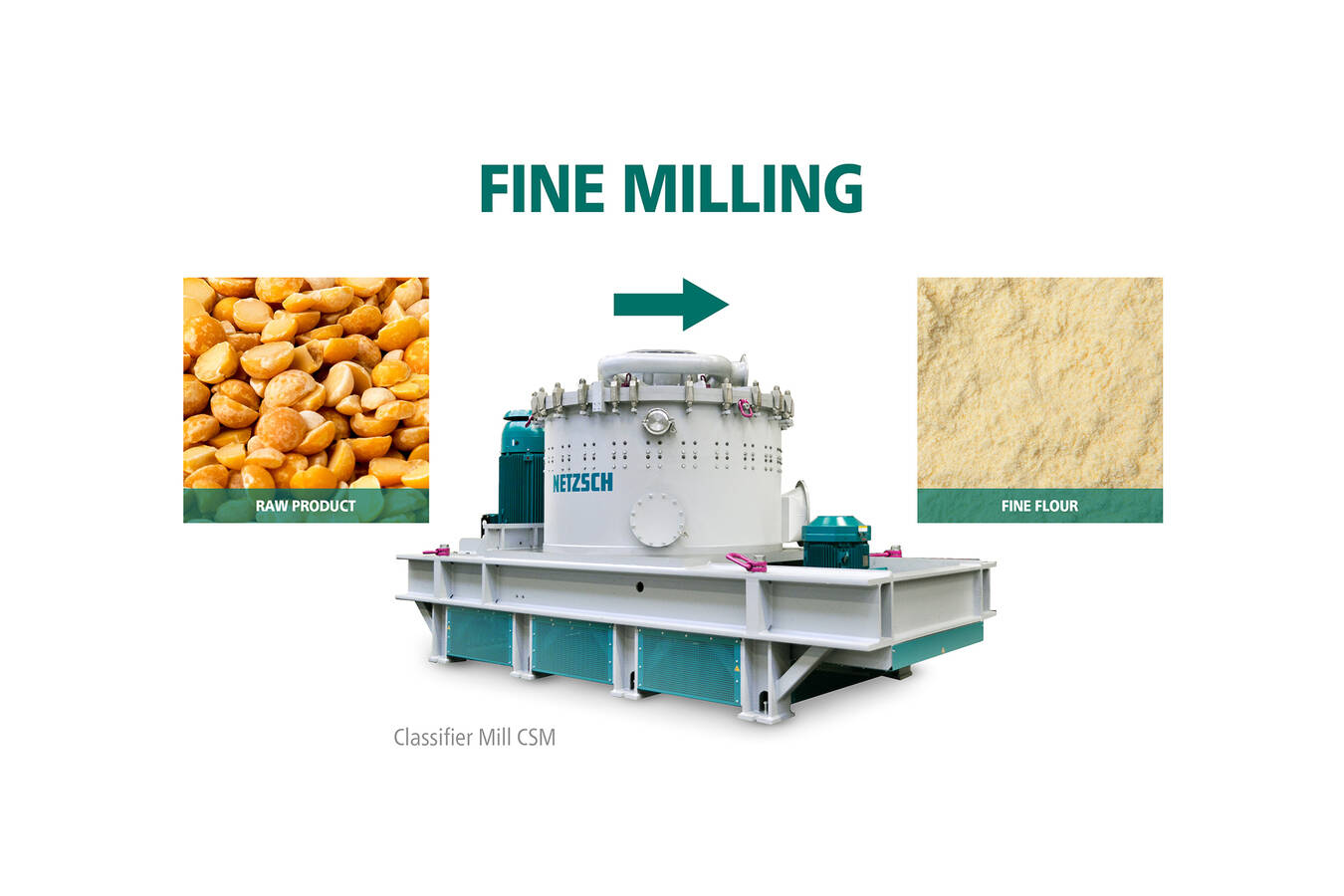
The process starts after the cleaning and dehulling step of the legumes. The milling disaggregates the relatively large starch bodies from the smaller protein parts. Furthermore, the damage of starch should be avoided to keep its quality. The most effective and gentle way to achieve this is through impact grinding in a NETZSCH Classifier Mill CSM. A fineness of around 40 – 60 µm (d90) of the obtained flour is ideal.

Processing step 2 – Efficient separation

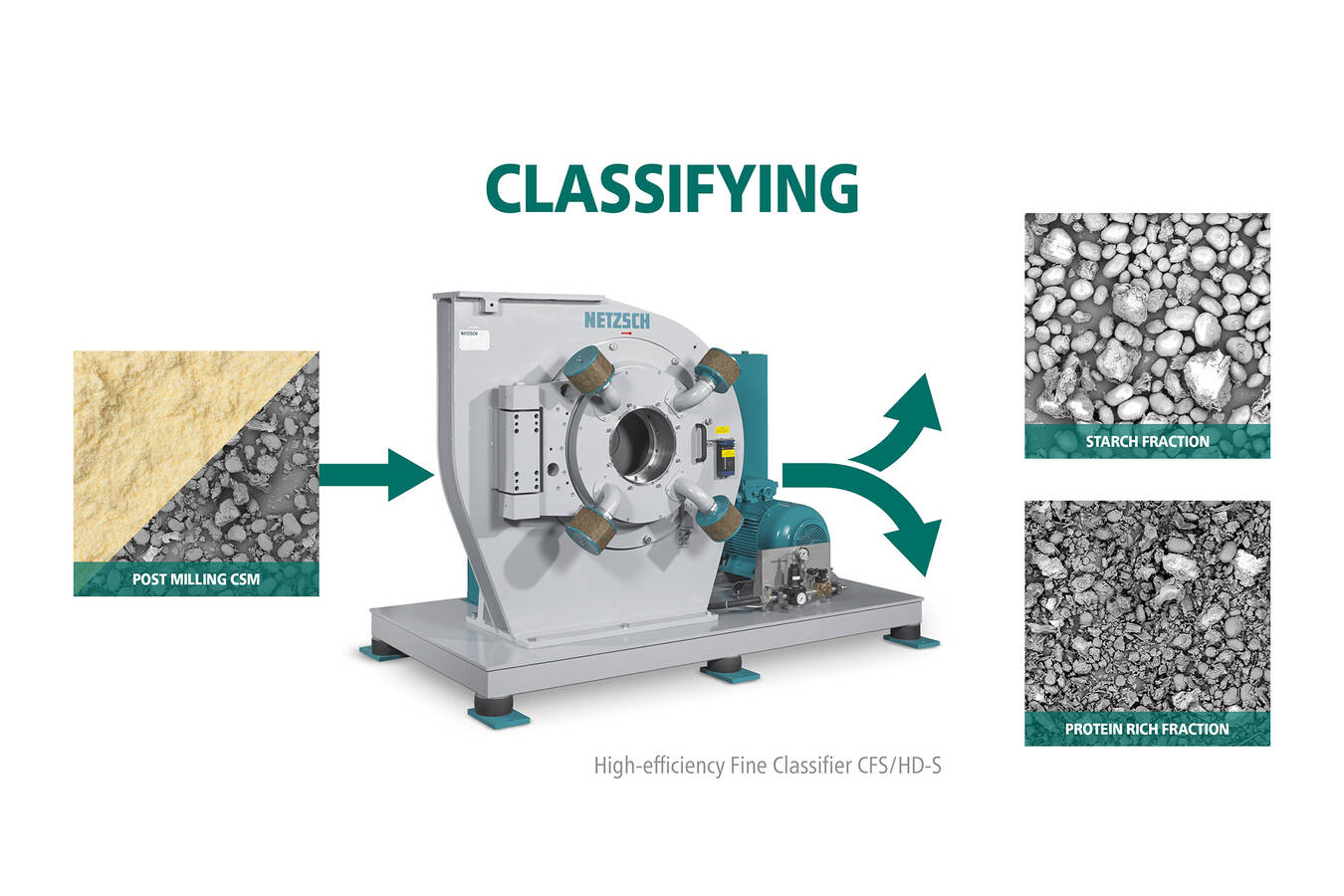
Using a high-efficiency classifier, the flour from step 1 is then separated into the high-protein and low-protein fraction (“starch fraction”), respectively. As this fineness range brings conventional flour sifters to their limits, separation is carried out by dynamic air classifiers. The NETZSCH High-efficiency Fine Classifier CFS/HD-S is used to achieve highest yields with a minimal loss of protein in the starch fraction. For this purpose, the ground product is passed into a ring gap, charged with air for optimum dispersion. The ring gap accelerates the particles into a circulatory motion and the additional centrifugal forces separate them from one another. The particles are separated considerably more effectively, compared to conventional types of classifiers.

In March 2024, ANDRITZ and NETZSCH formed a strategic partnership to serving the alternative protein market with innovative technologies. Their collaboration combines NETZSCH’s expertise in fine grinding and subsequent classifying to extract a protein-rich fraction, with ANDRITZ’s comprehensive process knowledge of conditioning, extraction, dewatering, drying, extrusion or pelleting – followed by offering tailor-made solutions for turn-key plants or conceptual designs and of course testing possibilities.


Company information

Netzsch Lohnmahltechnik GmbH
Netzsch Lohnmahltechnik GmbH is a service company with locations in Bobingen (company headquarters and administration) as well as the facility in Hanau and is part of the Business Unit Grinding & Dispersing in the Netzsch Group. As a leading international company, we also offer toll services for the wet grinding sector, which are performed at our location in Selb. We work with an ultra-modern and diversified selection of machinery for mechanical processing of a variety of materials. In addition to a pilot plant for product development and processing of small quantities, our state-of-the-art laboratories offer additional technologies for diverse analyses and quality assurance. We are mindful of providing the highest quality in all processes. The service we provide for your application also includes eminently important factors such as packaging, labeling and warehouse logistics, which our specialists adapt to your requirements with speed and flexibility. Hazardous materials are handled with exceptional professional responsibility. We also offer contract services in the area of wet grinding and dispersion of powders in liquids. Challenge us – we`ll work closely with you to find a customized solution. Whether the finest classification, demanding grinding tasks, or the related analyses – we always offer you a quick and professional solution. This allows you, for example, to bridge temporary capacity bottlenecks, introduce new products or outsource your own production without the investment risk. With our two locations in Bobingen and Hanau, we are always nearby and, as a company with world-leading processing technology, we offer you everything from one source – ISO certified and Made in Germany. See for yourself. We combine tradition, know-how and pioneering products in excellent quality and technology.
Last update: 26.08.2025

More items

Benefits of ISO Certifications for NETZSCH Lohnmahltechnik
For NETZSCH Lohnmahltechnik, ISO certifications such as ISO 9001, 14001, and 50001 offer significant advantages. They highlight our commitment to the highest quality standards, environmental responsibility, and energy efficiency. These certifications not only demonstrate our expertise but also strengthen the trust our customers and partners have in our services. The ISO 9001 certification ensures consistent high quality and optimized processes, leading to increased customer satisfaction and more efficient operations. With ISO 14001, we showcase our dedication to environmental protection by continuously improving our environmental performance and minimizing our ecological footprint. The ISO 50001 helps us systematically enhance our energy efficiency, reduce energy costs, and operate sustainably. These certifications assist us in minimizing risks, reducing costs, and enhancing our competitiveness. They also foster a culture of continuous improvement within our company,
25.09.2024  |  1832x  |  Press release  | 
Recycling rare earth magnets for sustainable electromobility Recycling and the sustainable use of valuable raw materials are playing an increasingly important role in the area of rare earth magnets.
Recycling rare earth magnets for sustainable electromobility
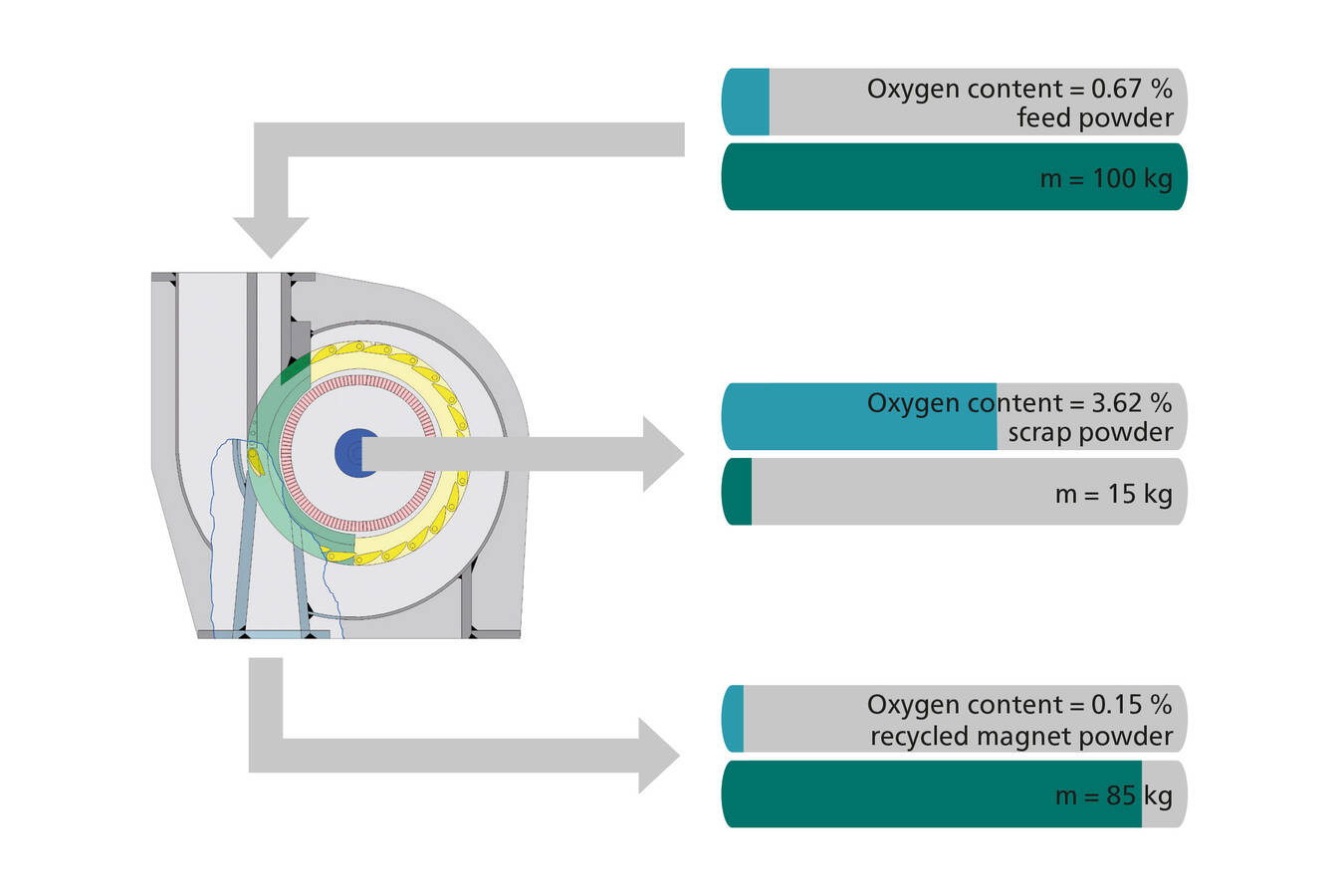
Recycling and the sustainable use of valuable raw materials are playing an increasingly important role in the area of rare earth magnets. Rare earth alloys and the permanent magnets made from them are becoming increasingly important as the use of electromobility grows. These materials are of crucial importance for the efficiency and performance of electric motors, generators, and other industrial applications. To ensure the sustainable use of these valuable raw materials and at the same time protect the environment, recycling is also playing an increasingly important role in this area. Recycled magnets can be divided into two main categories: On the one hand, waste is generated during the production of magnets, and on the other hand, classic returns from electric motors, generators or other applications are recycled. Magnet waste from production is usually cutting waste from the mechanical processing of magnets. To be able to reincorporate this material into the production process, it is crucial to remove any impurities such as oxides and carbides. Electric motors and generators generally have
22.07.2024  |  2705x  |  Product news  | 
New Equipment for Toll Grinding NETZSCH Lohnmahltechnik is pleased to announce the commissioning of two state-of-the-art grinding systems, enhancing our service offerings and providing our customers with even more options.
New Equipment for Toll Grinding
NETZSCH Lohnmahltechnik is pleased to announce the commissioning of two state-of-the-art grinding systems, enhancing our service offerings and providing our customers with even more options. CGS 50 Fluidized Bed Jet Mill for Low-Contamination Grinding The new CGS 50 Fluidized Bed Jet Mill has been successfully operating for a year. This system is constructed in a pressure-resistant design and is specifically approved for processing dust-explosive materials of class St 3 with < 1 mJ. Its ceramic lining allows for contamination-free processing, which is particularly advantageous for ceramic materials, battery materials, or pigments. The necessary compressed air for grinding can be regulated via a frequency-controlled compressor, ensuring energy-efficient operation. New Cryogenic Grinding System with Condux® 300 Fine Impact Mill For several months, our customers in Bobingen have had access to a cryogenic grinding system with the Condux® 300 Fine Impact Mill. This system enables cryogenic grinding at temperatures ranging from -50°C to -150 °C, allowing materials to become brittle. This is especially beneficial for the fine grinding of polymers,
24.06.2024  |  2159x  |  Product news  | 
PORTALS
BulkSolids-Portal Schuettgut-Portal Recycling-Portal
Related
Bulkgids.nl
SIGN UP FOR OUR NEWSLETTER
Newsletter archive
Service and contact
ContactDisclaimerPrivacyAdvertising
FOLLOW US
Linked