New energy concept for brick production cuts CO2 emissions by 88%
Heat pumps are widely used in private homes, but in industry, process heat is often still generated using natural gas. To change this, the AIT Austrian Institute of Technology in Vienna is focusing, among other things, on heat pumps for industrial process
The goal is to reintegrate waste heat from existing processes back into industrial operations, thereby significantly reducing the demand for fossil fuels. The “GreenBricks” research project was jointly carried out by the AIT Austrian Institute of Technology and Wienerberger Austria and was recently honored with the Net Zero Industries Award in Vienna.
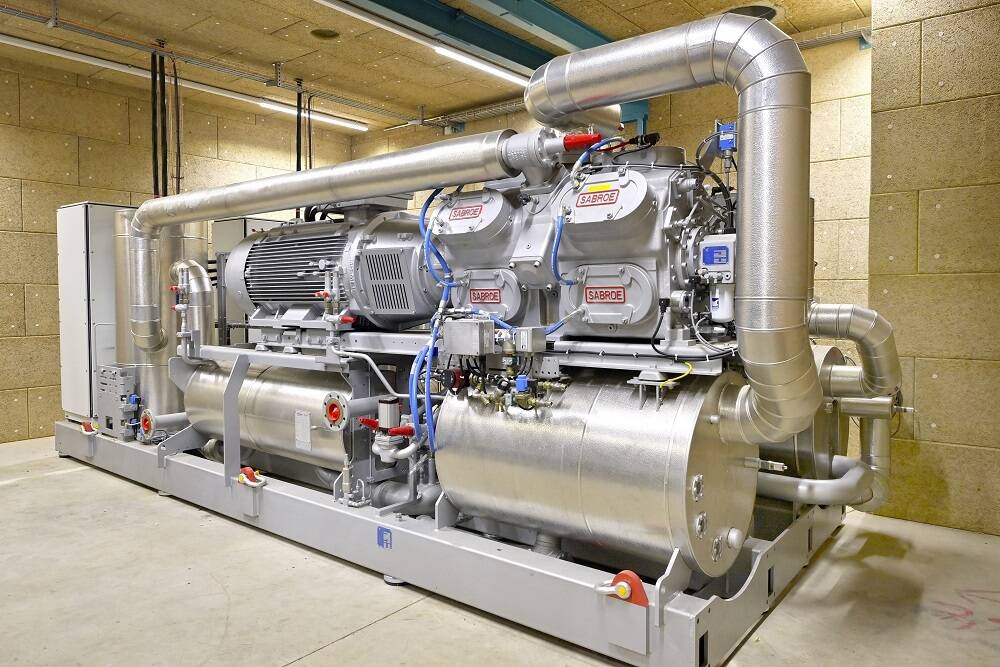
The plant renovation at Wienerberger Austria in Uttendorf was systematically planned using digital tools developed by experts at the Center for Energy at the AIT Austrian Institute of Technology. As part of the project, the world’s first electrified brick kiln was constructed, and a heat pump was also integrated to utilize the waste heat generated by the kiln during the firing process for drying the bricks. Simulations were conducted around the new electric kiln, and processes were digitally optimized with a focus on climate protection. Through the combined effect of these and other measures, approximately 30 percent of primary energy was saved, and CO₂ emissions were reduced by a total of 88 percent.
The use of waste heat can be applied to other industries
The technology used in the new brick plant is highly transferable. “Since other industrial sectors face similar challenges, the technology involving electric heating elements and the use of waste heat via a heat pump can also be applied there with certain adjustments,” according to an article by AIT published on the blog of simulation specialist CADFEM. The significant CO₂ savings also create incentives for other manufacturing companies, such as those in the steel, ceramics, paper, or pharmaceutical industries. “By directly utilizing waste heat, we can significantly reduce the carbon footprint of industrial plants,” says AIT researcher Manuel Schieder.
The “GreenBricks” project is part of the Austrian innovation network NEFI (New Energy for Industry), which aims to advance the decarbonization of industrial energy systems through key technologies. This enables close integration between research and practice, creating ideal conditions for testing new technologies directly within companies and rapidly bringing them to market.
Simulation provides crucial insights
Industrial applications often require higher temperatures than residential ones. Depending on the temperature requirements, so-called high-temperature heat pumps can be used for this purpose. “The high-temperature heat pump is a relatively new technology, which means that hardly any industrial companies are taking the first step in this direction,” Manuel Schieder explains in an article. “That is why compelling pilot projects are needed to demonstrate, using demonstration systems, that it works.”
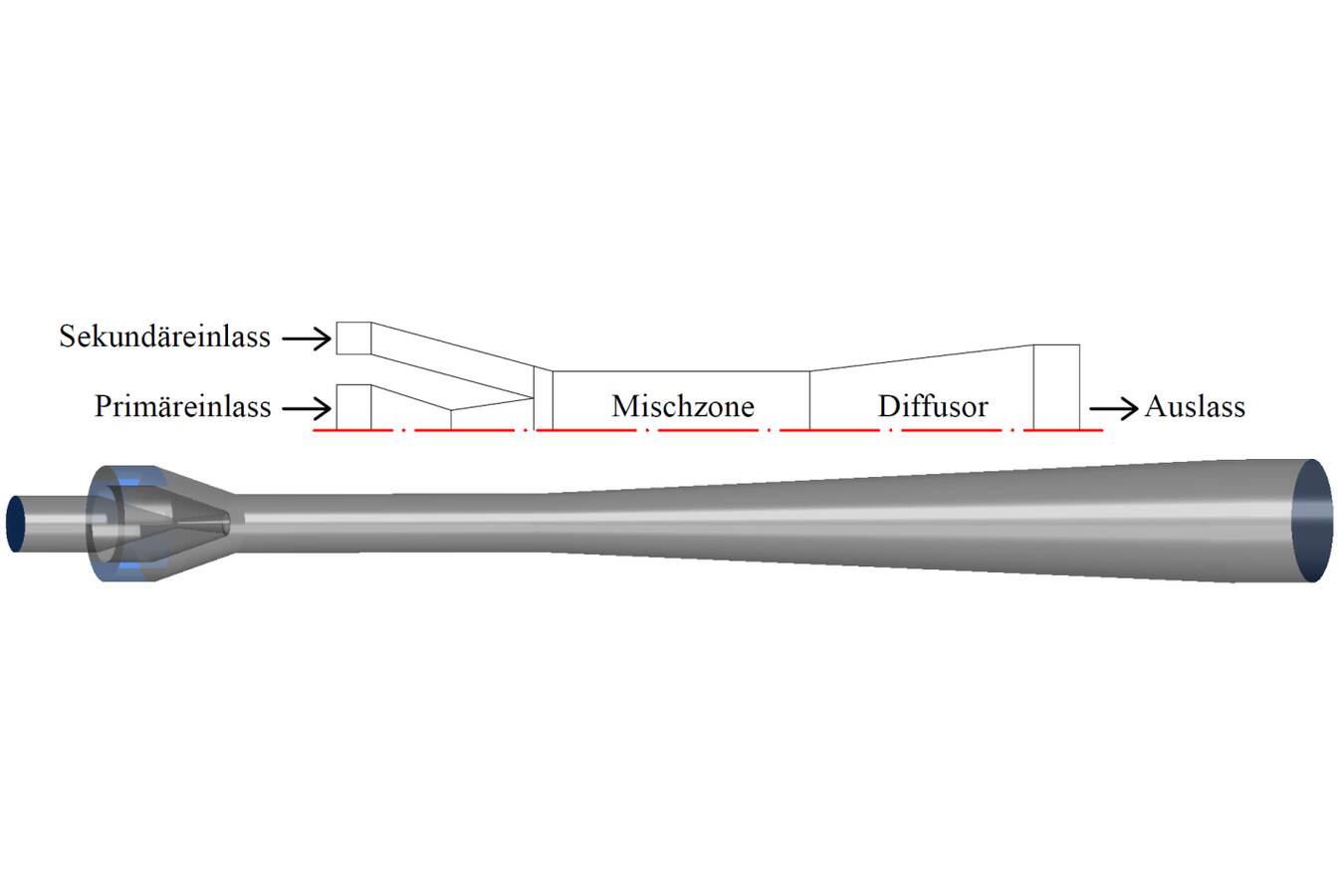
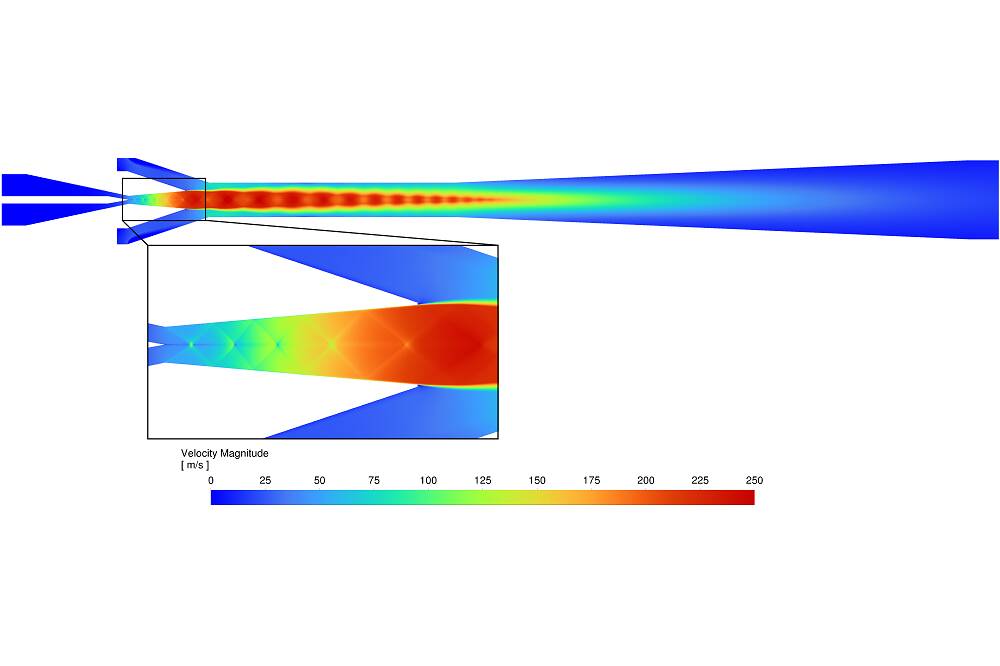
In the case of the related FFG project “VLESH” (“Variable Load Ejector for Steam Heat Pumps”), the simulations carried out with support from CADFEM played a major role in the detailed analysis of high-temperature heat pumps equipped with state-of-the-art ejector technology designed to improve efficiency. “Simulations are essential both for the design of the heat pump’s refrigeration circuit and for the optimization of the ejector used.” Simulating the ejector was particularly challenging because several complex physical phenomena occur simultaneously: on the one hand, supersonic speeds and the resulting high turbulence, as well as evaporation. Special material databases in the simulation tool Ansys Fluent helped to perform these fluid dynamics simulations and stabilize the process.
Mission Innovation Net-Zero Industries Award
On April 10, 2026, the “GreenBricks” project was honored with the Mission Innovation Net-Zero Industries Award in the “Outstanding Project” category at the Hofburg Palace in Vienna. It was recognized as an innovative energy concept for brick production at the Wienerberger site in Uttendorf (Upper Austria). It impressively demonstrates how the combination of electrification, digitalization, and the use of heat pump technologies enables virtually emission-free industrial production.
International IEA Heat Pump Conference in Vienna
On the topic of “Decarbonization through Innovation,” AIT, with the support of the Austrian Federal Ministry for Innovation, Mobility, and Infrastructure, will host the 15th International IEA Heat Pump Conference in Vienna from May 26 to 29, 2026. Experts from around the world will gather there to discuss the use of heat pumps in various sectors and industries and to advance the development of high-temperature heat pumps as well.
About AIT
The Austrian Institute of Technology (AIT) is Austria’s largest research and technology organization, with more than 1,600 employees working on the key infrastructure issues of the future. It sees itself as a bridge between university research and industry, aimed at breaking down barriers to new technologies. AIT focuses on two interrelated research priorities—“Sustainable and Resilient Infrastructures” and “Digital Transformation of the Economy and Society”—and works closely with industry and clients from public institutions.