Bulk goods: Solutions for skilled labor shortages
Skilled labor shortages and occupational safety regulations make manual bag emptying difficult. Automated systems offer an efficient and safe alternative.
In the bulk goods industry, issues such as speed, cost savings, and high availability play a central role. The more requirements there are, the more difficult it becomes to combine them—a phenomenon that can also be observed in other industries. However, operations do not run themselves: human and machine support are essential.
A key problem in the industry—and beyond—is the ongoing shortage of qualified personnel.
Academization instead of vocational training
The shortage of skilled workers is a recurring issue, especially in skilled trades. Unlike in the past, fewer and fewer trainees are successfully completing vocational training in skilled trades. This is less due to a lack of motivation and more to do with the choice of training or study programs.
Companies are finding it increasingly difficult to find suitable employees for vacant positions. This is primarily due to the limited availability of applicants. The trend shows that in recent years, fewer and fewer young people are opting for vocational training in skilled trades.
Too heavy work
There is also a shortage of personnel in the bulk goods industry. No school-leaving qualification is required for certain jobs—this applies here as in other sectors. Nevertheless, it is difficult today to find employees who are willing to manually open and empty 25-kg bags of granulate or similar materials. Many companies still employ one or two people for this task, but finding suitable workers is proving challenging.
Laws and organizations such as the Dutch Arbowet or the German Occupational Safety and Health Act (ArbSchG) place higher demands on working conditions. From the applicants’ point of view, lifting heavy sacks every day is physically demanding and undemanding work. In the past, workers from Eastern Europe were enthusiastic about such jobs, but today fewer and fewer are willing to do them—let alone the local population.
Government requirements
As already mentioned, there are legal requirements and organizations that ensure that work processes are designed to be ergonomic and safe. When there is an increase in physical illnesses, government agencies analyze the causes and develop solutions that often become mandatory. Companies are monitored for compliance; violations are punishable by fines.
Higher risk of accidents
Manual bag emptying carries considerable accident risks. It often takes place on raised platforms where the funnel is positioned at the edge. Losing your balance can lead to falls.
In addition, granule residue on the floor can cause slipping—similar to the famous scene from “Home Alone” where burglars slip on toys.
Finally, bags are often opened with knives. When pressed for time, sharp tools are handled carelessly, which can lead to injuries when used close to the body.
Health risks
In addition to accidents, there is also a risk of health problems. The biggest problem with manual bag emptying is back pain; shoulder and arm problems can also occur.
Automated solution
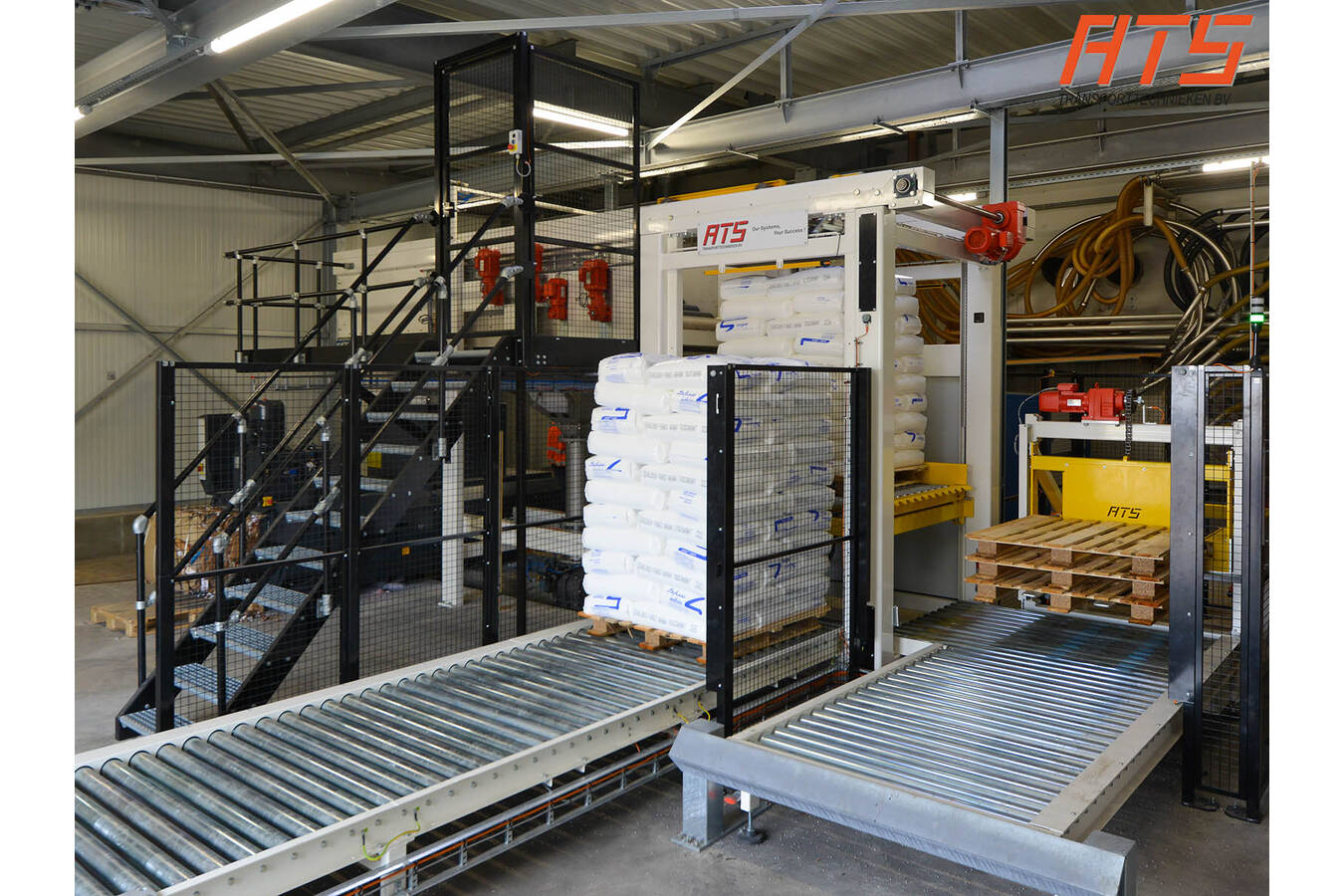
Recruiting new staff is difficult, and burdening existing employees with repetitive, replaceable tasks is unproductive. The machines developed by ATS Dutch Machinery offer an ideal solution for such activities.
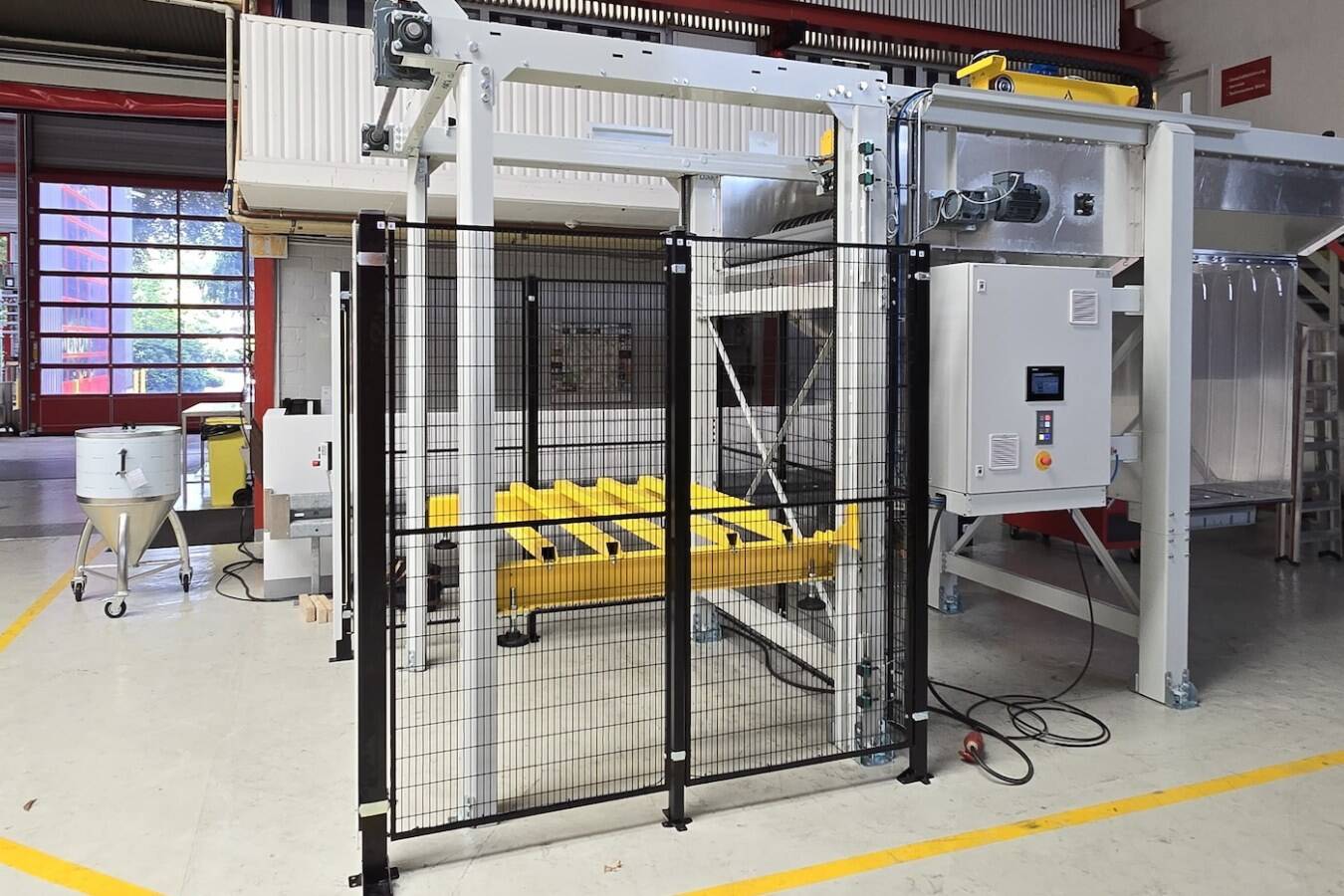
These bag emptying systems have been available for over 18 years and have been continuously developed, optimized, and adapted to the latest technical standards. They are highly efficient and—apart from loading with pallets (for which any number of feed rollers can be installed for buffering purposes) and removing empty pallet stacks—fully automated. An available forklift driver can perform these tasks on the side, saving time compared to manual handling.
The machines are CE certified, which means that personnel have no contact with moving parts. In addition, granulate collection plates can be integrated to minimize the risk of slipping.
Conclusion
The growing shortage of skilled workers and stricter occupational health and safety and ergonomics requirements pose significant challenges for the bulk solids industry, especially when it comes to manual bag emptying. Physically demanding manual labor makes it difficult to recruit staff and poses risks to health and safety. The automated bag emptying systems from ATS Dutch Machinery offer an effective alternative: they reduce manual effort, increase safety, and optimize process efficiency. In this way, our solutions help companies meet requirements and counteract staff shortages in the long term.